Lead story

The Commission’s work programme for 2026
On 21 October, the European Commission published its work programme 2026, spplemented by an annex setting out the timetable, the texts under discussion and the texts to be evaluated or repealed (see press release EN ES DE IT PL). As far as social Europe is concerned, the programme merely restates a number of announcements that have already been repeated many times.
- The quality jobs “package” is duly scheduled, though with no clues whatsoever regarding its content (4th quarter). The text merely indicates that this “Quality Jobs Act” must “ensure that modern employment keeps pace with the modern economy”.
- The other “package” on “fair labour mobility” (3rd quarter) will include legislative proposals relating to: a European social security pass; strengthening the European Labour Authority; and skills portability.
- As for the current legislative process, one awaited text is absent from the programme: the proposal for a directive on telework and the right to disconnect. This should mean that it will be put forward by the end of 2025. As for the proposal for a directive on quality traineeships, it looks set to continue working its way through the legislative process, as do the proposals for a regulation on the declaration of posting of workers, on the revision of the European Globalisation Adjustment Fund and the creation of an EU talent pool. On the other hand, the proposed revision of the directive on the protection of workers from risks related to exposure to carcinogens, mutagens and reprotoxic substances at work may be abandoned.
“Several strategies and initiatives are announced to boost citizens’ purchasing power and combat poverty, an area where the EU is lagging behind.”
Frederic Turlan
- Several strategies and initiatives are announced to boost citizens’ purchasing power and combat poverty, an area where the EU is lagging behind. The following are announced: an initiative to tackle “issues related to short-term rentals” (2nd quarter); a “European Affordable Housing Plan” (4th quarter) and an “EU anti-poverty strategy” to “address structural causes of exclusion and strengthen support services” (2nd quarter). This will include “a strengthened Child Guarantee that will include investments and reforms to tackle child poverty”. There are also two strategies covering “gender equality” (1st quarter) and “the rights of persons with disabilities” (2nd quarter).
- Work on the goal of simplification will continue, so as to cut the administrative burdens faced by companies, with a number of new “omnibus” packages on various topics. However these do not affect social legislation – directly, at least.
- A number of significant texts that may affect employment relationships are announced: the presentation of a 28th regime for innovative companies (1st quarter) that might include a simplification of the social legislation applicable to start-ups; a revision of public procurement rules (2nd quarter) that might allow a strengthening of the obligation to adhere to social clauses, such as restricting public contracts to companies that apply a collective agreement, an evaluation of the legislation covering market surveillance and compliance of products, and an evaluation of the whistleblower protection directive (4th quarter).

EU Social Developments
Legislation
European Works Council: On 27 October, following on from the Parliament (see IR Notes 260 EN ES DE IT PL), it was the turn of the Council of the EU to definitively adopt the revision of the European Works Council Directive (see press release EN ES DE IT PL). The directive will enter into force as soon as it has been published in the OJEU. After the directive has entered into force, Member States will have to transpose it into their domestic law within two years and apply it within three years.
 Case Law
Social dumping in the transport industry: On 16 October, the Court of Justice handed down a judgment upholding a 2019 Danish regulation that restricts the cabotage operations of non-Danish transport companies to “seven consecutive days in one calendar month” (Editor’s note: cabotage is the transport of goods – including loading and unloading – between two points within national territory, undertaken by a non-resident company). The European Commission’s view is that this regulation restricts transport companies’ freedom to operate within Member States, but Denmark argued that this regulation precisely defined the notion of “occasional services”, as provided for by EU law in the area of cabotage, and was part of the margin of discretion left to Member State when implementing texts. The Court of Justice confirms that the “waiting period” imposed by Denmark “does not go beyond what is necessary to attain the objective pursued by that practice, which is to ensure that cabotage operations by coach and bus are not carried out in such a way as to create a permanent or continuous activity in the same host Member State.” The European Transport Workers’ Federation (ETF) stresses that this represents “a major victory in the ongoing battle against social dumping in the transport sector.” Flemming Overgaard, chairman of the Danish trade union 3F Transport, comments that “the ruling also means that Sweden and other countries are free to copy the Danish rules and put effective brakes on the undermining of wages and working conditions for foreign drivers throughout the Nordic region” (see press release).
Domestic violence
On 17 October, the Employment and Social Affairs Council approved Conclusions on Violence against women and domestic violence of discrimination.
Restructuring
On 30 October, the European Commission proposed releasing aid worth 8.5 million euros to support 5,800 employees dismissed following the bankruptcy of electric battery manufacturer Northvolt in Sweden.
Across Europe

 Germany
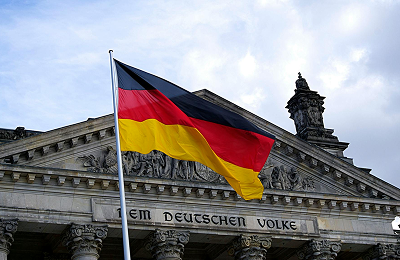
Case-law on a difference in pay between men and women: The Bundesarbeitsgericht (BAG – Federal Labour Court) has delivered a ruling pointing out that a difference in pay between men and women for work of equal value creates a presumption of discrimination, which must be corrected by the employer (see press release). In this particular case, a female employee had denounced a pay gap with one of her male colleagues (without taking account of a comparable group of male employees), on the basis of a dashboard released by the employer, in accordance with German pay transparency law. The regional labour court had initially rejected the claim on the grounds that comparing her salary with a group of comparable male employees and a group of comparable female employees did not reveal any unjustified pay gaps. However, the BAG partially quashed this decision, aligning itself with EU Court of Justice case law and validating the comparison made only with the male employee cited by the complainant. The DGB trade-union confederation has expressed its satisfaction with this decision (see press release) and calls on Germany to rapidly transpose the pay transparency directive.
Germany
Occupational Health: Firms under 50 employees will no longer need a safety manager under new simplification plans.
 Austria
Care work: Nursing and care work classified as “arduous” from 2026, enabling earlier retirement.
Company Updates

Transnational agreement
Carrefour renews its International framework agreement: On 17 October, the management of retail group Carrefour and the Uni Global Union federation renewed the global agreement first signed in 2001. The new text was signed on the final day of the annual meeting of Carrefour’s EWC (known as the ‘CICE’), which, says UNI Global Union, “has played a crucial role in strengthening the GFA through supporting documents addressing gender equality, violence against women and other key issues” (see press release). The federation is delighted that “despite recent changes to its global footprint, the company has maintained its commitment to the agreement’s due diligence obligations, including throughout its franchise network”.
Clariane
50 free shares granted to EU employees, tied to satisfaction targets.
Nestlé
On 30 September, the Nestlé European Council for Information and Consultation (NECIC) requested clarification from management on the planned sale of the Nestlé Waters business (5,500 employees in Europe).
Data & Reports

European Pillar of Social Rights
At a time when the Commission is working on a new action plan to apply the European Pillar of Social Rights, the European Economic and Social Committee has published a study, commissioned by our partner Panteia, examining the Pillar’s implementation and its initial action plan in 2024. The study focuses on four directives featuring in the context of the European pillar: those covering transparent and predictable working conditions, work-life balance, adequate minimum wages and gender balance on company boards. The analysis, which relates to the implementation of these directives and any remaining gaps, covers 14 of the 27 Member States (see country reports). Its conclusions are fairly critical, emphasising insufficient application of these texts. The rights bestowed by these directives often do not benefit people who hold atypical or precarious jobs. Furthermore, labour inspectorates and equality bodies do not have the resources and sanctions they need to ensure compliance with the legislation.
Key Statistik
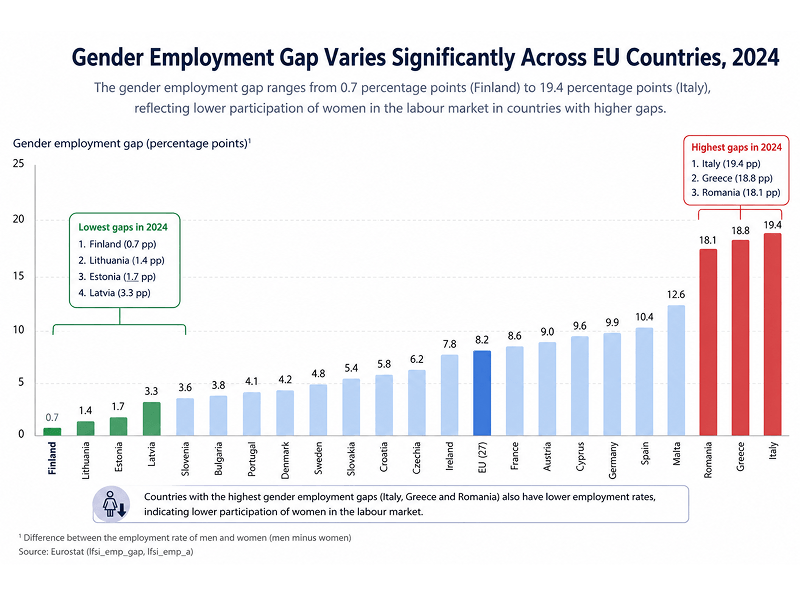
0,7
The gender employment gap in Finland reached 0.7 point of percentage in 2024, the lowest rate in the EU
Three questions for…

You recently published a report denouncing severe exploitation of third-country road‑transport drivers. Is this the price we have to pay for free movement of workers and goods within the EU?
“No, not at all. We have indeed highlighted cases of unacceptable terms of employment, but on paper at least, EU legislation is fairly protective. As soon as a worker from a third country is legally admitted to EU territory, an equal treatment principle applies, virtually across the board. The social legislation applicable to posted workers in general, and to workers in the road transport sector in particular, doesn’t create “second class” workers. The problem is that in many cases, these rules are broken. What’s more, inspections are the responsibility of each Member State, but everyone knows that there aren’t enough of these inspections and they’re not effective. The situation of drivers had already deteriorated at the time the EU expanded to take in the countries of Central and Eastern Europe, when carriers set up subsidiaries in these countries to recruit drivers and move them around within the EU at the least cost. At the present time, mainly due to labour shortages, these same subsidiaries and local SMEs are recruiting drivers from Belarus, Ukraine, Georgia, etc., who are dispatched directly onto EU roads, usually in breach of EU legislation designed to combat letterbox companies. In point of fact, a road transport company is supposedly authorised to offer international transport services only if it is carrying on a genuine economic activity in the place where it is established. Many of these employers are not engaged in such activity but they are nonetheless happy to recruit drivers in third countries, and put them in charge of lorries operating outside their home country, without having a genuine business there. The situation won’t change unless Member States and the European Commission make a conscious decision to boost their inspections and efforts to combat fraud. Thus far, the authorities (and the EU authorities in particular) have tended to take the view that toughening up road traffic inspections would constitute an obstacle to freedom of movement within the internal market. However, this laissez-faire attitude has created a catastrophic social situation, in which social dumping has become the norm and working conditions have become unacceptable for our EU Member States, which are governed by the rule of law. Furthermore, this strong pressure on wages is keeping road transport costs artificially low, to the detriment of rail in particular, despite this latter mode of transport being better aligned with our climate goals. Member States must therefore accept their responsibilities, to ensure that they meet the environmental, social justice and road safety goals.”
IR Dictionary

Paid leave
In its judgement of 12 June last, the Court of Justice of the European Union noted that paid leave constitutes an "essential principle of EU social law". This principle concerns the entitlement to at least four weeks' paid annual leave granted to all European workers by article 7 of directive 2003/88 of 4 November 2003. The text also stipulates that this minimum period of paid leave may not be replaced by an allowance in lieu unless the employment relationship ends, when the employee is compensated for the paid leave accrued at the time of his departure by an allowance. The latter rule is appraised strictly by the Court of Justice because use of the allowance in lieu must remain an exception. In fact, the legal basis for this directive is the preservation of health and safety at the workplace, which has prompted the Court to establish important jurisprudence on the subject so that workers do actually take these four weeks' leave. See the European Industrial Relations Dictionary (in English) for further details.
Upcoming Events
11 November
Luxembourg
Denmark v Commission (Minimum Wage Directive)
The CJEU has ruled on Denmark’s challenge to the EU Minimum Wage Directive, confirming its validity but striking down two provisions that interfered with national wage‑setting powers
11 November
Dublin (and online)
Eurofound Forum 2025
On 19–20 November 2025, Eurofound held its 8th Foundation Forum at IMMA Venues. It is the agency’s quadrennial high-level flagship event which has been running for the past 20 years and is organised in cooperation with the Irish Government.
4 December
Luxembourg
A conference organised by the European Trade Union Institute
On 19–20 November 2025, Eurofound held its 8th Foundation Forum at IMMA Venues. It is the agency’s quadrennial high-level flagship event which has been running for the past 20 years and is organised in cooperation with the Irish Government.
The Team
This issue was produced by Inès Bollet, Victoria Fonseca, Ambre Grenier-Boley, Laura Renucci, Iris Turlan, Frédéric Turlan
Find out more about the IR Share team on our website, Linkedin or IR News.
www.irshare.eu
