Lead story

The right to strike is part of the fundamental right of freedom of association
In an advisory opinion published on 21 May, the International Court of Justice confirmed that the right to strike is encompassed in freedom of association, and is therefore protected under ILO Convention No. 87.
In 1994, employers’ representatives at the International Labour Organization (ILO) disputed that the right to strike was guaranteed by ILO Convention No. 87 on freedom of association. After failing to reach agreement with employee representatives, the ILO Governing Body referred the case to the International Court of Justice (ICJ) in 2023 for interpretation of Convention No. 87. This Convention, which was adopted after the Second World War, guarantees workers and employers the right to establish and join organisations of their own choosing. Article 3.1 of the Convention grants them the right to organise their activities and formulate their programmes, but the right to strike is not mentioned. The employers argued that because the Convention does not expressly mention the right to strike, it cannot include this right implicitly. However, defenders of the right of freedom of association have always believed that it is included. The ILO Committee on Freedom of Association has long based the right to strike on several articles of this Convention. It is also significant that, during the debates held in 1947-1948, neither governments nor employers suggested the idea of excluding the right to strike from the Convention. At hearings held before the Court in October 2025, both camps defended their opposing positions. The International Trade Union Confederation (ITUC) affirms that striking is the main way of improving working conditions and defending human dignity, and it is therefore self-evident that it should be protected under Convention No. 87. The International Organisation of Employers (IOE), on the other hand, argues that while the right to strike is legitimate in principle, its formal inclusion in the Convention would risk disrupting national labour systems by imposing an excessively restrictive framework. By ten votes to four, the ICJ has concluded that the right to strike is indeed protected under Convention No. 87 (see ICJ press release). This advisory opinion is not legally binding, but it should carry lasting weight in the area of labour law, both at national and international level, and make it harder for attempts to restrict the right to strike to succeed (see Three questions for… opposite). At its June session, the ILO Governing Body is due to examine what follow-up action should now be taken. The ITUC has expressed its satisfaction at this “important” opinion, emphasising that it is “a victory for the ILO and its governance structures” (see press release). The ITUC calls on all ILO constituents to ensure “that the ILO supervisory system fully resumes its work in guiding governments in their application of Convention 87, including with regard to the right to strike, while continuing to benefit from the ILO’s unique expertise and tripartite structure”. For its part, the IOE takes note of the opinion and emphasises that it “does not entail any determination on the precise content, scope or conditions for the exercise of that right” (see press release). Discussions are due to be held at the 114th session of the International Labour Conference, which is taking place in Geneva from 1 June to 12 June.

Across Europe


 Netherlands
Adoption of the pay transparency bill: The government has submitted its bill transposing the EU pay transparency directive to the Chamber of Representatives (see press release). This law, which is scheduled to enter into force in early 2027, will oblige companies with more than 150 employees to publish their pay gaps from 2028 onwards. Those with more than 100 employees will have until 2031 to comply. Speaking for the employers, VNO-NCW, MKB and AWVN fear that the introduction of this measure will create an administrative overload and that the timetable for implementation will be too short (see press release). AWVN also cites the risk that publishing this pay gap data will create tensions within companies (see press release), while VNO-NCW warns against reaching erroneous conclusions linked to a lack of clarity in the data (see press release). For their part, the trade unions support the plan, but are critical of the leadtimes for its application (see press release). FNV points out that the law does not allow employers to base their decisions on an applicant’s previous wage (see press release), while CNV believes that the employers’ criticisms relating to the administrative burden primarily reflect the embarrassment associated with highlighting pay gaps (see press release).
Paesi Bassi
A trade union guide to the use of AI: The Dutch trade union confederation VCP has published its first guide to the use of artificial intelligence in social dialogue (see guide). This guide will help employee representatives and trade unions to use AI when negotiating agreements or participating in social dialogue (see press release). The guide advises members to prepare a roadmap. VCP identifies good practices based on concrete scenarios, such as using AI to draft and negotiate a collective agreement in the banking and insurance sectors (see press release). The document also provides access to tools such as an ethical checklist developed by Eurocadres (see checklist).
 Slovenia
Tensions around labour market reform: On 10 April, the new parliamentary majority presented a bill “on intervention measures for Slovenia’s development”, which is creating a high level of polarisation between trade unions and employers’ organisations.
The package includes tax reductions, lower social security contributions and measures to promote economic recovery. The trade unions reacted immediately, accusing the government of undermining the welfare state and bypassing social dialogue. They gathered 47,223 signatures in just three and a half days, i.e. far more than the 2,500 needed to trigger an application for a referendum. According to the unions, the proposal poses a threat to the funding of healthcare, social security and social services (see press release). The employers’ organisations, on the other hand, support the proposal, describing it as an important step towards modernising and boosting the economy (see press release). The controversy took on an international dimension when the European Trade Union Confederation (ETUC) and the Workers’ Group of the European Economic and Social Committee (EESC) both expressed concern about social dialogue being weakened in Slovenia (see ETUC and EESC press releases).
Company updates

 Global framework agreements
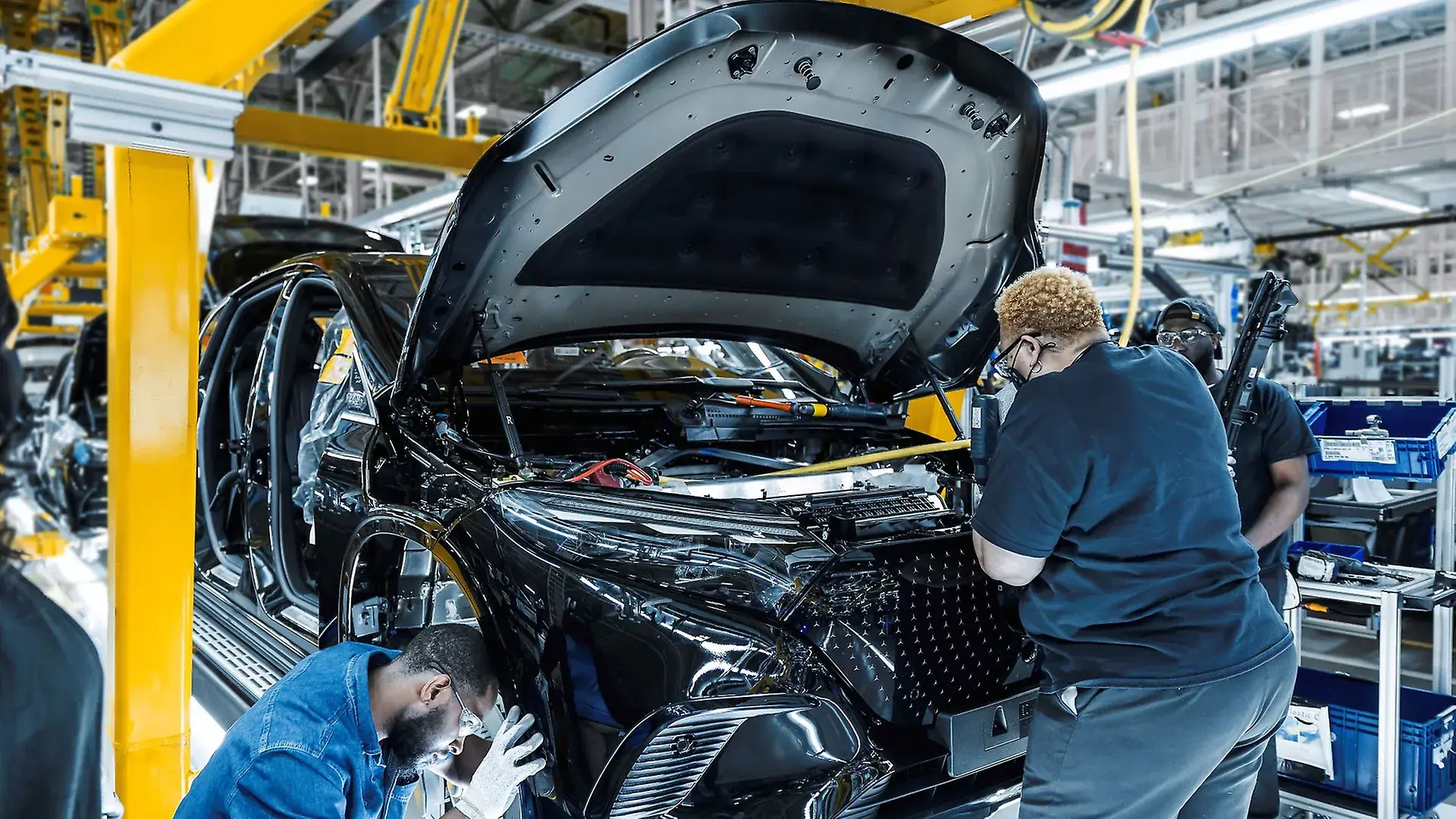
IndustriAll denounces the framework agreement concluded with Mercedes Benz: On 19 May, the IndustriAll Global Union federation announced that it was withdrawing from the Agreement on the Principles of Social Responsibility and Human Rights concluded with the German car maker Mercedes-Benz in 2021 (see press release). It cites the group’s campaign to prevent the UAW trade union setting up a branch at its Tuscaloosa car plant in Alabama, USA, as its justification for this withdrawal.
Just Eat Takeaway
On 3 December 2025, the Dutch delivery platform Just Eat Takeaway signed an agreement for the establishment of a European Works Council for employees of the Just Eat Takeaway.com group (see press release). The agreement draws inspiration from the new definitions of transnationality and confidentiality. It provides for four meetings per year (two in person, two via videoconferencing) and a right to conduct site visits.
Avient
On 3 December 2025, the US plastics technology group Avient (9,000 employees) concluded a European Works Council agreement, governed by Luxembourg law, for its workforce in the EU.
The Council is made up of 16 representatives from 12 countries plus a 4-member select committee, which has powers to deal with extraordinary circumstances (site closures, collective redundancies affecting more than 2% of the workforce in at least 2 countries). The agreement provides for an annual face-to-face meeting and three ordinary select committee meetings per year.
Data & Reports

 Platform workers
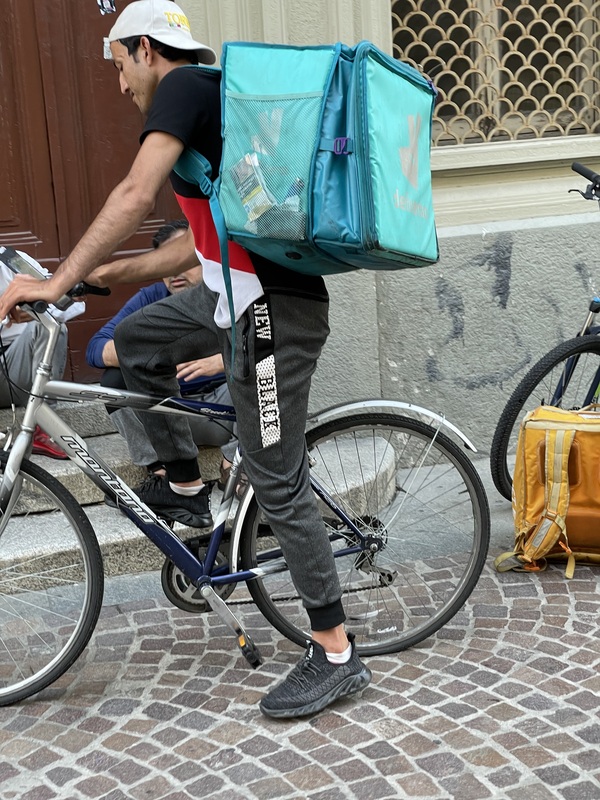
Three recent studies shed light on the working conditions of platform workers. In France, Santé-Course is the first large-scale study to document the links between platform delivery workers’ health and their living and working conditions. Drawing on interviews conducted with more than 1,000 delivery workers, it reveals “an alarming medico-social situation, which is closely linked to these workers’ precarious socio-economic and administrative situations”. On average, these delivery workers earn 1,480 euros gross per month, i.e. 5.83 euros gross per hour. On average, 90% of them work more than 6 hours per day, and their working week normally lasts 63 hours.
Using evidence from around one hundred interviews conducted with delivery drivers and workers in the Paris and Brussels conurbations, an article documents platform working conditions and shows how algorithmic management and customer reviews affect workers’ health. It also describes the coping strategies adopted by these workers. Lastly, a Eurofound study involving 3,830 workers in 15 EU Member States focuses on workers who provide services entirely on line. It finds that algorithmic control practices are very widespread (more than 40% of people surveyed had their work managed in this way) and emphasises how these workers lack information on labour law, particularly when it comes to social security contributions.
Key Statistic
35,9
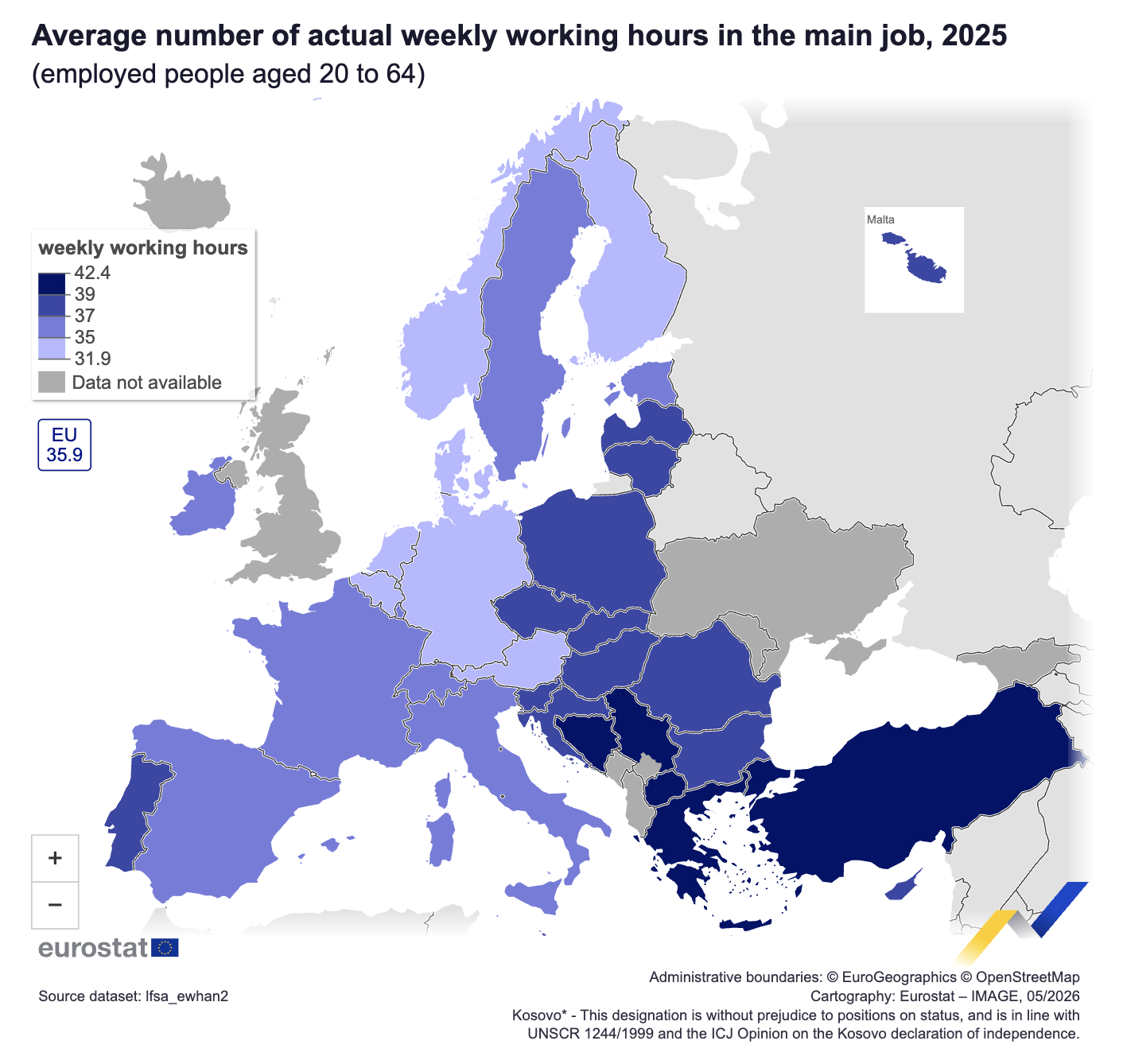
On average, the actual length of the working week of full-time and part-time EU workers aged between 20 and 64, in their main job, amounted to 35.9 hours in 2025, compared to 36.9 hours in 2015.
According to the latest Eurostat data, the countries with the longest working weeks are Greece (39.6 hours), Bulgaria and Poland (both 38.7 hours), then Lithuania (38.4 hours). Conversely, the Netherlands had the shortest working week (31.9 hours), followed by Denmark and Germany (both 33.9 hours), then Austria (34 hours).
Three questions for…

On the International Court of Justice’s advisory opinion on the right to strike:
«This is a landmark decision that cannot and will not be ignored in the future.»
An advisory opinion from the International Court of Justice has confirmed that the right to strike is a fundamental element of freedom of association, protected by ILO Convention No. 87 (see Lead story, opposite). Are you surprised by the Court’s opinion?
I’m not surprised. The question put to the Court was quite clear. And the answer is also very clear. The fact is that Convention No. 87 doesn’t mention the word ‘strike’ in its text. However, whilst the right to strike isn’t mentioned in the Convention, it isn’t excluded from it either. The Convention protects the ability of trade unions to carry out their ‘activities’. However, a rule of international law dictates that treaty texts must be interpreted according to the ‘ordinary meaning’ to be given to the terms of the treaty. The Court’s main task was to determine whether strikes constituted trade union activities within the ordinary meaning of the word ‘activities’. Referring, once again, to the ordinary meaning of the provisions of Convention No. 87, but also to additional sources of interpretation, the Court ruled that strikes are, in fact, a standard trade union activity and therefore fall within the scope of protection of Convention No. 87. There’s no reason to downplay the significance of the Court’s opinion. It was delivered by the body which, under the ILO Constitution, has a mandate to interpret the Conventions. Furthermore, the Court endorsed and recognised the work of the ILO’s supervisory bodies, which, from the 1950s onwards, gradually included the protection of strikes within the scope of the Convention. The Court attached great weight to the opinions of these bodies, and its own opinion is authoritative. Admittedly, the Court was unable to go into the details of the regulation of strikes, but that was not what the parties had asked of it. The Court was simply asked to rule on the meaning of the Convention. The attempt to give a minimalist interpretation of this opinion is therefore highly unconvincing. This is a landmark decision that cannot and will not be ignored in the future.
Can we now say that the right to strike is a fundamental right?
The right to strike is already a fundamental right under, for example, the Charter of Fundamental Rights of the EU or the European Social Charter, and at national level, enshrined in many constitutions across Europe and around the world. The right to strike is therefore already a fundamental right. However, it’s fair to say that the right to strike has been strengthened by this opinion, as it’s now clearly established that the right to strike is covered by a fundamental ILO Convention. The right to strike has been recognised by the Court as, once and for all, a fundamental component of freedom of association, which is a fundamental right under the ILO Constitution and ILO standards.
Does this opinion give workers’ representatives further ways to protect the right to strike?
This is a decision relating to a fundamental ILO Convention. Even though national courts are not the direct addressees of this decision, they’ll have to heed it whenever they rule on the right to strike. Thus, even if they are not directly bound by it, they’ll have to take it into account. Furthermore, there are also codes of conduct or international framework agreements concluded within multinational companies that refer to respect for freedom of association. From now on, whenever freedom of association is mentioned, the right to strike should also be deemed to be included. There can be no genuine freedom of association without also protecting the right to strike.
IR Dictionary

A European strike
The countries of the EU guarantee the right to strike, even if the latter's implementation is sometimes very highly regulated, either because its exercise is limited to a given period (on the model of the industrial peace clauses in Germany which prohibit the use of strikes unless collective agreements are being renegotiated) or because the trade unions have to adhere to an extremely strict procedure to be sure that a majority of the employees supports the strike call (as in Great Britain). On the other hand, at EU level, the right to strike is guaranteed by the Charter of Fundamental Rights of the European Union. However, in keeping with the EU Treaty, the EU is not competent to legislate on this matter. If collective, pan-European action has taken place in the past, as in 2002 in the air traffic control sector for instance, to oppose plans of the European Commission, each action at national level must respect that country's legislation relating to the right to strike. There is no "European right" to conduct a transnational strike, either at country or sector or at multinational level.
Upcoming Events
4 June
Online
AI and European Works Councils
European Works Council Club meeting on using AI to boost EWCs’ efficiency
10 to 12 June
Brussels
AI and social dialogue
Eurofound, Cedefop, the European Agency for Safety and Health at Work (EU-OSHA) and the European Training Foundation (ETF) are organising a Tripartite Exchange Seminar on digital and artificial intelligence and the role of social dialogue.
16 June
Bologna
The future of labour law
International conference on “The Present and the Future of EU Labour Law“, organised by Bologna University’s Jean Monnet Chair in European Social Policy.
18 and 19 June
Barcelona
Charter of Fundamental Rights
Training course organised by the Academy of European Law (ERA), entitled “The EU Charter in Legal Practice“.
23 and 24 June
Brussels
European Works Council
Via a combination of plenary sessions and themed workshops, the annual conference organised by the European Workers’ Participation Competence Centre (EWPCC) and the European Trade Union Institute (ETUI), entitled “Making the most of the transposition of the European Works Councils Directive” will offer an in-depth presentation of the new European Works Councils directive.
25 June
Brussels
Working in the heat
Joint conference with ETUI and three European trade union federations (EFFAT, EPSU, EFBWW) on “Protecting workers against occupational heat: impacts and solutions”.
29 June
Luxembourg
Employment and Social Affairs Council
1 July
Brussels
Public procurement contracts
The European Commission is due to adopt a legislative proposal on European public procurement contracts
22 July
Brussels
European Pillar of Social Rights:
The European Commission is due to adopt the new action plan on the European Pillar of Social Rights (see agenda).
16 to 18 September
Oslo
Inequality in the labour market
Conference organised jointly by IWPLMS and IREC: How can trends towards inequality in the labour market be counteracted and what role can actors and institutions play?
The team
This edition has been prepared by Inès Bollet, Victoria Fonseca, Ambre Grenier-Boley, Frédéric Turlan and Iris Turlan. You can read about everyone in the IR Share team on our website.
To find out more about the IR Share team, please consult our website, LinkedIn or IR Notes.
www.irshare.eu
Publisher: IR Share SARL - 5, Les Compères - 89520 Fontenoy - France
Share capital: 1500 euros
Business registration: RCS (Auxerre): 512 567 959.
Publication Director: Frédéric Turlan
Tel.:+33 (0)6 81 41 53 95
CPPAP no.: 0626 Z 93933.
> The IR Notes newsletter is recognised as an “online press service” under Article 1 of Law no. 86-897 of 1 August 1986. In addition to the quality of IR Notes being recognised, “online press service” status allows us to charge a lower rate of VAT (2.1%) on subscriptions to IR Notes.

EU Social developments
European Parliament wants to strengthen protection against work-related accidents: In a resolution passed by an overwhelming majority on 21 May, MEPs asked for 8 August to be designated the European Day in Remembrance of the Victims of Accidents at Work (see press release).
This was the date of the Bois du Cazier mining tragedy that occurred in 1956 at Marcinelle, in Belgium, when 262 miners of more than 10 nationalities lost their lives, something that gives this accident “its intrinsically European nature”. In addition to this symbolic gesture, the resolution calls on the Commission and Member States to:
Although the resolution calls for the advancement of EU action to address psychosocial risks, musculoskeletal disorders and climate-related risks, it does not mention the adoption of binding legislation. Its purpose is to provide the Commission with food for thought as it prepares the future EU Strategic Framework on Health and Safety at Work for the period 2028-2034.
The Commission plans to keep the pay transparency directive intact: In a written answer to MEP Kris Van Dijck (ECR) on 12 May, the EU Commissioner for Equality, Hadja Lahbib, dampened the hopes of employers’ organisations who were calling for a period of grace or even a postponement or simplification of Pay Transparency Directive 2023/970 of 10 May 2023. This directive, which is due to be transposed by 7 June, already provides for “proportionate pay transparency obligations and delayed reporting according to the size of companies”. It “also provides flexibility concerning methodologies to guide the assessment of work of equal value by employers”. The Commissioner adds that the “Commission does not envisage to include the Directive in any future omnibus regulatory simplification package or a ‘stop-the-clock’ measure, as it considers the Directive essential for the full realisation of the right to equal pay between men and women”. The Commission is holding firm, but it will have to issue formal warnings to any Member States that have failed to meet the transposition deadline or unilaterally announced postponements of its implementation, which in fact means virtually all of them.
Directive strengthening workers’ protection against lead and diisocyanates: On 28 May, the European Commission sent letters of formal notice to 10 EU countries for failing to notify their measures fully transposing Directive (EU) 2024/869, which strengthens workers’ protection against lead and diisocyanates, into national law. The transposition deadline was 9 April (see press release).
Legislation
Publication of EU Talent Pool regulation: Regulation no. 2026/1047 of 29 April 2026 establishing an EU Talent Pool was published in the OJEU on 12 May. The main purpose of this text is to facilitate the recruitment of jobseekers from third countries who reside outside the EU and have the skills and qualification levels needed to work in occupations experiencing labour shortages in the Union.
Publication of regulation revising the European Globalisation Adjustment Fund: After the Council gave it the green light (see IR Notes 274), Regulation no. 2026/1139 of 20 May 2026 amending regulation 2021/691 as regards support for workers affected by imminent job displacement in enterprises undergoing restructuring, was published in the OJEU on 20 May.
Case law
Clarity on the rule governing aggregation of periods of workers’ activity: On 21 May, the Court of Justice pronounced judgment on a Slovak case concerning the aggregation of periods of activity completed in different Member States for the calculation of retirement pensions (CJEU, 21 May, Case C-717/24 Sociálna poisťovňa). A miner worked in former Czechoslovakia before holding jobs in the Czech Republic and subsequently Slovakia, the country in which he applied for an early retirement pension. Czechoslovac legislation granted this benefit to miners who had worked for at least 25 years, including at least 15 years underground, through to December 1992, while Slovak legislation maintained it until 1999. In 2013 the miner, then aged 55, applied for this pension in Slovakia. His application was rejected on the ground that he did not satisfy the condition requiring him to have worked as an underground miner for 15 years at the time that classification was abolished in the Czech Republic. The Court was asked to decide whether the Slovak administration was required to take into account the period between 1 January 1993 and 31 August 1995, during which the person concerned had continued to work as an underground miner in the Czech Republic, in which case the fifteen-year threshold would be reached. The Court notes that for that period, Slovak legislation laid down rules on retirement pensions specific to the occupation of underground miner, and concludes that those periods “must be taken into consideration for the calculation of his retirement pension in Slovakia” (see press release).