Lead story
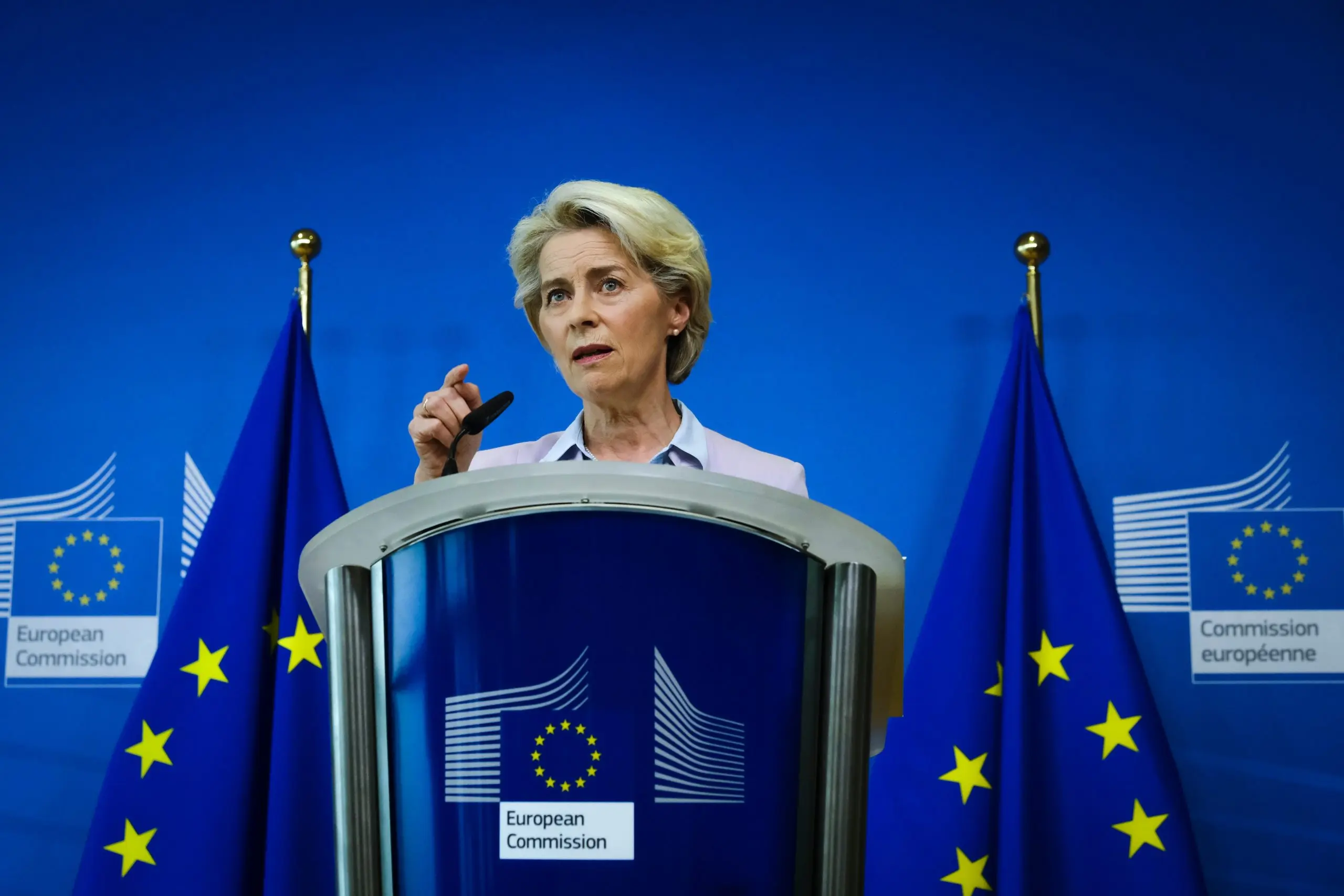
The Commission is ready to bring out a new law that may undermine social rights
In Brussels, the need to boost competitiveness continues to fire the imagination of the European Commission, which is prepared to do everything possible to satisfy the desires for deregulation expressed by Member States and employers’ organisations.
In March, the Commission presented a proposal for a regulation, which is currently being analysed at the Parliament and the Council, creating a kind of fictitious 28th Member State (the “28th regime”), in which the rules of company law are simplified to an extreme degree. This status would enable someone to set up a company within 48 hours, for an outlay of less than 100 euros and with no minimum share capital requirements, by submitting information once only, via an EU-level interface. The Commission claims that once Europe is armed with these “EU Inc.” companies, it would be able to hold on to its start-ups. This proposal, which would lead to an “archipelisation” of EU law, contains the seeds of a number of risks for social rights and social security systems , which is why the trade unions launched a further appeal to demonstrate on 20 October this year, outside the European Parliament building in Strasbourg (see ETUC press release).
The Commission returned from the summer break with a brilliant new idea: the Anti-Gold-Plating Pact, which Ursula von der Leyen pulled out of the hat on 16 September, during her State of the Union Address. Gold-plating is defined in a Commission communication of 28 April 2026 as a Member State introducing, at the time a law is transposed into its domestic law, “a wider scope, stricter rules or obligations” than the EU legal act, or creating more burdensome procedures than necessary. Ursula von der Leyen, who is proud of the 12 omnibus proposals that “are reducing the administrative burden by around €17 billion a year”, believes that the EU is doing its best “to cut red tape”, but “now [...] it is time for the Member States to step up” by adopting a pact against “over-regulation”, in other words against “over-transposition” of directives.
In a letter dated 12 October and sent to the 27 Heads of State and Government, the President of the Commission sets out her thinking more explicitly and proposes two undertakings. 1/ For new transpositions, each Member State would declare and justify any national additions and indicate their impact on companies and the Single Market (“comply or explain”, risk assessment, etc.). For its part, the Commission will give precedence to regulations rather than directives and cut back on options left open to Member States. 2/ For existing national rules, among other things, a “review and remove” mechanism would be integrated into the European Semester. The Pact is due to be signed by the year end.
Amid this free-for-all to see who can come up with the weirdest idea, the European Trade Union Confederation is calling for reason to prevail and for all European social legislation to be excluded from this Pact. Such legislation is based on directives that set minimum requirements and leave Member States scope to enhance the protections granted, as laid down in the Treaty on the Functioning of the European Union (see press release), which is in direct contrast to the spirit of this Pact.

 Legislation
Carcinogens, mutagens and reprotoxic substances: On 6 October, the European Parliament adopted the sixth revision of the Carcinogens, Mutagens and Reprotoxic Substances Directive (CMRD). This sixth revision includes new exposure limit values for certain dangerous chemicals. The text was definitively approved by the Council on 19 October, and is due to be published shortly in the OJEU. Once the directive enters into force, Member States will have two years to transpose its provisions, with longer transition periods for certain occupational exposure limit values (see Parliament’s press release and factsheet).
Social update
Health and safety in civil aviation: In response to a recent study, the requirements imposed by the Netherlands Labour Inspectorate following an inspection of Schiphol airport, and a French court ruling recognising the occupational origin of the breast cancer suffered by a cabin crew member, the European trade union federation ETF has published a press release calling on national governments to recognise the dangers associated with kerosene engine exhaust gases and to ensure that employers apply the highest standards of prevention. The ETF says: “This must include eliminating or reducing emissions at source, reorganising work to keep workers away from pollution and providing appropriate health surveillance”, and it invites employers and public authorities to recognise “the combined effect of the multiple hazards experienced by cabin crew and ground staff throughout their working lives”.
Sectoral social dialogue
Action plan on digitalisation in the cleaning sector: On 5 October, the European social partners in the cleaning sector, EFCI and UNI Europa, adopted a joint action plan on digitalisation which, among other things, provides for the creation of a European Observatory on Digitalisation and Working Conditions. Its mission will be to “monitor technological developments, assess their impact on employment, working conditions, health and safety, and identify good practices from national and company-level initiatives”. It will publish reports once every two years and make recommendations to support evidence-based social dialogue. The signatories promise to develop a Code of Conduct on Responsible AI and Data Use. They also recommend prior consultation with employee representatives when considering the introduction of new technologies or significant changes to work systems, and emphasise that “early engagement can help build trust, facilitate successful change management and support positive outcomes for both employers and workers”. The seven actions comprising the plan include employee training prior to implementation of new technologies, accounting for the cost of digital technologies in tenders and contracts, and promoting daytime cleaning. Mark Bergfeld, UNI Europa’s Director of Property Services, explains: “This statement has the potential to turn the cleaning industry into one which addresses existing inequalities – rather than exacerbate these.”
A call to remedy unfair practices in the agri-food industry: The European social partners in the agri-food industry, EFFAT and FoodDrinkEurope, have adopted a joint position calling for an ambitious revision of Directive 2019/633 of 17 April 2019 (the so-called UTP directive, which regulates Unfair Trading Practices among companies operating in the food and drink supply chain). The signatories say that it is necessary to “tackle persistent imbalances in the value chain”, because “unfair trading practices may further constrain manufacturers’ margins, with potential implications for employment conditions and workforce resilience” (see joint press release).
Across Europe

 Norway
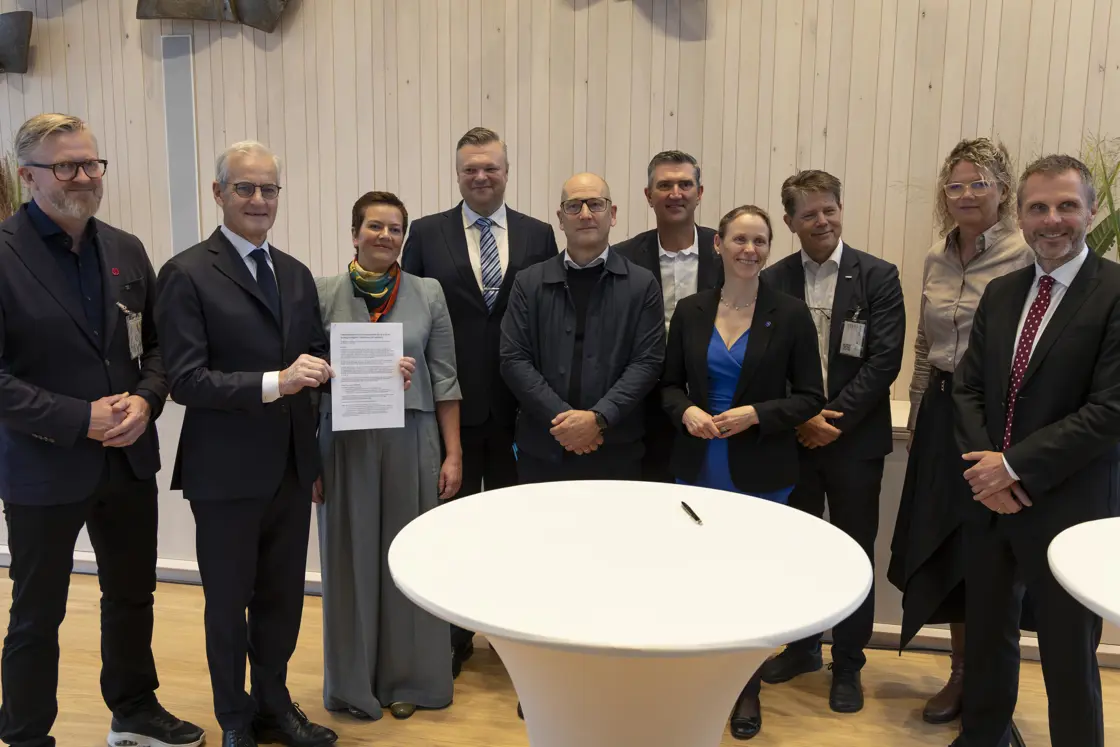
A tripartite agreement on artificial intelligence: On 2 October, the government and the main social partners concluded an agreement on the introduction and use of artificial intelligence (AI) in the world of work, which will remain in force until 31 December 2029. The text calls on social partners to “contribute to ensuring that the Working Environment Act and collectively agreed mechanisms for participation and co-determination are actively utilized during the introduction and use of AI”. It establishes a framework within which the signatories will discuss principles for the responsible introduction and use of AI. A coordination group, which includes the Labour Inspectorate and the Data Protection Authority, is responsible for monitoring the agreement (see press release).
 Ireland
Towards paid pregnancy loss leave: On 15 October, the Minister of Employment, Peter Burke, announced that he had secured priority drafting for the Pregnancy Loss Leave Bill this autumn. This bill aims to grant five days of leave per year for women who suffer a pregnancy loss prior to 23 weeks gestation. This leave will be paid by the employer, at 70% of the daily rate, capped at €110 a day, in line with statutory sick leave. At the present time, maternity leave is only available to those who experience a loss from the 23rd week onwards (see press release).
 Denmark
Towards bereavement leave for parents who lose a spouse with whom they have a child: On 8 October, Ane Halsboe-Jørgensen, the Minister of Employment and Equality, presented a bill granting parents the right to take up to 12 weeks of bereavement leave if they lose a spouse or cohabitee with whom they have a child aged under 18. This leave will be paid as maternity or parental leave, and capped at around 680 euros per week, i.e. 2,950 euros per month. The law is due to enter into force on 1 January 2027 (see press release).
 Spain
New transparency obligations covering working conditions: Royal Decree 723/2026, which came into force on 5 October, partially transposes Directive 2019/1152 on transparent and predictable working conditions. For contracts lasting longer than four weeks, companies must notify the employee in writing, before the employment relationship commences, of the main working conditions applicable, including pay, working hours, overtime, leave and the collective bargaining agreement applicable. They must also inform employees of the use of any algorithmic or automated systems that may influence their working conditions, and of their operating rules. Employees already in post are entitled to request any missing information, which the employer must provide within 30 working days. The government is presenting this law as a means of combatting precarious employment and strengthening legal security (see press release). The UGT union is emphasising workers’ entitlement to receive more detailed and accessible information (see press release). Nevertheless, the reform may remain limited in scope, unless the sanctions regime is adapted appropriately.
 Netherlands
Simplifying occupational risk assessments: The Chamber of Representatives has adopted five motions aimed at easing the burden linked to itemising and assessing health and safety-related risks. The employers’ organisations VNO-NCW and MKB-Nederland support this measure (see press release). In particular, the motions stipulate that sectors without their own social partners or branch-level agreement can have a simplified assessment approved. The government will have to submit a list of concrete simplification measures by January 2027 at the latest.
Denmark
A pay transparency bill: On 8 October, the government presented a bill to Parliament, seeking to transpose the Pay Transparency Directive, in the wake of an implementation agreement concluded by the social partners. The new rules will enter into force on 1 March 2027, to allow companies more time to adapt. The transposition deadline set by the directive was 7 June 2026 (see press release).
Company updates

 European Works Councils
Two years to prepare for the renegotiation of ENI’s EWC agreement: At the annual meeting of the EWC of Italian energy group ENI (31,500 employees, including 21,600 in Italy), held in Budapest from 30 September to 2 October, the group’s management, the IndustriAll Europe trade union federation and the Italian trade unions signed a two-year extension of the current agreement. This extension gives the parties enough time to assess the implications of the amended Directive “and prepare thoroughly for negotiations on a new EWC agreement” (see press release).
Bonus announced at TotalEnergies EWC meeting: Geoffrey Caillon, the group’s CFDT coordinator, says that the management of French energy group TotalEnergies confirmed at an EWC meeting on 30 September, that all group employees will receive a 1,000 euro bonus. In the case of France, this is an advance on the future value-sharing bonus, which will be discussed as part of the wage negotiation scheduled for December. In 2023, the bonus rose to 0.75% of the annual wage, with employees receiving a minimum of 2,000 and a maximum of 4,000 euros. Management has yet to specify how an equivalent measure will be applied to employees based outside France.
Trade unionism
BASF trade-union network calls for global social dialogue: Under the auspices of the IndustriAll Global Union federation, the trade unions of the BASF group (94,000 employees) in Asia, Europe and Latin America met in Kuantan (Malaysia), on 10 October, to discuss restructurings and job losses. The trade unionists reaffirmed their joint position, seeking firstly to establish a dialogue with management, based on “proper information and consultation at global level, so that workers everywhere can engage on plans that affect their jobs before those plans are carried out”, and secondly to conclude a global framework agreement “in the long run”. IndustriALL sector director Tom Grinter said: “IndustriALL is BASF’s global dialogue partner and we are ready to engage” (see press release).
Data and reports

 The Commission notes an improvement in job quality
On 13 October, the European Commission published its 2026 edition of the European Employment and Social Outlook, which is packed with statistics on labour market trends. In this edition, the Commission offers a long exposition on the topic of job quality – on which it is due to present an initiative by the year end. Based on three dimensions of job quality – adequate earnings, job security and working time – it notes that “these job quality dimensions are found to have on average improved over the last ten years”. Nevertheless, deteriorations are noted in the case of some categories, such as essential workers. The report also analyses the impact of outsourcing jobs – at a time when one of the trade unions’ demands is a reduction in subcontracting chains: while outsourcing unskilled operational activities (cleaning, security, catering, logistics) is associated with paying much lower wages, outsourcing highly skilled professional jobs (IT, consulting, accountancy) is associated with higher wage levels. “Therefore, outsourcing should not be treated as a singular phenomenon” (see press release).
Key Statistics
400,000
Jobs not created in the EU due to the energy crisis linked to the conflict in the Middle East, according to the European Commission.
In its 2026 Employment Outlook (see above), the Commission emphasises that in 2026, growth in employment in the EU is estimated at 0.3%, compared to the rate of 0.5% expected before the conflict; this corresponds to around 440,000 fewer jobs created. In a pessimistic scenario, growth in employment remains close to zero in 2026, meaning approximately 900,000 fewer jobs created.
Three questions for…

Femke Cnossen
Assistant Professor at the University of Groningen
On the importance of management’s role in holding on to employees
“We need to move from surveillance micro-management to empathetic management”
In an article published in Labour Economics¹, in conjunction with Davide Lunardon, you analysed ten waves of the Dutch Working Conditions Survey (NEA, 2014-2023), linked to administrative records covering over 360,000 employees, with a view to identifying the factors associated with employees leaving their job. Is the idea (widely held among employers) that high wages and salaries are enough in themselves to earn the loyalty of employees, confirmed by your study?
Not really! Many employers continue to believe that employees change jobs in order to earn more money: if you offer them a higher salary, they’ll be more inclined to join your company or to stay with you. Our findings do show that the best-paid people are less likely to leave. However, we demonstrate that a significant proportion [around one third] of the explained variation in staff turnover relates to employees’ satisfaction with the non-wage-related aspects of their job.
Even if you offer someone a relatively high salary, if you make their work completely uninteresting, for instance by excessive micro-management, or by giving them very boring tasks, employees will be more inclined to leave. The same applies if they don’t have enough learning opportunities. And in general terms, quality of leadership is a major predictive factor in staff turnover. We also found that some employees are so dissatisfied with working for someone else that they say to themselves: “that’s enough of that” and decide to become their own boss.
Does management need to make an effort to show that their employees’ work is meaningful?
We’re currently performing another study in which we’re asking employees what they regard as important in their working life, and also asking employers what they think their employees deem to be important. The initial results are already revealing a marked difference: for example, the employers think that doing meaningful work isn’t something that really matters to employees, whereas the latter are really keen to understand the meaning of their work. We also know that when an employer explains to their employees why their work is interesting or useful – even if this doesn’t make their tasks any more exciting –, it’s enough to strengthen their attachment to the company and encourage them to stay. It would be good for employers to realise that these are really effective and relatively inexpensive ways of boosting employees’ loyalty to their company.
What advice would you give to managers?
It needs to be understood that dissatisfaction arises from the interaction between the objective working environment – which is something that employers can shape themselves – and each employee’s own preferences. This means that there’s no ready-made solution for improving any given aspect of the working environment, because preferences vary from one person to the next. For example, some people like to be closely guided, while others don’t. The most important advice I can give to an employer is to get to know their employees’ preferences: discuss with them what they want and what matters to them, and then adapt the working environment accordingly. This doesn’t mean, for example, granting everyone the same amount of telework, but rather determining, through consultation between employer and employee, what suits them best, how they can let their talents flourish, and what they need to achieve the right work-life balance. It’s also necessary to help to design jobs – what’s known as “job crafting”. Much of all this can be decided through informal encounters in the corridors; where this doesn’t apply, e.g. due to remote working, one-to-one interviews need to be scheduled. This is a form of empathetic management, insofar as we know what employees need in order to be, so to speak, happy and fulfilled in their work, and that we can adapt working environments accordingly.
¹ “Job attribute dissatisfaction and turnover: New job or no job?”, Labour Economics, vol. 103, 2026, open access
IR Dictionary

Green transition:
According to the European Training Foundation (ETF), the green transition refers to a process aimed at establishing a new development model that ensures environmentally sustainable and fairer societies.
Driven in particular by the European Green Deal, this transition involves a conscious and deliberate effort to mitigate climate change, reduce pollution and preserve natural resources for future generations, by moving away from a reliance on fossil fuels and towards more environmentally-friendly practices. This is not simply a series of individual actions, but a coordinated, large-scale transformation affecting infrastructure, industries and societal behaviour.
Policies to combat climate change must also be closely linked to the creation of a fairer and more equal society. This is why European policymakers also emphasise the concept of a “just transition”, as the scope of this definition extends beyond immediate environmental benefits, encompassing long-term economic restructuring and geopolitical changes.
Upcoming Events
29 October
Brussels
The future of working time
Conference of the European Trade Union Institute on Trends in worktime reduction and socio-economic consequences, in the context of publication of a special edition of the journal Transfert, coordinated by Jean-Yves Boulin.
5 November
Brussels
Quality jobs for Europe
Conference of the European Trade Union Confederation and the Friedrich Ebert Foundation (FES) on Quality Jobs: from Ambition to Action.
5 November
On line
European Works Councils: facing the dual transition
Meeting of the European Works Council Club (in French) - Contact: frederic.t@irshare.eu
19 November
Paris
Industrial relations in Spain
As part of its European tour on industrial relations, the Dialogues association is organising a morning session on Spain with Valérie Parra Balayé, confederal secretary for international policy and European relations officer at the UGT (see Contact).
The team
This edition has been prepared by Inès Bollet, Victoria Fonseca, Ambre Grenier-Boley, Frédéric Turlan and Paula Villalobos. You can read about everyone in the IR Share team on our website.
To find out more about the IR Share team, please consult our website, LinkedIn or IR Notes.
www.irshare.eu
Publisher: IR Share SARL - 5, Les Compères - 89520 Fontenoy - France
Share capital: 1500 euros
Business registration: RCS (Auxerre): 512 567 959.
Publication Director: Frédéric Turlan
Tel.:+33 (0)6 81 41 53 95
Hosting: OVH - 2 rue Kellermann - 59100 Roubaix
CPPAP no.: 0626 Z 93933.
> The IR Notes newsletter is recognised as an “online press service” under Article 1 of Law no. 86-897 of 1 August 1986. In addition to the quality of IR Notes being recognised, “online press service” status allows us to charge a lower rate of VAT (2.1%) on subscriptions to IR Notes.

European social update