 |
| |
IR Notes 272 – 22 April 2026
www.irshare.eu
|
|
|
| |
| |
A question for…
Nora Krokovay, Senior Analyst at Kopint-Tárki

What changes can we expect in terms
of social dialogue and labour law in Hungary following the
elections that brought an end to Viktor Orbán’s 16-year
leadership?
The
atmosphere was very euphoric and joyful
after the elections. We should welcome the fact that democratic
mobilisation, with a turnout of over 79%, can bring down a populist
government. The new government will hold 137 of the 199 seats in
Parliament. It wields significant power, which is the only chance to
change what has been put in place by a strong government. For the
moment, it’s difficult to make predictions as the new team begins to
settle in. It will be able to make certain swift decisions, but
after that, it’s essentially a matter of bringing about profound
changes in society, particularly regarding how to tackle corruption.
Things will need to be changed that have been deeply entrenched in
society for sixteen years. A very complex system has been put in
place that permeates right down to the lowest levels. Changes can’t
simply be decreed: a genuine cultural shift will be
required.
As for social
dialogue and industrial relations, I can’t say much about them at
the moment. It must be acknowledged that social dialogue is in a
sorry state. Collective agreements are very weak. There are many
problems relating to social legislation, particularly due to
European directives that have not been properly transposed. The
situation has deteriorated over the years. For a long time, the
social partners haven’t been consulted at any level, and sometimes
haven’t even been informed. We’ve gone from simply being informed to
a situation where they were no longer even informed, or only on the
eve of a law being passed. We’re very keen to see if this will
change.
We’ve analysed the
content of the election manifesto of the Tisza party, the election
winner. It refers to the erosion of workers’ rights and the fact
that dialogue has become a mere formality and is virtually
non-existent. Apart from this rather brief observation, there’s
little mention of how to change this or of any real willingness to
bring about change. We already have the institutions in place, which
have certainly been stripped of their substance and discredited. How
can we reverse this trend? I mean, will people start to breathe new
life into these institutions? And now that there’s a government
willing to engage in dialogue with my social partners, will it
actually take the lead and set up these discussions? I think the
social partners are ready, but they’re also still adopting a
wait-and-see attitude on this. The only commitment we could find in
the Tisza party’s manifesto is that the industrial relations system
will be reviewed and improved. But honestly, I think it would be
very, very difficult to make it any worse!
|
|
|

|
|
|
|
|
| |
Who we are?
IR Notes is a
fortnightly newsletter produced by
IR Share and its network of experts, and is
available in several European languages (English, French, German,
Italian, Spanish, Polish). It offers Europe-wide monitoring of
employment law, labour relations and employment policy. It is available
by subscription for 273 euros per year .
The team: This
issue was producaed by Inès
Bollet,
Victoria Fonseca, Ambre Grenier-Boley, Anne Guisset, Frédéric Turlan
and
Iris Turlan. Find out more
about the IR Share team on our
website.
Subscribe to IR Notes
Via the IR
Share website or by calling us on: +33 (0)6 81 41 53 95
or
E-mail: frederic.t@irshare.eu
Legal notice.
Publisher: IR Share SARL – 5, Les Compères – 89520 Fontenoy, France –
Tel.: +33 (0)6 81 41 53 95 – share capital 1,500 euros – commercial
register (RCS Auxerre): 512 567 959. Managing editor: Frédéric Turlan.
Hosting: ALTEO by Damien Cornillet – Château – 89500
Villeneuve-sur-Yonne. CPPAP no.: 0626 Z 93933.
|
|
|
|
|
| |
Follow us on LinkedIn!

Why not connect to the IR Notes LinkedIn page, so that you can keep up with
developments in the issues we’re covering, between two editions?
You’re welcome to follow us! There are already 814 of you following
us!
|
|
|
|
|

|
|
|
Lead
story
Eurofound
notes improvements in job quality in Europe

Now that the European Commission has announced its intention to present a bill on job
quality by the year end, the results of the latest European Working Conditions
Survey (EWCS) will be scrutinised very closely! The survey provides a comprehensive
overview of job quality in Europe, examining the characteristics of the workforce,
workplaces, job quality and the quality of working life. The results are based on
more than 36,600 face-to-face interviews, each lasting approximately 45 minutes,
conducted in 35 countries. This survey provides a unique insight into the state of
work in Europe, and is a treasure trove of information waiting to be discovered, by
perusing the overview
report (see executive
summary) and using the online visualisation
tools. Much of the report is devoted to evaluation of the seven indicators
of job quality: earnings; working time quality; prospects (career, job security,
etc.); skills and discretion; work intensity; social environment (support from
colleagues, absence of adverse social behaviours); and physical environment. The
results are broken down in various ways, including by sector, qualification level,
gender, etc., and subsequently by country. The Nordic countries tend to lead the
rankings, along with Luxembourg, Switzerland, Estonia and Austria. Bulgaria and
Romania occupy the last places, behind three countries that have applied for EU
membership (North Macedonia, Serbia, Bosnia-Herzegovina), Italy and Greece. The
report notes some improvements. For example, in terms of working time, the
percentage of workers who sometimes work more than 10 hours a day fell from 37% in
2005 to 28% in 2024, while the proportion of those working more than 48 hours a week
fell from 19% to 11% over the same period. Eurofound nevertheless notes that
“despite a general improvement in job quality, the benefits are not evenly
distributed. Significant gaps remain, in terms of sex, age, place of origin, state
of health, occupation and sector.”
In addition to this mine of information, a
chapter is devoted to the issue of employee representation in the workplace. The
survey shows a strengthening in the presence of forms of workforce representation.
When asked whether there was a trade union, works council or similar body
representing employees at their company, 53% of workers in the survey responded in
the affirmative (up 5 points on 2015). The prevalence of this representation
increases with the size of the company, and is significantly higher at companies
with more than 250 employees (85.4%) and those with between 50 and 250 employees
(68.9%). The distribution by country is very unequal: fewer than one third of
employees benefit from such representation in Latvia, Bulgaria and Estonia. At the
other end of the scale, two thirds or more of employees in France, Belgium and
Finland say they have a form of collective representation in their workplace. The
leading countries are Denmark (68%), Luxembourg (70%) and Sweden (80%). Outside the
EU, Norway enjoys the largest share of all (82%). Another question concerns the
existence of a regular meeting at which employees can express their views on what is
happening within their organisation. In total, 62% of employees indicated that they
had such an opportunity (9 points more than in 2015), though with significant
variations, ranging from 39% in Hungary to 80% in Sweden. However, 21% of EU
employees did not have either formal representation or meetings at their workplace,
and a further 11% stated that there were meetings at which they could express their
views, but there was no collective representation within their company or
organisation.
|
1. European
Union
Projects

Exposure to dangerous substances :
On 15 April, the European Parliament’s Committee on Employment
and Social Affairs adopted its position on the sixth revision of the Carcinogens,
Mutagens and Reprotoxic Substances Directive. The text adopted provides for the
introduction of new limit values for cobalt and its inorganic compounds, used for
battery production; polycyclic aromatic hydrocarbons, used in iron, steel and
aluminium production; and 1,4-dioxane, used for chemical and textile production.
They also supported the proposal to add welding fumes. MEPs also included a limit
value for long-term work-related exposure to isoprene (used in the chemical and
rubber industries), which can lead to irritation of the nose, throat and lungs.
Chronic and high levels of exposure can result in cancer of the liver and anaemia.
The revised law will require employers to provide personal protective equipment
(PPE), such as breathing apparatus, where residual exposure levels cannot be brought
down below limit values. When wearing such PPE, workers must be entitled to take
regular breaks in contamination-free areas. The text also includes additional forms
of protection for firefighters and emergency services personnel, who are likely to
come into contact with various dangerous materials during their interventions.
Negotiations with the Council and the Commission are due to commence on 7 May.
|

Psychosocial risks : On 15
April, MEP Estelle Ceulemans (S&D) presented her draft
legislative own-initiative report on psychosocial risks at work, in which
she calls on the Commission to put forward, by the end of 2026, a proposal for a
directive on work-related psychosocial risks (see video
of exchanges). Any amendments were due to be filed by 20 April. Estelle Ceulemans
says the Committee on Employment and Social Affairs will vote on the report at its
meeting on 2 September, before a plenary vote in October (see press
release). If the report is adopted, the Commission will have to respond to
the demands set out by Parliament, probably within the framework of the future law
on job quality announced for the year end. At the debate that followed the report’s
presentation, most political groupings offered their support, with the exception of
the Patriots for Europe representative, Spain’s Margarita De La Pisa Carrión, who
denounced a ‘woke’ approach that is poisoning the working environment. The EPP’s
shadow rapporteur appeared happy with the report, while Renew announced a number of
amendments designed to reduce the burdens on SME.
|
Sectoral
social dialogue

Private security : On 15 April,
EU sectoral social partners in the field of private security services adopted a joint
statement in response to the EU Preparedness Strategy, presented by the
European Commission on 26 March (see Commission press release).
Among other things, the signatories call on the Commission to ensure that the future
revision of the Public Procurement Directive “effectively supports quality jobs and
high service standards in security”. This strategy also needs to “strengthen the
attractiveness, skills and retention of the security workforce” and facilitate
“public-private” cooperation (see UNI Europa press
release).
|
2. Member
States
Germany

A ban on subcontracting in the meat industry :
In a decision
published on 15 April, the First Senate of the Federal Constitutional Court rejected
an appeal challenging the law protecting workers’ rights in the meat industry (GSA
Fleisch). Several companies in the sector particularly objected to the ban,
accompanied by fines, on using external personnel – in the form of a contract for
services. This ban, first introduced on 1 January 2021, was supplemented on 1 April
2024 by a ban on the use of temporary workers. The law also requires businesses or
inter-company organisations engaged in slaughtering animals, cutting up carcasses or
processing meat to be managed by a single owner. The Constitutional Court rules that
the ban on using labour on the basis of contracts for services in the field of
slaughtering animals, including the cutting up of carcasses, is compatible with the
freedom of trade of companies operating in the meat industry. It pursues at least
one constitutionally legitimate objective, namely that of protecting the work and
health of persons employed in this core sector of the meat industry, and is
appropriate, necessary, and in particular, proportionate to the task of achieving
this objective. The ban constitutes only a minor infringement of the principle of
freedom of trade (see press
release). The decision has been welcomed by the NGG trade union federation,
which argues that “the obligation to recruit workers directly has been a help to
people working under precarious conditions” in these sectors and “has significantly
improved the authorities’ ability to exercise supervision” (see press
release).
|
Belgium

Moderating wages : With its bill of 23 February, the government is attempting to
mitigate the impact of the “index” mechanism for automatically index-linking wages,
social welfare allowances and pensions (unique in Europe). This enables household
purchasing power to be adapted at regular intervals, as soon as the rate of
inflation exceeds a certain threshold, usually 2%. The government has planned to
introduce a partial and temporary cap (in 2026 and 2028) on index-linking for gross
monthly wages above 4,000 euros and gross monthly welfare allowances above 2,000
euros. Any amount above these thresholds would not be index-linked, so this means
imposing wage moderation by law, by endorsing a net loss in purchasing power for
employees earning more than 4,000 euros per month. In a joint opinion published by the National Labour Council (CNT)
and the Central Council for the Economy on 31 March, the social partners criticised
this measure, citing various arguments, including the complexity of its
implementation (see press release). On the employers’ side, the criticisms –
which emanate primarily from SME representatives (see press release) – are directed at the employers’ contribution
to wage moderation included in this mechanism, which, in addition to its complexity,
equates to a cost for employers. The trade-union side has been very critical of the
idea of interfering with the automatic index-linking mechanism, fearing this might
create a precedent that will open the way to other types of intervention in the
mechanism. The stakes have been raised by the fact that the government has entrusted
the social partners with the task of working, by the end of 2026, towards a reform
of the wage norm (a cap fixed on increases in wage costs) and automatic
index-linking of wages. The trade-union confederations condemned the move in a joint press release: “It’s not the government’s place to
take steps to revise mechanisms that come primarily under the heading of social
dialogue”. A vote could be held on the bill in April, so that it comes into effect
on 1 June. ”Over and above its effects on purchasing power and corporate accounting,
this sequence of events shows that the government is exerting clear pressure on
social dialogue”, says Anne Guisset, a researcher at UCLouvain.
|
France
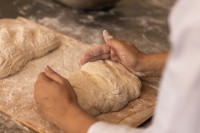
Labour Code : On 13 April, the
government cancelled plans to refer the bill expanding the
possibilities for working on 1 May, to a joint committee staffed by members of both
Chambers of Parliament, in the face of strong opposition from all of the country’s
trade-union confederations, as set out in a
letter to the Prime Minister. In so doing, the government made sure that the
bill cannot be adopted as it currently stands. Nevertheless, the Prime Minister
still wished to continue negotiations with the various union branches concerned.
Following a meeting with bakers’ and florists’ representatives, these establishments
should finally be allowed to open, provided they are run by self-employed
small-scale retailers, and the employees in question choose to work on 1 May, and
are paid double wages. A new text is expected to be drafted shortly.
|
Luxembourg

Cyberviolence : A
bill approved on 15 April by the government Council, seeks to combat
cyberviolence linked to developments in the world of digital communication media.
This bill means that online violence in its various forms, including cyberbullying,
will be among the offences covered by the Criminal Code, with penalties of up to 2
years’ imprisonment and fines of 3,000 euros (Article 442-3). This step also forms
part of the process of transposing Directive
(EU) 2024/1385 of 14 May 2024 on combating violence against women and
domestic violence. The text strengthens Article 442-2 of the Criminal Code, which
covers the offence of “stalking”. Article 442-2 previously covered the offence of
bullying under domestic law but, according to the bill, “in a limited way and not
properly covering all of its possible forms that have developed, especially in
connection with the latest technological advances”.
|
3.
Companies
Transnational negotiation
Framework agreement renewed : On
22 January, the UK supermarket chain Tesco and the international
trade union federation IUF signed a new
memorandum of understanding aimed at boosting their collaboration, with a
view to promoting and protecting workers’ rights throughout the group’s global food
supply chains. The MoU “renews the joint commitments set out in a first agreement
signed in 2022 and is based on the experiences learnt from its implementation”, says
the IUF. This version of the MoU is more structured and practical, and emphasises
the complaints procedure in place for raising cases of labour rights violations by
suppliers. It is intended to make an explicit contribution to enhancing responsible
business conduct (see press
release).
|
|
|











