
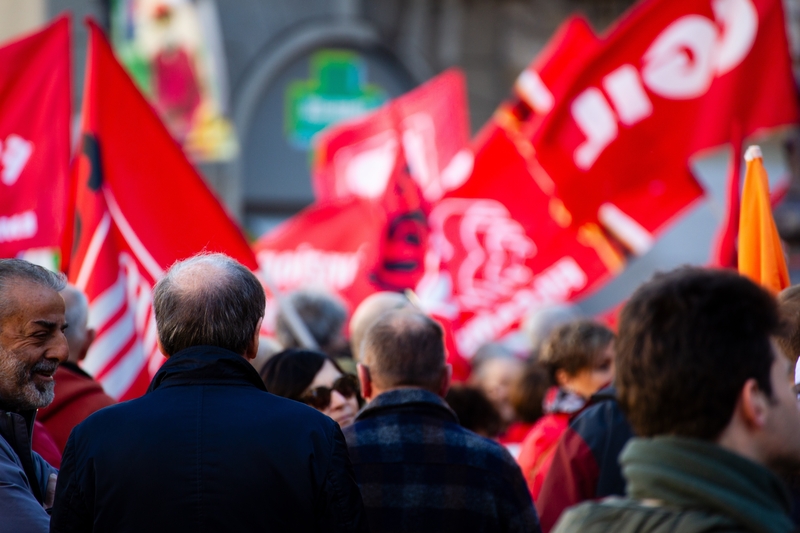
In an advisory opinion published on 21 May, the International Court of Justice confirmed that the right to strike is encompassed in freedom of association, and is therefore protected under ILO Convention No. 87.
In 1994, employers’ representatives at the International Labour Organization (ILO) disputed that the right to strike was guaranteed by ILO Convention No. 87 on freedom of association. After failing to reach agreement with employee representatives, the ILO Governing Body referred the case to the International Court of Justice (ICJ) in 2023 for interpretation of Convention No. 87.
This Convention, which was adopted after the Second World War, guarantees workers and employers the right to establish and join organisations of their own choosing. Article 3.1 of the Convention grants them the right to organise their activities and formulate their programmes, but the right to strike is not mentioned. The employers argued that because the Convention does not expressly mention the right to strike, it cannot include this right implicitly. However, defenders of the right of freedom of association have always believed that it is included. The ILO Committee on Freedom of Association has long based the right to strike on several articles of this Convention. It is also significant that, during the debates held in 1947-1948, neither governments nor employers suggested the idea of excluding the right to strike from the Convention.
At hearings held before the Court in October 2025, both camps defended their opposing positions. The International Trade Union Confederation (ITUC) affirms that striking is the main way of improving working conditions and defending human dignity, and it is therefore self-evident that it should be protected under Convention No. 87. The International Organisation of Employers (IOE), on the other hand, argues that while the right to strike is legitimate in principle, its formal inclusion in the Convention would risk disrupting national labour systems by imposing an excessively restrictive framework.
By ten votes to four, the ICJ has concluded that the right to strike is indeed protected under Convention No. 87 (see ICJ press release). This advisory opinion is not legally binding, but it should carry lasting weight in the area of labour law, both at national and international level, and make it harder for attempts to restrict the right to strike to succeed. At its June session, the ILO Governing Body is due to examine what follow-up action should now be taken.
The ITUC has expressed its satisfaction at this “important” opinion, emphasising that it is “a victory for the ILO and its governance structures” (see press release). The ITUC calls on all ILO constituents to ensure “that the ILO supervisory system fully resumes its work in guiding governments in their application of Convention 87, including with regard to the right to strike, while continuing to benefit from the ILO’s unique expertise and tripartite structure”. For its part, the IOE takes note of the opinion and emphasises that it “does not entail any determination on the precise content, scope or conditions for the exercise of that right” (see press release). Discussions are due to be held at the 114th session of the International Labour Conference, which is taking place in Geneva from 1 June to 12 June.
(Published in IR Notes 275 – 03 June 2026)