 |
| |
IR Notes 2 – 29 January 2014
www.irshare.eu
|
|
|
| |
| |
Who is IR Share?
IR Share is a provider that
shares information, documentation and expertise for HR managers and
employee representatives. The IR Share agency operates by way of online
publications, working groups, training devoted to relevant topics and a
network of experts.
The team
This
issue was produced by: Stepanka Lehman and Frédéric Turlan. Find out
more about the IR Share
team on our website.
Subscribe to IR
Notes
Via the IR
Share website or by calling us on:
+33 (0)6 81
41 53 95
|
|
|

|
| |
Interview
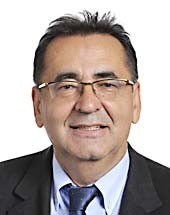
Alejandro Cercas, Spanish MEP and member of the Socialists and Democrats
Group (S&D) in the European Parliament
How is the work proceeding on your
report investigating the social consequences of the Troika’s
operations in the four countries placed under its financial
supervision (Cyprus, Ireland, Greece,
Portugal)?
On
the one hand, we have conducted a number of hearings and benefited
from the work of the European Parliament’s research service
(briefing on austerity,
labour market and international treaties, 11 December 2013;
briefing on the social
dimension of austerity measures, 10 December 2013). The
final report will be presented this coming March in a plenary
session of the European Parliament (see draft
report). We are quite shocked to see that Member States have
undertaken reforms which openly violate the European Social Charter,
the Charter of Fundamental Rights of the EU or even certain ILO
conventions.
What are your initial
findings?
The
people from the Troika did not understand that there were limits and
that, apart from the economic factors, the legal factors also had to
be considered. All the research has shown that there have been
terrible consequences for collective bargaining, with more than half
of the employees in these countries no longer covered by a
collective agreement. Social dialogue has taken a hit! It appears
that there has been a desire not to respect the social partners,
resulting in several decades of social dialogue being
destroyed.
Will your report make any
recommendations?
We believe that social dialogue has to be
restored, returned it to its rightful place, and that labour law
must be rebuilt. We understand that the crisis may make an austerity
policy necessary, but when this leads to a minimum wage or minimum
pension below the poverty line, then we are going beyond the limits
of what is acceptable.
To join the discussion, you can give
your opinion or share your experience on the Linkedin
group set up by Alejandro Cercas.
|
|
|
|
|
| |
Agenda
3-6 February
Strasbourg
Plenary
session of the European Parliament
5
February
Paris
Seminar by
Europe et Société and RDS on European social dialogue, focusing on an
introduction to some European employers’ organisations. Contact:
europeetsociete@wanadoo.fr
5-7
February
Melbourne
Annual
conference of the Association of Industrial Relations Academics of
Australia and New Zealand (AIRAANZ).
Details from: www.airaanzconference2014.com
6 February
Paris
“Ires
talks” (“Entretiens de l’Ires”) symposium on the subject of “Europe and
trade unions”, to mark the publication of the special annual edition
of La
Chronique internationale de l’Ires periodical entitled
“Trade unions in the face of new European governance”. Programme
and registration
online.
28
February
Brussels
Monthly
forum of the European Trade Union Institute (ETUI) on ”The
EU’s REFIT agenda: simplification or deregulation?”
|
|
|
|
|

IR Notes is a
fortnightly newsletter produced by IR
Share and its network of experts, and is available in
several European languages. It offers Europe-wide monitoring of employment law,
labour relations and employment policy. It is available by subscription for 15
euros per month (excluding tax), via the IR
Share website. IR Share
is a privately- owned, independent, apolitical company whose aim is to inform
and assist all players involved in social dialogue within and outside Europe. It
has been the correspondent organisation for France and Luxembourg of the Dublin
Foundation since 2009.
|
|
|
Lead
story
Negotiation
under way on directive to regulate the posting of workers

Representatives of the Council, the European Commission and the European Parliament
are, as part of a “trilogue” or tripartite negotiating group, involved in talks with
a view to adopting the directive aimed at regulating the posting of workers before
the European Parliament’s mandate expires. Two meetings have already taken place
based on the compromise reached by the Member States in the Council on 9 December
(press
release), and the climate appears constructive, with a desire to reach a
successful conclusion. Nevertheless, the negotiators have not addressed the main
sticking points: 1/ Article 9 of the text, which puts forward a list of measures
which the Member States may adopt to combat abuses relating to posted workers. The
compromise reached by the Member States allows them to add measures to this list,
provided that they are proportionate – which amounts to leaving this assessment to
the European Court of Justice – and notified to the Commission. Two restrictions
which the Parliament’s negotiators would like to remove. 2/ Article 12, which
establishes joint and several liability between the contractor and the
sub-contractor to guarantee, in particular, the payment of salaries and social
security contributions. The compromise limits this arrangement to direct
subcontractors and to the construction industry, whereas the European Parliament
wanted it extended to include all sectors and both direct and indirect
subcontractors. These two points were on the agenda of the meeting scheduled for
28 January.
|
1. European
Union
Legislation
- Ionising radiation:
Adopted by the Council on 5 December 2013, directive No. 2013/59 concerning
exposure to ionising radiation has been published in the official journal (OJ
17 January 2014, No. L 13, p. 1). It lays down basic safety standards
for protection against the dangers arising from exposure to ionising radiation
and repeals five preceding directives. In particular, it focuses on the safety
standards for protecting people who are subject to exposure at work against the
risks that may result from radiation of this kind. The Member States now have
four years to transpose the directive into their national legislation.
|
Draft
legislation
- Public procurement: the
Parliament has adopted at first reading two proposals for directives, concerning
public
procurement and the
award of concession contracts respectively. Besides the criterion of
“the most economically advantageous tender” these texts allow for environmental
and social considerations. Both documents must now be examined by the Council.
- Road transport: On 15
January the Parliament passed a resolution,
at second reading, on the Council position with a view to adopting the
Regulation on tachographs in road transport.
|
Other news
- European Parliament: The
Parliament passed a number of resolutions at its last plenary session on the
following matters:
– “Effective
labour inspections as a strategy to improve working conditions in
Europe“. The resolution particularly focuses on measures to combat bogus
self-employment and abusive practices connected with the posting of
workers.
– “Financial
participation of employees in companies’ proceeds” in favour of a
“gradual convergence of existing financial participation schemes” to “enable
employers in future to offer schemes in the same or a similar form in all Member
States”.
– “Social
protection for all, including self-employed workers“. The MEPs are
demanding an improvement in social protection for self-employed workers and
sanctions for employers who hire workers who are falsely classed as
self-employed.
In addition, amid the controversy about “social tourism”,
the Parliament passed a resolution on “respect
for the fundamental right of free movement in the EU” which opposes
European leaders who are in favour of restricting the free movement of citizens
and introducing a cap on the number of EU migrants being admitted.
- Industrial policy: The
European Commission on 22 January adopted a communication entitled For
a European industrial renaissance geared towards strengthening the
industrial competitiveness of the EU. The aim is to raise the share of
manufacturing in GDP from 15% at present to 20 % between now and 2020, a target
set by the Commission in 2012. The director general of BusinessEurope, Markus J.
Beyrer, said: “It is positive that the pack of measures published today
acknowledges the challenge of high energy prices in the EU and addresses the
risk of investment leakage better.” The trade union movement has criticised the
fact that this document ignores the social dimension and does not mention the
anticipation of restructuring (see CES– IndustriAll
press release). By contrast, the trade unions welcomed (see press release) the resolution
of the European Parliament in favour of reindustrialising the European Union.
- Working time: On 23
January, the European Commission requested that Spain (see Commission Memo)
respect Civil Guards’ rights to minimum rest periods and a 48-hour limit on
average weekly working time, as required by the Working Time Directive (Directive
2003/88).
- Troika: A debate took
place at the Committee on Employment and Social Affairs of the European
Parliament on the role of the Troika (EU-IMF-ECB) in the Member States
benefiting from a programme of financial support. The weakening of collective
agreements, high levels of unemployment and the violation of fundamental social
rights were highlighted (see press
release).
|
Sectoral
social dialogue
|
Case-law
- Charter of Fundamental Rights:
the Court of Justice gave an interesting judgement
on calculating the staff numbers to be taken into account when determining the
thresholds for setting up staff representative bodies. Notably, the Court judged
that Article 27 of the Charter of
Fundamental Rights of the European Union (workers’ rights to information
and consultation within the undertaking) could not, as such, be invoked in a
dispute in order to disapply a national provision that is not in conformity with
a directive. Thus, the lack of precision of Article 27 prevents it from having
the effect to supplant a national standard to the contrary.
|
2. Member
States
France
- Training, social dialogue and labour
inspectorate: At its meeting on 22 January, the Council
of Ministers passed a bill on training, employment and social democracy (links
to the press
pack, abstract
and draft
law). The text incorporates the provisions of the agreement
of 14 December 2013 on the reform of the vocational training system
concluded by the social partners. However, it also contains important measures
on representative employers’ and trade union organisations, the funding of
social dialogue and “paritarism” (management of joint bodies by the social
partners), and on strengthening the powers of the labour inspectorate.
- Single database: A decree
dated 27 December defines how the “single database” containing information of an
economic and social nature introduced by the Employment
Safeguarding Act (loi sur la sécurisation de l’emploi) of 14 June 2013
will work. The database comprises all the data due to be sent recurrently to the
works council, as well as the information necessary for the works council’s
annual consultation on the establishment’s strategic direction and its
consequences. It will be set up progressively, by 14 June 2014 at the latest for
establishments with 300 or more employees; and by 14 June 2015 at the latest for
businesses having fewer than 300 employees.
- Sunday working: Following
publication of the decree
authorising Sunday working in DIY stores, the social partners have concluded a
framework
agreement which makes participation voluntary, gives a right of refusal,
imposes double pay for those who work on Sundays and provides for the right to
12 Sundays off per year.
|
Germany
- Minimum wage in abattoirs:
The social partners in the abattoir sector on 13 January signed a collective
agreement establishing a minimum hourly rate of 7.75 euros for the around 80,000
workers employed in this industry, with effect from 1 July of this year. The
minimum wage will subsequently be increased in three stages and has been fixed
at the same level nationwide (see press releases of the NGG
trade union and the ANG
employers’ organisation).
- Union membership:
According to the latest figures from the Confederation of
German Trade Unions (DGB), the combined membership level of its affiliated trade
unions declined by 0.1% in 2012. Compared to previous years this meant that the
overall consolidation continued, said an article
published by Eurofound.
|
Slovenia
- Undeclared work: On 19
December 2013 the government passed a law to combat the grey economy and
undeclared work (see press
release of the Ministry of Labour).
|
3.
Companies
European
works councils
- Air France KLM: The
management of the Air
France-KLM airline group and its European works council (EWC) on
9 December 2013 signed a framework
agreement on the restructuring of its European cargo operations. This is
the fourth time that the management and EWC have concluded a framework agreement
on the joint rules for managing and anticipating restructuring measures. It
follows on from texts adopted in March 2010 for airport
ticket offices in Europe and in November 2011 concerning outstations
in Europe, as well as the framework agreement of 12 June 2013 on outstations
and commercial organisations in Europe.
- Coface: The management of
the Coface group and its European works
council on 11 June 2013 signed a new
European works council agreement. Under the agreement, all countries
having a small workforce (fewer than 50 employees) will be represented by two
members who will be elected from among the nominated candidates of the
establishments concerned. The select committee shall have the discretion to
decide, should exceptional circumstances arise, “whether it should be the forum
for dialogue as regards receiving information and/or being consulted and
expressing an opinion”, or whether it should meet in extended form together with
the members affected by the measures, or whether an extraordinary plenary
session should be convened.
- Decathlon:
The services federation of the CFDT (French Democratic Confederation of Labour)
has sent a letter to HR management at Decathlon requesting that it set up a
European works council within six months, according to a federation press
release.
- Hewlett-Packard (HP):
Following the failure of the negotiations to establish a new
European works council and the refusal of management to continue talks for a
further month, the EWC ceased to exist on 24 January, the date on which the
termination by the employee representatives of the agreement creating the EWC
took effect. In a letter, the CEO of HP indicated that the European management
was to work on setting up a special negotiating body (SNB) from 24 January.
|
Transnational agreements
- Pernod Ricard: The Pernod Ricard
group (19,000 employees) and the Effat trade union federation on 7 January
signed a European
agreement on corporate social responsibility which is to apply to all
the group’s subsidiaries within the EU (more than half the global workforce).
The agreement is one of the most comprehensive signed in recent years, in terms
both of the topics it covers and the detail of its commitments. The company’s
management states that it intends “to extend the agreement gradually to all its
subsidiaries throughout the world”.
|
Company-level negotiation
- Volkswagen: The car
manufacturer has submitted a proposal to its workers at the Bratislava site in
Slovakia to reduce their working hours and accept a decrease in salary of 4% ,
according to a report in the Hospodárske Noviny daily newspaper quoted by the Slovak
Spectator (21 January). The reason is to allow production to be
modernised.
|
4. Studies
and reports
Studies and
reports
- Labour relations in central and eastern
Europe: The Friedrich Ebert Foundation has published its
annual reviews
conducted as part of a regional project entitled “Labour relations and social
dialogue in central eastern Europe“. The reviews cover Hungary, Poland,
the Czech Republic, Slovakia and the three Baltic states.
- EU social audit: The
European Commission on 21 January presented its report
on employment and social developments in Europe 2013 which highlighted a
significant rise in poverty among those of working age. The Commission states
that “even if unemployment is gradually reduced, this may not be enough to
reverse the trend”.
- Strike statistics: The
European Trade Union Institute (Etui)
has produced an interactive
map (infographic) of statistics relating to strikes in the countries of
the European Union.
- Law applicable to social
security: The European Commission has published a practical
guide to the “habitual residence test” to help Member States apply
correctly the EU rules on the coordination of social security for EU citizens
who have moved to another Member State.
|
Phrase of
the fortnight
Sectoral
social dialogue
As in a large number of countries, social dialogue exists at a European level in a
significant number of business sectors and is formally incorporated in European
social dialogue committees. There are currently 43 such committees, covering sectors
as widely varied as the chemical and metal-working industries, agriculture,
professional football, ports and the graphics industry. In each of these sectors,
European trade union federations hold discussions with employers’ organisations to
arrive at various forms of instrument, ranging from the most flexible (joint
declarations, good practice guides, joint seminars, etc.) to the most stringent,
such as European collective agreements. The documents adopted are available on a
European Commission database. For further details, please refer to the European
Industrial Relations Dictionary.
|
|
|











