 |
| |
IR Notes 31 – 6 may 2015
www.irshare.eu
|
|
|
| |
| |
Who we are?
IR Share is a
provider that shares information, documentation and expertise for HR
managers and employee representatives. The IR Share agency operates by
way of online publications, working groups, training devoted to relevant
topics and a network of experts.
The team
This issue was produced by Frédéric Turlan and Fernando
Vasquez. Find out more about the IR Share
team on our website
Subscribe to IR
Notes Via the IR
Share website or by calling us on:
+33 (0)6 81 41 53 95 or
E-mail: frederic.t@irshare.eu
|
|
|

|
| |
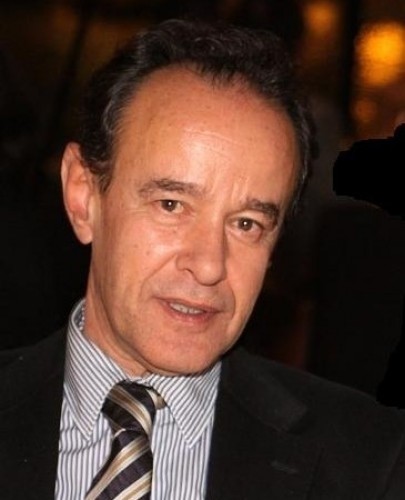
IR Perspectives by Fernando Vasquez
lawyer, former official of the European Commission and expert member of
the IR Share network
On several occasions I have advocated a
serious study of the real, economic and social impacts of fiscal
consolidation measures and reforms proposed or imposed by the EU on
its member states (see IR Notes 28). Now a study by the IMF informs us that the reforms
aimed at deregulating the labour market – a key element in the
Troika’s financial assistance programmes – do not have any positive
impact in terms of increasing the economy’s potential growth.
The
IMF maintains that the overall productivity
of the factors of production can be increased by more intense use of
high-skilled labour and ICT, by investing more in research and
development and by lowering product market regulation. By contrast,
the IMF does not find any statistically significant effects on
productivity of labour market deregulation.
This turn-around in doctrine is
important. Since
at least 2000, the year in which the Lisbon Strategy was launched,
whose aim was to make the economy of the EU the most competitive in
the world by pursuing a strategy of innovation, the official
position of the EU has consisted of arguing that very flexible
labour markets are essential to stimulate innovation. This
interpretation has therefore been dropped – to the indifference of
the EU’s institutions[1]. What will it take for subjects of this
kind, which are economically, socially and politically crucial for
Europe’s future, to begin to be taken seriously?
[1] The report has had a very significant impact:
see Ronald Jenssen in Social
Europe and Peter Bakvis in Equal
Times – News at Work, for example.
|
|
|
|
|
|
|
|
|

IR Notes is a fortnightly
newsletter produced by IR
Share and its network of experts, and is available in
several European languages. It offers Europe-wide monitoring of employment law,
labour relations and employment policy. It is available by subscription for 15
euros per month ; 150 euros per year (excluding tax), via the IR Share website. IR Share
is a privately- owned, independent, apolitical company whose aim is to inform
and assist all players involved in social dialogue within and outside Europe. It
has been the correspondent organisation for France and Luxembourg of the Dublin
Foundation since 2009 and for Bulgaria since 2014.
|
|
|
Lead
story
Collective
redundancies must be assessed establishment by establishment

The European Court of Justice has issued a judgement
concerning redundancies imposed in two retail chains, resulting in several thousands
of dismissals (see press
release. The directive
on collective redundancies provides for employee representatives to be
consulted on the redundancy plan when at least 20 employees are to be dismissed over
a period of 90 days, “whatever the number of workers normally employed in the
establishments in question”. Employees working on sites with fewer than 20 employees
sought a protective award on the grounds that the consultation procedure had not
been followed. The question referred to the Court was whether the thresholds for
consultation should be construed at company level, taking all of the affected
establishments into account, or only at the level of the individual establishment.
In the eyes of the Court, what must be taken into account is each “particular
establishment” of an undertaking, rather than the aggregate number of dismissals
across all of the establishments of a company. The employer therefore did not need
to consult the employees affected in establishments having fewer than 20 workers.
This decision thus deprives employees in undertakings operating as a network of
small entities of their right to consultation.
|
1. European
Union
Social
update
- Relaunch of social dialogue:
In a policy
brief, the IndustriAll trade union federation expresses its doubts about
the European Commission’s intention to relaunch social dialogue. IndustriAll
denounces the decreasing resources being devoted to sectoral social dialogue and
the failure to respect the European social partners’ autonomy by introducing a
cost/benefit analysis of their agreements.
|
Sectoral
social dialogue
- Electricity: The European
social partners in the electricity sector have sent a joint
letter to the European Commission to express their concern about the
absence of a social dimension in its plan to form an Energy
Union.
- Construction: The social
partners in the construction industry have presented their joint
proposals for combating social fraud to the European Commission. In
particular, the partners call for greater legal clarity as regards the position
of temporary agency workers in the framework of posting.
|
2. Member
states
Denmark
- Annual leave: The European
Commission has asked Denmark to respect the right of workers to take their
minimum paid annual leave in the year in which it was accrued. At present,
workers newly entering the labour market cannot take any annual leave in the
first year of employment, and some employees with fixed-term contracts cannot
take annual leave at all while employed (press
release).
|
Luxembourg
- Parental leave : on 27
April the government presented a bill to reform
parental leave which: 1. Raises the minimum allowance from 1,778 to
1,922.96 euros per month; the allowance is to become proportional to income up
to a ceiling of 3,200 euros per month. 2. Grants greater flexibility to parents
when taking parental leave (six months in the case of a full-time worker), which
is to be formalised in a “parental leave plan” worked out with the employer.
|
Spain
- Health and safety: the
labour minister, Fatima Baneza, has presented the Strategy
for health and safety at work 2015-2020 together with the general
secretaries of the CC.OO and UGT trade union confederations and the chairman of
the CEOE employers’ organisation.
|
3.
Companies
Co-determination

Deutsche Börse: A judgement handed down in first
instance by Frankfurt-am-Main regional court alters the way in which workforce
thresholds are appraised for the application of co-determination. German legislation
provides that companies with between 500 and 2,000 employees must reserve one-third
of the seats on the supervisory board for employee representatives; this goes up to
one-half when the workforce reaches 2,000. This calculation includes only employees
working on German soil. Now, in the case of Deutsche Börse, the court has found that
not only the 1,624 employees in Germany, but also the 1,747 working in other EU
countries should be taken into account. If confirmed, this judgement would have a
significant impact on the application of co-determination in Germany, exposing a
large number of companies to similar claims. As a possible side-effect, companies
might pursue a practice of locating their head office outside Germany, or opt for
conversion to a European Company (SE) (see below).
|
European
Company (SE)
- OHB: The German company
OHB, which is active in the space technology sector (more than 2,000 employees
in Europe), has been converted to a European Company (SE) after concluding an agreement
on the participation of employees in the SE with negotiators
representing employees from six countries (see company
press release). With 1,700 employees on German soil, OHB was close to
reaching the workforce threshold of 2,000, at which co-determination involving
the reservation of half of the seats on the supervisory board for the employees
becomes mandatory. The agreement that has been signed allows this rule to be
circumvented and provides for co-determination of one-third if the workforce
reaches the 4,000 mark in Germany or 5,000 at European level.
|
Restructuring
- Coca-Cola: The Spanish
Supreme Court on 15 April delivered its ruling concerning the reorganisation
decision taken by Coca-Cola in Spain, affecting four production locations (821
redundancies). The unreported decision rules that the dismissals are invalid on
the grounds that, in breach of the law, the company made use of subcontractors
during the strikes organised by workers at the sites concerned.
|
4. Studies
and reports
- Slight decrease in the proportion of
part-time workers wishing to work more hours: According
to a study
by Eurostat, 9.8 million part-time workers were underemployed in 2014, meaning
they wished to work more hours and were available to do so. They represent 22.2%
of part-time workers. This total signifies a slight downturn, since the 2013
percentage was 22.7% (compared to 18.5% in 2008).
- Reduction in collective disputes in
Germany: According to a review produced by the
Institute of Economic and Social Research (WSI), there was a reduced level of
conflicts in 2014. The study recorded 214 strikes linked to the renegotiation of
collective agreements (compared to 218 in 2013), 392,000 days of work lost (down
well over 25% compared to 2013) and 345,000 workers who had taken part in
industrial action (nearly two-thirds fewer than in 2013).
|
|
|











