 |
| |
IR Notes 177 – 12 January 2022
www.irshare.eu
|
|
|
| |
| |
Happy New Year!

The whole IR Share team sends you its best
wishes for 2022! It is likely to be a difficult year for all of us,
as were 2020 and 2021, but we nevertheless hope it will bring you
joy and happiness. IR Notes, which is now embarking on its eighth
year, will be pleased to enlighten you over the coming
months.
|
|
|

|
| |
A question for…
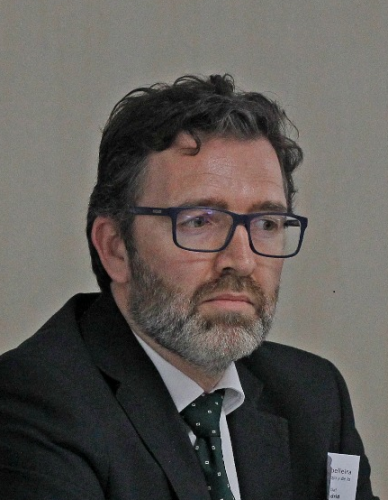
Francisco Javier Gómez Abelleira, Professor of Employment Law and Social
Security Law at Carlos III University (Madrid)
What is your analysis of the labour
market reforms adopted by the Spanish government in late
December, in the form of a decree-law, which is yet to be
approved by the country’s Parliament?
After months of tripartite negotiations
between the government and social partners, an agreement was
concluded in late December on labour market reforms affecting three
areas: fixed-term contracts, short-time working and collective
bargaining. For this agreement to be reached, all of the parties
involved had to sacrifice something significant. The initial
objective of the government and the trade unions was to repeal the
2012 labour reforms in full (these were conservative reforms, which
introduced greater flexibility into employment relationships,
greater decentralisation of collective bargaining and cut the cost
of making workers redundant). From the viewpoint of the employers’
organisations, it was important to maintain flexibility of labour
(and in particular, fixed-term contracts and decentralised
collective bargaining).
The agreement means that the main aspects of the 2012 labour reforms
will remain in place. Nevertheless, the government and the trade
unions achieved one important objective: branch-level collective
agreements will take precedence over company-level collective
agreements in terms of pay levels and pay structures. The employers,
for their part, managed to ensure that company-level agreements will
continue to prevail in other areas, such as working time schedules.
The government and the trade unions also achieved another objective:
collective labour agreements will remain in force after their expiry
date and for more than one year following that date, unless
otherwise agreed by both parties.
In other ways, the 2021 reforms don’t match
what the government and the trade unions were looking for: for
instance, in the area of redundancies (both individual and
collective), these reforms do not introduce any changes in terms of
the grounds, procedures, effects and costs involved in making
workers redundant. The reforms do not alter the substantial changes
made to working conditions: employers are still entitled to make
unilateral changes to working conditions, provided that there is
sufficient economic, technical or organisational justification for
doing so, and that these conditions are not set by a collective
agreement.
Although the
reforms are less ambitious than those initially planned by the
government, they may still make a significant impact on the labour
market. One of the worst aspects of the labour market is the way in
which fixed-term contracts are abused, by using them as a form of
flexible labour: companies are making excessive use of temporary
contracts instead of resorting to other forms of flexible labour,
such as shorter hours or temporary lay-offs. One of the main lessons
learned from the pandemic is that companies can maintain levels of
employment and hold onto their employees, even during difficult
trading periods: the legal mechanisms put in place during the
pandemic to prevent excessive numbers of workers being made
redundant, were based on cooperation between employers, trade unions
and the authorities, but are now established as normal ways of
coping with future crises (whether of a general, sectoral or
company-level nature).
>
For further details of these labour market
reforms, see article
in English written by our expert on Spain, Francisco Javier Gomez
Abelleira.
|
|
|
|
|
| |
Diary
17 to 20
January
Strasbourg
Plenary session of the European Parliament
27 and 28
January
On line
A
workshop organised by the European Trade Union Institute (ETUI) on
“Work-related Psychosocial Risks (PSR) in the European Union” which, on
the basis of an ETUI study, offers mapping of national law, collective
agreements and jurisprudence concerning PSR in the European Union, with
the aim of fostering discussion of the potential adoption of a European
directive on PSR (Programme
and registration).
7 and 8
February
On line
Training course organised by the European Trade Union Institute, for new
EWC (or SNB) members (other proposed dates: 10 and 11 February).
Contact: esantaniello@etui.org
and link
to register.
14 February
Bordeaux
Informal meeting of the Employment and Social Policy Council.
16 February
On line
Start of the “droit
européen du travail“ MOOC, on the subject of European
employment law (delivered in French), organised by CNAM. This free
on-line training course will run from 16 February to 4 April 2022
(registration is now open). IR Notes is a partner in this initiative,
led by Michel Miné, who is a professor at CNAM, and holds the
“Employment Law and Personal Rights” Chair.
17 and 18
February
Strasbourg
Conference organised by the French Presidency of the EU and the European
Economic and Social Committee on the theme of the social and solidarity
economy
14 March
Brussels
Employment and Social Policy Council
16 June
Luxembourg
Employment and Social Policy Council
27 and 28
June
Hamburg
14th
conference of the EWC Academy for European and SE Works
Councils, featuring Gabriele Bischoff, Udo Rehfeldt and Ilaria
Armaroli.
|
|
|
|
|
| |
Who we are?
IR Notes is a
fortnightly newsletter produced by IR
Share and its
network of experts, and is available in several European languages
(English, French, German, Italian, Spanish). It offers Europe-wide
monitoring of employment law, labour relations and employment policy. It
is available by subscription for 18 euros per month.
The team This
issue was producaed by
Francisco
Gomez Abelleira, Sylvain Nadalet,
Pascale Turlan
and
Frédéric
Turlan.
Find
out more about the IR Share
team on our website.
Subscribe to IR Notes
Via the
IR
Share website or by calling us on:
+33 (0)6 81 41 53 95
or
E-mail: frederic.t@irshare.eu
Legal notice.
Publisher: IR Share SARL – 5, Les Compères – 89520 Fontenoy,
France – Tel.: +33 (0)6 81 41 53 95 – share capital 1,500 euros –
commercial register (RCS Auxerre): 512 567 959. Managing editor:
Frédéric Turlan. Hosting: Ideal prod – 14 rue Auguste Morel – 89100
Sens – France – Tel.: + 33 (0)3 86 83 21 21. CPPAP no.: 0626 Z 93933
|
|
|
|
|
| |
European Industrial Relations Dictionary
In case reading IR Notes inspires you to explore this subject further, we
are providing links to the European
Industrial Relations Dictionary published by Eurofound. This is
updated at regular intervals by IR Share, which publishes IR Notes. The
term definitions are available in English and can easily be converted
into other languages using on-line translation tools.
|
|
|
|
|
| |
Please support us!

If you’re reading this newsletter,
it means you are either an IR Notes subscriber yourself or you
belong to one of our subscriber organisations. It may also have
been passed on to you by someone who is a
subscriber. In
some ways this is good news, as we aim to reach as many readers as
possible, but it also means we are missing out on revenue. As you
are aware, an independent quality publication comes at a cost, as
does its translation into the four languages offered by IR Notes.
For this reason, we need your cooperation: please do not distribute
IR Notes to other readers, or at least do so only occasionally, and
above all please ensure you subscribe to our publication. IR Notes
is wholly dependent on the revenue it earns from its subscribers. It
does not receive subsidies of any kind, and has no other sources of
funding. It is therefore vital for us to maximise our subscriber
numbers to ensure the continuation of IR Notes. You can help us by
telling others about IR Notes, distributing our brochure, subscribing to our publication if you are
not already doing so, and of course renewing your subscription or
arranging for your organisation to take out a subscription to IR
Notes. Thank you!
|
|
|
|
|

|
|
|
Lead
story
Social
issues on the agenda of the EU’s French Presidency
The French Presidency of the EU Council, which began on 1 January, has set out its
priorities in the field of employment and social affairs (see Council of the European
Union). Although the programme is largely dictated by initiatives
on which work has already begun, the Presidency can still prioritise certain issues,
with a view to taking them forward. In its work
programme, the Presidency emphasises its desire to “commence negotiations
with the European Parliament concerning the proposed directive on adequate minimum
wages in the EU”. Just a few months away from the next presidential election in
France, due to be held in April, the adoption of this directive would undoubtedly be
a significant political victory for the current French President, Emmanuel Macron,
whose policy has been criticised in some quarters as being too liberal. However, the
Presidency is not announcing either the adoption of the text nor a compromise with
Parliament, as negotiations with MEPs are proving difficult (see IR Notes 174 and IR Notes 175). The
second text is the proposal for a directive to improve the working conditions of
platform workers. This proposal has made much less progress than the first one, as
the Commission has only just presented it (see IR Notes 176),
whereas the minimum wage proposal has already been adopted by both the Council and
the Parliament. The Presidency announces that it “will also initiate discussions” on
this text on the Council. The Commission’s proposal is somewhat distant from the way
in which the French government is attempting to regulate working conditions on
online platforms in France, by placing the emphasis on social dialogue. The third
text is the proposed directive on pay transparency, for which the “Presidency will
move forward negotiations through trilogues” once Parliament has finalised its
position, the Council having already reached a political agreement under the
Slovenian Presidency (see IR
Notes 176 and IR
Notes 159). At
the same time, the Presidency is committed to “advancing discussions on the proposed
directive on improving gender balance on company boards”, which has been mired on
the Council for almost ten years now. The French Presidency is also involved in the
joint
programme, prepared in conjunction with the future Czech (2nd half of 2022)
and Swedish (1st half of 2023) presidencies. This “Trio Programme” defines the
priorities for the next 18 months. The aim is to strengthen the European social
model and to make labour markets more inclusive for older workers and persons with
disabilities. Other issues included in the programme are: improving the working
conditions of platform workers; health and safety at work; and tackling gender
inequalities. The trio will also “promote the establishment of due diligence
obligations regarding human rights and environmental impacts and support the setting
up of EU standards for corporate sustainability reporting in order to promote an EU
model of responsible business”.
|
1. European
Union
Project

Carcinogens and Mutagens : On 16
December 2021, the Presidency of the Council and the European Parliament reached a
provisional agreement on revision of the Directive
on Carcinogens and Mutagens (see Carcinogens directive
revision). This fourth revision of the directive was proposed by
the European Commission in September 2020 (see IR Notes 149). The
text has yet to be formally approved by the Council and Parliament, prior to
publication in the OJEU. The new text provides greater protection, firstly by
setting limit values for acrylonitrile and nickel compounds, and secondly by
revising the limits for benzene downwards. At the present time, approximately 33,000
workers are exposed to acrylonitrile, 79,000 to nickel compounds and one million to
benzene. MEPs also managed to secure the inclusion, in the directive’s scope of
application, of 12 reprotoxic substances that have adverse effects on reproduction
and may impair fertility or even cause infertility. The new directive will cover 39
substances: the 25 substances with an occupational exposure limit stipulated by the
previous version of the directive, plus the two new limits and the 12 reprotoxins.
The text also provides for the adoption, by the end of 2022, of an action plan
designed to add 25 new carcinogens to the scope of the directive. In addition, the
directive will provide better protection for employees working with dangerous
medicines. Better training will be required, showing employees how to handle these
medicines in complete safety. The Commission is due to publish guidelines on
training, supervision and monitoring by the end of 2022.
> See also: presentation
fact sheet issued by the European agency OSHA-EU, press releases issued by
the Council
and by Parliament).
|
Social
update

Strengthening democracy at work :
On 16 December 2021, by a large majority, the
European Parliament passed a resolution
on strengthening democracy at work, submitted by MEP Gabriele Bischoff
(S&D). This text is intended to strengthen employee participation in company
decision-making processes and calls for the revision of several directives,
including those regulating European Works Councils. Companies that make use of
European mobility instruments, and in particular those provided for by Directive no.
2019/2121 on cross-border mergers or by European Company (SE) status, should abide
by “minimum EU rules governing employee participation and representation on
supervisory boards, including on gender equality”. To this end, “the
number/proportion of seats” on supervisory boards “for workers’ representatives
should range from a few seats to parity, depending on the number of employees in the
company and its subsidiaries”. The resolution also notes the existence of “loopholes
in the EU Statute for a European Company (SE)” that enable companies to circumvent
national regulations, particularly as regards employee representation on company
boards, including supervisory boards. The Commission is urged to close these
loopholes. As far as revision of European Works Councils Directive no. 2009/38 is
concerned, MEPs want to strengthen information and consultation rights, especially
in cases involving restructuring. They express regret that “the financial, material
and legal resources needed to enable EWCs to perform their duties in an appropriate
manner are not always provided by central management”. The Commission and the Member
States should also ensure that “the EWC’s opinion is taken into account in company
decisions and is delivered before consultation is completed at the respective level
and before the governing bodies come to a decision”. Lastly, MEPs call on the
Commission and the Member States to: put an end to “exemptions” that permit the
survival of old, so-called “voluntary” agreements concluded more than 20 years ago;
clarify the concept of the ‘transnational character of a matter’; and “to prevent
the abuse of confidentiality rules as a means to limit access to information and
effective participation”.
|
- Coordination of social security systems :
On 22 December 2021, Member States’
representatives (via the COREPER committee) rejected the inter-institutional
agreement reached the previous week on regulations relating to coordination of
social security systems (see Free movement and social
security). The revision of these systems has been under
discussion for five years now. Nine Member States voted against the text and
five abstained, including Germany and Poland, thus preventing the passing of any
qualified majority vote.
|
2. Member
States
Italy

A framework for hybrid working :
The Minister of Employment has signed a memorandum
of understanding on hybrid working with 26 different trade unions and
employers’ organisations, which offers a non-binding framework of reference for use
in collective labour agreements. Via this non-binding initiative, the government is
responding to the rapid changes that have occurred in this area since the
introduction of Law no. 81/2017 on hybrid working. Drawing on a study based on 200
collective agreements, the government plans to provide rules that will be adapted
outside pandemic periods. The principles on which this initiative is based are as
follows: 1/ hybrid working must not be confused with teleworking, as it may specify
alternating arrangements of working from home (or another location) and working on
the employer’s premises: any individual agreement reached between the employer and
employee on “agile working” must stipulate such alternating arrangements, plus any
locations that are excluded. 2/ Hybrid working is voluntary in nature, i.e. if an
employee chooses not to engage in it, they cannot be subject to any sanctions. 3/
The individual agreement may stipulate a fixed term for hybrid working, but this can
be terminated, both by the employer and the employee, giving the required period of
notice. 4/ Hybrid working involves allowing employees to work to a flexible
timetable without changing the number of hours they work (in principle, overtime
working is excluded), e.g. by creating “core time” and including the right to
disconnect. 5/ The agreement must specify which monitoring tools the employer will
use. 6/ The employer must provide the tools necessary for performing the work and
pay for them. If an employee uses their own hardware, the parties must reach
agreement on the IT security tools to be put in place, and agreement may also be
reached on how the employer will refund the costs incurred by the employee.
|

A law to reduce wage inequality levels :
Law no.
162/2021 on equality of opportunity, passed on 5 November 2021, which came
into force on 3 December, aims to eliminate the gender pay gap. The law expands the
scope of both direct and indirect discrimination, with a view to protecting job
applicants. Discrimination now covers not only cases where employees are subjected
to unfavourable treatment but also changes in organisational arrangements and
working hours prompted by pregnancy, maternity or paternity and the exercising of
employee rights relating thereto, plus discrimination based merely on gender, age or
needs related to care or family support, which put, or might put, a female worker in
at least one of the following positions: 1) being disadvantaged in relation to the
rest of the workforce; 2) limiting the employee’s options in terms of taking part in
the company’s life or the decisions made by the company; 3) limiting access to
mechanisms for achieving advancement and career progress. In addition to these
changes, the approach being taken is one of incentivisation, via the adoption of a
gender equality certification mechanism, which will allow businesses to demonstrate
what concrete actions they have taken to reduce the existing gaps in career
opportunities and wage disparities, to manage gender differences or to protect
maternity (the criteria in question will be covered by a decree). Businesses will
require this certification to benefit from lower social security contributions or to
secure financing. Companies with more than 50 employees (the previous figure was
100) will also have to issue a report at two-year intervals on the situation
regarding their male and female employees in each business line.
|
- Various social measures :
The 2022
finance law, passed by Parliament on 30 December, contains various
social measures (see presentation
published by the Ministry of Employment). The principal measures are: firstly,
expanding the scope of social support mechanisms (Cassa integrazione /
short-time working) to include companies previously unable to access this
support; and secondly, strengthening the social responsibility obligations
applicable to companies with at least 250 employees, which are planning to close
a site in Italy. These companies will be obliged to notify the trade unions and
various authorities of their plans, 90 days before proceeding with any
redundancies. Within 60 days, they will have to draw up a plan to limit the
impact on employment, and put forward measures allowing the employees concerned
to be redeployed and these industrial sites to be revitalised. If this procedure
is not followed, the redundancies in question will not be legally valid. The law
increases the budget of the Equal Pay Fund by 50 million euros and, for 2022, on
an experimental basis lasting one year, introduces a 50% exemption from the
social security contributions payable by mothers employed in the private sector,
when they return to work after maternity leave. For a one-year period, this
measure will provide them with a net wage higher than the pay they were
receiving at the time they went on maternity leave. The aim is to encourage
women to return to the labour market. Their pension entitlements will not be
affected by the reduction in the contributions paid.
|
3. Third
countries
- Executive pay : The issue
of so-called “fat cats”, i.e. senior managers who receive enormous remuneration
packages, is one that continually arises in the United Kingdom. A study by the
High Pay Centre suggests that the median FTSE 100 CEO’s earnings for 2022
surpassed the median annual wage for a full-time worker in the UK by around
09:00am on Friday 7 January (see press release). The
TUC General Secretary, Frances O’Grady, is calling for “big reforms to bring CEO
pay back down to earth”. The trade union leader comments: “Executive pay
committees have to change. They should be required to include workforce
representatives who can speak up for a fair balance of pay with ordinary
workers. And incentive schemes for company directors should be replaced by
profit share schemes that include the whole workforce. Too much wealth is being
hoarded at the top.” (see press
release)
|
4.
Companies
European
Works Councils

Adaptation following a spin-off :
The CNH Industrial
NV group, a holding company incorporated under Dutch law,
came into being in 2013, following the merger of Fiat Industrial and and its US
subsidiary CNH Global. It has now been split into two: the Iveco Group subsidiary, which
encompasses CNH International’s road vehicle businesses, including manufacturers
such as Iveco, Iveco Bus, Heuliez Bus and Astra, has been floated on the stock
market, while the CNH Industrial arm of the business retains production of
agriculture and construction vehicles. On 23 November 2021, the management of CNH
Industrial and the select committee of its EWC, which was created in 2015, based on
the subsidiary requirements of the Dutch transposition law, signed an agreement adapting the EWC’s
composition to match this new configuration. As both of the groups resulting from
this demerger come within the scope of application of EWC legislation, given the
size of their respective workforces in the EU, the Iveco Group too, is set to embark
on a procedure for setting up a EWC.
|
Revised agreement : On 6 June
2021, the management of the logistics group Geodis (41,837 employees,
including 15,500 in France) renewed its agreement, signed on 8 February 2010,
relating to the “European Consultation Council” (Comité Européen de
Concertation or CEC), which is the name that the group’s European Works
Council goes under. Under the new
agreement the council’s composition remains strongly focused on France, with
7 of the 8 seats on the EWC’s executive committee being reserved for French trade
unions. “In a spirit of openness and taking account of the group’s international
scope”, the agreement states that the council “will benefit at regular intervals
from information on the group outside its strictly European perimeter”. The Council
Secretary is also “invited to sit in on meetings of the Geodis Supervisory Board in
an advisory capacity”. “Prior consultation” within the meaning of the agreement
involves “arranging for accurate and rapid information to be provided” by management
“so that the CEC can make its opinion known within no more than 21 days, via its
executive committee”. The CEC is endowed with an annual operating budget of 12,500
euros, plus an additional annual budget of 10,000 euros for training its members.
Executive committee members will benefit from a personal quota of 120 hours per
annum to perform their duties, while the other members will share an annual quota of
650 hours.
> Other agreements
published on line on IR Share: Groupe
Up and Keolis.
|
Trade
unionism
- An international network :
The trade union network of the
pharmaceuticals group Sanofi,
which covers around 30
countries, held a virtual meeting on 16 December, to discuss the group’s future
orientations and the problems encountered in the area of social dialogue.
IndustriAll Global Union’s aim in setting up this network is to convince the
group to negotiate an international framework agreement, so that a social
dialogue can be initiated at global level.
|
5. Studies
and reports
Scrutiny of EWCs ahead of revision of the EWC
directive : The European Trade Union Institute has just
published a benchmark study of EWCs entitled (European
Works Councils: contested and still in the making), which will make
a vital contribution to the process of revising Directive 2009/38. This
well-documented publication offers a critical examination of the EWC, which even
now, despite revision of the EWC directive in 2009, remains primarily an information
body. Its consultation role continues to be disputed by the employers, say the
authors, who highlight management’s tendency to use the EWC as a way of serving the
company’s own interests. As a body, the EWC is still constantly evolving, but
whatever changes it undergoes appear to emanate solely from actors on the ground,
including the trade unions, whereas institutional actors seem to have adopted
positions firmly opposing any revisions.
|

Inequalities in Europe : Benchmarking
Working Europe is one of the European Trade Union Institute’s
flagship publications. The latest edition, which came out in December,
focuses on rising inequalities, a trend that “is both increasingly measurable and
alarming”. These inequalities have been exacerbated by the Covid-19 crisis, but they
have been structurally present for several decades now. For those who are convinced
that there can be no lasting peace without social justice, these findings offer food
for thought and inspiration for taking action.
|
- Psychosocial risks :
The European Agency for Safety and Health
at Work (EU-OSHA) has published a study analysing the links between psychosocial
factors and musculoskeletal disorders (MSD). One of the conclusions is that
measures introduced at workplace level to address and eliminate psychosocial
risks can be highly effective in preventing MSDs (press
release, Executive
summary, Full
report). The Agency has also published an article
on the occupational safety and health of LGBTI workers, with a focus on
psychosocial and organisational risks, including discrimination, harassment and
bullying in the workplace (see press
release).
|
- A just transition :
In an article,
Adrien Thomas, a researcher at LISER, returns to the issue of how international
trade unions arrive at their climate policy positions. He emphasises that the
concept of a just transition “allows the simultaneous pursuit of contradictory
policies, accommodating both the most climate-ambitious and the more reticent
unions”. The success of this formula “has been its capacity to bridge and
temporarily conceal disagreements over the adequate framing of climate
policies”. The author highlights a new North-South fault line in the
international trade union movement, notably with regard to any customs barriers
supported by trade unions in the North, penalising products with a high carbon
footprint. Such mechanisms open up new “dissensions within the international
union movement, bringing to the fore some of the disagreements previously hidden
by the joint advocacy for the just transition concept”.
|
- Social consultation in Belgium :
What impact will the Covid-19 crisis have on social
dialogue? A study
performed by Michel Ajzen and Laurent Taskin, of the Catholic University of
Leuven, offers an initial answer to this question. Looking at the role played by
social partners since the start of the pandemic, and scrutinising its various
phases, the authors consider what lasting changes this crisis might bring about
in the field of social dialogue. They note in particular “the preponderance of
negotiations at company level as the relevant level used for negotiating during
the crisis”, whereby “management and trade union officials often worked together
to ensure the safety of employees, and sometimes the company’s very survival”.
This practice confirms the trend towards decentralisation of collective
bargaining, “as well as opening the way to new partnership dynamics” that go
beyond some of the “dogmatic postures” observed in particular at sectoral level.
|
|
|











