 |
| |
IR Notes 183 – 6 April 2022
www.irshare.eu
|
|
|
| |
| |
A question for…
Dennis Radtke, MEP (EPP)
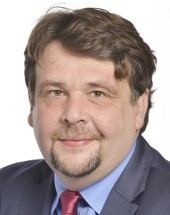
You are currently preparing a
report on revision of the European Works Councils directive. In
this connection, you organised a hearing last week (see Lead
story, opposite), with representatives of employers, trade
unions, experts and EWC members. What are the key messages that
you took away from these exchanges?
At this hearing, it was important for us to
listen to the voices of both social partners, of experts like Ralf
Scholten who – as a lawyer – is very familiar with EWCs, and above
all, of EWC members who, in light of their experience, are the real
experts! They know where the problems are, as they encounter them at
regular intervals. So, one of the key points for me – and this was
confirmed by, among other things, the testimony given by the Nokia
EWC representative – is the need to ensure that EWCs have access to
justice. We spend our time in Brussels talking about respect for the
rule of law, yet at the hearing, it became apparent to us that EWCs
are not managing to assert their rights before the courts. This is
not acceptable. EWCs must be able to access justice and to clearly
identify the court whose jurisdiction they come under. Something
else that emerged from the hearings was the weakness of current
sanctions. Even within large corporations, EWCs are not properly
informed and consulted in the way they should be, in a timely
manner. Effective sanctions need to be put in place, because for
these businesses, a fine amounting to a few thousand euros does not
act as a deterrent. These two points – access to justice and
stronger sanctions – will feature among the priorities of the
own-initiative legal report that I hope to be able to convince the
Committee on Employment and Social Affairs to adopt in June, and
subsequently convince Parliament to adopt at a plenary session, in
July. The Commission will then have to take a position and will
probably launch a consultation procedure with European social
partners, with a view to amending the directive.
|
|
|

|
|
|
|
|
| |
Who we are?
IR Notes is a
fortnightly newsletter produced by IR
Share and its
network of experts, and is available in several European languages
(English, French, German, Italian, Spanish). It offers Europe-wide
monitoring of employment law, labour relations and employment policy. It
is available by subscription for 18 euros per month .
The team This
issue was producaed by Vasileidos
Komiaris,
Pascale
Turlan et
Frédéric Turlan.
Find out more about
the IR Share
team on our website.
Subscribe to IR Notes
Via the
IR
Share website or by calling us on:
+33 (0)6 81 41 53 95
or
E-mail: frederic.t@irshare.eu
Legal notice.
Publisher: IR Share SARL – 5, Les Compères – 89520 Fontenoy,
France – Tel.: +33 (0)6 81 41 53 95 – share capital 1,500 euros –
commercial register (RCS Auxerre): 512 567 959. Managing editor:
Frédéric Turlan. Hosting: Ideal prod – 14 rue Auguste Morel – 89100
Sens – France – Tel.: + 33 (0)3 86 83 21 21. CPPAP no.: 0626 Z 93933
|
|
|
|
|
| |
European Industrial Relations Dictionary
In case reading IR Notes inspires you to explore this subject further, we
are providing links to
the European
Industrial Relations Dictionary published by Eurofound. This is
updated at regular intervals by IR Share, which publishes IR Notes. The
term definitions are available in English and can easily be converted
into other languages using on-line translation tools.
|
|
|
|
|

|
|
|
Lead
story
European
Works Councils are paper tigers

On 31 March, at the European Parliament, Dennis Radtke, who is a German MEP, a former
trade union official and member of the European People’s Party (EPP) (see A question
for…) organised a hearing in preparation for his report on revising the European
Works Council Directive. Several EWC representatives gave an account of the problems
encountered by these bodies, nearly 30 years after the first directive was adopted
in 1994. For example, Salvatore Di Gaetano, EWC secretary of Adient, a US-based parts
supplier to the car industry, created as a result of the demerger in 2016 of the
automobile businesses of Johnson Controls, reported on the powerlessness of some
EWCs. As a former member of the Johnson
Controls EWC, “on which nothing happened”, he campaigned for
the creation of a new EWC, based on the 2009 revised directive, at the time Adient
was created. After attempting to deter him, the company set up a SNB, without
providing any training whatsoever, before embarking on a one-way negotiation. “It
proposed that the EWC should be informed and consulted solely on projects involving
at least 5% of the total workforce in Europe. This would have left the Council
completely powerless in a situation where 1500 employees were facing collective
redundancy!” said an indignant Salvatore Di Gaetano. Management also refused to
grant EWC members the right to visit company sites and chose to negotiate under the
auspices of Irish law, even though the group has no employees in Ireland. Lastly,
Salvatore Di Gaetano emphasised that the first meeting was held in 2017, but nothing
whatsoever has happened since then. “We wrote to management several times, seeking
to exercise our information-consultation rights on a transnational subject, and each
time our request was refused”, on the pretext that the matter in question was one to
be dealt with at national level. “They have nothing to fear”, he explained, because
the maximum fine faced by companies in Ireland that breach European Works Council
laws would be 20,000 euros, and even this would apply only if legal action could be
pursued through to the end. “This is simply unacceptable!”, he concludes. Like
Bettina Haller, Siemens EWC
secretary, he is calling for sanctions that will act as a deterrent: not necessarily
financial sanctions, as the amount of money involved is not usually large enough to
deter companies from taking their proposed measures, but rather in the form of the
courts being granted powers to suspend a proposed reorganisation. Bettina Haller
also wants EWC members to be released for a longer period of time to carry out their
EWC duties, and to be granted the right to visit company sites, while Petr Nesmerak,
who is a member of the Bosch
EWC executive committee, emphasises the need to meet more than once a year: “EWC
members need to be able to spend more time together, so that they can have
constructive discussions”. Domenico Colapinto, spokesperson of the Adecco EWC, believes that “a
management based outside the EU should no longer be at liberty to choose whatever
jurisdiction they want, to govern their EWC”. In Dennis Radtke’s opinion, “where
possible, the law of the Member State with the largest number of that company’s
employees should be the one chosen to govern its EWC agreement”. In conclusion, the
German lawyer Ralf Scholten, who is a partner at the LNS practice, emphasised that
this revision must ensure that the text of the directive is properly applied. “We’re
not looking for a package of new rights”, adds Dennis Radtke. “We simply want to
ensure that companies abide by the law, and we want to bring unacceptable situations
to an end, by allowing the EWC to be a legal entity in its own right, to gain access
to the legal system and to secure sanctions that are genuinely effective”. So it
seems that the aim is not revolutionary changes for EWCs, but rather a shared desire
to ensure that the law as it currently stands is at least respected: after all, the
right to information and consultation became a fundamental EU right when the Charter
of Fundamental Rights of the European Union was adopted in 2000. We must “make sure
that the European Works Council, which at present is a ‘toothless tiger’, has a few
sharp teeth to defend itself with”, concludes Dennis Radtke.
|
1. European
Union
Projects
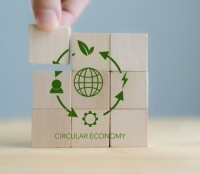
Circular economy : On 30 March,
the European Commission presented a package of European Green Deal proposals to
boost the circular economy, which will have significant impacts on the world of
work, in light of the necessary adaptations involved: reorganisations linked to
changes in production methods, training staff to acquire new skills, etc.) (see press
release). The Commission is proposing a framework, in the form of a Proposal
for Ecodesign for Sustainable Products Regulation “to make almost all
physical goods on the EU market more friendly to the environment, circular, and
energy-efficient throughout their whole lifecycle from the design phase through to
daily use, repurposing and end-of-life”. Based on this framework, it will publish
texts tailored to individual products. So far it has presented: 1/
A communication
relating to an EU strategy for sustainable and circular textiles to combat
the trend towards ‘fast fashion’. The aim is that by 2030, textile products placed
on the EU market will be long-lived and recyclable, largely made of recycled fibres,
free of hazardous substances and produced in a way that respects social rights and
is not harmful to the environment. The Commission also plans to adopt guidelines to
boost social enterprises engaged in the businesses of collecting and recycling, as
these companies create 20-35 jobs per 1,000 tonnes of textiles collected.
2/ A Proposal
for a Regulation
laying down harmonised conditions for the marketing of construction
products, which includes new requirements to ensure that the design and
manufacture of these products are based on techniques that will make them “more
durable, repairable, reusable and recyclable”.
|
Social
update
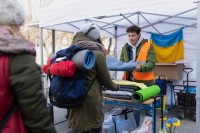
Welcoming the Ukrainians :
: On 23 March, the European Commission
published a communication
telling Member States how to apply the temporary protection directive (see IR Notes 181), and
in particular, its provisions dealing with the principle of equal treatment and the
right to access the labour market (this right is seen as vital for allowing
Ukrainian refugees to integrate properly. States can draw on various types of EU
funding (the CARE programme, the Asylum, Migration and Integration Fund, etc.) to
offer educational programmes, finance business-led training actions or support
childcare services, which are vital if the many women who have fled Ukraine with
their child(ren) are to participate in the labour market. Tools such as a resource
website are being set up to facilitate recognition of professional qualifications
obtained in Ukraine. These tools will also be useful for social partners, and
especially employers, who are being invited to make every effort to ensure that
temporary protection arrangements are properly applied.
- SURE programme working smoothly:
On 24 March, the European Commission published the
third bi-annual report on implementation of the SURE programme (see SURE initiative). This
instrument, funded with 100 billion euros, was used to help 30 million workers
and 2.5 million businesses in 2020 during the Covid-19 crisis, by financing
short-time working schemes and in other ways (see press
release). The impact of the crisis in Ukraine, which is mentioned in the
report, might be an argument for extending or perpetuating this scheme, which is
due to come to an end in December 2022.
- Quality traineeships: The
European Commission has launched a public consultation, which is open until 13
June and accessible in all languages, to gather opinions on the quality of
in-house traineeships undertaken by young people seeking to gain experience (see
Traineeship). The
Commission will analyse the results with a view to revising the Recommendation
of 10 March 2014 on a Quality Framework for Traineeships. The current
arrangements do not appear to be good enough to guarantee quality traineeships
(see press
release) and registration
form).
- Tripartite Social Summit:
On the eve of the European Council held on 24 March, EU leaders and
European social partners met for a tripartite social summit, much of which was
devoted to the impacts of the war in Ukraine (see press
release).
- Access to collective bargaining for
self-employed workers: The European Parliament’s
Committee on Employment and Social Affairs has questioned European Commissioner
and Executive Vice-President of the Commission, Margrethe Vestager, on the Draft
Guidelines on collective bargaining of self-employed, which are intended to
ensure that EU non-competition rules will no longer prevent self-employed
workers from entering into collective bargaining agreements (see IR Notes 176).
The main purpose of the hearing was to reassure MEPs, who were worried about the
prospect of such collective bargaining encouraging the emergence of a third
status, part-way between salaried status and self-employed work (see press
release).
|
Sectoral
social dialogue

Future of social dialogue : Just
as the Commission is about to put forward a revision of European social dialogue
rules in the second half of 2022, the nine European trade-union federations have
published a joint
position, which has the merit of being very clear: whenever the social
partners conclude an agreement, regardless of whether it applies at cross-industry
or sectoral level, the text of this agreement must be submitted to the Council
within three months, with a view to transposition by way of a directive. The
Commission plans to use this time to check that the text complies with EU law and
that the social partners who are signatories to the agreement in question comply
with representativeness rules. The Commission will not be able to carry out any
appropriateness checks, in contrast to the way in which it refused to refer the
European sectoral agreement on information and consultation rights for public sector
workers to the Council (see EPSU case). This position
contradicts the Commission’s power of initiative, which was recognised by the Court
of Justice in the EPSU case (see IR Notes 169).
|
2. Member
States
Germany
- Fighting racism: On 21
March, as part of their joint plan to
boost democratic skills within businesses, the Federal Ministry of
Labour and the trade union confederation DGB launched a website on ‘Our work, our diversity’
[‘Unsere Arbeit: Unsere Vielfalt’]. It features a map, which
lists 34 regional and sectoral projects aimed at combatting racist and far-right
remarks, and the spread of conspiracy theories in the
workplace.
- Working despite being ill:
In a survey of 6,000 employees, commissioned by DGB, almost one half
(48%) of those questioned said they had worked on at least one occasion during
the past year while feeling really ill. Women (53%) had done so more often than
men (43%). Nearly one third of these employees had even worked for a week or
more while ill, during the past 12 months. Working while ill is more prevalent
in businesses where the social climate is oppressive (68%) or the workload is
heavy (see press
release).
|
Greece
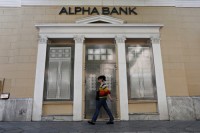
A new collective bargaining agreement for the
banking sector: : A new sectoral collective agreement has
been signed between the Greek Federation of bank staff trade unions and
representatives of the four largest banks, which employ more than 70% of the
workforce in this sector. The agreement provides for a global wage increase of 5.6%
over the period 2022-2024, delivered in three stages: 2% in 2022, 1% in 2023 and
2.5% in 2024. The banks promise to do everything they can to maintain jobs and avoid
redundancies. This agreement includes provisions covering telework, which among
other things, make the employer responsible for paying the employee’s teleworking
costs, and for continuing professional development, so that workers can cope with
the challenge of digitalisation. This agreement constitutes the basis for
company-level agreements by setting minimum levels, in accordance with the principle
of favour. This is the first sector-wide agreement to be concluded during a period
of strong inflationary pressures (inflation reached an annual rate of 8% in March,
according to Eurostat). It will serve as a benchmark for other sectors that will
soon be concluding their own collective bargaining agreements.
|
Ireland
- Paid sick leave : On 30
March, the government definitively adopted the Sick Leave Bill 2022,
establishing a statutory entitlement to sick leave. This law, which has yet to
be formally ratified by Parliament, provides for the introduction of a statutory
entitlement to sick leave, for the first time. The new regime will be phased in
as follows: three days’ sick leave per annum in 2022, once the bill has been
promulgated, rising to five days in 2024, seven days in 2025 and ten days in
2026. Sick pay will be paid by employers at a rate of 70% of an employee’s wage,
with a daily maximum threshold fixed at 110 euros (see press
release).
|
Italy
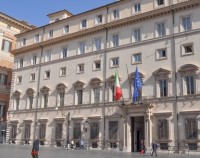
Two transpositions : On 31
March, the Council of Ministers approved two draft legislative decrees transposing
EU directives (see press
release issued by the Ministry of Labour and Social Policy) : 1/ Directive
2019/1158 of 20 June 2019 on work-life balance for parents and carers. The
text provides for ten days’ paternity leave, to be taken during a period extending
from two months before the child’s birth through to five months afterwards. As far
as parental leave is concerned, the corresponding allowance is paid at 30% of the
employee’s wage, based on three transferable months for each parent, i.e. a total
period of six months. In addition, the total length of a single parent’s leave
entitlement is raised from ten to eleven months, in response to the needs of
single-parent families. Employers who conclude (‘agile working’) telework agreements
are required to prioritise requests submitted by employees who have children aged
under 12 (however, no age limit applies if these children have disabilities). The
same priority is to be given to requests submitted by workers who are carers.
Entitlement to maternity allowance has been extended to self-employed women and also
covers the period of early withdrawal necessitated by an at-risk pregnancy. 2/ Directive
2019/1152 of 20 June 2019 on transparent and predictable working conditions in
the EU: the decree strengthens the obligations to provide information to
workers who are recruited under various types of atypical employment contracts
(including platform workers but excluding workers who are genuinely self-employed),
and grants substantial rights, such as a reasonable trial period, the option for a
worker to carry on a parallel activity outside their agreed working hours and a
minimum level of predictability for their working hours.
|
3. Third
countries
United
Kingdom
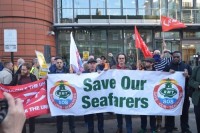
Changes to working conditions and minimum wage :
In response to the decision made by ferry company P&O to
sack almost 800 employees with immediate effect and replace them with agency workers
(see IR Notes 182),
the government has announced proposals to introduce a guide (a ‘Statutory Code of
Practice’), which will “detail how businesses must hold fair, transparent and
meaningful consultations on proposed changes to employment terms”. If companies fail
to abide by this code, employment tribunals will be able to increase the redundancy
money paid to employees by 25%. However, unions have said that this initiative does
not go far enough (see article in Union
news). The government has also announced plans to introduce new laws
requiring ferry operators sailing out of British ports to pay their workers the
National Minimum Wage (NMW), even if they are sailing under a flag of convenience.
To ensure seafarers are protected straightaway, the Transport Secretary has
instructed ports to refuse entry to ferries not paying workers the NMW from 30 March
– immediately replicating the effect the new laws will have when introduced in the
coming weeks (see press
release).
|
4.
Companies
Global Works
Councils
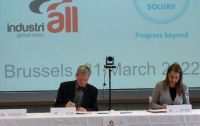
Global body renewed : The Solvay
Global Forum (SGF), established in 2015 on an informal basis within the Solvay group (21,000 employees),
was the subject of an agreement
signed on 7 June 2018 (IR Notes 103). This
text has now been revised, and a new
agreement was signed on 31 March 2022, by group CEO and Chairwoman Ilham
Kadri, and the forum’s coordinator, Albert Kruft, who is also the group’s EWC
secretary. The SGF, which is authorised to sign agreements on transnational
subjects, will now be made up of 10 members rather than 8, and they are: 4 EWC
representatives, plus one member for each of the following countries: Brazil, China,
South Korea, India (new) and two members for the USA (which gains one member). The
IndustriAll Global Union federation is not a signatory of the agreement but has been
invited to support the appointment process. One of its representatives will attend
the forum’s annual meeting to present a review of the implementation of the global
agreement (see below). The new agreement allows the ten representatives to meet once
a month via videoconferencing, in order to hold discussions. The main change
introduced is the adaptation clause that applies in the event of a substantial
change in the group’s scope and/or structure. In fact this provision is highly
topical, because on 15 March, Solvay announced that it planned to split the company
into two separate entities by the second half of 2023. One will produce essential
chemicals, and the other will be dedicated to specialty chemicals, (see press
release). “At the time of the change”, says the agreement, “the parties will
convene with the common goal to continue the Solvay Global Forum Agreement in the
new entities, achieving the ownership and support from all stakeholders. Subject to
the parties’ agreement, this SGF will then be considered valid for its remaining
duration in the new entities”. Lastly, it should also be emphasised that continuity
is being maintained in transnational social dialogue, despite the change of
management in March 2019.
|
Transnational agreements
Global agreement renewed : Once
again the Belgian chemicals group Solvay (21,000 employees) has renewed its Global
Corporate Social Responsibility and sustainable development Agreement with
the IndustriAll Global Union federation. This agreement was first signed in 2013
(see IR Notes 1), then
extended in 2017 (see agreement).
Among other things, the new
agreement incorporates the new ILO
Violence and Harassment Convention no. 190, which is one of the
international instruments that the group will have to comply with and strengthens
the obligations incumbent on the chain of subcontractors and suppliers. To ensure
compliance with basic standards, “Solvay and the Solvay Global Forum will create a
working group to analyze labor rights in Solvay suppliers” by “conducting a deep
analysis into Solvay suppliers in at least one country per year” to check compliance
with core labor rights and “seeking remediation in case of non-compliance”. Special
attention will be paid to the global supply chain for electric vehicle batteries,
“with the aim of ensuring ethical conditions along it”. The chapter on health and
safety in the workplace is the first one at the level of a global agreement to learn
the lessons of widespread recourse to telework during Covid-19. The group
“recognises the specific mental health challenges of telework, and the need to
protect employees’ right to disconnect, and right to a realistic workload that does
not lead to burnout”. To this end, “social dialogue and/or collective bargaining are
key to a successful telework practice.” The new agreement supplements the provisions
on the environment, with a commitment to “the principles of Just Transition (as defined by ILO)
to provide the framework for an equitable transition to a climate-resilient future”.
As a result, “any workers losing their jobs due to business decisions impacted by
climate change will be supported in their transition to new jobs”. In general terms,
the agreement adds that Solvay promises to ensure that employees are able to
identify and acquire skills that are vital to developing their employment and their
employability. It should also be noted that the conflict resolution and
interpretation clause stipulates that in the event of a persistent divergence
between the parties, they “shall agree to seek the expert advice of the ILO or other
mutually agreed third party for mediation and dispute settlement”. Lastly, as with
the Solvay Global Forum (see above), in the event of a demerger into two separate
entities, the agreement will apply to each one.
|
Company
agreement

Status of the person and ‘smart working’ :
On 29 March, the management of the Italian energy company Enel and all of the trade unions
(FILCTEM, FLAEI CISL and UILTEC), signed an innovative agreement on the Status
of the person (Statuto della Persona). According to the joint press
release, the agreement “aims to let human beings achieve their full potential by
making them protagonists in an ecosystem in which the company and the trade unions
work together to create a healthy, safe, stimulating and participatory working
environment.” (see Enel
press release and trade unions joint
press release). A few days earlier, on 21 March, the group signed an experimental
agreement on ‘smart working’, which “sketches out the new way of working”,
explains the UIL union: “alternating working at the office with agile working,
which, in conjunction with a return to the new post-pandemic normality, will ensure
that work does not come into conflict with personal and family time, while
reconciling environmental requirements (such as cutting emissions) with the need to
protect employees”. The text provides for a maximum of 60% of days worked remotely
and a minimum of 40% at the office. An employee can work remotely for up to 13 days
over a one-month period. One provision grants the right to disconnect between 19.00
and 07.30, and on Saturdays, Sundays and public holidays. During these periods, an
employee is under no obligation to do any work whatsoever, or to be in contact with
work, check their emails, reply to or read their messages, etc. The text provides
for two limited periods when they must be in contact with work, i.e. from 10.00 to
12.30 and from 14.30 to 16.30, during which they must be present and available to
take part in meetings.
|
Trade
unionism
Corporate Social Responsibility :
The French group Teleperformance (more than
400,000 employees in 83 countries), which is specialised in customer relationship
management, has once again come under fire from
the Uni Global Union federation, which published a report on 25 March,
showing that this group does not deserve its ‘Great place to work’ certification.
The federation denounces the company’s practice of ‘social washing’ and plans to
make its feelings known at the company’s AGM on 14 April, with the aim of convincing
the company’s management to negotiate an international framework agreement (see press
release).
- Protection of personal data:
On 14 March, with the support of the Uni Global Union federation and the
NGO ‘noyb.eu’, Amazon
warehouse employees in Germany, the UK, Italy, Poland and Slovakia filed access
requests for their personal data under Article 15 of the GDPR, to find out how
Amazon, which is accused of using invasive algorithms and even spying on its
employees, uses their data (see press release).
|
|
|











