 |
| |
IR Notes 186 – 18 May 2022
www.irshare.eu
|
|
|
| |
| |
A question for…
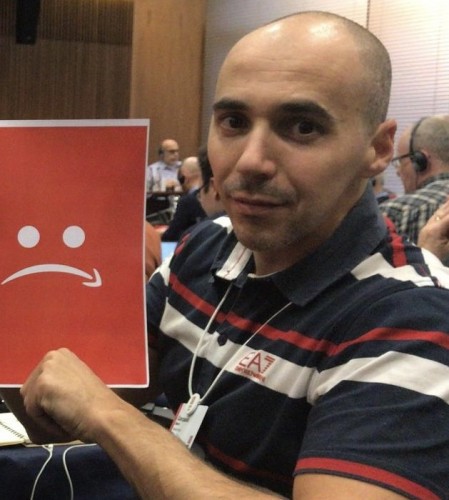
Gianpaolo Meloni, president of the special negotiating body established
for the purpose of setting up Amazon’s European Works Council, and
employee representative in Italy
You and your colleagues on the
special negotiating body (SNB) have just signed an agreement
creating a European Works Council (EWC) at Amazon, which is the
first GAFA to conclude such an agreement (see 4. Companies). Is
this a turning point for Amazon?
Before the final negotiation meeting, in
February, nobody was expecting an agreement to be reached. During
the early years of negotiation, it was very clear that management
didn’t want to reach an agreement and would merely comply with the
directive’s minimum requirements. However, in the end we found a
compromise that has brought the council into being. It’s not
perfect, but we have a text that goes further than the subsidiary
requirements, with for example the right to be consulted about
occupational health and safety issues. It was thanks to the
commitment of all members of the SNB, which I am honoured to chair,
that we managed to secure an agreement. We operated in a very
democratic way, which enabled each member to have their say and to
contribute, whether or not they belong to a union. I believe that as
far as Amazon is concerned, this agreement is important for their
image. The company holds an anti-union position in the USA. In
contrast to many recent agreements, the words “trade unions” and
“trade unionism” are absent from the agreement we signed, despite
our requests for European trade-union federations to be involved.
However, my impression is that management has understood that it
could not waste time, resources and energy on following a pathway
like this in Europe. Amazon is now trying to establish a social
dialogue throughout Europe. For example, we signed a collective
agreement in September of last year to improve the working
conditions of employees in Italy. I hope that the signing of the
European Works Council agreement confirms this new pathway and that
management genuinely wants to play the social dialogue card. That
remains to be confirmed. I don’t fully trust Amazon. We’ll be
focusing closely in the near future on how management behaves. We’ll
have an initial constitutive meeting in September this year, with a
training session, and the first plenary meeting will probably then
be held after Amazon’s financial statements have been published, at
the start of next year.
|
|
|

|
| |
Diary
18 May
On line
A
debate organised by the Praxis
Trabalho e Sindicalismo association on “the impact of collective
bargaining on wages in Portugal” with interventions by David Card,
winner of the Nobel Prize in Economics in 2021, Ana Rute Cardoso,
employment economist at Lisbon University’s Institute of Social Sciences
(English-Portuguese simultaneous interpreting provided) and
representatives of the UGT and CGPT trade unions. Link to registration.
19 May
Brussels
Presentation to the European Parliament’s Committee on Employment and
Social Affairs, of the draft report on the proposal for a platform
workers directive.
19 May
On line
A
conference organised by Confrontations Europe, on the topic of
« Quel
avenir pour la politique sociale européenne ? » [“What future
for European social policy?”], with Jérôme Brouillet (SGAE) and Yvan
Ricordeau (CFDT).
21 May
Strasbourg
Sciences Po Strasbourg is organising “La
Nuit de l’Europe de Sciences Po Strasbourg” [‘Sciences Po
Strasbourg’s Europe Night’], which is dedicated to sharing ideas and
knowledge. At this event, aimed at researchers, journalists, artists and
students, participants will pool their thinking about all facets of
Europe.
25 May
Strasbourg
Study day on European labour law, organised by Strasbourg
University’s Institute of Employment, taking the theme of “Droits
sociaux et harmonisation sociale en Europe : quelles avancées ?”
[‘Social rights and social harmonisation in Europe: what progress has
been made?’]. Presenters include Mélanie Schmidt and Nicolas Moizard,
(link to register).
2 to 3 June
Paris
Seminar organised by the French Presidency of the EU, entitled
“The
New Challenges of combatting Discrimination in Europe: What role can
equality bodies play?”
16 June
Luxembourg
Employment
and Social Policy Council
22 June
On line
Webinar organised by Global Deal entitled “Social
dialogue – A key pillar of due diligence”.
22 to 24 June
Brussels
Annual conference of the European Trade Union Confederation and the
European Trade Union Institute on the theme of: A blue print
for equality.
27 and 28
June
Hamburg
14th
conference of the EWC Academy for European and SE Works
Councils, featuring Gabriele Bischoff, Udo Rehfeldt and Ilaria
Armaroli.
29 June to 1
July
London
A
global first conference, entitled “Safe To be Me: A Global Equality
Conference”, organised by the British government, which has issued a call
for businesses to share best practices for supporting LGBT+
staff (see press
release).
8 to 10
September
Barcelona
13th ILERA European Congress, on the theme of “Industrial relations and the
Green transition”.
|
|
|
|
|
| |
Who we are?
IR Notes is a
fortnightly newsletter produced by IR
Share and its
network of experts, and is available in several European languages
(English, French, German, Italian, Spanish). It offers Europe-wide
monitoring of employment law, labour relations and employment policy. It
is available by subscription for 18 euros per month .
The team This
issue was producaed by Predrag
Bejakovic,
Pascale Turlan
and Frédéric
Turlan.
Find
out more about the IR Share
team on our website.
Subscribe to IR Notes
Via the
IR
Share website or by calling us on:
+33 (0)6 81 41 53 95
or
E-mail: frederic.t@irshare.eu
Legal notice.
Publisher: IR Share SARL – 5, Les Compères – 89520 Fontenoy,
France – Tel.: +33 (0)6 81 41 53 95 – share capital 1,500 euros –
commercial register (RCS Auxerre): 512 567 959. Managing editor:
Frédéric Turlan. Hosting: Ideal prod – 14 rue Auguste Morel – 89100
Sens – France – Tel.: + 33 (0)3 86 83 21 21. CPPAP no.: 0626 Z
93933.
|
|
|
|
|
| |
European Industrial Relations Dictionary
In case reading IR Notes inspires you to explore this subject further, we
are providing links to
the European
Industrial Relations Dictionary published by Eurofound. This is
updated at regular intervals by IR Share, which publishes IR Notes. The
term definitions are available in English and can easily be converted
into other languages using on-line translation tools.
|
|
|
|
|

|
|
|
Lead
story
Conference
on the Future of Europe calls for much more social legislation
The consultation exercise launched in March 2021, seeking the views of civil society
and citizens on the future of the European Union, has resulted in a final
report that does not disappoint, in terms of the social ambitions set out in
it. First of all, the conference wishes to extend qualified majority voting at EU
Council level. This would mean abandoning the unanimity rule that still exists (Art.
153 of the TFEU) in the following areas of social affairs: social security and
social protection of workers; protection of workers where their employment contract
is terminated; and representation and collective defence of the interests of workers
and employers, including co-determination and conditions of employment for
third-country nationals legally residing in Union territory. Another remarkable
change is that of granting the European Parliament, which is usually the most
progressive of the European institutions, the right to submit a proposal for a
directive. These radical transformations will require revision of the Treaties. Most
actors are hoping and praying for this development, which would involve convening a
Convention composed of representatives of the European institutions and of national
governments and parliaments. In addition to these institutional changes, the
Conference on the Future of Europe includes a growing number of calls for social
Europe to be strengthened. For example, proposal 14 calls for “Reinforcing the
competences of the EU in social policies and proposing legislation to promote social
policies and ensure equality of rights, including health, harmonised for the entire
EU (…)”. It also calls for the creation of “a common framework for minimum incomes
to ensure that nobody is left behind.” Proposal 13 on inclusive labour markets calls
for measures to “ensure that social rights are fully protected and safeguarded in
case of conflict with economic freedoms including via the introduction of a social
progress protocol in the Treaties”. The conference report supports existing
initiatives such as the introduction of “statutory minimum wages guarantee[ing] that
each worker can earn a decent and similar quality of living across all Member
States” and “effective and proportionate EU legislation to ensure that decent work
standards are fully applied along the global value chains”. The conference also
innovates by calling for a revision of the Working Time Directive to “ensure a
healthy work-life balance”. In terms of discrimination, it encourages the
recruitment of “people that are usually most subject to discrimination (e.g. youth,
elders, women, minorities), including through subsidies, and, as a second step,
temporary quotas”. The report also wants the Union to ensure human oversight of
decision-making processes involving artificial intelligence in the workplace and
transparency of the algorithms used. It calls for “negative impacts of illimited
digital surveillance in the workplace” to be taken into account and for steps to be
taken to ensure that “new forms of work, such as platform work, respect worker
rights and provide appropriate working conditions”. In addition to the many calls
for social partners to be integrated more effectively into EU governance, and for
collective bargaining to be strengthened, the report points out that “democracy is
embodied in the institutions and in society at large, including in the workplace
through the role of social partners”, for example “informing and consulting workers
prior to the introduction of digital technologies that impact working conditions”.
The European institutions will reveal in the autumn how they plan to meet these
expectations (see European Parliament press
release and European Parliament infographic
on the Conference on the Future of Europe).
|
1. European
Union
Social
update
- Support for employees dismissed by Air
France : On 10 May, the European Commission announced a
proposal to provide financial support from the European Globalisation Adjustment
Fund (EGF) to 1,580 former Air France employees who lost their jobs as a
consequence of the Covid-19 pandemic. The EGF is being asked to contribute
funding worth 17.7 million euros. In 2020, KLM employees received support worth
5 million euros (see press
release).
|
Case law

Equal treatment for temporary agency workers :
On 12 May, the EU Court of Justice delivered a ruling on a
Portuguese case concerning two temporary agency workers made available to a user
undertaking (Luso Temp) for a period of just over two years (see CJEU,
12 May 2022, Case C-426/20, Luso Temp not available in English). Under the
specific legislation applicable to temporary employment, when their contract came to
an end, both employees received compensation corresponding to 44 days of paid leave,
whereas if they had been recruited directly by the user undertaking to do exactly
the same job there for the same period of time, they would have been entitled to
67 days and 65 days respectively. Article 5 of Directive 2008/104
of 19 November 2008 on temporary agency work states that “the basic working
and employment conditions of temporary agency workers shall be, for the duration of
their assignment at a user undertaking, at least those that would apply if they had
been recruited directly by that undertaking to occupy the same job.” (see Temporary agency work).
According to the directive, these “basic working and employment conditions” include
binding general provisions in force at the user undertaking, relating among other
things to “rest periods” and “holidays”. The Court of Justice holds that this notion
of “basic working and employment conditions” must be interpreted “as meaning that it
includes an amount of compensation which an employer is obliged to pay a worker on
account of the termination of the latter’s temporary agency employment, in respect
of days of paid annual leave not taken and the corresponding holiday bonus pay”.
Excluding such compensation “would be contrary to the objectives” pursued by the
directive, given that, among other things, it would diminish “the scope of the
protection granted to temporary agency workers in terms of equal treatment” (see press
release).
|
Sectoral
social dialogue

Chemical industry : European
social partners in the chemical sector have issued a joint statement calling on the
European Commission to intensify its efforts to implement its European strategy in
the fields of science, technology, engineering and mathematics (STEM). The
signatories believe that skills in these areas “are vital in responding to the
(structural) changes induced, for example, by climate goals, digitalisation or the
Chemicals Strategy for Sustainability”. One of the proposals is that Member States
should “encourage and support well-paid internships for STEM students, as foreseen
in the collective agreement of the Spanish chemical industry” (see press release).
|
2. Member
States
Germany
A change of leader for the DGB :
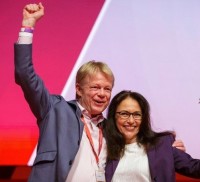
The Congress of the EU’s main trade union confederation, the
DGB, has chosen the Social Democratic MP Yasmin Fahimi, aged 54, as its new leader.
She was born in Hannover and represented it as a MP. Like her predecessor Reiner
Hoffmann, Yasmin Fahimi, who will be the DGB’s first woman President, previously
worked for the chemical industry’s trade-union federation IG BCE. Yasmin Fahimi was
accepted by the service industries trade union Ver.di and elected by a comfortable
majority, with 93.2% of the votes cast. Her task will be to rejuvenate and feminise
her army of trade union members, who have shed almost a further 2 million members
since the beginning of the century, and around 200,000 members since the last
Congress. The DGB’s membership currently stands at 5.7 million. She is in favour of
a wealth tax, and will be responsible for defending the purchasing power of German
employees and accompanying them in the forthcoming “transitions” – a concept that
covers adaptation to climate change, digitalisation of the economy and demographic
changes. As far as the confederation’s positioning on Europe is concerned, few
changes are anticipated. A motion passed by Congress supports all initiatives aimed
at strengthening social Europe and adopts most of the European Trade Union
Confederation’s claims in terms of democracy at work, such as revision of the
European Works Council Directive and the adoption of a social protocol to be added
to the EU Treaty. The motion also calls on the EU to develop collective bargaining
in various ways, including by incorporating it into the procedures applicable to
public procurement contracts.
|
Austria
- Wage rises in several branches :
On 6 May, social partners in the electrical and electronics
sectors reached a wage agreement covering the branch’s 67,000 employees, who
will receive a 4.8% wage rise backdated to 1 May, with a minimum nominal rise of
130 euros. This represents a 6.7% increase in the minimum wage. The rise amounts
to 8.6% for apprentices, and represents a wage of 1,000 euros per month during
their first year and 1,950 euros in the fourth year. The agreement has been
concluded for a 12-month period (see GPA press
release). On 3 May, social partners in the chemical industry (47,000
employees) secured a 4.95% increase from 1 May, over a 12-month period, with a
minimum sum of 120 euros, thus raising the minimum wage by 5.9% (see GPA press
release). Similar agreements have previously been reached in the
papermaking industry (a 4.9% increase, see press
release) and the textile industry (a 4.5% increase, see press
release).
|
Croatia
- Wage rises in the public sector :
On 26 April, the government and the trade unions reached an
agreement to increase civil servants’ salaries and public-sector workers’ wages
by 4%, backdated to 1 May. This figure matches the trade unions’ pay claim,
whereas the government had offered 2%. The pay of Croatia’s 240,000
public-sector employees was frozen from 2012 to 2016, but has risen by 18.31%
since Prime Minister Andrej Plenković came to power in 2016. This agreement,
which also increased the value of certain bonuses and allowances, will serve as
a benchmark for forthcoming negotiations in the private sector (see article in
Vlada).
|
Spain

A step towards menstrual leave :
The Minister for Equality, Irene Montero, has announced that the
government plans to introduce, in the bill on sexual and reproductive health and
voluntary interruption of pregnancy, which was due to be passed on 17 May at the
Council of Ministers, an entitlement for women who are experiencing painful
menstruation to receive a special temporary disability benefit. This will be
financed by the State from day one, as is currently the case for sick leave linked
to accidents at work or occupational diseases. If this law is passed, Spain will
become the first country in Europe to allow workers to take sick leave when
suffering painful periods. The proposal has been welcomed by Carolina Vidal López,
the CCOO union’s Confederal Secretary for Women, Equality and Working Conditions,
who agrees wholeheartedly with the measure granting three days of sick leave for
painful menstruation (see press
release).
- The “pre-pandemic world” is returning: In a press
release, the UGT trade union confederation laments the gradual
abandonment of teleworking, due to the declining seriousness of the pandemic and
the importance of “face-to-face culture”. Teleworking is now at its lowest level
for two years, with just 13.1% of employees working remotely (7.5% of them
telework on more than one half of their working days and just 5.6% do so
occasionally). The UGT believes that companies and public services have used the
so-called “Covid exception” (a transitional provision of the law on teleworking)
“to prevent teleworking becoming a permanent feature of their production model,
thereby holding back the aspirations of millions of workers”. The UGT notes how
few collective agreements on teleworking were signed in 2021: just 123 for Spain
as a whole.
|
France
- The first platform elections have been a
fiasco : The elections held to appoint representatives
of the “self-employed” workers used by delivery platforms and
vehicle-with-driver platforms, prior to the opening of a social dialogue in
these two sectors that could potentially result in collective bargaining
agreements, have been a fiasco. Just 1.83% of the 84,000 registered delivery
riders (a figure far lower than their actual total number), took part in the
vote. The first three trade unions each received between 300 and 400 votes.
Turnout among the 39,000 drivers was 3.91%. The model that France boasted about
in the negotiations currently under way on the Council of the EU, regarding a
directive providing protection for platform workers, in particular by
recognising their status as an employee as soon as they meet certain criteria,
will therefore be hard to defend.
|
Ireland
A charter for women working in finance :
On 27 April, Finance Minister Sean Fleming unveiled the
country’s first Women
in Finance Charter. The signatories of the charter, which has been drawn up
by the government and employers’ organisations, commit to increasing the number of
women in management and board-level positions, in order to achieve a better gender
balance and a more inclusive working environment. They will submit data on an annual
basis to an independent research institute (ESRI) (see government press
release and presentation
fact sheet on the charter). Companies will be required to draw up an action
plan, and the progress made on this will be assessed every year. The charter states
that the company’s CEO and senior management team will be accountable for the
progress made.
|
3. Third
countries
United
Kingdom
- Women’s wellbeing in the workplace :
On 13 May, the government announced the creation of a fund
to assist the voluntary, community and social enterprise (VCSE) sector.
Organisations operating in this sector will be entitled to apply for grants of
between £200,000 and £600,000 (approx. 235,000 to 706,000 euros) to fund
projects delivered at SME level, to support women experiencing the menopause,
fertility problems, miscarriage and pregnancy loss or menstrual health and
gynaecological conditions in the workplace, and help them to remain in or return
to their workplace (see press
release).
|
4.
Companies
European
Works Councils
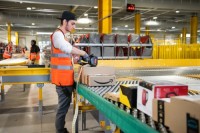
Creation : After nearly four
years of negotiations, on 11 May, the management of e-commerce giant Amazon (238.000 employees),
signed a European
Works Council agreement. The EWC comprises 30 members, including
representatives of the United Kingdom, and the agreement is governed by Irish law,
following what the European trade union federations ETF and UNI Europa describe as
the “sudden decision” of Amazon management to move the jurisdiction from Luxembourg
to Ireland (see joint
press release). “We see this agreement as the first step to ensure workers’
participation, provided the management lives up to the commitments and obligations
of the agreement”, explains Livia Spera, who is ETF’s General Secretary. For his
part, Mathias Bolton, Head of UNI Global Commerce, is now calling on Amazon’s
management “to engage in proper collective bargaining with trade unions”. Clearly,
this is a major event in the GAFA world, where negotiations to set up European Works
Councils are all either bogged down or simply non-existent. It is remarkable too,
that Amazon management, which adopts a strongly anti-union position in the USA, is
opening up to social dialogue in Europe, with the signing of a national agreement
for Italian workers in September 2021 (see ETF press
release) and now the signing of a EWC agreement that will open the door to a
European social dialogue. Although management originally adopted the typical
position of letting the negotiations drag on for as long as possible (three years),
it changed its position at the end of 2021, when the negotiations that had been
interrupted during the Covid-19 crisis, resumed. The agreement provides for two
annual EWC meetings and four Select Committee meetings (two of which are held away
from the annual meetings), with simultaneous interpreting. The EWC has a number of
resources at its disposal, such as 24 paid hours per year for members of the
European committee and 72 paid hours for Select Committee members, plus an
entitlement to 15 days of support per year from an expert and 5 days of training per
member over their four‑year term of office. The EWC has to choose a single expert,
which therefore means opting either for a consultant or a trade-union expert. The
weaknesses of the agreement include the high threshold set for employee
representation (1,000 in a country), and the threshold set for organising an
extraordinary meeting of the Select Committee: a proposal must concern 5% of the
workforce (i.e. 12,000 employees in the EU) and at least 7% of the workforce in at
least two countries over a period of no more than 90 days. These percentages are
also used to determine whether a transnational issue is sufficiently important to
warrant initiating an information and consultation process. The agreement’s scope of
application has been the subject of intense discussions: the EWC is staffed by
employees of Amazon’s ‘Operations’ division in the EU, which excludes a (minority)
proportion of group employees who do not work directly in warehouses or logistics.
This point is legally debatable, as the EWC must represent a group’s entire
workforce in Europe. Sebastian Schulze-Marmeling, the (Syndex-wmp consult) external
consultant who accompanied the special negotiating body, explains: “The compromise
is that the EWC covers all European employees, but will be informed and consulted only within
the scope of ‘Amazon Operations’ and merely informed regarding other activities.”
Also worthy of note is a conciliation clause that applies in the event of a dispute,
with recourse to two conciliators appointed by each party.
|
A disputed appointment : EWC
members are appointed in a variety of ways, which are regulated by national
procedures. Sometimes, a loophole allows local management to appoint one of its
members or an employee who is close to management. The internal rules of procedure
of the Adecco Group European
Works Council, signed by its members and central management, contain a provision to
protect against irregularities of this nature: if the select committee has any
doubts about the appointment procedure followed by local management, it must inform
central management of its concerns, so that a joint investigation can be conducted,
to check that the procedure was in order. In the meantime, the disputed appointment
will be suspended. However, this did not prevent a Hungarian representative, who was
appointed in March and whose legitimacy was contested by the select committee, from
appearing on the list of participants in the plenary meeting that commenced last
Monday – despite the fact that on 30 March, the select committee had sent a letter
to the Hungarian HR manager expressing its doubts regarding the appointment
procedure followed. The investigations conducted by the select committee suggest
that management gave preferential treatment to a strike-breaking candidate, and that
the procedure was tainted by irregularities. EWC secretary Klaus Reitgassl expressly
wrote to the “so-called” Hungarian representative, instructing him not to attend the
first two days of the plenary session, which is an internal meeting for council
members who are employees.
|
Company
agreement
- Collective agreement in the video game
industry : On 29 April, the Croatian video games
development studio Gamechuck and the trade union Novi Sindikat signed the first
collective bargaining agreement regulating a company in Croatia’s video games
industry. For the first time in that country, a company-level agreement has
introduced a profit-sharing scheme, whereby 10% of net profits can be
distributed to the employees. However, these profits are currently still quite
modest (133 euros paid out in 2022). The agreement also provides for a shorter
working week (reduced to 35 hours), a paid 45-minute daily break, 24 days of
annual leave and an annual medical examination paid for by the company, which
will also pay contributions into a supplementary pension scheme. The agreement
provides for employees to be briefed at regular intervals on the company’s
progress and a union representative is invited to attend board meetings (see UNI
Global Union press
release and article in HRT
Vijesti).
|
|
|











