 |
| |
IR Notes 204 – 22 March 2023
www.irshare.eu
|
|
|
| |
| |
A question for…
Volker Nüsse, a trade union official at Germany’s Ver.di trade union
(public transport section, bus and trains)

On 3
March, your trade union Ver.di and the climate justice
movement Fridays for Future, organised a day of
mobilisation, with token strikes on public transport and
actions urging a change of direction regarding transport
(*). How did this cooperation come about?
Six years ago, in 2017, our trade union
decided that the collective labour agreements in the urban transport
sector, which were negotiated at the level of each federal state
[Land], according to different timetables, should all
expire at the same time, so that we could enter a common period for
renegotiating them. During this period, the trade unions were
allowed by law to organise token strikes in support of their claims.
Our campaign to synchronise the renegotiation periods coincided with
the emergence of the Friday For Future (FFF) movement, in 2018-2019.
We held joint meetings with them, which gave birth to the idea that
we should join forces. In 2020, despite the pandemic, we organised
actions together at companies and in public spaces. Employees took
part in climate action days organised by FFF, while activists came
to support our militants on picket lines (**). It’s clear to us that
insufficient resources have been earmarked to achieve an
environmental turning point in the transport sector. And even if the
necessary investments were made, there is a shortage of personnel.
Workers are retiring and their places are not being taken, due to
low pay and poor working conditions. We believe that working
conditions in the industry need to be changed, in order to transform
the public transport system. This partnership with FFF, which is
intended to bring joint pressure to bear on the authorities, is
producing results: we’re gaining members and we’ve introduced a new
method of collaboration between workers and the climate movement. In
March 2023, joint action groups were set up in around forty towns
and cities. We’re proving that social justice and the battle against
climate change can function together and improve people’s lives by
expanding the transport offering.
> Find out more : Website dedicated to the day of action held on 3
March, (*) Ver.di’s press
release and (**) a university
study of the first joint actions, entitled “Fahren
wir zusammen?“ [‘Are we travelling
together?’], published in 2022.
|
|
|

|
| |
Agenda
22 March
Brussels
Tripartite Social Summit.
29 March
Brussels
Joint conference organised by ELA and Eurofound “Where
are the shortages, where are the workers?“.
25 April
Vienna
Final
conference of an EU-funded project organised by the construction
industry social partners (EFBWW and FIEC) on the theme of “Better
Functioning of the European Labour Market“.
28 April
Budapest
International conference on “decent work in the digital age”, organised
by the Labour Law Department of Pázmány Péter Catholic University, with
the support of Friedrich Ebert Stiftung Budapest (information).
3-4 May
Stockholm
Informal meeting of Ministers of Employment and Social Affairs.
12 June
Luxembourg
Employment and Social Policy Council.
|
|
|
|
|
| |
Who we are?
IR Notes is a
fortnightly newsletter produced by IR
Share and its
network of experts, and is available in several European languages
(English, French, German, Italian, Spanish). It offers Europe-wide
monitoring of employment law, labour relations and employment policy. It
is available by subscription for 18 euros per month .
The team This issue
was producaed by Predrag
Bejakovic, Pascale Turlan and
Frédéric
Turlan.
Find out more
about the IR
Share team on our website.
Subscribe to IR Notes
Via the
IR
Share website or by calliang us on:
+33 (0)6 81 41 53 95
or
E-mail: frederic.t@irshare.eu
Legal notice.
Publisher: IR Share SARL – 5, Les Compères – 89520 Fontenoy, France –
Tel.: +33 (0)6 81 41 53 95 – share capital 1,500 euros – commercial
register (RCS Auxerre): 512 567 959. Managing editor: Frédéric Turlan.
Hosting: Ideal prod – 14 rue Auguste Morel – 89100 Sens – France –
Tel.: + 33 (0)3 86 83 21 21. CPPAP no.: 0626 Z 93933.
|
|
|
|
|
| |
!!! Follow us on LinkedIn! !!!

Why not connect to the IR Notes LinkedIn page, so that you can keep up with
developments in the issues we’re covering, between two editions?
You’re welcome to follow us! There are already 195 of you
following us!
|
|
|
|
|
| |
European Industrial Relations Dictionary
In case reading IR Notes inspires you to
explore this subject further, we are providing links to the European
Industrial Relations Dictionary published by Eurofound. This is updated at
regular intervals by IR Share, which publishes IR Notes. The term
definitions are available in English and can easily be converted
into other languages using on-line translation tools.
|
|
|
|
|

|
|
|
Lead
story
Can Ireland
remain a paradise for employers in terms of hosting EWCs?
In May 2022, the European Commission issued a letter of formal notice to Ireland,
instructing it to review its European Works Council legislation and citing “a number
of shortcomings” in Irish legislation (see press
release). In practice, the problem encountered by EWCs established in
Ireland, such as that of Verizon, is that access to justice is virtually impossible
in cases involving a breach of information and consultation rights (see European Works Councils). EWCs
are not allowed to refer their cases directly to either the Workplace Relations
Commission (WRC) or the Labour Court, which are the two bodies tasked with dealing
with labour law disputes. Although the possibility of recourse to arbitration exists
under Irish law in the event of a dispute, this does not happen in practice, due to
the absence of any implementing regulations. Moreover, the penalties payable by the
employer range from 1500 to 10,000 euros – an amount unlikely to act as a deterrent
for a multinational company.
Sinn Féin spokesperson, Louise O’Reilly, whose
party has been calling on the government for years to update EWC legislation,
emphasises that the European Commission’s warning “did not come out of the blue”.
For its part, the SIPTU trade union warned the government as early as 2019 about
shortcomings in the country’s legislation (see press release) and in the
absence of a response, the ICTU trade union confederation submitted an official
complaint to the European Commission in March 2021 (see SIPTU press
release). Up to now, the government has made do with explaining that the
legislation complies with EU law. It is true – and this is one of the astonishing
aspects of this matter – that not a single grievance is raised against Irish law,
either in the evaluation
report on the 1994 directive, or in that
of the 2009 directive, or in the working
document accompanying this report.
What is the explanation for this
situation? Much can be learned by reading verbatim records of the hearings conducted
by a Committee of the Irish Parliament (see sittings held in June
2022 and February
2023): 1/ this situation passed under the radar while the number of EWCs
established in Ireland could be counted on the fingers of one hand. Following on
from Brexit, the similarity between Ireland’s and the UK’s legal systems, its use of
the English language and the absence of any collective bargaining laws there
convinced many groups to move the seat of their EWC to Ireland. According to
estimates (there are no official sources), between 150 and 200 EWCs are now based on
Irish soil, compared to 11 before Brexit (see Brexit and labour standards).
This puts Ireland in second place among the ranks of EU countries where EWCs are
based, behind Germany and probably ahead of France. So “the influx of EWCs to
Ireland” is what “has drawn attention to a concern around how disputes relating to
EWCs are processed and resolved”, explains Jonathan Lavelle (University of
Limerick). 2/ The government “is going out of its way not to deal with” this matter,
claims Senator Paul Gavan. All of the experts appearing at the hearings agree that
it is materially impossible for EWCs to pursue legal proceedings, and they all admit
that the legislation should be revised. 3/ All that is needed for this to happen –
and everyone is in agreement – is firstly to extend the remit of the WRC and of the
Labour Court, so that EWCs can refer their cases to these bodies directly, and
secondly to provide training for a few judges.
So, why isn’t the government
taking action? Is this situation the result of a desire to ensure that Ireland
remains a welcoming jurisdiction for multinational companies in terms of industrial
relations, in the same way it is for taxation? Is the goal an economic one, i.e.
attracting EWC meetings to Ireland, in order to fill pubs and hotels? It doesn’t
really matter. The important thing is that this issue extends beyond the
Irish question, because at the moment, between 10% and 15% of existing EWCs are
unable to take legal action if they suffer a breach of their information and
consultation rights: this deprives the directive of any useful value and denies
hundreds of thousands of European employees their rights. Even Tom Hayes, who
advises many multinational companies, admits that allowing EWCs to access justice
properly will not prompt them to leave. They would keep their EWC based in Ireland.
Remedying this situation is also a requirement laid down by the European Parliament
within the framework of revision of the directive, even if it is not expressly aimed
at Ireland: “The Member States should determine and notify to the Commission a
competent national labour court to which the European Works Council and the special
negotiation body have straightforward access”.
|
1. European
Union
Legislation

“Working time” package : On 15
March, the European Commission very discreetly (no press release issued) adopted a
working time “package” comprised of three documents: 1/ A Report
on the implementation by Member States of Directive 2003/88/EC concerning
working time (see Working time). This document,
which analyses the progress made in transposing the directive, emphasises among
other things an “incorrect transposition of derogations from daily and weekly rest”,
but the Commission is not proposing a revision of the directive. 2/ A detailed working
document on the transposition. 3/ An interpretative
communication taking into account EU Court of Justice case law relating to
the directive. This text seeks to increase the directive’s legal security and
clarity of interpretation, and incorporates the thirty or so new rulings. The
Commission therefore plans to help the Member States and stakeholders to implement
and interpret this directive, based on promoting health and safety at work. Let us
not forget that in 2009, Parliament and the Council failed to revise this directive,
and that, faced with deadlock, the social partners also failed to negotiate an
agreement aimed at revising this text in December 2012. Since then, it is the Court
of Justice that has been making the law governing working time in the EU.
|
Sectoral
social dialogue

Artificial intelligence : On 22
February, European social partners in the metalworking sector adopted Joint
conclusions on Artificial Intelligence in the MET industries. Their
statement “aims at providing guidance for the social partners” in these industries
“on how to approach AI at the workplace” (see Artificial intelligence).. The signatories “support an early
stage consultation of workers and, where applicable, their representatives, when
deciding on the introduction of new AI systems including the design, preparation of
specifications for all relevant actors, development and deployment of the system.”
|
2. Member
States
Croatia
Sunday working : The government
has expressed its satisfaction at the passing of a law that establishes the
principle of a ban on retail outlets opening on Sundays, with the exception of shops
located within bus or railway stations, airports, museums and service stations. This
law will enter into force on 1 July and allows traders to open their business on 16
Sundays per year. Davor Filipović, who is the country’s Minister of the Economy and
Sustainable Development, has dismissed any risk of disastrous economic effects
(redundancies and a drop in business), and has instead expressed satisfaction that
the 118,000 employees working in this sector will be able to spend more time with
their friends and family (see press
release).
|
Denmark
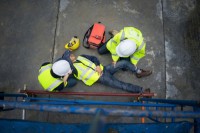
Health and safety at work : The
Danish Working Environment Authority has published worrying figures,
showing that 43 fatalities were recorded in 2022, making it the worst year since
2008, and marking the end of a steady drop in fatalities since the late 1970s
through to 2017 (see press
release). These deaths occurred mainly in three sectors: construction,
building demolition and goods transportation, and occurred primarily among Polish
and Lithuanian workers. For its part, on 2 March, the National Health Council
released morbidity data in two reports on diseases
and risk
factors. This data reveals that osteoarthritis and cervical and lumbar pains
cost employers approximately 7.3 million sick days per year, an amount corresponding
to approximately 30,000 full-time jobs. Lene Krabbe Dahl, Federal Secretary of
Danish trade union 3F explains: “The sick leave associated with these symptoms costs
Danish society billions of crowns. It’s vital that we improve the working
environment, so that people are not exhausted. This situation exacts a heavy toll on
health services, employers and individuals, when employees have to take sick leave
due to a poor working environment”. In response, on 14 March, the government
embarked on negotiations with the parties in Parliament (see press
release), aimed at reaching a new 2023-2026 “agreement on the working
environment”, with funding of 1.3 billion crowns (approx. 175 million euros). Going
forward, this agreement is expected to provide guaranteed long-term financing for
the Working Environment Authority (203 million crowns from 2027 onwards, i.e. almost
24 million euros), better protection for employees engaged in asbestos removal from
buildings and a policy for improving mental health (see FH press
release).
|
Luxembourg
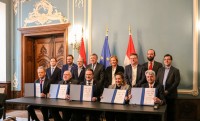
Tripartite agreement : On 7
March, the government and the social partners signed a new tripartite agreement,
supplementing those of September and March 2022. The text guarantees that the system
of automatically index-linking wages and salaries will stay in place through to the
end of 2024: as soon as inflation exceeds 2.5%, wages and salaries will be raised
accordingly. In return, employers will be entitled to reduce their social security
contributions to offset this pay rise. The agreement, which includes other measures
aimed at protecting employees’ purchasing power, has been welcomed both by the two
trade-union confederations (see press releases issued by OGBL
and LCGB)
and by the employers’ organisation UEL (see press
release).
- Bullying: On 9 March,
Parliament passed a law to combat bullying at work. It provides both for a
specific procedure that victims can pursue via the Labour Inspectorate (ITM) and
for sanctions taken against employers (see Ministry of Employment press
release). As a result, this law introduces a new chapter into the
Employment Code, contrary to the wishes of the employers’ organisation UEL,
which takes the view that the social partners had already dealt with this matter
within the framework of their cross-industry agreement of 25 June 2019 on
bullying and violence at work.
|
3. Third
countries
United
Kingdom

Menopause : The government has
appointed a “Menopause Employment Champion”, in the person of Helen Tomlinson, Head
of Talent (UK & Ireland) at The Adecco Group. Her mission will be to encourage
employers to develop menopause policies to create more supportive environments that
will help women experiencing menopause to stay and progress in work (see press
release). Although this appointment has no precedent in Europe, it
represents the government’s main announcement, despite the ambitious recommendations
contained in two reports: Menopause
and the Workplace: How to enable fulfilling working lives, published in
November 2021, to which the government responded in July 2022 (see report
and IR Notes 176),
and the report published by the Women and Equalities Committee of the House of
Commons, Menopause
and the workplace, published in July 2022, to which the government responded
in late January (see report).
|
Ukraine

Reform of collective bargaining :
After being criticised for passing legislation and introducing
draft legislation that is at odds with the body of EU law (the “acquis
communautaire”) and with trade union rights (see IR Notes 201 and
IR Notes 191), the
Ukrainian authorities seem to be modifying their position. Parliament did in fact
pass Draft law 7628
on 23 February – covering Ukraine’s so-called “European integration” as regards
“collective labour agreements and contracts”, reforming the previous 1993
legislation governing collective bargaining and social dialogue (see press
release issued by the Ministry of the Economy). The text has to be signed by
President Zelensky to allow it to enter into force. The government says that the law
has been approved by the social partners and ILO experts. The text makes it easier
for non-representative or newly created trade unions to access collective
bargaining; it establishes an interface between the various levels of collective
agreements (territorial, branch, company, etc.); and it allows the signatories of a
collective agreement to suspend certain provisions in the event of force
majeure. Furthermore, this text transposes two EU directives into Ukrainian
law: firstly Directive 2001/23/EC of 12 March 2001, which protects employees in the
event a company is transferred; and secondly Directive 91/533/EEC of 14 October
1991, which relates to an employer’s obligation to inform employees of the
conditions applicable to their contract or employment relationship. Consequently,
its Parliament emphasises that “Ukraine is steadily continuing to bring its own
legislation closer to EU legislation, norms and practice in the areas of employment,
social policy and equality of opportunity” (see press release).
|
4.
Companies
European
company

Demerger :
After calling on expert assistance, the SE
works council of the French group Atos, which is specialised in
digital transformation, has issued an unfavourable opinion regarding the group’s
proposed demerger into two companies. One of these would retain the Atos name and
its historical IT infrastructure management services business, while the other –
Evidian – would group together the rapidly growing cybersecurity and
high-performance computing businesses. Under this proposal, the current SE works
council would remain in place to cover the first company, but the new Evidian SA
company will have to negotiate the creation of its own European Works Council. This
means the future company’s employees may be without a body representing its European
employees during the negotiation period, which could last for three years. The
directive does not provide for a solution to remedy the loss of employees’
information and consultation rights at translational level, in the event of a
demerger. A temporary body can be set up during the negotiation period of a future
EWC agreement only if management pro-actively takes steps to do so. Management may
also give the SE works council a commitment that they will negotiate this agreement
within a shorter time period, as recently happened at Suez.
|
5. Studies
and reports
French legislation grants the employees of large groups the right to elect
one or two employee representatives on the company board, but it also obliges the
latter, once appointed, to resign from any other mandates they may hold as employee
representatives within the group, as soon as they take up their seat on the board.
This “non-cumul des mandats” rule prohibiting employees from holding
concurrent mandates also applies when the EWC elects one of the two employee
representatives on the board, thus requiring the elected member to relinquish their
seat on the EWC, as well as any national and/or local mandates they may hold. In a
study
published by the European Trade Union Institute (ETUI), Stéphane Vernac, Professor
of Private Law at Jean Monnet University, Saint-Étienne, re-examines this
legislation and discusses its compatibility with EU law in particular. It seems hard
to challenge the logic of the incompatibility rule, even though the author
emphasises a few flaws in it. The study encourages companies to be more transparent
in their appointment processes, and also to ensure that employee representatives who
become board members are granted an equivalent level of redundancy protection to
that enjoyed by workforce representatives, if they are deprived of such protection
when forced to relinquish their national and/or local mandates.
>
See also: ETUI study of The
Europeanisation of board‑level employee representation in France, published
in 2022.
|
|
|











