 |
| |
IR Notes 207 – 3 May 2023
www.irshare.eu
|
|
|
| |
| |
A question for…
Jean-Philippe Charpentier, Chairman, Verizon EWC

Your EWC, which is now governed by
Irish subsidiary requirements, is one of the first to take legal
action against its management through the Irish courts. What
lessons can you draw from this?
In Ireland, an EWC has no legal personality
of its own, so it’s unable to take action through the courts.
However, an EWC member can do so. Consequently, four of us took our
case to the Workplace Relations Commission (WRC) in November 2021,
seeking a refund of consultancy fees and of the costs we incurred in
taking part in a training course. Following several hearings, the
legal decisions
in question were pronounced on 24 April. As regards refunding the
training costs, the WRC followed the arguments used by management:
the EWC had already benefitted from a training day organised by
management, so the latter didn’t have to reimburse the costs
incurred by the 4 members who received the training, despite central
management’s previous refusal to pay them. As for the consultancy
fees, the WRC held that management should pay 50% of the costs, and
examined the various subjects one by one, to decide which were
legitimate and therefore qualified for reimbursement. Such decisions
are highly problematic: they raise the question of access to
specialist expertise, training and the justice system. In our case,
management wishes to exert total control over the EWC. We’re unable
to choose which training courses we need; we’ve no budget to spend
on consultancy fees, other than in a restructuring scenario (and
even then, the amounts in question are very limited) and no
resources to challenge a decision in the courts. Is it normal that
EWC members should have to pay legal costs out of their own pocket,
whereas management can draw on the company’s resources to an
unlimited extent, and pay for a top barrister to appear opposite us
in court? To lodge an appeal, we’ll have to come up with somewhere
between 30,000 and 100,000 euros. Are we supposed to mortgage our
houses? So we’re going to start a fund to raise the money we need to
finance our appeal. We’re bringing it on behalf of a large number of
employees: not only those who work at Verizon, but also everyone
whose EWC is governed by Irish law.
|
|
|

|
|
|
|
|
| |
Who we are?
IR Notes is a
fortnightly newsletter produced by IR
Share and its
network of experts, and is available in several European languages
(English, French, German, Italian, Spanish). It offers Europe-wide
monitoring of employment law, labour relations and employment policy. It
is available by subscription for 18 euros per month .
The team This issue
was producaed by Elisabeth Gunn
Myhren, Pascale Turlan,
Frédéric
Turlan and Aimee
Waldon.
Find out more
about the IR
Share team on our website.
Subscribe to IR Notes
Via the
IR
Share website or by calliang us on:
+33 (0)6 81 41 53 95
or
E-mail: frederic.t@irshare.eu
Legal notice.
Publisher: IR Share SARL – 5, Les Compères – 89520 Fontenoy, France –
Tel.: +33 (0)6 81 41 53 95 – share capital 1,500 euros – commercial
register (RCS Auxerre): 512 567 959. Managing editor: Frédéric Turlan.
Hosting: Ideal prod – 14 rue Auguste Morel – 89100 Sens – France –
Tel.: + 33 (0)3 86 83 21 21. CPPAP no.: 0626 Z 93933.
|
|
|
|
|
| |
Follow us on LinkedIn!

Why not connect to the IR Notes LinkedIn page, so that you can keep up with
developments in the issues we’re covering, between two editions?
You’re welcome to follow us! There are already 270 of you
following us!
|
|
|
|
|
| |
European Industrial Relations Dictionary
In case reading IR Notes inspires you to
explore this subject further, we are providing links to the European
Industrial Relations Dictionary published by Eurofound. This is updated at
regular intervals by IR Share, which publishes IR Notes. The term
definitions are available in English and can easily be converted
into other languages using on-line translation tools.
|
|
|
|
|

|
|
|
Lead
story
The number
of fatal accidents at work is no longer falling

The downward trend in fatal accidents at work in the EU has come to a halt – a fact
that should encourage us all to take another look at prevention policies, especially
since we are just a few days beyond International Workers Memorial Day (28 April),
when those killed or injured at work are remembered. Health and safety practices in
Europe vary widely when it comes to recording and declaring accidents at work in
general, and fatal accidents in particular (see Occupational accidents and
diseases).
Consequently, it is difficult to make comparisons. One of the resources that can be
mobilised is the data published by Eurostat, in a form that is standardised as
possible, on the number
of fatal accidents at work by country. This data includes both absolute
values and, to facilitate comparisons, the number
of fatal accidents at work per 100,000 workers. The latest available dataset
is for 2020: the number of fatal accidents at work in the EU was 3,358 in 2020. This
figure was slightly down on 2019 (3,408) but slightly above the figures for 2016 to
2018. Following a steady decline, the average EU accident rate has been stagnating
at between 1.74 and 1.79 since 2017. The countries now suffering the most deaths at
work are Italy (776), France (541), Spain (392), Germany (371) and Poland (190).
These figures only partially reflect the reality of the situation: they are
influenced by the size of the economic sectors suffering the most accidents,
under-declaration of accidents and differing calculation methods, e.g. excluding
certain causes of death (suicide, illness, attacks at the workplace, accidents on
the way to/from work). When the number of fatal accidents per 100,000 workers is
taken into account, the rankings look very different: the EU average is 1.77, but
the worst figures are those for Cyprus (4.45), Bulgaria (3.68), Italy (3.39),
Romania (3.31) and Lithuania (3.17). One of the lessons to be learned from the 2020
figures is that the number of accidents at work has fallen in all countries with the
exception of Denmark, due to the impact of the Covid-19 crisis. However, the initial
national feedback for 2022 is not encouraging, especially given that after two years
of lockdown and working from home, fatal accidents on the way to/from work have
resumed an upward trend. In Finland, which is one of the countries with the lowest
accident rates (0.95), 24 workers died in fatal accidents at work in 2022, i.e.
double the figure for 2021 (see press
release). In Italy, INAIL recorded a 25.7% rise in accidents at work between
2021 and 2022, and a total of 1,089 fatal accidents; even though this figure is
lower than it was in 2021 (1,221) and 2020 (1,270), it is still extremely high (see
press
release). In Spain, fatal accidents at work rose by 17.2% in 2022: there
were 826 deaths (i.e. 121 more than in 2021), according to an analysis
produced by the CCOO trade union confederation. Denmark recorded between 43 and 45
deaths at work. This figure too, represents an increase (see press
release). In all of these countries, trade unions are mobilising and calling
on their government, sometimes in conjunction with the employers (as in Denmark –
see FH press
release), to take this subject in hand. The EU is still a long way off
meeting its target of 0 deaths at work (see Strategic Framework on Health and Safety
at Work).
>
See also: Eurogip, Study
of the phenomenon of under-reporting of accidents at work in Europe (in
French), 2017
|
1. European
Union
Projects

Due diligence: : On 25 April,
the European Parliament’s Legal Affairs Committee adopted, by a large majority, the
report on the proposal for a directive on corporate sustainability due diligence,
which the European Commission presented in February 2022 (see IR Notes 181 and Due diligence). Parliament is
due to vote on this text at a plenary session on 1 June, before the start of
negotiations with the Council, which finalised its position
on 1 December 2022 (see press
release). Definitive adoption of this text is a priority for the Spanish
presidency of the EU, which will commence on 1 July. MEPS are more ambitious than
the Commission (see press
release). Their position is that these due diligence rules should apply to
all EU-based companies with more than 250 employees and a turnover higher than 40
million euros, regardless of their sector of activity (rather than companies with
over 500 employees and a turnover higher than 150 million euros). They also want the
rules to apply to multinational companies based outside the EU, if they have more
than 500 employees and a turnover higher than 150 million euro, at least 40 million
of which is generated in the EU. MEPs have included financial services companies in
the directive’s scope of application. Companies will be required to implement –
rather than simply to adopt – a transition plan compatible with a global warming
limit of 1.5°C. They will have to demonstrate that they are set to meet this target
and are committed to cutting their greenhouse gas emissions in the short, medium and
long term. This plan must be drawn up in conjunction with the stakeholders
concerned. European Works Councils can be expected to play a role here – some EWCs
have already included due diligence monitoring in the scope of their competence
(e.g. SNCF, Eiffage). Furthermore, directors of companies with over 1,000 employees
will be directly responsible for this step, which will affect the variable elements
of their pay. MEPs want companies that breach the rules to be subject to fines
amounting to at least 5% of their net worldwide turnover, and in the case of
non-compliant third-country companies, banned from participation in public
procurement contracts. The trade-union world has given a warm welcome to MEPs’
proposals: the European Trade Union Confederation has expressed satisfaction at the
increased role played by unions in defending victims (see press
release). Employers’ organisations, on the other hand, are highly critical
of them. Delphine Rudelli, Director General of Ceemet, argues that this text is not
workable in practice, as it imposes unreasonable requirements on companies (see press
release). NGOs, on the other hand, believe that this text does not go far
enough, especially as it allows companies to set their own priorities for tackling
environmental pollution issues and breaches of human rights (see press
release issued by French NGOs), which “could enable companies to postpone
their efforts to prevent or cease certain unlawful activities, simply on the grounds
that they have prioritised other more serious or more likely violations”, explains
legal expert Brice Laniyan, who works for the climate campaigning organisation
Notre Affaire à tous, in an article in the environmental newsletter Reporterre.
Given these strongly diverging positions, the stage is set for some intensive
lobbying. Likewise, the forthcoming discussions between Parliament and the Council
are likely to be extremely vigorous, given their very different positions.
|

Protection against asbestos :
The European Parliament’s Committee on Employment and Social
Affairs has approved a draft
report on revision of Directive
2009/148/EC on the protection of workers from the risks related to exposure to
asbestos at work (see press
release issued by Parliament), presented by the European Commission on 28
September 2022 (see IR
Notes 193 and proposal
for a directive). The text invites employers to reduce exposure to asbestos
fibres to the lowest possible level and bring it below an occupational exposure
limit (OEL) of 0.001 fibre/cm³ over an average eight-hour period, while at the same
time aiming to introduce the use of electron microscopy, with a view to maximising
the effectiveness of detecting the finest and most carcinogenic fibres. A four-year
transition period is provided for in the run-up to this threshold, during which the
exposure limit would be cut from the current standard (0.1 fibre/cm³) to 0.01
fibre/cm³, as stipulated by the Commission. During this time, Member States would
still be allowed to use the current detection method (phase-contrast microscopy),
which is less effective. The text takes passive and secondary exposure to asbestos
into account, and sets out a list of ways to prevent this. It substantially
reinforces the notification requirements, by requiring employers to specify, on
asbestos removal sites, the spaces where work will be carried out, a list of the
workers assigned to them, setting out details of their certification to carry out
such work and the training they have received for this purpose, together with the
measures taken to reduce exposure, such as the use of personal protective and
respiratory equipment, safe cleaning of workers’ clothing and a compulsory
decontamination procedure. It is expected that the text and the mandate to commence
negotiations with the Council will be adopted at a plenary session of Parliament on
8 May, thereby opening discussions with the Council with a view to definitive
adoption of the revised directive later this year. The European Federation of
Building and Woodworkers (EFBWW) and the European Trade Union Confederation are
urging Member States to adopt the proposal for a directive, in line with
Parliament’s “more ambitious and holistic approach” and to go for the new OEL,
measured with electronic microscopes, “with no transition period” (see press
release).
|
Social
update
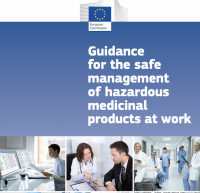
Hazardous medicinal products :
On 28 April, the European Commission published a non-binding guide
containing practical advice on how to reduce workers’ exposure to hazardous
medicinal products (HMP) at all life-cycle stages: production, transport and
storage, preparation, administration to human and animal patients, as well as waste
management (see press
release). This publication has been welcomed by the European public service
union EPSU (see press
release).
|
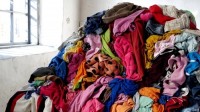
Fast fashion : The European
Parliament’s Environment Committee has adopted its recommendations on EU measures to
ensure that textiles sold in the EU are more durable, easier to reuse, repair and
recycle, and that they are made to a great extent of recycled fibres, and are free
of hazardous substances. Textiles should also be produced in a manner that respects
human, social and labour rights, the environment and animal welfare throughout their
supply chain (see press
release). The report, which was accepted by a unanimous vote, is due to be
adopted at a plenary session before the summer.
|
- Minimum wage : The Swedish
government has announced that it will be supporting Denmark’s appeal seeking
annulment of the directive on minimum wages. “It’s important to examine whether
the EU has powers to legislate on minimum wages via this directive”, says
Paulina Brandberg, the country’s Gender Equality Minister and Deputy Minister of
Labour (see press
release).
|
Sectoral
social dialogue
- Gas : On 28 April, European
social partners in the gas industry announced the launch of collective
bargaining negotiations aimed at reaching a sector-wide Just Transition
framework agreement, which is intended to safeguard jobs and upskill the
workforce (see IndustriAll Europe press release).
|
2. Member
States
Germany

Breakdown of working hours : On
18 April, the Federal Ministry of Labour introduced a draft bill on logging working
hours, in order to bring German law into line with EU Court of Justice case law (see
CJEU,
14 May 2019, aff. C-55/18, Federación de Servicios de Comisiones Obreras
/Deutsche bank et IR
Notes 120) and
its recent application by the Federal Labour Court (see Decision
and IR Notes 192).
The text, which has not yet been made public, requires companies to systematically
log the hours worked by their employees, using electronic means, but grants
exemptions for certain categories of workers, via collective agreements (v. Press
release of the Bundesrechtsanwaltskammer).
|
Denmark

Parents of twins: : The 2023
finance bill, which was passed by the government with the support of a majority of
the parties, provides for 26 weeks of additional leave with maternity benefits for
the parents of twins. Its methods of application will be discussed in due course.
Parliament is expected to pass this law in mid-May.
- Transposition : Employment
Minister Ane Halsboe-Jørgensen has submitted a bill
to Parliament (see procedure
file) transposing Directive no. 2019/1152 of 20 June 2019 on transparent
and predictable working conditions in the EU. The directive’s implementation is
based on a memorandum of understanding dated 30 June 2022, reached between the
social partners FH (the Danish Trade Union Confederation) and DA (the Danish
Employers’ Confederation). The substantive rights granted by the future law will
not apply if the employment relationship is covered by a nationwide collective
bargaining agreement that has been concluded by the most representative social
partners and provides an equivalent level of global protection for the employees
concerned. This law is due to enter into force on 1 July 2023 (see press
release).
|
France

Ecological transition and social dialogue :
The social partners have concluded their negotiations concerning
a national
cross-industry agreement on the theme of ecological transition and social
dialogue. This text, which is not binding, provides some examples and good
practices for applying the legal framework covering ecological transition. The
agreement comprises five chapters: 1/ identifying methods of leverage for change
within the framework of an informed social dialogue around ecological transition; 2/
enabling social dialogue to address environmental issues at company level; 3/
incorporating environmental issues into collective bargaining; 4/ addressing
environmental issues within territorial and sectoral social dialogue spaces; 5/
dealing with employment and skills-related issues as part of the process of
implementing the ecological transition. What good practices are suggested here? One
example is that of including a regular review of environmental policy on the agenda
of works council (‘Economic and Social Committee’ – ESC) meetings at companies with
more than 50 employees, and setting up further ESC subcommittees, with their own
budget, to deal with environmental matters. A concrete example of this, as suggested
by the text, is having “green clauses” to mitigate the consequences of environmental
and climate-related changes, e.g. by providing for adaptations to organisational
arrangements and working conditions, or including environmental criteria in
profit-sharing agreements.
> Note:
The Economic, Social and Environmental Council (CESE) has unanimously adopted
an opinion
on the impact of climate disruption on employment and health at work. It
contains 17 concrete recommendations, which together form a fully-fledged action
plan for adapting the world of work to global warming, and mitigating the impact of
human activities on the climate (see press
release).
|
3. Third
countries
Norway
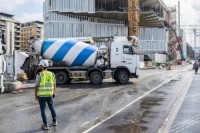
Restrictions on the use of temporary workers :
Since 1 April, a law
has severely restricted the use of temporary workers. The aim is to promote
permanent employment and combat social dumping (see press releases issued by the government
and the LO
trade union confederation). The use of temporary workers is limited to
specific cases such as cover for maternity or sick leave, and coping with a
temporary increase in activity levels, and furthermore, it can only proceed with the
agreement of workforce representatives at companies that have signed a collective
agreement with a representative trade union at national level. It is still possible
to recruit temporary replacement staff in the healthcare sector, without the
agreement of a representative trade union. The law prohibits the use of temporary
workers on building sites at Oslo, Viken and Vestfold. In contrast to what was
initially planned, as requested by the Samfunnsviterne trade union, consultancy
firms will still be able to send employees to work at clients’ premises. The new law
also stipulates that a temporary worker will automatically be recruited on an
open-ended contract of employment at the end of a three-year period with the same
employer. “We don’t yet know what effects the new law will have”, explains Gunn
Elisabeth Myhren, General Secretary of the Samfunnsviterne union. “It might be
feared that temporary workers who are already employed on a fixed-term contract at a
temporary work agency will find themselves unemployed again when it comes to an end,
and if they are not taken on again by the user company, they might subsequently find
themselves back in precarious employment”.
|
|
|











