 |
| |
IR Notes 226 – 20 March 2024
www.irshare.eu
|
|
|
| |
| |
Appointment
Maria Luisa Cabral, European Commission

Maria
Luisa Cabral has left Ursula von der Leyen’s
cabinet, where she was involved in the Val Duchesse process, aimed
at strengthening social dialogue, to take on the post of Deputy
Director-General – Jobs, Skills and Social Policies, at the
Directorate-General for Employment, Social Affairs and Inclusion (DG
EMPL). This post was previously held by Stefan Olsson, who has now
been appointed Deputy Director-General of DG EMPL. Maria Luisa
Cabral’s responsibilities will include labour law, occupational
health and safety, and social dialogue.
|
|
|

|
|
|
|
|
| |
Who we are?
IR Notes is a
fortnightly newsletter produced by IR
Share and its
network of experts, and is available in several European languages
(English, French, German, Italian, Spanish). It offers Europe-wide
monitoring of employment law, labour relations and employment policy. It
is available by subscription for 273 euros per year .
The team This issue
was producaed by Iris
Turlan
and
Frédéric
Turlan.
Find out more about the IR Share
team on our website.
Subscribe to IR Notes
Via the
IR
Share website or by calliang us on:
+33 (0)6 81 41 53 95
or
E-mail: frederic.t@irshare.eu
Legal notice.
Publisher: IR Share SARL – 5, Les Compères – 89520 Fontenoy, France –
Tel.: +33 (0)6 81 41 53 95 – share capital 1,500 euros – commercial
register (RCS Auxerre): 512 567 959. Managing editor: Frédéric Turlan.
Hosting: ALTEO by Damien Cornillet – Château – 89500
Villeneuve-sur-Yonne. CPPAP no.: 0626 Z 93933.
|
|
|
|
|
| |
Follow us on LinkedIn!

Why not connect to the IR Notes LinkedIn page, so that you can keep up with
developments in the issues we’re covering, between two editions?
You’re welcome to follow us! There are already 600 of you following
us!
|
|
|
|
|
| |
European Industrial Relations Dictionary

In case reading IR Notes inspires you to
explore this subject further, we are providing links to the European
Industrial Relations Dictionary published by Eurofound. This is updated at
regular intervals by IR Share, which publishes IR Notes. The term
definitions are available in English and can easily be converted
into other languages using on-line translation tools.
|
|
|
|
|

|
|
|
Lead
story
Green light
given for regulating platforms and algorithmic management

At last, following a number of last-minute developments (see IR Notes 224),
the European Union has passed a directive that firstly establishes a presumption of
employment for digital platform workers when “facts indicating control and direction
are found” (Article 5.1). Secondly, it grants platform workers – whether
self-employed or recognised as employees – a number of new “digital rights” with
regard to algorithmic management (see Platform work). The text also
invites Member States to take “adequate measures to promote the role of the social
partners and encourage the exercise of the right to collective bargaining in
platform work”. The text
of the agreement, which was adopted on 11 March by and between the Council and
Parliament, will now be finalised in all official EU languages and formally adopted
by both institutions. Member States will then have two years to incorporate the new
provisions into their domestic legislation (see Council press
release).
To achieve this outcome, Parliament’s negotiators had to
agree to the removal of a key provision of this proposal for a directive (see IR Notes 176): that
of a presumption of employment harmonised at European level, triggered as soon as an
employment relationship ticks a number of boxes indicating a link of subordination
between worker and platform, thereby turning the worker into an employee. France
completely ruled out this provision, which had been fiercely debated over a period
of months, and had already been substantially amended by the Council (see interview
with Leïla Chaibi, IR
Notes 210). As a result, each of the 27 EU Member States is now free to
define this presumption in their own domestic law, thus creating a heresy at odds
with the very purpose of a directive, which is to harmonise the governing law within
the EU. This “back of an envelope” provision, which was finalised between late 2023
and 8 February this year, will lead to different interpretations and to disputes. It
does however have the merit of allowing the passing of a much-needed and important
law, whose scope extends beyond the simple matter of determining a worker’s
status.
This directive is actually the first-ever piece of EU legislation to
regulate algorithmic management in the workplace. Chapter 3, which extends to ten or
so pages, will firstly be used as the basis for preparing a future directive
applicable to all employees (this one only applies to platform work) and, secondly,
as a source of inspiration for all social dialogue actors planning to regulate the
use of algorithmic management. The directive includes a list of prohibited
practices, such as processing of biometric data or personal data in a number of
cases; it requires an impact assessment to be carried out in situations where
authorised processing of personal data is undertaken; and it demands transparency on
automated monitoring or decision-making systems and on human oversight of automated
systems. Lastly, the directive repeatedly calls for workers’ representatives to be
involved, and its provisions covering information and consultation rights extend
further than current European legislation in this area. It requires platforms to
seek the views of these representatives regarding assessment of the impact of
personal data processing systems, and to present the results to them. Moreover,
“given the technical complexity of algorithmic management systems, information
should be given in due time”, to enable representatives to “prepare for
consultation, with the assistance of an expert chosen by the platform workers or
their representatives”. According to the Commission, this text applies to 28 million
workers at the present time and will apply to 43 million by 2025.
>
Reactions: See press releases issued
by the European trade union federations ETF,
EPSU
and the European
Trade Union Confederation. See also: article on “‘Gig’
workers in Europe: the new platform of rights“, by Antonio Aloisi and
Valerio de Stefano.
|
1. European
Union
Legislation

Due diligence directive rescued from the brink :
Finally, on 15 March, Member States adopted the proposal for a
due diligence directive (see Due diligence), after
Parliament’s negotiators gave way on its scope of application: the future
directive, which has yet to be formally approved by the Council and
Parliament before being published, will eventually cover companies with more than
1,000 employees and a turnover of more than 450 million euros. It will then have to
be transposed within two years. Both the European Commission’s proposal and the
position reached by the Council and Parliament on 14 December 2023, were aimed at
companies with more than 500 employees and a turnover of at least 150 million euros
(see IR Notes
221). Previously, in its general approach adopted on 30 November 2022, the
Council had agreed on a threshold of 1,000 employees, with a turnover of 300 million
euros. For its part, in June 2023, Parliament fixed these thresholds at a much lower
level: more than 250 employees and a turnover in excess of 40 million (see IR Notes 196). The
outcome is a long way from the threshold of 5,000 employees that France suddenly
proposed before the meeting on 15 March, but at the risk of torpedoing the
directive’s adoption, (see IR Notes 225),
under pressure from the employers’ organisations, Member States managed to water
down the text significantly: it will now apply to just under 7,000 companies,
compared to the expected figure of 16,000, according to the European Trade Union
Confederation (see press
release). The directive’s effects will also be phased in gradually: it will
apply in the first instance to companies with more than 5,000 employees and a
turnover of at least 1500 million euros in 2029 (covering financial year 2028), then
in 2030 to those with 3,000 employees and a turnover of at least 900 million euros
(for FY 2029) before being extended to include those with more than 1,000 employees
and a turnover of 450 million euros in 2031 (for FY 2030). In addition to reducing
its scope of application and gradually phasing in its application, the directive no
longer specifies lower thresholds for certain activities carrying specific risks,
and all of its provisions seeking to link executive pay with meeting climate
targets, have been dropped. The definition of “value chain” to which the due
diligence obligations apply, has also been reduced in scope. In concrete terms, the
companies concerned will have to: 1/ map the risks of potential
adverse impacts on human rights and the environment, assess and prevent them, and if
applicable, ensure that they are brought to an end or, failing this, minimise them
via the use of prevention plans and corrective action plans; 2/ remediate adverse impacts caused
by their own actions or those of companies in their value chain; 3/ publish an annual statement
relating to their exercising of due diligence; 4/ adopt a transition plan for
climate change mitigation, to ensure that their business is compatible with the
transition to a sustainable economy and with limiting global warming to 1.5 °C. The
directive assigns an important role to workforce representatives and trade unions.
The company’s due diligence implementation policy is to be developed in prior
consultation with its employees and their representatives. The text states that this
consultation must be conducted in accordance with relevant EU law, where applicable,
and with domestic law and collective labour agreements, without prejudice to
workers’ rights to information, consultation and participation, and in particular
those covered by Directives 2002/14/EC (Information and Consultation), 2009/38/EC
(European Works Council) and 2001/86/EC (Worker involvement in the European
Company).
>
Reactions: See press releases issued by ETUC,
UNI
Europa, BusinessEurope
and the NGO Global
Witness. See also briefing
published by the European Parliament.
|

Regulating AI in the workplace :
On 13 March, the European Parliament definitively adopted the proposal
for a regulation on laying down harmonised rules on Artificial Intelligence,
which will regulate, among other things, the use of AI systems in the workplace (see
IR Notes 162, IR Notes 163 and Artificial intelligence) First
of all, the regulation prohibits the use of some AI systems: those “that create or
expand facial recognition databases through the untargeted scraping of facial images
from the internet or CCTV footage”, as well as those seeking to “infer emotions of a
natural person in the areas of workplace and education institutions”, with two
exceptions, which are likely to be too vague: “for medical or safety reasons”, such
as recognising the signs of tiredness on a lorry driver’s face. The regulation also
prohibits the use of systems that categorise individuals on the basis of their
biometric data, and are used to “deduce or infer an individual’s political opinions,
trade union membership, religious or philosophical beliefs, race, sex life or sexual
orientation”. The regulation then stipulates a second category: that of high-risk AI
systems. In employment terms, these are AI systems that are intended to be used:
1/ for the recruitment or
selection of natural persons, in particular to place targeted job advertisements, to
analyse and filter job applications, and to evaluate candidates; 2/ to make decisions affecting terms
of work-related relationships, the promotion or termination of work-related
contractual relationships, to allocate tasks based on individual behaviour or
personal traits or characteristics or to monitor and evaluate the performance and
behaviour of persons in such relationships. Before introducing or using a high-risk
AI system in the workplace, the regulation requires “deployers” who are employers,
to inform “workers’ representatives and the affected workers that they will be
subject to the use of the high-risk AI system”, in accordance with the rules and
procedures laid down in Union and national law and practice on providing information
to workers and their representatives. A third category concerns AI systems intended
for general-purpose use, including those presenting “a systemic risk”, which are
subject to transparency obligations. The regulation also imposes training
obligations on employers. Consequently, when they deploy a high-risk AI system, they
must entrust “human oversight to natural persons who have the necessary competence,
training and authority, as well as the necessary support” (Article 26 section 2). In
more general terms, they must take “measures to ensure, to their best extent, a
sufficient level of AI literacy of their staff and other persons dealing with the
operation and use of AI systems on their behalf, taking into account their technical
knowledge, experience, education and training and the context the AI systems are to
be used in, and considering the persons or groups of persons on whom the AI systems
are to be used” (see Parliament press
release).
>
See also: Report
presented to the French government by the Artificial Intelligence Commission, with a
chapter on social dialogue and co-construction as the cornerstone of AI deployment.
|
Actualité
sociale

Future social policies : At the
Employment and Social Affairs Council meeting on 11 March, Member States approved an
Opinion
on future policy priorities for the Union on the European Pillar of Social
Rights, prepared by the Employment Committee and the Social Protection
Committee (see European Pillar of Social
Rights). Among other things, the document refers to “further
actions promoting a mindset of lifelong learning” and asks whether it is necessary
to intervene in the face of “the progressive proliferation of platform work,
artificial intelligence, and algorithmic management”. The text calls for further
adaptations to the rules, so as to “better incorporate both the psychosocial risks
linked to the digital transition, including negative impacts on mental health, and
specific hazards stemming from climate change […] by encouraging their prevention,
in addition to speeding up the setting of minimum standards regarding hazardous
substances” (see Council press
release).
|
Sectoral
social dialogue

Cruising : On 6 March, European
social partners in the river cruise sector signed a framework
agreement to improve the working conditions on board of river cruise vessels, as
well as to ensure a level playing field for the sector. The text is
presented as being binding, as it goes further than the usual “recommendations” or
“guidelines” encountered in the marine and inland waterways sector”, says ETF (see
ETF
press release).
|
Trade
unionism
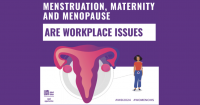
Menstruation and menopause : On
7 March, the eve of International Women’s Day, the UNI Europa trade union federation
published, for the first time, a guide
that explains how trade unions can support menstruating workers, including
negotiating menstrual leave, access to sanitary products, improving facilities in
the workplace and combating the stigmatisation associated with menstruation. Other
guides will follow, on menopause and maternity (see press
release).
>
See also: In France, the national
agency for improving working conditions has published a guide on endometriosis in the
workplace.
|
2. Member
States
Austria
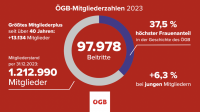
Trade unionism in good shape :
On 18 March, ÖGB, the country’s main trade union confederation
expressed its satisfaction at the biggest increase in its member numbers for 40
years, with 97,978 new members. ÖGB now has a total of 1,212,990 members, and
believes this growth can be attributed to the successes achieved by trade unions in
collective bargaining negotiations. The percentage of women members has reached an
unprecedented level (37.5%) and the number of young people under the age of 19 has
risen by 6.3% (see press
release).
|
France

Due diligence : The Paris Appeal
Court has created a new specialised chamber to hear all disputes emerging, at
national level, on the issues of corporate due diligence and environmental
liability. It will therefore hear appeals linked to disputes heard before the Paris
Ordinary Court [Tribunal Judiciaire], which has “sole” competence to hear
these disputes at national level. So far, fewer than ten cases have been referred to
this court, but it has already ruled against one company, the La Poste group (see IR Notes 220),
which decided on 11 March to appeal the ruling. (see press
release).
- Menstrual leave: On 30
January, social partners in the poultry hatching and selection industry signed
one of the first branch-level collective agreements to introduce one day’s
monthly leave for women suffering from incapacitating endometriosis.
|
3.
Companies
European
works councils

Artificial intelligence : The
topic of Artificial Intelligence (AI) frequently appears on European Works Council
agendas. For example, on 14 December 2023, members of the TotalEnergies EWC were given a
presentation on the deployment of AI systems within the group, together with
accompanying measures, including in the area of training, and examples of how AI has
been implemented within the group’s various branches. This week, on 20 March, the
Danone group EWC is being
consulted on “a redeployment of resources and skills within its ‘planning’ and
‘business services’ functions, in connection with the group’s introduction of AI”.
“The group is envisaging a number of new professions, which will be presented to
European trade union representatives”, says the FGA-CFDT.
|

Renegotiation : On 6 March, a new
agreement was concluded at American
Express Global Business Travel (7,713 employees in Europe).
It is very similar to the previous
agreement but EWC members will be given slightly more time to perform their
duties: 30 hours for members (as against 20 hours previously); 70 hours for
“coordination committee” members (was 60 hours); 90 hours for the secretary (was 80
hours); and the deputy secretary will now have 80 hours, which is a new development.
An annual budget of 25,000 euros has been earmarked to fund training and recourse to
an expert, instead of the previous separate budgets of 10,000 euros and 15,000 euros
respectively. In the event of a dispute, the group will pay the legal costs.
However, these will be borne by the other party if it has “acted in bad faith and/or
frivolously” in bringing these proceedings. The text includes the 2021
addendum, which opts to be governed by Dutch law but retains the United
Kingdom (2,127 employees) within its scope of application. However, the agreement
does not solve the ongoing dispute between the group’s EWC and its management, which
is refusing to allow the EWC to cover the company’s Egencia subsidiary (2,000
employees in the EU), purchased in 2021.
|
|
|











