 |
| |
IR Notes 238 – 16 October 2024
www.irshare.eu
|
|
|
| |
| |
Obituary
Addio compagno Gabaglio !

The death of Emilio Gabaglio, one of the
founding fathers of the European Trade Union Confederation and its
General Secretary from 1991 to 2003, marks the end of an era for
social Europe. Joël Decaillon (CGT), a former ETUC Deputy General
Secretary, remembers him as “a highly cultivated man, who possessed
formidable political skills, a great deal of tact, and was a very
good listener”. During Jacques Delors’ presidency of the European
Commission, Emilio Gabaglio was always hard at work with his
associate Jean-Lapeyre (CFDT), who was ETUC’s Deputy General
Secretary during Gabaglio’s three terms in charge of the
confederation. Emilio Gabaglio is one of the people who forged
social Europe, securing substantial progress on behalf of European
workers, through social dialogue, collective bargaining and
sometimes a trial of strength. As Jean Lapeyre recalls in Syndicalisme
Hebdo, they achieved
successes “in the form of Directives on Information and Consultation
(2002) and on the establishment of European Works Councils (1994),
as well as the many framework agreements signed, covering issues
such as parental leave (1995), part-time working (1997), fixed-term
contracts (1999) and the autonomous agreement on telework (2002)”.
This was a time when European social dialogue at cross-industry
level was productive, in contrast to its current lethargy. Emilio
Gabaglio also pushed for the ETUC’s expansion, by inviting the CGT –
the French trade union confederation historically linked to the
Communist Party – to join it in 1999, and expanding its scope of
operation to take in the countries of Central and Eastern Europe, as
well as Turkey. When we encountered him in Rome, just over five
years ago, at a symposium organised by the late Claudio Stanzani,
(see IR
Notes 133), he was as enthusiastic
as ever, and on learning that IR Notes was now being translated into
Italian, he exclaimed, in perfect French, “alors il faut les
aider avec notre réseau” [‘well, we must use our network to
help them!’].
>
See also: ETUC press
release and obituary
in Le Monde by Michel
Noblecourt.
|
|
|

|
| |
Diary
17 and 18 October
Brussels
European
Council.
4 November
Strasbourg
Lecture on “L’égalité
dans les relations de travail, comparaison
France-Allemagne“ [‘Equality in workplace
relationships: comparing France and Germany’], with Gerhard Binkert
(Landesarbeitsgericht Berlin-Brandenburg [Regional Labour
Court]) and Yves Struillou (Conseil d’État [Council of State]).
Contact: fru6703-contact@unistra.fr
12 November
Strasbourg
Commissioner Roxana Mînzatu, future Executive Vice-President for
“People, Skills and Preparedness”, will appear at a hearing before MEPs
from the Parliament’s “Employment and Social Affairs” and “Culture and
Education” committees.
14
November
Paris
International
conference organised by the INRS, anticipating the transformations
taking place in the world of work and preventing occupational hazards
(programme).
2 to 3 December
Brussels
Meeting of
the Council of Employment and Social Policy.
|
|
|
|
|
| |
Who we are?
IR Notes is a
fortnightly newsletter produced by IR
Share and its
network of experts, and is available in several European languages
(English, French, German, Italian, Spanish). It offers Europe-wide
monitoring of employment law, labour relations and employment policy. It
is available by subscription for 273 euros per year .
The team This issue
was producaed by Predrag
Bejakovic, Victoria Fonseca, Ambre
Grenier-Boley, Iris Turlan
and Frédéric
Turlan.
Find out more
about the IR
Share team on our website.
Subscribe to IR Notes
Via the
IR
Share website or by calliang us on:
+33 (0)6 81 41 53 95
or
E-mail: frederic.t@irshare.eu
Legal notice.
Publisher: IR Share SARL – 5, Les Compères – 89520 Fontenoy, France –
Tel.: +33 (0)6 81 41 53 95 – share capital 1,500 euros – commercial
register (RCS Auxerre): 512 567 959. Managing editor: Frédéric Turlan.
Hosting: ALTEO by Damien Cornillet – Château – 89500
Villeneuve-sur-Yonne. CPPAP no.: 0626 Z 93933.
|
|
|
|
|
| |
Follow us on LinkedIn!

Why not connect to the IR Notes LinkedIn page, so that you can keep up with
developments in the issues we’re covering, between two editions?
You’re welcome to follow us! There are already 647 of you following
us!
|
|
|
|
|
| |
European Industrial Relations Dictionary

In case reading IR Notes inspires you to
explore this subject further, we are providing links to the European
Industrial Relations Dictionary published by Eurofound. This is updated at
regular intervals by IR Share, which publishes IR Notes. The term
definitions are available in English and can easily be converted
into other languages using on-line translation tools.
|
|
|
|
|

|
|
|
Lead
story
United
Kingdom embarks on a reset of employment law
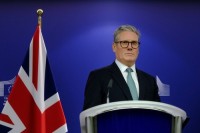
On 10 October, Keir Starmer’s Labour government unveiled its plans to reform
employment law, by enhancing working conditions and redressing those aspects of
current employment legislation that are most unfavourable to workers. These reforms,
which were promised for the government’s first 100 days in office, include a bill
(Employment
Act Bill) and a policy paper (Next
Steps to Make Work Pay), with a number of other measures that will be
referred for consultation, such as the right to switch off and a ban on unpaid
internships (see government press
release). The policy paper also announces longer-term reforms in areas such
as the parental leave system, which at present “does not support working parents”;
paid leave for carers; regulating workplace surveillance technologies; revising the
legislation covering transfers of undertakings (TUPE); improving occupational health
and safety, in ways that include raising awareness of neurodiversity in the
workplace and protecting workers who are exposed to extreme temperatures; and
revising the system in place for handling public procurement contracts, so that
social criteria can be taken into account and employment law requirements
tightened.
At a personal level, the Employment Act Bill abolishes the
requirements for a minimum qualifying period for paternity leave and parental leave.
It announces a new entitlement to at least one week’s bereavement leave. The bill
removes the four-day waiting period before sick pay becomes payable. It also
provides greater protection against harassment, forcing the employer to take “all
reasonable steps” to prevent sexual harassment in the workplace, and furthermore,
makes employers responsible for tackling harassment perpetrated by third parties, on
whatever grounds.
In the area of job security, the bill makes protection
against unfair dismissal a right from day 1 of employment. In addition, drawing
lessons from the scandal involving the ferry company P&O (see IR Notes 182
and IR Notes
201), the bill prohibits ‘fire and rehire’ dismissals, whereby a company
dismisses employees who refuse to accept either less favourable working conditions
or a pay cut, so that they can be replaced with cheaper labour. An exception is
provided for if the company is at risk of bankruptcy. While not banning “zero-hours
contracts” outright, the bill requires employers to offer a guaranteed number of
working hours to those of their workers who have either a “low” number of guaranteed
hours or no fixed hours.
At collective level, the bill provides for employee
representatives to be consulted in connection with redundancies involving more than
20 people during a 90-day period, including for redundancies at several
establishments owned by the same company. The new legislation also includes a number
of amendments designed to facilitate access to trade unions in the workplace and to
secure recognition, in ways that include reducing union affiliation thresholds, of
their right to conduct collective bargaining. Moreover, it obliges employers to
inform workers of their right to belong to a trade union, and it repeals the recent
legislation restricting the right to strike, which “failed to prevent a single day
of industrial action while in force”.
The government is thus attempting to
engineer a reset of employment relationships. However, this will be a gradual
process, as many of the measures will not come into force until 2026. In contrast to
the fears aroused in connection with the post-Brexit period (see Brexit and labour standards),
the government is distancing itself from the Conservatives’ plans to boost business
competitiveness by opting for all-out deregulation and scrapping EU laws, in order
to enhance the United Kingdom’s appeal in the eyes of investors. It is a relief to
see that the Labour government is refusing to back such a policy, which would amount
to “social dumping”.
|
1. European
Union
Legislation

“Platform” directive : On 14
October, the Council gave the green light for final adoption of the directive
on improving working conditions in platform work (see IR Notes
226). This directive will enter into force once it has been published in the
EU’s Official Journal. Member States will then have two years to incorporate its
provisions into their domestic law. It should be borne in mind that this law
establishes a presumption of employment for digital platform workers as soon as
“facts indicating control and direction […]” are found (Article 5.1). Moreover (see
Chapter V), it grants platform workers – whether self-employed or recognised as
employees – a number of new “digital rights” with regard to algorithmic management
(see Platform work). The text also
invites Member States to take “adequate measures to promote the role of the social
partners and encourage the exercise of the right to collective bargaining in
platform work” (Article 25).
|
Case law

Difference in treatment justified :
On 4 October, the EU Court of Justice pronounced judgment on a
Spanish case concerning indirect discrimination between flight deck crew and cabin
crew employed by the airline Air Nostrum. The Court did not follow the opinion
published by its Advocate General (see IR Notes
232). Under two separate collective agreements, flight deck crew enjoy a
daily subsistence allowance of between 65 and 100 euros, depending on whether the
flight in question is a domestic or an international one, whereas cabin crew receive
between 37.06 and 59.06 euros for the same flights. Given that 93% of flight deck
employees are men, and 93% of cabin crew are women, the Court of Justice was asked
to rule on whether this was a case of indirect discrimination (see Indirect discrimination). The
Court agreed that this was indeed unequal treatment but inferred from Article 4 of
Directive 2006/54 that such a difference in treatment, as regards the pay of the
workers at issue in the main proceedings, could constitute indirect discrimination
on grounds of sex only if that pay were paid “for the same work or for work to which
equal value is attributed”. It points out that in order to assess whether workers
are performing the same work or work of equal value, account should be taken of a
range of factors, including the nature of the work and training and working
conditions. The Court asserts that “cabin crew members and pilots clearly do not
perform the same work”. Furthermore, these workers do not receive the same training
nor do they have the same responsibilities. Consequently, this difference in
treatment cannot be regarded as indirect discrimination on grounds of sex (CJEU,
4 October 2024, Case C-314/23, Air Nostrum).
|

CJEU upholds “Mobility Package” :
In a judgment dated 4 October, the Court of Justice approved,
with one exception, the European legislation governing working conditions in the
road transport sector (the “Mobility Package”), as adopted in 2020 (see Mobility package). This
legislation had been contested by a number of Member States, especially East
European countries. The Court states that by introducing the “Mobility Package”, the
EU legislature had sought to strike a new balance between the interest of drivers in
enjoying better working conditions and the interest of employers in carrying on
their transport activities under fair commercial conditions (CJEU,
4 October 2024, Case C‑541/20 to C‑555/20, Lithuania / Parliament and
Council). The Court confirmed the validity of several contested provisions,
such as the prohibition on drivers taking their weekly rest periods in their
vehicle, but annulled the obligation requiring vehicles to return to their home
country every eight weeks. It held that the EU legislature had not established that
it had sufficient information to enable it to assess the proportionality of that
measure. European social partners in the sector have expressed their satisfaction
with the judgment, but are also disappointed with the decision to overturn the
provision regarding return of vehicles. The employers’ organisation IRU wonders
whether the Commission will now try to build a case with more information around the
proportionality of that measure or whether the judgment “will put an end to the EU
attempt of requesting operators to bring trucks home in addition to the necessary
visits for mandatory technical inspections” (see press
release). The European trade union federation ETF argues that “this decision
is a significant setback for efforts to combat unfair competition and labor rights
violations, as well as a serious blow to the economic and social sustainability of
the industry.” This provision ensures that there is a direct and genuine link
between the Member State of establishment and the company’s economic activity in
another Member State. The ETF therefore believes that the Commission should now
address the insufficiencies in terms of information, as noted by the Court of
Justice, “and reinstate this measure” (see press
release).
|
2. Member
States
Germany

Cannabis in the workplace :
Social partners in the chemical industry (IGBCE and BAVC) have
updated their 1996 sectoral agreement in response to the partial legalisation of
cannabis. In addition to workplace safety issues, the agreement emphasises the need
for dialogue around addiction in order to protect companies and raise awareness of
at-risk behaviours. Employers are encouraged to put in place discussions on the
effects of cannabis, in order to guarantee workers’ safety and productivity (see press
release).
|
Croatia

Collective bargaining agreement in the retailing
industry : On 25 September, social partners in the retail
sector signed its first collective bargaining agreement, which will cover the 28,000
companies and 250,000 employees concerned (see Ministry of Employment press
release). The message jointly promoted by employers and trade unions is that
companies can only be competitive if their workers experience job satisfaction,
which in turn is conditional on these companies being competitive. Consequently, the
agreement seeks to enhance working conditions with a view to safeguarding jobs,
protecting the retail sector and boosting its competitiveness. The President of
Croatia’s Retail Union said that both parties intend to further develop social
dialogue, at both sectoral and company level (see press releases issued by the Union
of Autonomous Trade Unions of Croatia (SSSH).
|
Spain

Discrimination against LGBTI persons :
On 8 October, the Council of Ministers passed a royal
decree implementing all of the measures promoting equality and
non-discrimination against LGBTI persons in corporate environments, as provided for
by the agreement concluded between the Ministry of Employment and the social
partners. Companies with more than 50 employees will now have three months to
initiate the negotiation of a memorandum of understanding dealing with harassment
situations linked to sexual orientation, identity and gender expression, together
with preventive practices and detection mechanisms. If no agreement is concluded
within six months, the company will be required to implement the measures enacted by
the decree. This decree will permit implementation of Article 15 of the “Ley
Trans” [‘Trans Law’], passed in February 2023, which requires large
corporations to promote equality for LGBTI persons in the workplace. Collective
labour agreements will also have to include provisions taking into account the
reality of diverse LGBTI families, spouses and unmarried partners.
|
Finland

Female company directors and equal pay :
A study
performed by the German Institute for Economic Research (DIW Berlin) reveals that
the gender pay gap in Finnish companies managed by women is more than two percentage
points lower than that reported by companies led by men, and it is even close to
zero in some sectors. In particular, female directors of small companies have a
greater margin of discretion when it comes to setting wages and salaries, thereby
contributing to a reduction in inequalities (see press
release). However, the study also emphasises that the gender pay gap remains
significant in male-dominated sectors, even when the companies concerned are led by
women.
|

Berry pickers : On 10 October,
the government unveiled a proposal to introduce a number of amendments to the
Seasonal Workers Act, with the aim of enhancing the status of berry pickers. These
changes mean that foreign workers employed as wild berry pickers will no longer be
allowed into the country on an ordinary tourist visa. Companies will be required to
employ foreign pickers based on a contractual employment relationship, granting them
permission to enter the country, in order to prevent abuses linked to exploitation
and human trafficking (see press
release).
|
Luxembourg

Sunday working : On 11 October,
the Government Council passed a bill amending Article L. 231-4 of the Employment
Code, relating to Sunday working in the retail industry. This will allow employers
to ask their employees to work for up to eight hours on Sundays, instead of four
hours, which is the current limit. Employees will continue to receive a 70% higher
hourly rate of pay for all hours worked on Sundays. The Ministry of Employment
comments that “the move to allow up to eight hours of Sunday working reflects
current trends taking place in a changing society and workplace, and offers
employees the opportunity to enjoy a more flexible work-life balance” (see Ministry
of Employment press
release).
|
3.
Companies
Transnational agreements
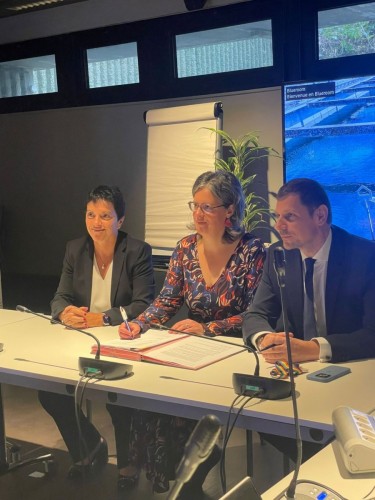
Occupational health and safety :
On 3 October, Suez group management and the
European Federation of Public Service Unions (EPSU) signed a new European
agreement on health and safety in the workplace, superseding the previous
agreement concluded in 2014. The agreement includes “concrete provisions on a range
of health and safety issues from the operation of heavy machinery to mental health
and the right to disconnect to the fight against harassment and violence”. The
negotiations commenced in November 2023 and were led by Christine Chiffre, Chair of
the Suez EWC, EPSU and a special negotiating body made up of representatives from
all countries represented on the European Works Council (see EPSU press
release). EPSU policy officer Tuscany Bell said: “By tackling both emerging
and well-established health and safety risks, the new Suez agreement can be seen as
a model at European level, and not just for the waste and water sectors.”
|

A stronger global agreement : On
10 October, the management of the Spanish textile group Inditex (160,000 employees) renewed
its global framework agreement, concluded in 2009, with the IndustriAll Global Union
federation. The initial text has been supplemented by a number of new provisions
concerning: 1/ “Fair digital transformation”, which introduces a right for retail
workers to be consulted regarding Inditex’s use and implementation of these tools;
2/ Fighting gender-based violence; 3/ Workplace inclusion, with a focus on retention
of workers who offer “functional diversity”; 4/ Extending the rights covered by the
agreement to include employees of franchised operations (see press
releases issued by IndustriAll
Global Union and Inditex).
|
4. Studies
and reports
Négociation
collective et IA
Collective bargaining and AI :
France’s Centre d’études de l’emploi et du travail
[‘Centre for Research into Employment and Work’] has published a study
analysing company agreements signed in France between 2017 and 2024 that mention
artificial intelligence. Although these agreements account for just a fraction of
the total (242 out of more than 285,000 agreements signed), their number has risen
by a factor of 2.5 in recent years. Negotiations around AI are focused primarily on
employment-related issues, “reflecting concerns and questions regarding safeguarding
of jobs in a context of digital transition”. The authors argue that “it is vital to
expand the dialogue to include workplace transformations brought about by AI”, in
order to “direct the use of AI towards improving working conditions and better
meeting workers’ needs, with beneficial long-term effects on employment”.
|
|
|











