 |
| |
IR Notes 240 – 13 November 2024
www.irshare.eu
|
|
|
| |
| |
A question for…
Domenico Colapinto, Spokesperson and President of the Adecco Group
EWC
What
are the main features and innovations of the Adecco Group
EWC’s new agreement? (see 3.
Companies)
The new agreement is
inspired by the concept of democracy at work, which is included in
several of its provisions, e.g. monitoring of EWC candidates’
elections, country by country. Furthermore, in countries where there
is no local works council or trade union, the EWC representative of
the country concerned now has the right to be informed by local
management of any transnational decisions that will affect their
country’s employees. This provision means that a kind of local
social dialogue can be initiated. Additionally, local management
must now seek support from the local trade unions when it comes to
organising the process of appointing EWC members.
I’d also like to point out another key
feature of the agreement: stronger protection for all EWC members,
be they regular members or substitutes. By comparison with the
minimum national standards and the article contained in the previous
agreement, a minimum standard is now in existence: members cannot be
dismissed or be subject to unfavourable changes in their terms of
employment or to unfair treatment because of their EWC
membership.
This
negotiation was successfully completed thanks to two key factors:
firstly, the EWC’s perseverance and resilience during a period of
crisis, with the support of Uni Europa, national works councils and
high-level experts, who strengthened its position and negotiating
capacity. Secondly, the negotiations were also made easier by a
change of Human Resources Department representatives, and I’d like
to extend my official thanks to them.
|
|
|

|
| |
Diary
14
November
Paris
International
conference organised by the INRS, anticipating the transformations
taking place in the world of work and preventing occupational hazards
(programme).
21 November
Brussels
Conference
organised by The Left group in the European Parliament and researcher
Antonio Casilli at the CNRS Interdisciplinary Innovation Institute,
entitled ‘ (Un)artificial
intelligence – workers behind the machine ’.
2 to 3 December
Brussels
Meeting of
the Council of Employment and Social Policy.
|
|
|
|
|
| |
Who we are?
IR Notes is a
fortnightly newsletter produced by IR
Share and its
network of experts, and is available in several European languages
(English, French, German, Italian, Spanish). It offers Europe-wide
monitoring of employment law, labour relations and employment policy. It
is available by subscription for 273 euros per year .
The team This issue
was producaed by Ambre Grenier-Boley,
Victoria Fonseca, Camille Hue,
Iris Turlan and Frédéric
Turlan
.
Find out more about the IR Share
team on our website.
Subscribe to IR Notes
Via the
IR
Share website or by calliang us on:
+33 (0)6 81 41 53 95
or
E-mail: frederic.t@irshare.eu
Legal notice.
Publisher: IR Share SARL – 5, Les Compères – 89520 Fontenoy, France –
Tel.: +33 (0)6 81 41 53 95 – share capital 1,500 euros – commercial
register (RCS Auxerre): 512 567 959. Managing editor: Frédéric Turlan.
Hosting: ALTEO by Damien Cornillet – Château – 89500
Villeneuve-sur-Yonne. CPPAP no.: 0626 Z 93933.
|
|
|
|
|
| |
Follow us on LinkedIn!

Why not connect to the IR Notes LinkedIn page, so that you can keep up with
developments in the issues we’re covering, between two editions?
You’re welcome to follow us! There are already 653 of you following
us!
|
|
|
|
|
| |
European Industrial Relations Dictionary
In case reading IR Notes inspires you to
explore this subject further, we are providing links to the European
Industrial Relations Dictionary published by Eurofound. This is updated at
regular intervals by IR Share, which publishes IR Notes. The term
definitions are available in English and can easily be converted
into other languages using on-line translation tools.
|
|
|
|
|

|
|
|
Lead
story
The
objective of boosting EU competitiveness collides with social Europe
On 8 November, at an informal Council meeting in Budapest, the Twenty-Seven adopted a
Declaration
on the New European Competitiveness Deal, drawing the lessons from two
recent reports: “Much more
than a market”, written by Enrico Letta, and “The
future of European competitiveness” by Mario Draghi (see IR Notes
236). EU leaders say they will “seize the wake-up call” contained in these
reports, and they are determined to “urgently close the innovation and productivity
gap, both with our global competitors and within the EU”. However, they remain
excessively cautious when it comes to identifying exactly what resources will be on
the table. They acknowledge that “the competitiveness challenges we face will
require significant investment, mobilising both public and private financing”. The
usual instruments (Multiannual Financial Framework, Capital Markets Union, European
Investment Bank) are listed but there is nothing about a major EU loan, which is the
only realistic way of funding innovation. The leaders simply promise to “explore the
development of new instruments” and to continue to “work towards the introduction of
new own resources”. This commitment is out of step with Mario Draghi’s call for
massive investments, amounting to EUR 800 billion per year, to fund the European
Union’s ecological and digital transition, and its defence, and to prevent its “slow
death”. Despite their divided opinions, EU leaders drew up a roadmap for turning the
EU’s economy around, calling on the European Commission to act quickly to: 1/ present, by June 2025, a new
and comprehensive horizontal strategy on the deepening of the Single Market,
including a roadmap with clear timelines and milestones; 2/ take decisive steps towards a
Savings and Investments Union by 2026, and make urgent progress on the Capital
Markets Union; 3/ present, as
a priority, a comprehensive industrial strategy for competitive industries and
quality jobs; 4/ implement,
without delay, concrete proposals on reducing reporting requirements by at least 25%
in the first half of 2025, and including red-tape and competitiveness impact
assessments in its proposals. As far as social dialogue is concerned, in a period
that looks set to be chaotic and marked by a succession of factory closure
announcements, the Twenty-Seven are contenting themselves with maintaining a minimum
service: the EU must “harness Europe’s talent and invest in skills to foster
high-quality jobs throughout the Union”, with a view to tackling its labour and
skill shortages. With these goals in mind, “we will aim to strengthen social
dialogue, uphold equal opportunities and reduce inequalities, in line with the
European Pillar of Social Rights”, say EU leaders. This modest ambition is aligned
with the employers’ two main demands concerning social Europe: remedying the labour
and skills shortages, and introducing “regulatory holidays”, or even watering down
the directives passed by the previous Parliament (CSRD, due diligence, pay
transparency, etc.) in the name of cutting regulatory burdens and bureaucracy, so as
not to damage the competitiveness of European businesses.
|
1. European
Union
Legislation
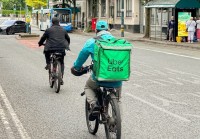
Platform directive : On 11
November, one of the emblematic texts of the von der Leyen Commission was published
in the OJEU: Directive
(EU) 2024/2831 of 23 October 2024 on improving working conditions in platform
work (see IR
Notes
226). The directive firstly establishes a presumption of employment for
digital platform workers when “facts indicating control and direction are found”
(Article 5.1). Secondly, it grants platform workers – whether self-employed or
recognised as employees – a number of new “digital rights” with regard to
algorithmic management (see Platform work). The text also
invites Member States to take “adequate measures to promote the role of the social
partners and encourage the exercise of the right to collective bargaining in
platform work”.
|
Social
update

Employers rise up against due diligence
legislation : EU employers continue to be unhappy about the
adoption of Directive (EU) 2024/1760 of 13 June 2024 on corporate sustainability due
diligence (see IR Notes 226)
(see Due diligence). Citing Mario
Draghi’s report
(see IR Notes
236), which asserts that “the EU’s sustainability reporting and due
diligence framework is a major source of regulatory burden”, on 5 November, a group
of 27 employers’ organisations and trade associations, including BusinessEurope and
SME United, published a joint
statement entitled “Towards EU due diligence rules that work for all”,
setting out their concerns regarding the implementation and transposition phases of
the directive. Their view is that the Commission’s goal of relieving and simplifying
administrative burdens should prompt it to: 1/ Immediately launch a
comprehensive competitiveness assessment of the directive, in consultation with
businesses and their business associations, in order to identify and address
priority areas for simplification, clarification and burden reduction; 2/ Either adopt guidelines and
implementing legislation at least two years before compliance with legislation
becomes mandatory, or extend the transition period; 3/ Harmonise and guarantee
interoperability of the rules: these steps are essential for supporting Europe’s
competitiveness and ensuring a well-functioning Single Market. The employers’
organisations are also calling on the Commission to closely monitor transposition
measures, whilst coordinating with the Member States to ensure that divergence with
the Directive is minimised. They warn that not following these recommendations
“would once again jeopardise European competitiveness”. Ahead of the informal
Council meeting in Budapest, the employers’ organisations also cited the application
of the pay transparency directive as an example of an excessive reporting burden.
|

Restructuring : On 5 November,
the European Commission unveiled a proposal to grant €700,000 from the European
Globalisation Adjustment Fund (EGF) to finance measures designed to help the 632
employees laid off by Purmo (machinery) and Sappi (paper) to find a new job (see European Globalisation Adjustment
Fund). The total cost of these accompanying measures, aimed at
workers who are mostly lower-skilled and aged 50 years and older, is estimated at
1.2 million euros, 60% of which will be covered by the EGF (see press
release). On 16 September this year, the Commission also announced support
worth 2.7 million euros for 365 workers dismissed in Belgium by the retail chain
Match-Smatch (see press
release).
|
European
social dialogue
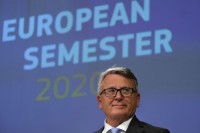
EU economic governance : On 22
October, European social partners, with the exception of BusinessEurope, adopted a
declaration calling for their participation in economic governance and in the
European Semester, under Regulation
2024/1263 of 29 April 2024 on the effective coordination of economic policies
and on multilateral budgetary surveillance (see European Semester), to be
strengthened. The signatories invite the European institutions to “take the
necessary steps to ensure that meaningful and appropriate involvement of the
European-level social partners is set in a European rulebook”. For example, in the
Social Convergence Framework, European-level social partners and their national
members in countries that are subject to a second-phase analysis, should be
consulted “in useful time” to express their views on the existence of social
imbalances and possible remedies.
|
Sectoral
social dialogue

Gas : The European trade-union
federations IndustriAll Europe and EPSU have condemned the refusal by the employers’
organisation Eurogas to sign the draft
European framework agreement for a just transition for the gas sector, which
was validated by negotiators at the beginning of the year, and approved by the two
federations’ executive bodies in March (EPSU) and April (IndustriAll) (see press
releases issued by IndustriAll and EPSU).
The text, which represents the outcome of a negotiation that began in July 2023 and
seeks to result in a transposition via European directive, sets forth the minimum
requirements for a just transition, such as adopting a “Social Just Transition Plan
with the full involvement of workers’ representatives”. This just transition plan,
which is linked to the decarbonisation plan, “shall map and clarify the employment
and skills needs and the accompanying social measures aimed at promoting employment
and quality jobs throughout the transition, including addressing strategic jobs and
skills planning and related training policies”. However, Eurogas has refused to sign
this text: its Secretary General, Andreas Guth, has invoked “difficulties in
reaching consensus within an organisation of more than a hundred members”. EPSU’s
spokesperson Can Kaya is unconvinced by this explanation. Following the recent
breakdown of the cross-industry negotiation on telework and the right to disconnect
(see IR Notes
219), he is concerned at the propensity of employers’ organisations to
refuse to enter into binding agreements.
|

Paper : On 8 November, European
social partners in the paper sector (180,000 employees in the EU) adopted a joint
statement calling for “An EU Industrial Deal focused on ensuring quality jobs in
the European Pulp and Paper sector”. The signatories call for a strong
industrial policy that will allow a just transition, while at the same time
developing “a re-skilling and upskilling agenda”.
|
Trade
unionism

Psychosocial risks : To
coincide with the campaign launched by the EU’s Agency for Safety and Health at Work
(EU-OSHA) to promote safe and healthy work in the digital age, the European Trade
Union Confederation (ETUC) highlights that this objective cannot be achieved without
strengthening EU law by adopting directives in the following three areas:
1/ telework and the right to
disconnect (the ETUC is calling on the Commission to embark on the second-phase
consultation for this directive); 2/
combatting stress at work, “which is the cause of over 40% of cases of
depression in the EU and UK, and costs the European economy €620 billion a
year”; 3/ AI at work, which
will uphold the “human in control” principle (see press
release).
|
2. Member
States
Germany
No more impunity for anti-union practices :
On 24 October, the Ministry of Employment put forward a draft
law designed to strengthen collective bargaining and works councils (see press
release). At the present time, “union busting” activities are only
investigated if a complaint is made. One of the aims of the new law is to categorise
as a criminal offence any offence linked to the use of intimidation tactics against
works councils, by converting Article 119 of the BetrVG [German law on workforce
representation] into an offence that will automatically be subject to legal action.
|
Belgium
- Biological agents : A Royal
Decree dated 6 October and published on 21 October, adapts the
provisions of the Well-Being at Work Code with regard to biological agents,
including those applicable when workers are unintentionally exposed to a
biological agent (see press
release).
|
Luxembourg
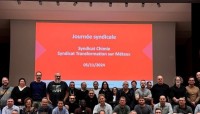
Unions merge : On 5 November, by
means of a unanimous vote giving birth to its “Industry” union, Luxembourg’s main
trade-union confederation, the OGBL, merged two of its unions, which had previously
represented the chemical and metalworking industries (see press
release). The aim is to boost the trade-union presence in the industrial
sector. Delegates adopted a five-year work programme that aims to “strengthen
collective labour agreements, enhance working conditions and build on established
rights”.
|
3.
Entreprises
European
works councils
EWC and management bury the hatchet :
After years of conflict, on 22 October, the management of Adecco Group and its European
Works Council signed a new agreement
covering the company’s EWC and social dialogue. The agreement, which states
that the EWC adds value by “enabling better management decisions through making
employee voices heard”, covers not only the company’s 46,000 or so permanent
employees but also temporary workers who have an employment contract with a group
entity. At geographical level, outside the European Economic Area, it covers the UK,
Switzerland and now Serbia, too. The EWC, which has 36 members representing 24
countries, has a dual-voting system inspired by the Council of the EU: an opinion
must be adopted by a majority of members, representing a majority of employees, so
that every member carries their own “electoral” weight. In countries that have no
employee representative, under the rules, EWC members are elected by all employees,
via a secret ballot. A procedure is provided for in the event of any doubts
surrounding the appointment process, whereby the representative’s mandate is
suspended. To prevent the phenomenon of “phantom” members arising, the agreement
stipulates that following two consecutive absences from EWC meetings without
reasonable justification, a member’s mandate will be suspended and taken over by
their elected substitute. The steering group will then ask employees from the
country concerned to designate a new member. The role of EWC members is set out very
precisely. The agreement includes definitions of information and consultation that
are more elaborate and explicit than those contained in the directive, and it also
grants the EWC the right to express an opinion concerning any transnational matter
on which it has not been consulted under the agreement, but which its members have
identified as being relevant and of transnational importance. The consultation
procedure covering extraordinary matters is detailed, including a timetable, and
states that management “cannot implement the decision(s) through irreversible
measures until the steps” stipulated in the timetable “are completed”. A clause
specifies various levels of confidentiality. If the agreement is terminated, the
rule states that the EWC will remain in place until a new agreement is concluded. A
dispute resolution clause specifies several stages, including an amicable settlement
phase, recourse to mediation and finally to arbitration under Irish law, with an
arbitrator being chosen in advance to speed up the procedure. In terms of resources,
the EWC is entitled to establish working parties and to commission experts, chosen
by it but paid for by the employer, who may provide the following services if and
when required: legal advice, financial expertise, industrial relations expertise or
coaching.
|
Transnational agreements
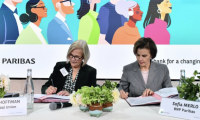
Global agreement strengthened :
On 4 November, the French banking group BNP Paribas (182,656 employees)
and the Uni Global Union federation renewed the global
framework agreement they signed in 2018. The new
agreement incorporates the issue of working modes, defining common
principles for teleworking practice based on fairness and sustainability, and
ensuring that “a minimum presence [is maintained ] on the site in order to preserve
the social link, collective effectiveness and collaborative work”. The text sets out
rights and obligations linked to teleworking, including the right to disconnect. It
is one of the first agreements to address the use of generative AI, with the
intention of supporting employees in developing their skills and deploying
generative artificial intelligence in a secure and ethical manner. The group
specifies the activities concerned by AI and explains that it “has initiated an
industrial approach in order to get the best out of it in terms of creating value”.
Generative AI is “a new additional tool that assists in specific tasks”. Its scope
of application “opens the way to significant transformations that the group will
support”. Another section of the agreement deals with support for parenthood and
work-life balance. It introduces paid paternity leave and child fostering leave,
both lasting for a minimum of 6 days. Each employee can also benefit from a maximum
of 5 unpaid “flexibility days” per year, to be taken either as full or half-days, so
that they can manage absences linked to their personal life. The signatories have
included the “We Care” health and well-being programme in the agreement. This was
launched unilaterally by the group’s management in 2021, with the intention of
providing all employees with death, incapacity-disability and health insurance
cover, as well as taking action to provide support with mental health, e.g. rolling
out a listening and psychological support system (with the goal of raising access to
such services from 84% of employees today to 100%). They have also strengthened the
provisions relating to workplace violence and harassment, and added support for
victims of domestic and intra-family violence, “which is both a factor of inequality
in the workplace and an obstacle to professional equality between men and women”.
The agreement recognises UNI Global Union as a BNP Paribas partner within the
framework of implementing its vigilance plan (see UNI
Global Union and BNP
Paribas press release).
|
|
|











