 |
| |
IR Notes 245 – 5 February 2025
www.irshare.eu
|
|
|
| |
| |
A question for…
Estelle Devos, FCE-CFDT trade union representative and member of the EDF
Group’s Global Dialogue Committee on Social and Environmental
Responsibility

What
are the main areas of progress for the EDF Group in the new
global agreement on CSR, compared to the first version,
signed in 2018 (see 3.
Companies)?
Speaking as a negotiator, I’m convinced that
this new global framework agreement represents significant progress,
compared to the previous one signed in 2018. It’s an ambitious and
appealing text, which can serve as a benchmark for other large
groups.
The text clearly
states that no infringements of basic human rights will be
tolerated, and establishes “zero tolerance” of harassment,
discrimination and all forms of violence at work. Il also sets
higher occupational health and safety targets, by seeking to
eradicate not only fatal accidents at work, as did the 2018
agreement, but also serious accidents, going forward. Lastly, the
agreement contains several new chapters covering topics such as due
diligence, use of artificial intelligence, the just transition and
environmental and climate issues.
The text, which is due to be officially
unveiled at a ceremony on 12 February, has been co-signed on behalf
of the EDF Group by its CEO Luc Rémont, and by all of the trade
union federations represented within the group’s various companies
around the world.
In terms
of governance, the EDF group’s Global Dialogue Committee on Social
and Environmental Responsibility is chaired either by the CEO of EDF
SA, or a duly mandated person, and is made up of 25 representatives
of EDF Group employees, appointed by their trade unions. It’s headed
up by a secretary, who will now have an annual time credit of 80
days to coordinate the work of committee members.
In addition to these changes in governance,
every year there will also be a two-day plenary meeting, a minimum
of two steering committee meetings and a site visit.
|
|
|

|
| |
Diary
5 February
Brussels
The
IndustriAll Europe trade-union federation has called on industrial trade
unions across Europe to demonstrate in demand of “a proactive European
industrial policy based on investment, solidarity, quality jobs and
innovation, in line with our climate commitments” (see press
release).
7 February
Paris
MoveS
seminar: Libre
circulation des travailleurs vulnérables [‘Free
movement of vulnerable workers’], organised by Sophie Robin-Olivier and
Jean-Philippe Lhernould, MoveS experts for France.
11
February
Brussels
Presentation of the European Commission’s work programme for 2025
20 and 21
February
Gdansk
Conference
organised by the Polish presidency of the EU on The
future of work in digital Europe, the social economy, support for
people with disabilities and demographic challenges.
26 February
Brussels
The
European Commission will present an “Omnibus package”, including a
communication and a proposal for a directive.
5 March
Brussels
Commissioner Mînzatu will set out her plan for a Union of Skills.
10
March
Brussels
Employment
and Social Affairs Council (website)
20 and 21
March
Brussels
European
Council (website)
3 and 4 April
Warsaw
Conference
organised by the Polish presidency of the EU, entitled “Building
a digital future in the context of occupational safety and
health“.
4 to 6 June
Bordeaux
5th
international congress of the CIELO Laboral network: « Vers une
reconfiguration du droit social face aux transformations du
travail ?» [‘Towards a reconfiguration of
labour law in light of the transformations taking place in
work?’], with the support of COMPTRASEC, CIEST and the
European Care4Care programme.
|
|
|
|
|
| |
Who we are?
IR Notes is a
fortnightly newsletter produced by IR
Share and its
network of experts, and is available in several European languages
(English, French, German, Italian, Spanish). It offers Europe-wide
monitoring of employment law, labour relations and employment policy. It
is available by subscription for 273 euros per year .
The team This issue
was producaed by Ambre Grenier-Boley,
Victoria Fonseca,
Iris Turlan and Frédéric
Turlan.
Find out more
about the IR
Share team on our website.
Subscribe to IR Notes
Via the
IR
Share website or by calliang us on:
+33 (0)6 81 41 53 95
or
E-mail: frederic.t@irshare.eu
Legal notice.
Publisher: IR Share SARL – 5, Les Compères – 89520 Fontenoy, France –
Tel.: +33 (0)6 81 41 53 95 – share capital 1,500 euros – commercial
register (RCS Auxerre): 512 567 959. Managing editor: Frédéric Turlan.
Hosting: ALTEO by Damien Cornillet – Château – 89500
Villeneuve-sur-Yonne. CPPAP no.: 0626 Z 93933.
|
|
|
|
|
| |
Follow us on LinkedIn!

Why not connect to the IR Notes LinkedIn page, so that you can keep up with
developments in the issues we’re covering, between two editions?
You’re welcome to follow us! There are already 678 of you following
us!
|
|
|
|
|
| |
European Industrial Relations Dictionary

In case reading IR Notes inspires you to
explore this subject further, we are providing links to the European
Industrial Relations Dictionary published by Eurofound. This is updated at
regular intervals by IR Share, which publishes IR Notes. The term
definitions are available in English and can easily be converted
into other languages using on-line translation tools.
|
|
|
|
|

|
|
|
Lead
story
A “compass”
to show the European Union the way forward
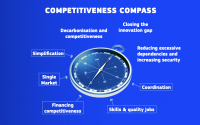
On 29 January, the European Commission unveiled its “Competitiveness Compass”, in the
form of a communication that it sees as the “first major initiative” of its new
mandate (see press
release). This communication sets out the framework of the future
initiatives it plans to take, which are designed to tackle the EU’s weaknesses, as
identified by Enrico Letta and Mario Draghi in their reports. The communication
announces three core areas for action: 1/ Closing the innovation gap,
with the proposal to create a new company status, tailored to start-ups and
scale-ups – the “28th legal regime”. In other words, a kind of 28th fictitious
Member State, where companies can enjoy the benefit of simplified rules, especially
in the area of labour law. 2/
Preparing a roadmap for decarbonisation and competitiveness,
which aims to reinvigorate European industry. This roadmap includes an affordable
energy action plan and tailor-made action plans for energy-intensive sectors, such
as steel, metals and chemicals. 3/
Reducing excessive dependencies and increasing security, to
safeguard the supply of raw materials, clean energy and sustainable transport fuels.
The Commission also wants re-examine public procurement rules in 2026, to allow for
the introduction of a European preference when placing public procurement contracts
for critical sectors and technologies. In addition to these three core areas, the
Commission is announcing “five horizontal enablers for competitiveness”, one of them
being “simplification”, which aims to reduce the regulatory and administrative
burden. It mentions several “Omnibus” packages designed to simplify legislation,
including the upcoming proposal for an Omnibus directive, which will simplify
“sustainability reporting, due diligence, and taxonomy” (see IR Notes
244). Another “enabler” is aimed at “promoting skills and quality jobs”,
while ensuring “social fairness”. To “ensure a good match between skills and labour
market demands”, the Commission will present an initiative to build a Union of
Skills and a “Skills Portability” initiative. The Commission wants to work with
social partners to “present a Quality Jobs Roadmap” and points out that “social
dialogue will continue to be a foundation”.
|
1. European
Union
Social
update

Company boards : The European
Commission has sent a letter of formal notice to 11 Member States, reminding them
that they have not yet notified the Commission of the respective transposition
measures they are taking in connection with Directive (EU)
2022/2381 of 23 November 2022 on improving the gender balance among directors of
listed companies and related measures; and to six other States, who have
notified it only of a partial transposition of the directive. This directive seeks
to ensure a more balanced gender representation among directors on the boards of
listed companies in all EU Member States. It sets a target of 40% for the
under-represented sex among non-executive directors of EU large listed companies,
and of 33% among all directors. The deadline for transposition of this directive was
28 December 2024 (see press
release).
|
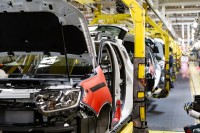
Automotive industry : On 30
January, President von der Leyen convened a meeting of key European automotive
industry leaders, social partners and stakeholders, to launch a strategic dialogue
on the industry’s future. The Commission, which acknowledges “the urgent need to
take measures that will protect” this industry, has tasked Commissioner Tzitzikostas
with presenting an action plan on 5 March (see press
release). To nurture these exchanges, on 27 January, the European Foundation
for the Improvement of Living and Working Conditions (Eurofound) published an
initial study
of employment in the EU automotive sector, ahead of a forthcoming study of the
impact of the twin transition on this sector, scheduled for later this year.
Although car manufacturing jobs represent only 1.5% of total employment within the
EU, a number of countries are highly exposed in the event of a crisis in this
sector, given that it represents a much higher proportion of their total employment.
They include Slovakia (5%), Czechia (4.4%), Romania (3.1%), Hungary (3%) and Germany
(2.6%). Eurofound has also listed the job losses announced in 2024 (a net total of
88,000). At the meeting on 30 January, IndustriAll Europe called for three steps to
be taken: 1/ an action plan to
safeguard jobs in the sector and a stronger legal framework in order to better
anticipate and manage structural change; 2/ implementing and complementing
the Green Deal with a European industrial and investment strategy, as advocated by
the Draghi report; 3/ a
European action plan to manufacture clean cars and make them affordable to all (see
press release).
|

Posted workers : At a time when
work on revising the coordination of social security regulations (see Portability of social security
rights), which has been in progress since 2016, finally appears
to be resuming, European social partners in the construction sector issued a joint
press release, calling for mandatory prior notification to be maintained for
all posted workers in the construction sector. This notification “ensures
transparency and accountability in cross-border postings. It prevents abusive
practices like ‘fake postings’ and undeclared work, empowers authorities to monitor”
compliance with laws and facilitates inspections. EFBWW General Secretary, Tom
Deleu, condemns the proposal: “Once again, supposed simplification and
competitiveness are being discussed at the expense of construction workers’ rights”,
he says. “Such exemption would undermine the principle of fair mobility that we
promote”, adds FIEC Director General, Domenico Campogrande.
|
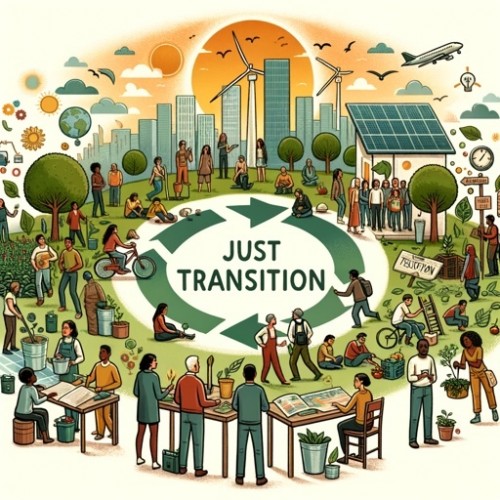
Just transition : On 28 January,
the European Parliament’s Committee on Employment and Social Affairs passed a
resolution calling for the European Commission to present a just transition
directive in order to strengthen democracy in the workplace, in the context of
climate change, digital transformation and company restructuring (see Just transition). This text,
which was adopted by 40 votes in favour, 13 against and 4 abstentions, also
addresses the forthcoming revision of the EU public procurement directive. MEPs
invite the Commission to promote collective bargaining and preferential treatment
for companies whose employees are covered by collective labour agreements. The idea
is that EU financial aid should be withheld from companies that fail to meet the
required standards governing working conditions and terms of employment. Parliament
will vote on this draft resolution at one of its forthcoming plenary sessions (see
press
release).
|
2. Member
States
Finland

Tripartite working group on platforms :
The Ministry of Economic Affairs and Employment has established
a working group that brings together representatives of employers’ and employees’
organisations, and of the ministries responsible for occupational safety and health,
protection of personal data and social security issues (see press
release). The aim is to transpose the European directive on improving the
working conditions of platform workers, by the December 2026 deadline (see IR Notes
240).
|
France
Institutional bullying : The
Court of Cassation [Supreme Court] has handed down a final ruling on the France
Télécom case relating to the introduction, in 2006, of a company policy affecting
one quarter of the workforce of telecommunications group France Télécom. This
involved cutting 20,000 jobs and redeploying a further 10,000 employees under an
internal mobility plan. The implementation of this plan led to a “wave of suicides”,
prompting the trade unions to bring a lawsuit against the directors serving on
France Télécom’s board at that time. These directors, some of whom were sent to
prison and ordered to pay fines, had challenged the Court of Appeal’s judgment. The
main point of law that the Court of Cassation was asked to rule on was whether the
directors’ behaviour could still be classified as “bullying”, within the meaning of
Article 222-33-2 of the French Criminal Code, even though they had no direct contact
with their victims. In a judgment
dated 21 January, the Court of Cassation states that in situations involving conduct
intended to impair employees’ working conditions, such conduct can be deemed to
constitute bullying without the victim(s) having to be in direct contact with the
perpetrator, and without the victims having to be individually identified. The Court
takes the view that the following conduct “can be categorised as a situation of
institutional bullying”: knowingly deciding on and implementing, “a company policy
that is designed to impair the working conditions of some or all employees, with a
view to cutting the size of the workforce or achieving any other objective, be it
managerial, economic or financial, or which results in such an impairment, that may
infringe the rights and undermine the dignity of these employees, harm their
physical or mental health or compromise their professional future” (see press
release).
|
Netherlands

Teleworkers’ safety : A survey
performed by the FNV trade union confederation highlights the lack of attention paid
to safety-related issues encountered by teleworkers, such as cyber-intimidation and
sexting (see press
release). Almost 47% of employees who suffer an incident fail to report it,
either because they do not feel confident to do so, or due to fear of reprisals.
Some employees who did dare to report incidents were either ordered to stay silent
or threatened. The FNV believes that new procedures are needed to oversee this
change in working practices.
|
Sweden
Action plan for LGBTQ+ equality :
This plan seeks to guarantee equal rights and opportunities,
with measures that will encourage better working conditions for LGBTQ+ people (see
press
release), who are more exposed than others to discrimination, harassment and
microaggressions in the workplace (see Eurofound
report). The Swedish Work Environment Authority and the Swedish Agency for
Work Environment Expertise have now been appointed as strategic authorities
supervising these initiatives (see plan).
|
3.
Companies
Transnational agreement
Corporate Social Responsibility :
At a time when the European Commission is considering replacing
the Green Deal texts and the Due Diligence and Corporate Sustainability Reporting
directives with the future proposal for an “omnibus” directive (see IR Notes
244), on 28 January, the French energy group EDF and the international trade
union federations IndustriAll Global Union and PSI renewed their previous Agreement
on Corporate Social Responsibility and strengthened its content, with the
aim of establishing it as a benchmark agreement in this area. The new
agreement contains several new chapters supplementing the 2018 agreement and
covering topics such as exercising due diligence, protecting the environment and
combatting climate change. The section dealing with the digital transformation now
contains a chapter on artificial intelligence.
|
Industrial
dispute

Striking to protest against the ending of
telework : The Catalan energy company Holaluz is facing a severe
backlash after announcing plans to abolish teleworking and to discontinue several
social benefits enjoyed by its employees. According to the trade unions, this
decision led to the resignation of around 25% of the workforce, i.e. almost 50
workers, who view this measure as an Expediente de Regulación de Empleo (ERE)
encubierto, in other words, a disguised collective redundancy. The benefits
withdrawn include medical insurance, language lessons, leisure activities for
employees’ children and most significantly of all, telework: from 28 January
onwards, everyone will have to work on site, all of the time. Spain’s General
Confederation of Labour (CGT) has responded to this decision by calling an all-out
and indefinite strike from the same date. Management justifies these changes by
citing the need to boost efficiency and to react to falls both in its sales and
customer numbers. However, the trade unions believe that this measure is primarily
intended to cut the size of the workforce, without going through formal redundancy
proceedings, by putting pressure on employees to leave the company of their own
initiative.
|
4. Studies
and reports

Artificial intelligence : On 22
January, the European Economic and Social Committee (EESC) published an own-initiative
opinion on pro-worker artificial intelligence. Among other things, the EESC
proposes broadening the scope of the provisions contained in the Platform Work
Directive (PWD), in order to address “the challenges that algorithmic management
systems pose to all workers” and strengthen the rules applicable under Directive
2002/14/EC when high-risk AI systems are introduced. It also calls for explicit
guidance on the provisions of EU Directive 89/391 on Safety and Health at Work (see
press
release).
|
Minimum wages in the EU : The
European Foundation for the Improvement of Living and Working Conditions (Eurofound)
emphasises that the initial
results of the annual review of minimum wages in the EU, due to be published
in mid-2025, suggest that the directive on adequate minimum wages, which is
now threatened by the Court of Justice (see IR Notes
244), is beginning to produce its effect. A growing number of countries have
transposed the “indicative reference values” – as recommended by the directive, for
the purpose of assessing the adequacy of minimum wages, i.e. a level equivalent to
either 50% of the average wage or 60% of the median wage – into their domestic
legislation. It remains to be seen whether these reference values will be high
enough to ensure that adequate minimum wages are paid in all Member States.
|
EU citizens are feeling dispirited :
On 13 January, the European Foundation for the Improvement of
Living and Working Conditions (Eurofound) published the results of a survey
of several tens of thousands of EU citizens, which offers little comfort. These
citizens found it harder to make ends meet in 2024 than they did in 2023 (30%
compared to 22%, and even 56% among low-income households, compared to 40% in 2023).
This situation also goes some way towards explaining the deterioration in mental
well-being affecting all age brackets, except those aged 65 and over. It reveals an
increase in negative feelings such as tension, anxiety and loneliness, particularly
among young adults, and in the number of people who said they regularly felt
downhearted or depressed. 30% of respondents reported that they frequently worried
about work outside their working hours, a figure that represents a return to the
level observed during the Covid-19 pandemic. The survey also shows a decline in
remote-only jobs: among teleworkable jobs, the proportion of employees working
exclusively from home was 14% in 2024, compared to 19% in 2023 and 24% in 2022. A
total of 44% of employees work in hybrid mode (compared to 45% in 2023) and 41% no
longer work from home at all (compared to 36% in 2023). There is still a significant
difference between the number of workers who would prefer to work from home and
those who are allowed to do so, especially given that the percentage wishing to work
exclusively from home rose from 13% in 2020 to 24% in 2024, whereas more than 50%
would like to work from home several times a week. Satisfaction levels with
democracy remain low and even decreased to 4.5 points (out of 10) in 2024, compared
to 4.8 points in 2023. Only five countries score above 5 points: Denmark (6.4),
Luxembourg (5.9), Sweden (5.8), Ireland (5.7) and Germany (5.3). Hungary is in last
place (2.7), behind Bulgaria (3) and Greece and Croatia (both on 3.2).
|
|
|











