 |
| |
IR Notes 256 – 9 July 2025
www.irshare.eu
|
|
|
| |
| |
A question to…
Louise Collett, Syensqo European Works Council General Secretary & Global
Forum Coordinator

You signed a global agreement on
digital transformation and AI with Syenqo’s management (see
section 3: Companies). How did you persuade them to grant the
European Works Council a central role in the company’s AI
deployment?
The agreement acknowledges the
transformative potential of AI and digital tools at Syensqo, while
recognizing the importance of governance, ethical use and the
continuous development of human expertise alongside technological
advancements. It is the result of a continuous dialogue between the
EWC and the Syensqo.ai and IT teams, which began in June 2024, when
the EWC invited the Syensqo.ai team to our EWC training seminar to
present Syensqo’s AI strategy. The company recognises the
importance of continuous dialogue and over the months that followed
we discussed the critical points that the agreement should cover.
One of the important points of the agreement is to ensure the
reskilling and upskilling of the workforce with the advancement of
AI tools through continuous training. We recognize the need for AI
and the valuable benefits and competitive advantages it will bring
us. At the same time, we need to ensure that it is used responsibly
and ethically, in a way that maximizes benefits for our employees,
businesses and customers. The agreement will help us to achieve
this.
|
|
|

|
|
|
|
|
| |
Who we are ?
IR Notes is a
fortnightly newsletter produced by IR
Share and its
network of experts, and is available in several European languages
(English, French, German, Italian, Spanish). It offers Europe-wide
monitoring of employment law, labour relations and employment policy. It
is available by subscription for 273 euros per year .
The team :
This issue was producaed by Inès Bollet, Victoria
Fonseca, Ambre
Grenier-Boley, Iris
Turlan and Frédéric
Turlan. Find out more about
the IR Share team on our
website.
Subscribe to IR Notes
Via the
IR
Share website or by calliang us on:
+33 (0)6 81 41 53 95
or
E-mail: frederic.t@irshare.eu
Legal notice.
Publisher: IR Share SARL – 5, Les Compères – 89520 Fontenoy, France –
Tel.: +33 (0)6 81 41 53 95 – share capital 1,500 euros – commercial
register (RCS Auxerre): 512 567 959. Managing editor: Frédéric Turlan.
Hosting: ALTEO by Damien Cornillet – Château – 89500
Villeneuve-sur-Yonne. CPPAP no.: 0626 Z 93933.
|
|
|
|
|
| |
Follow us on LinkedIn!

Why not connect to the IR
Notes LinkedIn page, so
that you can keep up with developments in the issues we’re covering,
between two editions? You’re welcome to follow us! There are already
724 of you following us!
|
|
|
|
|
| |
European Industrial Relations Dictionary
In case reading IR Notes inspires you to
explore this subject further, we are providing links to the European
Industrial Relations Dictionary
published by Eurofound. This is updated at regular intervals by IR
Share, which publishes IR Notes. The term definitions are available
in English and can easily be converted into other languages using
on-line translation tools.
|
|
|
|
|

|
|
|
Lead
story
A majority
of multinational companies have kept their British representatives on the EWC

At the time of Brexit, which marked the United Kingdom’s departure from the EU, any
group that had established a European Works Council was obliged to adopt one of
several positions, and choose: either to keep the British on board, as before; or to
exclude them; or to grant them a minor role as observers or guests but without any
voting rights; or lastly, to abolish their EWC altogether, on the basis that the
workforce thresholds warranting its creation were no longer met. In addition, the
180 or so non-EU multinational companies that had chosen to locate their
representative in the United Kingdom, for the purpose of establishing the EWC, had
to make a decision and choose which country they should transfer their
representative to. So, more than four years after this earthquake, how have
companies positioned themselves?
On the last point, Ireland has gained many of
the companies whose representative was previously located in the United Kingdom. How
many? The latest statistics published on line by the European Trade Union Institute
(ETUI) estimate that 48 EWCs are now operating under Irish law, whereas the figures
of between 100 (SIPTU, 2021) and 200 EWCs (CFTC, 2024) established in Ireland are frequently cited. The
data therefore needs to be refined.
As for the fate of the British
representatives previously present on 70% of EWCs (De Spiegelaere and Jagodzinski 2020), a study performed by
IRES and presented on 3 April this year (see presentation),
provides some answers. Taking a sample of 64 multinational companies whose EU legal
representative was based in France, Germany and the United Kingdom, only in a tiny
number of cases (2) has Brexit represented an innovation opportunity to expand –
rather than scale back – the EWC’s perimeter. A majority of EWCs (32) have opted for
stability, usually by means of an addendum to the founding agreement or within the
context of its global renegotiation. In this scenario, management and EWC
representatives agree to maintain the existing situation, by keeping on their
British representatives, and maintaining all of their rights. In a number of other
cases (13), their participation has been downgraded, with a sole British
representative continuing to be involved in the EWC, and with limited rights, acting
as an observer or guest. In this scenario, the United Kingdom is often excluded from
the transnational scope of application of the European Works Council agreement.
Lastly, 17 groups have chosen to simply exclude the United Kingdom from the
agreement’s scope of application, and British members left the EWC on 1 January
2021.
Also worthy of note is the choice made by some companies to keep the
British representatives on temporarily, until the end of their current term. As a
result, several of these groups have recently had to take a position. One such
company was Aptar, which
adopted an addendum to its agreement, keeping its British
representatives on the EWC on a permanent basis, and another was Sanofi, where an addendum to this effect was signed on 19
June.
(*) Anna Frisone, Marcus Kahmann,
Patrick Witzak, Federico Fuchs, Kevin Guillas-Cavan, Marco Hauptmeier,
Markus Hertwig, L’impact du Brexit sur les comités d’entreprise européens.
Stabilité ou changement institutionnel – un enjeu de négociation, la Revue
de l’IRES n° 115, not yet published
|
1. European
Union
Social
update

Restructuring : The European
Commission has put forward a proposal to grant Belgium aid worth 930,000 euros via
the European Globalisation Adjustment Fund (see European Globalisation Adjustment
Fund), to support 417 people who were made redundant in July 2024
in returning to employment, following the closure of microchip manufacturer BelGaN.
Belgium applied to the EGF for aid in February 2025 (see press release).
|
Case law

Collective redundancies : Before
closing the hotel down for 20 months for renovation work, the management of Hôtel
Plaza in Paris dismissed 29 of its 39 employees, without putting in place a ‘social
plan’. This employment protection plan is a requirement imposed by French law on
companies with at least 50 employees. One dismissed female employee had claimed that
management should have drawn up a social plan, as the 11 employees supplied to it by
GSF Jupiter, the company performing maintenance and cleaning services on its behalf,
should have been included in the hotel’s workforce. “It must be stated that it does
not follow from Directive 98/59 (editor’s note: on collective redundancies) that
there is any obligation to draw up and implement an employment protection plan”,
explains the CJEU in a judgment
dated 19 June, which rules that it does not have jurisdiction to respond to the question
posed by France’s Court of Cassation. The Court points out that the directive
provides for only “a partial harmonisation of the rules for the protection of
workers in the event of collective redundancies”, and that it grants Member States
the right “to apply or to introduce laws, regulations or administrative provisions
which are more favourable to workers”. French law has done so, by introducing an
obligation for companies with 50 or more employees to draw up a social plan.
Consequently, only the national court is competent to rule on the dispute.
|
Sectoral
social dialogue
Social services : On 26 June,
European social partners in the social services sector signed a Framework
of Actions on Retention and Recruitment in Social Services. This initiative
is the main step taken so far by this young European sectoral social dialogue
committee, which was established in 2023. The text contains 15 concrete actions for
combatting the problems of labour shortages and high staff turnover rates, which
compromise care quality and availability. They include improving employees’
work-life balance by introducing flexible time schedules and family-friendly
policies, and preventing musculoskeletal disorders and psychosocial risks.
|

Chemical sector : On 30 June,
the European chemical industry social partners issued a joint
statement on fair employment of third country nationals in subcontracting
chains. The signatories note that “isolated cases of employment malpractices
affecting particularly third country national (TCN) workers have occurred”. Faced
with a labour shortage, they wish to “recognize the importance to highlight the need
for continued efforts to ensure fair treatment, compliance with labour laws, and the
protection of all workers in the EU, including TCN workers’ rights throughout the
subcontracting chains”.
|
Trade
unionism
Content moderators : Led by the
Uni Global Union federation, a global trade-union alliance has been set up to cover
the content moderators employed by digital giants such as TikTok, Meta, Alphabet and
OpenAI. It is calling on these companies to adopt mental health protection measures
throughout their supply chains for the workers who shield internet users from
violent content. Based on a report
analysing the problematic situations encountered, UNI Global proposes eight
protocols designed to reduce risks (see press release).
|

Health and safety in the waste sector :
The European Public Service Union (EPSU) has published a report
on the waste sector, highlighting “the alarming risks faced by nearly one million
workers keeping Europe’s towns and cities clean”. The report identifies a number of
safety problems linked to climate change, technological changes and the outsourcing
of public services.
|
2. Member
States
Germany
Employee participation in the workplace :
The Länder would like to modernise employee
participation arrangements and to make changes to the rights enjoyed by works
councils (see Federal
Council resolution). The Federal Council (Bundesrat) will vote on a
global resolution that seeks to clarify the definition of an employee, to boost
protection against anti-trade union actions, and to enhance data security in the
face of new forms of work organisation and artificial intelligence. For example,
works councils should be entitled to hold meetings and elections on line.
|
Bulgaria
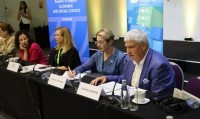
Individual learning accounts :
At a conference,
Natalia Efremova, Vice-Minister of Labour and Social Policy, declared that
individual learning accounts will be developed in collaboration with social
partners, to improve access to training. Every worker or unemployed person will have
a digital account, which they can use to select a particular type of training. She
also announced the creation of sectoral training funds to remedy the shortage of
skilled labour in some sectors, and the introduction of micro-certificates aimed at
enhancing the knowledge and skills of the working population via short training
courses.
|
Finland
Maintaining essential services during strikes :
A new law proposed by the government seeks to ensure that
essential services will continue to be provided when disputes arise during
negotiations between social partners (see press
release). The amendments have been drawn up by a tripartite group, in the
wake of a resolution passed by the government in 2022. The texts call on trade
unions to ensure that industrial action does not give rise to health and safety
risks. Employers, for their part, will be able to issue orders instructing that
emergency work be carried out, and to apply to the courts for a strike prohibition
order if their employees then fail to undertake this essential work.
|
France

Accompanying parenthood : On 19
June, Parliament passed the law that will protect persons who are planning to become
a parent from discrimination in the workplace, including those engaged in a
medically assisted procreation or adoption procedure. (IR Notes
252). This law will increase the number of leaves of absences granted for
the purpose of attending appointments with medical professionals and the
authorities.
|

Vocational retraining : Social
partners have adopted a national
cross-industry agreement to promote vocational transitions and retraining.
Its main measures are expected to be incorporated into a draft law, currently being
debated in Parliament, which is already transposing two national cross-industry
agreements on social dialogue and employment of older workers. The new agreement
changes the frequency of certain interviews that an employer is required to conduct
with an employee during the course of their working life. A “regular appraisal”
[entretien professionnel] will now be held once every four years instead of
two, while a “longer-term appraisal” [entretien de bilan], previously
conducted at six-yearly intervals, will now be held once every eight years. In
addition, the agreement provides employers with means of topping up an employee’s
personal learning account, for the purpose of jointly funding training. It also
merges two existing mechanisms offering retraining pathways, either internally or
externally.
|
Netherlands
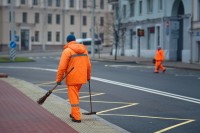
Early retirement for workers with arduous jobs :
Under the new collective agreement governing cleaning companies,
from 2026 onwards, employees who work for these companies will be eligible to retire
up to 30 months before they reach the statutory retirement age if their working
conditions are physically demanding (see press
release). The FNV trade union confederation has expressed its satisfaction
with this development. The new collective agreement also includes measures that will
automatically convert structural overtime into a new contract of employment with
longer working hours, and will extend the generational pact to include employees who
work for several employers, so that they can move to an 80% of full-time work
schedule while continuing to receive 95% of their wages.
|
3.
Entreprises
Transnational agreements
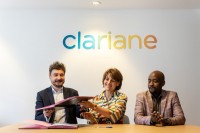
Occupational health and safety :
On 26 June, the management of the Clariane group (63,000
employees) and the European Public Service Union (EPSU) signed their second joint
text: a European
health and safety agreement on preventing accidents at work and supporting
employees, following on from the European
charter for the fundamental principles of social dialogue, signed in 2023
(see Clariane
and EPSU
press releases). The new agreement supersedes the European protocol on health and
safety at work and prevention of accidents, signed in 2021. The text proposes a
number of measures, often inspired by grassroots practices, which seek to promote a
health and safety culture, and working conditions that are conducive to everyone’s
safety; to prevent violence and support employees who fall victim to violence
(paying their legal costs); and to take actions relating to health and quality of
life at work, e.g. raising awareness of issues related to women’s health
(cardiovascular disease, endometriosis, the menopause). The signatories also want to
see action plans implemented in every establishment, aimed at reducing accident
risks and absenteeism. A monitoring committee is tasked with analysing trends in
accidentology and absenteeism data, and the actions put in place in the various
countries. It will meet twice a year in person, and its members will be granted an
annual time credit of 10 hours. The text of the agreement specifies the monitoring
indicators to be used and examples of practices that have led to the measures set
out in the agreement.
|

Digital transformation and AI :
On 23 January, the management of the Belgian chemicals group
Syensqo (13,500 employees, 38%
of them in Europe) signed a global
framework agreement on digital transformation and artificial intelligence
with the Syensqo Global Forum and its European Works Council. This agreement is
based on compliance with the fundamental principle of a ‘human in control’,
asserting that human supervision will always remain present in any decision-making
processes involving AI. The text, which is global in scope, confers a major role on
the EWC: 1/ Responsible AI
policies will be developed and updated in consultation with the EWC. 2/ A regular dialogue between
the EWC and the company’s digital management and AI teams is provided for. 3/ Once every three months, the
select committee will receive a presentation on the company’s digital and AI plans
before they are implemented, so that the committee can put forward its own
contributions. Where plans are of particular importance, the agreement provides for
an information and consultation process conducted at the appropriate level, in line
with the scale of the plan. A training, reskilling and upskilling programme will
also form an integral part of the roll-out of a new digital/AI tool. The agreement
guarantees compliance with the principles of well-being at work, including the right
to disconnect. In addition, employee representatives can use company systems to
carry out their duties, and as such, “will not have their digital footprint
monitored, accessed or held in any way”.
|
4. Studies
and reports
Working conditions : On 17 June,
at a seminar for European social partners held behind closed doors, the European
Foundation for the Improvement of Living and Working Conditions (Eurofound) unveiled
the Preliminary
results of the latest European Working Conditions Survey (EWCS), conducted
in 2024 (see EPSU press
release). This survey of more than 35,000 European workers, which is
conducted once every four years, is the only available barometer for monitoring
trends in working conditions in the EU. These results are particularly eagerly
awaited, insofar as they may be used by the European political decision-makers who
are due to put forward a roadmap for quality jobs by the year-end. The results offer
long-term comparisons, e.g. of the proportion of workers who are exposed for at
least three-quarters of the time, or even all of the time, to high temperatures.
This figure rose from 19% in 1995 to 26% in 2024. The other interesting feature of
this survey is that it includes a number of new questions. The question regarding
the efforts made by employers to accommodate women’s health issues shows that 23% of
employers are providing adaptations, at least partially, for painful periods, and
17% are doing so for disruptive menopausal syndrome. The question about the use of
generative AI at work is very interesting, too: 12% of European workers used this at
work in 2024, and of these, 28% were in the financial services sector, 21% in other
services and 18% in the education sector. Industry came in fourth place, with 11%.
Bearing in mind that the survey ended in November 2024, whereas ChatGPT was starting
to be widely used from 2023 onwards, we can only imagine what the results will look
like in 2025! Overall, workers believe that technology creates more tasks and
interactions with colleagues than it removes.
|
|
|











