 |
| |
IR Notes 263 – 03 December 2025
www.irshare.eu
|
|
|
| |
| |
A question for…
Pascale Rauline, Secretary of AXA’s Group European Works Council (CEG)

AXA Group’s management and its
European Works Council have signed a charter on social dialogue
around artificial intelligence (see Companies). Is this the
outcome of a process conducted by employee
representatives?
Well, the AXA CEG has been working on AI for
about fifteen years now, in fact ever since data exploitation and
digitalisation became widespread. From 2023 onwards, we at the CEG
began to work more specifically on generative AI, firstly by
including this topic on the agenda of our annual plenary sessions,
and then, from 2025 onwards, by devoting two of the CEG Bureau’s
monthly meetings to this topic. The aim is to conduct regular
reviews with management covering its strategy in this area, progress
in the use of these technologies, and employee training. Our main
role is to ensure that all employees are included in the changes
linked to this trend, and that nobody is left behind, paying
particular attention to the issue of maintaining employability. This
year, we wanted to formalise this step in a charter signed with the
Group’s management, setting out the basic principles of a
responsible AI transformation: transparency, ethical issues,
fairness, human supervision, data protection and environmental
considerations. By signing this text, management is committing
itself to nurture social dialogue on AI, both at European level and
within each employee representation body at national level. We want
to boost an ongoing social dialogue on AI everywhere, in the spirit
of the 2020 European framework agreement on digitalisation. Lastly,
the charter emphasises the importance of training. Once again, I
stress that the aim is to ensure that all employees
are included, so that responsible adoption of AI systems will become
something as natural as using the Internet and email.
|
|
|

|
|
|
|
|
| |
Who we are?
IR Notes is a
fortnightly newsletter produced by
IR Share and its network of experts, and is
available in several European languages (English, French, German,
Italian, Spanish, Polish). It offers Europe-wide monitoring of
employment law, labour relations and employment policy. It is available
by subscription for 273 euros per year .
The team: This
issue was producaed by Inès
Bollet,
Victoria Fonseca, Ambre
Grenier-Boley, Laura Renucci, Iris Turlan and Frédéric Turlan.
Find out more about the IR Share
team on our website.
Subscribe to IR Notes
Via the IR
Share website or by calling us on: +33 (0)6 81 41 53 95
or
E-mail: frederic.t@irshare.eu
Legal notice.
Publisher: IR Share SARL – 5, Les Compères – 89520 Fontenoy,
France – Tel.: +33 (0)6 81 41 53 95 – share capital 1,500 euros –
commercial register (RCS Auxerre): 512 567 959. Managing editor:
Frédéric Turlan. Hosting: ALTEO by Damien Cornillet – Château – 89500
Villeneuve-sur-Yonne. CPPAP no.: 0626 Z 93933.
|
|
|
|
|
| |
Follow us on LinkedIn!

Why not connect to the IR Notes LinkedIn page, so that you can keep up with
developments in the issues we’re covering, between two editions?
You’re welcome to follow us! There are already 774 of you following
us!
|
|
|
|
|

|
|
|
Lead
story
Towards an
epilogue in the landmark case of Verizon’s EWC

As indicated in our last edition (see IR Notes
262), Ireland’s High Court has handed down an important judgment
in the case brought by Jean-Philippe Charpentier, Verizon EWC Secretary (see IR Notes 250)
against Verizon’s management. The High Court overturned the decision pronounced on
appeal by the Labour Court, which had found entirely in favour of the group’s
management.
In November 2021, a number of EWC members acting in a personal
capacity, including its secretary, took their case to the Workplace Relations
Commission (WRC), which is the competent body for resolving collective labour
disputes in Ireland [editor’s note: under Irish law, an EWC has no legal personality
of its own, and therefore cannot take matters to court]. The complainants applied
for the company’s management to be ordered to pay the costs they had incurred by
taking part in a training course for EWC members, and also to pay certain expert
legal costs incurred by the EWC. The WRC ruled that the EWC had already benefitted
from a training day organised by management, so the latter was not obliged to
reimburse the costs incurred by the 4 members in attending a further seminar –
especially given that management had notified them in advance that they would not
pay these costs. As for the expert costs, the WRC drew a distinction between areas
of expertise that, in its view, qualified for reimbursement, and those that did not
(see decision
and IR
Notes 207) and concluded that management should pay 50% of the eligible
costs. However, on appeal, on 27 August 2024, the Labour Court handed down two
decisions: one confirming that the training costs did not have to be reimbursed, and
the other dismissing the workforce representatives’ application for expert costs to
be refunded (see IR
Notes
236). In fact the Labour Court overturned the WRC’s decision, holding that
the employees’ representative was not entitled to act (decision
TID241). As a last resort, the employee representatives then decided to
refer the case to the High Court.
In its judgment, which is the first one in
this field handed down in Ireland, the High Court notes that the Labour Court had
made several “errors of law”. With the exception of training costs, which the High
Court confirms did not have to be paid by the employer, given that it had already
presented an EWC training course that was deemed adequate, the High Court disputes
all of the Labour Court’s conclusions. The Labour Court made errors of law by
excluding a collective complaint filed by the EWC; by rejecting the EWC secretary’s
capacity as an EWC representative; by not ruling on the matter of whether the expert
costs were necessary and appropriate; and by not taking account of the application
to have the legal fees of the EWC secretary’s barrister refunded, solely on the
grounds that its appeal had been rejected. In particular, the High Court notes that
“the EWC, having no separate legal personality or independent financial resources,
could only proceed with expert, including legal, advice and assistance”. To ensure
that EWC members’ rights could be properly exercised, “the Labour Court should have
considered whether it could, or should, permit an EWC or an employee to seek
agreement from central management to reimburse all or some of the legal expenses
associated with the claim on the basis that those expenses were necessary to satisfy
the requirement of s. 17(1A) [editor’s note: of the law transposing the European
Works Council directive into Irish law] that an EWC member or employee
representative had the means required to apply the rights conferred by the
Directive.”
Looking beyond the Verizon case, this landmark case has made a
significant contribution to the adoption of the revised European Works Council
directive, which plans to abolish the legal restriction preventing an EWC from
taking a matter to court, notably in Ireland, where any dispute must be instigated
by individuals acting in a personal capacity, at their own expense – a situation
that represents a practical obstacle to challenging any decisions made by management
(see also IR Notes
204).
|
1. European
Union
Project

Artificial intelligence : On 19
November, the European Commission put forward a new “Omnibus” package, which aims to
simplify several pieces of digital legislation, including the regulation governing
artificial intelligence or “AI Act” (see press
release). Its proposal
for a regulation amending the AI Act aims, among other things, to delay
implementation of the rules relating to high-risk AI systems until the Commission
has had time to prepare tools and guidelines to help suppliers to comply with the
requirements. In employment terms, the systems concerned are those used for:
recruitment or selection purposes; taking decisions concerning the terms of
employment relationships, promotion or termination of employment relationships;
assigning tasks on the basis of individual behaviour, personality traits or personal
characteristics; or monitoring and evaluating workers’ performance and behaviour.
Suppliers will have until the end of December 2027 (rather than August 2026) to
demonstrate that their systems are not prejudicial to candidates’ and workers’
fundamental rights, and that they will continue to be systematically supervised by a
human.
|
Social
update
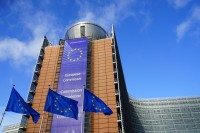
European Semester : On 25
November, the European Commission adopted the autumn package of the European
Semester 2026, with a communication
that defines economic and employment policy priorities (see press
release). In addition, and for the first time, the Commission has put
forward a Council
recommendation on human capital, calling on the Twenty-Seven to prioritise
i) the education and skills needed in strategic sectors of the EU economy (clean
transition, circular economy, industrial decarbonisation, defence and space
industry, etc.) and ii) boosting programmes in the fields of science, technology,
engineering and mathematics (STEM). States are also urged to “reverse the negative
trend in basic skills”. Furthermore, the proposal
for a joint employment report expresses concern regarding the “slow growth”
of labour productivity and “sizeable skills and labour shortages”. The Annex of this report
includes the first-stage analysis of the social convergence framework (SCF) based on
the social scoreboard. The Commission points out that several parts of the autumn
package highlight “the importance of social dialogue” (see press
release).
|
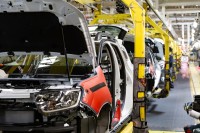
Restructuring : On 27 November,
the European Commission launched a Skills Guarantee Pilot project with a budget of
14.5 million euros, which will focus on workers from the automotive industry and its
supply chain, who are at risk of unemployment (see press
release). To this end, it has published a call
for proposals (deadline: 29 January 2026) to fund schemes to speed up and
improve the transition of these workers to jobs in companies in growing or emerging
strategic sectors, by providing targeted upskilling and reskilling programmes.
|
A “social” Omnibus directive :
In the wake of seeing the European Commission put forward
“Omnibus” directives in order to simplify whole swathes of EU legislation, the idea
of a specific Omnibus directive for European social legislation is gaining ground
among EU employers. The European Chemical Employers Group (ECEG) has published a table
of proposals for simplifications in this area. However, IndustriAll Europe is
critical of this ECEG-led campaign, saying it is “aimed at rolling back
worker-focused legislation, (…) is opportunistic, and it distracts from the
existential issues the sector must urgently confront”, (see press release). This
warning did not prevent four other sector-specific employers’ organisations (Ceemet,
EFB, Hotrec, WEC Europe) from launching a Call
for simplification and enforcement of the social acquis, on 1 December.
|
Trade
unionism

Restructuring : On 12 November,
the European Transport Workers’ Federation published new
guidelines for supporting trade unions and employee representatives at the
time of transnational company restructurings. EWCs and trade-union networks within
transnational companies are presented as “key tools to detect early warning signs,
share information, and coordinate union strategies at the European level” (see press
release).
|

Future of industry : The
IndustriAll Europe trade union federation has published a report
on the risks of deindustrialisation in the EU, prepared by the consultancy firm
Syndex. According to the authors, of the 18 industrial sectors analysed, only
aerospace and defence appear not to be at risk in the short term. The report says
that “all the other sectors are struggling facing harsh US and Chinese competition”.
The document contains recommendations, aimed at decision-makers, for preventing
Europe’s deindustrialisation, and supports some trade union demands, such as the
creation of a mechanism, inspired by the SURE programme, “to prevent irreversible
industrial job losses” (see press release).
|
2. Member
States
Germany

Deforestation regulation : The
trade union IG Metall and the employers’ organisation HDH have called on the Federal
Chancellor and the EU to intervene and cut bureaucracy linked to the European
regulation on deforestation (see press
release). The signatories warn of the risks of lost production, job losses,
and rising costs for consumers. Under the new regulation, timber must have a
declaration of origin, but this requirement is currently giving rise to difficulties
in implementation, reported by SME in particular.
|
Cyprus

Index-linking wages : On 13
November, the government concluded an agreement
aimed at achieving a gradual full restoration of the automatic mechanism for
adjusting wages to match inflation (Cost-of-Living Allowance – CoLA / Automatic
Tariff Adjustment – ATA). This agreement, which is the outcome of protracted
negotiations between organisations representing workers and employers, provides for
the indexation allowance to be raised to 80% of the increase in the consumer price
index (excluding consumption taxes) in January 2026, to 90% on 1 July 2026, and
subsequently to 100% on 1 January 2027. The social partners say that they are
satisfied with the final outcome, as set out in the newsletter of the OEB — the
Cyprus Employers & Industrialists Federation (see press
release). Index-linking will also apply once every two years to the national
minimum wage.
|
Croatia

AI and employment : The
Friedrich Ebert Foundation has performed a survey
of trade unionists’ use and perception of artificial intelligence (AI), on behalf of
the Union of Autonomous Trade Unions of Croatia (UATUC) (see press
release). The study shows that trade union members are aware of the issues
involved with AI, but remain fairly unprepared when it comes to using it. 49.7% of
participants make little use of AI, and those who use it, do so for administrative
tasks. Consequently, there is a significant need for trade unions to receive
education in this area, so that a strategic and proactive position can be reached.
|
Greece

Collective bargaining : On 26
November, the Minister of Labour and Social Security, Niki Kerameus, signed an
agreement with representatives of the country’s main employers’ and employees’
organisations. This historic agreement aims to strengthen collective labour
agreements and to increase the numbers of workers covered by them. The action plan
to implement this agreement, which is required under the EU directive on adequate
minimum wages, will be published in December, and is due to be supplemented by
legislation in early 2026. During a visit to Brussels on 1 December, the Greek
minister saw this agreement welcomed by Roxana Mînzatu, the European Commission’s
Executive Vice-President for Social Rights (see photo), who believes that it is a
source of inspiration for other EU countries in terms of social dialogue.
|
Poland

A new tool for contracts :
Working in conjunction with social partners, the national labour
inspectorate has compiled a checklist to help companies to become more effective in
choosing the right type of employment contract when they recruit workers (see press
release). The parties involved also want to boost workers’ knowledge of
labour law, and thereby help prevent instances of abuse. However, the employers’
organisations have criticised these measures, fearing that they will impair the
process of cost optimisation (see press
release).
|
3.
Companies
European
Works Councils

Artificial intelligence : On 27
November, Thomas Buberl, CEO of AXA and President of the AXA
group’s European Works Council (CEG), and Pascale Rauline, CEG secretary, jointly
signed a charter on
the conduct of European social dialogue in the context of the development of
artificial intelligence within the group. This charter formalises the
commitments made by the Group to its European Works Council, with regard to
iterative social dialogue and employee training in the safe, ethical and sustainable
use of AI.
|

Telework : On 1 July, the
banking group BNP Paribas and
its EWC revised their European
Charter on Teleworking, replacing the text
adopted in November 2021. The new charter supplements the telework provisions of the
November 2024 Agreement
on the Fundamental Rights and Global Social Floor, and contains a number of
“commitments that were made specifically at the European level”. It provides for
specific monitoring of teleworking practice with the establishment of a monitoring
commission, made up of the six members of the Bureau of the European Works Council,
representatives of the European trade-union federations UNI Europe and FECEC, and
management. The charter maintains the principle of “a rate of work time exerted as
teleworking at an individual maximum of 50%” (with options for derogations) and
regular presence on the site, in principle in “the form of a minimum of one day per
week”. The text also limits the length of any partial or total suspension of
teleworking to six months, whether at management’s or the employee’s initiative, and
at the end of this period, provides for an exchange between the manager and the
employee on the organisation of the activity.
|

Day of action : The EWC of the
Spanish textile group Inditex
has launched a day of action across Europe, with the support of the trade
unions represented within the company, to demand a fairer distribution of the
group’s profits. Since it is impossible, in light of national legislations, to
pursue simultaneous strike actions across the EU, the Spanish trade union CC.OO
coordinated a series of demonstrations outside Zara stores in seven European
countries on 28 November, which received good media coverage. “After exhausting
other avenues – a letter to the management, a petition at each meeting – the trade
unions have decided on holding the rallies as a last resort”, says the UNI Europa
trade union federation (see press
release).
|
European
company works council

Combatting climate change : At
the plenary meeting of the Clariane
group’s European company Works Council, held on 20 November, the Works
Council and management signed a charter
to accelerate the reduction of carbon emissions by the Clariane group. This
document is the outcome of work undertaken by a permanent CSR working group set up
by the Works Council. The document makes recommendations to all actors within the
company (management, employees and their representatives) structured around three
themes: 1/ Inform, raise
awareness and train employees; 2/
develop practices to reduce
the company’s carbon footprint; 3/
analyse the impacts of
climate change and take action to protect employees and residents/patients. For
example, qualitative and quantitative carbon footprint indicators will be monitored
by social dialogue bodies, especially the Works Council’s CSR working group.
Employee representatives undertake to support energy efficiency initiatives and
green solutions, particularly when holding social dialogue meetings:
videoconferencing, venues accessible by public transport, use of sustainable
collective modes of transport, responsible local catering, reduction of plastic
waste, etc. Employee representatives will also have to analyse the mapping of the
exposure and vulnerability of establishments to climate risks at European and
national level, and draw up associated action plans.
|
Trade
unionism
Trade union network : On 17
November, trade union representatives from Finland, France, Germany and Spain, and
from the Finnish papermaking group UPM met “to align strategies,
strengthen cross-border solidarity, and push back against UPM’s deteriorating social
dialogue”, says IndustriAll Europe (see press release).
|
|
|











