 |
| |
IR Notes 265 – 14 January 2026
www.irshare.eu
|
|
|
| |
| |
Editorial
Dear readers,

Everyone at IR Notes sends you their best
wishes for the new year! Let’s hope that a growing number of
decision-makers around the world will – like us – be convinced that
a lasting peace can be built only on the basis of social
justice.
As the new
year begins, we’d like to involve you in the ongoing development
of IR Notes. Our heads are full of plans and ideas, and we need
you to help us set our priorities! Over 60 readers have already
responded to our survey, and you can still contribute via
this link.
We’re working hard on a new design for
IR Notes, to make it easier to read and to create dedicated
pages for subscribers on the IR Share website, so that you can
easily consult every issue of our newsletter and access our
archives. What you tell us in the survey will influence our
thinking!
|
|
|

|
| |
Agenda
2 February
Madrid
Presentation of the report of the committee of experts on democracy at
work, commissioned by Yolanda Díaz, Spain’s Minister of Labour and
Social Economy.
12 and 13
February
Lefkosia
(Cyprus)
Informal meeting of European
Ministers of Employment
3 and 4 March
Brussels
4th
European Employment and Social Rights Forum,
organised by the
European Commission, on the theme of:
Social
Europe: Empowering people in times of uncertainty.
9
March
Brussels
Employment
and Social Affairs Council
18
March
Brussels
Tripartite
Social Summit
29 June
Luxembourg
Employment and Social Affairs Council
|
|
|
|
|
| |
Who we are?
IR Notes is a
fortnightly newsletter produced by
IR Share and its network of experts, and is
available in several European languages (English, French, German,
Italian, Spanish, Polish). It offers Europe-wide monitoring of
employment law, labour relations and employment policy. It is available
by subscription for 273 euros per year .
The team: This
issue was producaed by Inès
Bollet, Victoria
Fonseca, Ambre
Grenier-Boley,
Sylvain Nadalet, Laura Renucci, Frédéric Turlan and Iris
Turlan.
Find out more about the IR Share
team on our website.
Subscribe to IR Notes
Via the IR
Share website or by calling us on: +33 (0)6 81 41 53 95
or
E-mail: frederic.t@irshare.eu
Legal notice.
Publisher: IR Share SARL – 5, Les Compères – 89520 Fontenoy,
France – Tel.: +33 (0)6 81 41 53 95 – share capital 1,500 euros –
commercial register (RCS Auxerre): 512 567 959. Managing editor:
Frédéric Turlan. Hosting: ALTEO by Damien Cornillet – Château – 89500
Villeneuve-sur-Yonne. CPPAP no.: 0626 Z 93933.
|
|
|
|
|
| |
Follow us on LinkedIn!

Why not connect to the IR Notes LinkedIn page, so that you can keep up with
developments in the issues we’re covering, between two editions?
You’re welcome to follow us! There are already 777 of you following
us!
|
|
|
|
|

|
|
|
Lead
story
Commission
urged to protect workers from risks related to AI and algorithmic management

On 17 December, by a large majority (451 votes in favour, 45 against and 153
abstentions), the European Parliament adopted the report on Digitalisation,
artificial intelligence and algorithmic management in the workplace –
shaping the future of work. This report invites the European
Commission to put forward an initiative on artificial intelligence and algorithmic
management in the workplace, which will apply to all workers (see press
release). On 12 November, at the Committee on Employment and Social Affairs,
MEPs called on the Commission to put forward a “legislative” proposal (see IR Notes
262), but this qualifier was subsequently deleted from the text adopted at
the plenary session, following pressure from BusinessEurope among
others.
However, the fact remains that the final document constitutes a
“legislative own-initiative report”, meaning that the Commission must respond within
three months. It will either have to indicate what measures it plans to take or
justify its refusal to put forward an initiative that complies with Parliament’s
request. In their report, MEPs argue that “any new deployment or significant change
in the use of AI tools or algorithmic management systems in the workplace should be
subject to health and safety assessment”. The text also calls for meaningful
participation of workers and their representatives “in decision-making processes at
all stages as well as provision of information and consultation on and in-work
training to facilitate the application of new technologies by all workers”. In
addition, the text includes an annex describing the content of a “proposal” that the
Commission could draw up. This annex states that “the deployment and use of new
systems of algorithmic management, or updates to existing systems, which directly
affect workers’ remuneration, evaluation, working arrangements, task allocation or
working time” should be deemed to be “decisions likely to lead to substantial
changes in work organisation or in contractual relations and as such are subject to
consultation pursuant to Article 4(2), point (c), of Directive 2002/14/EC, without
prejudice to Directive 2009/38/EC”. This interpretation would clearly assign
competence to European Works Councils.
Such consultation should be carried out
with regard to: 1/ the
objectives of the deployment or update, the work processes and the workers affected;
2/ the workload, work
intensity, scheduling, working time, flexibility, renumeration, job content,
performance evaluation or contractual relations; 3/ the effects on occupational
health and safety; 4/ the
types of data collected; 5/
the measures in place to prevent, detect, mitigate and correct bias or
discriminatory outcomes; 6/
human oversight and review mechanisms; 7/ training and support measures,
including the assistance of experts, for the workers and the managers using such
systems. The Commission now has three months to prepare its response. The “Quality
Jobs Law”, which is expected by the year end, could be the appropriate vehicle for
responding to the concerns expressed by Parliament.
|
1. European
Union
Legislation

Protection of workers exposed to asbestos :
Three days before the deadline for transposition of Directive
(EU) 2023/2668 of 22 November 2023 amending Directive 2009/148/EC on the
protection of workers from the risks related to exposure to asbestos at work, on 18
December, the European Commission published a communication
introducing guidelines
to help Member States to comply with this legislation. In the first instance, the
directive provides for a reduction in the maximum exposure limit value to 0.01
fibres of asbestos per cm³, i.e. a threshold ten times lower than the current limit
of 0.1 fibres per cm³, (see IR Notes
212). However, the European trade union movement and the European Parliament
had been seeking a more ambitious reduction, to 0.001 fibres per cm³, i.e. a value
100 times lower than the one currently applicable (see ETUI press
release), with a view to cutting the number of asbestos-related deaths,
estimated at 90,000 per year. According to the Commission, between 4.1 and 7.3
million workers in the European Union are still exposed to asbestos at the present
time. On the same day, the Commission also published an update of its Recommendation
concerning the European schedule of occupational diseases. This revision
seeks to ensure “consistent recognition of these diseases across Member States” and
to promote “necessary support and compensation for affected workers” (see press
release).
|
Projects

Corporate sustainability reporting and due
diligence : On 16 December, the European Parliament
definitively adopted the provisional agreement concluded on 9 December with the
Council of the EU, regarding the Omnibus I simplification package. MEPs broadly
approved the compromise, by 428 votes in favour, 218 against and 17 abstentions.
This text aims to “simplify” the directives relating to due diligence requirements
and corporate sustainability reporting, i.e. the CS3D and CSRD directives. The directive
resulting from this agreement is now due to be published in the OJEU.
Member States will have one year, with effect from publication, to transpose the
changes made to the CSRD directive. The deadline for transposition of amendments to
the CS3D directive is set for 26 July 2028.
|
Social
update
Cypriot presidency of the EU :
Cyprus, which on 1 January assumed the presidency of the EU for
six months, has unveiled its work
programme. In the employment field, the presidency is placing the emphasis
on “fair wages, safe working conditions, and equal opportunities”. To guide the
action it plans to take, it refers to “the International Labour Organisation’s
longstanding commitment to social justice as a foundation for peace and prosperity”.
Thus “fair employment for social justice” will be one of the main discussion topics
at the Informal EPSCO Council taking place in February. In legislative terms, the
presidency is keen to conclude the negotiations on the Traineeships Directive and
the sixth révision of the Directive on Carcinogens, Mutagens and Reprotoxic
Substances. It also wants to continue work on the revision of the Regulation on the
European Globalisation Adjustment Fund, to finalise the negotiations on the revision
of the Regulation on social security coordination, and to strengthen protection of
mobile workers’ rights.
|

Restructuring : On 9 January,
the European Commission announced a proposal to mobilise 7.5 million euros from the
European Globalisation Adjustment Fund (EGF), in support of 3,414 workers affected
by the closure, in February 2025, of the Audi plant in Brussels. This aid
will be used to fund measures that will help 2,580 former Audi workers and 834
workers from its suppliers to learn new skills and rejoin the labour market (see press
release).
|
2. Member
States
Germany
Short-time working : The
government has extended to December 2026 the period for which short-time working
allowances are payable (see press
release). This measure is intended to stabilise the economy, which has been
weakened by the current geopolitical instability. Companies can now claim these
allowances for their employees for 24 months instead of the current 12-month period.
IG Metall and other trade unions have welcomed this decision (see IG Metall press
release), though they have also warned that this step may put the Federal
Employment Agency under increased pressure (see DGB).
|

Trade union subscriptions :
Parliament has adopted a law designed to enhance the
tax-deductibility of trade union subscriptions. These subscriptions were previously
included under business expenses and were tax-deductible only if they exceeded a
fixed allowance. As most employees were claiming less than this threshold, the
amount of this deduction remained limited. From this year onwards however, these
subscriptions will be deductible separately from the fixed allowance, meaning that
employees will be able to save between 25 and 35% of the cost of their annual union
subscription (see press releases issued by DGB
and IGBCE).
|
Italy

Minimum wage and invitations to tender :
In a judgment
pronounced on 16 December, Italy’s Constitutional Court indirectly addressed the
question of the country’s statutory minimum wage. Italian domestic law does not set
a minimum wage: branch-level collective agreements are used to determine
minimum wages, but no extension mechanisms are in place to ensure these are applied
across the board. This situation may encourage some companies to select whichever
collective agreement is most advantageous for their purposes with a view to cutting
labour costs, thereby creating a downward competition dynamic. The Apulia region
attempted to curb this trend by adopting a regional law on the awarding of public
procurement contracts. It requires any private service providers bidding for such
contracts to apply a minimum gross wage of 9 euros per hour. The government then
challenged this measure before the Constitutional Court, arguing firstly that a
regional law cannot govern employment relationships, and secondly that such a
mechanism would breach the principle of the employers’ freedom of association. The
Constitutional Court rejected the appeal, holding that the regional law does not set
a universal minimum wage, but applies in a specific context only: that of public
procurement contracts. The decision is also based on Directive
2022/2041, which acknowledges the role played by public contracts in
guaranteeing minimum wages.
|
Finland

Youth employment : On 22
December, the government passed a decree creating employment vouchers for young
people. The scheme involves paying a subsidy to companies that hire unemployed
workers aged under 30, who have been out of work for at least six months (three
months in the case of those with only a basic level of education). The subsidy, of
up to 1500 euros per month, covers one half of the young person’s wage for a
six-month period (see press
release).
|
Netherlands

Diversity charter : This
Charter, drawn up in 2015 by the tripartite body SER, has enabled many of its
signatory companies to make progress, especially in the areas of gender and
ethnocultural diversity (see press
release). The 532 companies that signed it are attempting to create a better
reflection of society and of their customer base, while at the same time complying
with legislation (see report).
Their “diversity” policies are based primarily on recruitment, making changes to job
offers and raising employees’ awareness. For example, one half of these companies
have set up internal networks to encourage employees to take these issues on board.
This initiative has enabled companies to define objectives more clearly and to
tackle certain subjects that receive less attention, such as neurodiversity in the
workplace. Nevertheless, SER emphasises the problems encountered in reconciling
these initiatives with the GDPR, especially when it comes to processing demographic
data.
|

Report on kerosene emissions :
The Health Council, which is an independent scientific advisory
body for government and parliament, has launched a public consultation on the health
hazards associated with kerosene engine exhaust (see press
release and report).
This evaluation, which was commissioned by the Ministry of Employment and several
Nordic European authorities, highlights the serious risks faced by airport workers,
including flight officers, baggage handlers and crew members.
|
Slovakia

Pay transparency : Within the
framework of transposition of Directive 2023/970, the
government has adopted the law on equal pay for men and women for equal work or work
of equal value (see press
release). This law grants employees new rights in terms of pay transparency,
such as providing them with access to information on their pay and enhanced
protection against discrimination. Once every three years, companies with more than
100 employees will have to submit a report to the Ministry of Labour, describing how
they have been implementing this law, and they will face severe penalties if they do
not comply.
|
Slovenia

Sick leave : The law
on additional intervention measures in the field of healthcare, which
entered into force on 30 December, introduces a number of new rules applicable to
persons on sick leave. Among other things, these measures concern authorisations to
travel, instances of suspension of sick pay and checks conducted by
non-professionals (see press
release).
|
Sweden

Employment of older people : The
government has instructed the Equality Ombudsman (DO) to work with social partners
on combatting age-based discrimination in the workplace. This mission is designed to
propose measures that will boost the efforts made by employers to combat age-based
discrimination, through preventive and promotional initiatives. Its report will be
submitted by 31 March 2027 (see press
release).
|
3. Third
countries
United
Kingdom
Labour law reforms : The Employment
Rights Act, passed on 18 December, has been hailed by social partners and
civil society as the biggest step forward for workers’ rights in 50 years (see
government press
release and factsheet).
This law enacts some major changes, including: 1/ banning exploitative
zero-hours contracts; 2/
protecting workers from harassment; and 3/ entitlement to sick pay from day
one (see TUC press
release). It constitutes a historic moment, by boosting job security and
making concrete improvements to the working life of millions of people. The trade
unions have stressed the importance of social dialogue, which will continue via
multiple consultations scheduled in 2026, to ensure that the Act is being properly
applied.
|
4.
Companies

Artificial intelligence : On 15
December, the management of the chemicals group Solvay, its global works council
(the Solvay Global Forum) and its European Works Council adopted an Addendum
regarding Artificial Intelligence Systems to their Global
Framework Agreement on Digital Transformation, signed in 2020. This
agreement “provides a framework and a set of principles” to address the issues that
arise in connection with the development, use or implementation of such systems. The
agreement establishes a four-stage procedure: 1/ Initial and ongoing
inventorisation of AI and autonomous systems (both internal and external); 2/ Risk assessment to categorise
AI solutions by risk levels; 3/
Setting up procedures to
manage compliance and risks associated with these tools; 4/ Providing proper training
both on the use of these tools and on the procedures, rules and regulations
surrounding them. Employee representatives are closely involved in monitoring the
agreement. The progress of projects related to AI and autonomous systems will be a
permanent item on the Solvay Global Forum agenda. The European Works Council will
also be informed of any major initiatives involving the use of artificial
intelligence or autonomous systems.
|
5. Studies
and reports
Collective labour agreements and low wages :
A study
published by Eurofound, on 19 December, analyses and compares the content of 94
collective agreements in three low-wage sectors in 11 EU Member States and Norway.
The results of this painstaking work show that collective labour agreements enhance
the job quality of workers in these sectors, even though the question of work
intensity is not fully addressed. The study confirms the importance of strengthening
collective bargaining in the States concerned.
|
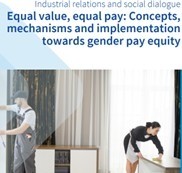
Equal pay : The principle of
equal pay means that when two jobs are deemed to be equivalent in terms of skills,
effort, responsibilities and working conditions, they must carry equal pay. Relying
on 16 case studies, a report
published by Eurofound, on 15 December, examines how this principle is implemented.
At a time when employers are adapting to the imperatives of the pay transparency
directive, there is much to be learnt from this document.
|

Artificial intelligence : The DIGILARE research project, focusing on the
challenges to workers’ collective rights posed by the digital transformation, offers
a comparative legal analysis of four of the issues involved here: 1/ Who is covered by workplace
representation? 2/ Which
national Member State’s rules apply in a crossborder context? 3/ How are employee participation
rights guaranteed in a digital world of work? 4/
What needs to be regulated to
provide for quality working conditions? The project has resulted in a series of
deliverables: two synthesis reports covering the project’s four topics (first
report, second
report); an analysis
of the EU acquis in terms of workers’ collective rights and a Policy
paper proposing regulatory changes at European level.
|
|
|











