 |
| |
IR Notes 268 – 25 February 2026
www.irshare.eu
|
|
|
| |
| |
A question for…
Gilbert Cette, economist and professor at Neoma Business School

In a recent publication co-written
by you, entitled Sauver la démocratie sociale (*), you
criticise the fact that France’s social partners have become
institutionalised, and seem unable to exploit the possibilities
available to them to set standards via collective labour
agreements. How can they play a more decisive
role?
From
the 1982 Auroux laws to the high point of the “Labour” orders in
2017, via the 2016 El Khomri law, the decision-making space for
social partners to operate in has steadily expanded. They can now
set standards that may yet supplant those laid down in the Labour
Code, and are constrained only by the limits of supranational law
and principles (fundamental freedoms and rights). Yet what we
actually find is that social partners have exploited few of these
possibilities to build mutually beneficial compromises that could
not only secure better protection for workers but also boost
economic efficiency. There are various reasons for this state of
affairs, which we set out in detail in this publication. One of them
is the number of trade unions in France. Based on OECD criteria,
there are eight trade-union confederations in France, whereas most
European countries have between one and three. This fragmentation of
trade unions, at national, branch and company level, calls for a
more radical discourse. The social partners’ institutionalisation is
also cutting them off from their base. This is true of the
employers, but even more so of the trade unions. Unlike in other
European countries, they aren’t sufficiently dependent on their
members for their funding, so they don’t see it as a priority to
recruit as many employees as possible. This institutionalisation is
encountered at all levels. People lose count of the number of
high-level bodies the unions sit on and of the number of “social
conferences” the government invites them to attend, all to little
effect. Companies hold mandatory annual negotiations covering a long
list of topics enshrined in positive law. This notion of mandatory
collective bargaining makes no sense whatsoever in other countries
where social partners are free to negotiate and to choose which
subjects they want to negotiate on. And why are cross-industry
negotiations always held at the headquarters of Medef, which is the
main employers’ organisation, rather than on neutral ground, at the
Economic, Social and Environmental Council? Why not leave more scope
for collective bargaining? When the government proposed, in August
2025, that the fifth week of paid holiday entitlement could be
converted into a monetary bonus, the trade unions opposed this idea,
so as not to undermine social progress. Yet what right does anyone
have to decide that social progress means five weeks of holiday,
rather than a wage bonus? The trade unions could have accepted the
proposal while also asking for this transaction to be overseen by a
branch-level or company-level collective agreement, to protect the
employee. Representativeness rules need to be reviewed, thresholds
raised, and if trade unions aren’t sufficiently representative at
companies, the right to negotiate collective agreements should be
entrusted to the works council [CSE – economic and social
committee], as is already the case in Germany. These proposals would
strengthen the trade unions! And furthermore, they’re not just aimed
at the trade unions! For example, we’re also proposing to remove the
employer from the presidency of the CSE.
(*) Cette,
G., Groux, G., Richard, R., Sauver
la démocratie sociale,
Calman Lévy, 19.50 euros (or 13.99 euros in digital format)
|
|
|

|
| |
Agenda
26 February
Brussels
The
European Commission is due to hold a policy debate on the 28th regime
(see agenda).
3 and 4 March
Brussels
4th
European Employment and Social Rights Forum, organised by the European
Commission, on the theme of: Social
Europe: Empowering people in times of uncertainty.
4 March
Brussels
The
European Commission is due to adopt its 2026-2030 gender equality
strategy and its intergenerational fairness strategy (see agenda).
9 March
Brussels
Employment and Social Affairs Council
18 March
Brussels
Tripartite Social Summit
18 March
Brussels
The
European Commission is due to adopt a legislative proposal for the
purpose of establishing the 28th regime (see agenda).
20 March
Bordeaux
Symposium entitled La démocratie au travail dans la transition
environnementale [‘Democracy at work in the environmental
transition’], organised by the Institut du travail de Bordeaux (registration)
24 March
On line
Webinar organised by the European employers’ federations EFSI and EFFE,
with the support of the European Commission, on the topic of “Delivering
Quality Jobs in Europe: The Expanding Role of Collective Bargaining”
across the Personal and Household Services (PHS) sector in Europe, with
an intervention by Maria Sedlakova, a research officer at Eurofound (registration).
29 June
Luxembourg
Employment and Social Affairs Council
|
|
|
|
|
| |
Who we are?
IR Notes is a
fortnightly newsletter produced by
IR Share and its network of experts, and is
available in several European languages (English, French, German,
Italian, Spanish, Polish). It offers Europe-wide monitoring of
employment law, labour relations and employment policy. It is available
by subscription for 273 euros per year .
The team: This
issue was producaed by Inès
Bollet, Victoria
Fonseca, Ambre
Grenier-Boley, Laura Renucci,
Frédéric
Turlan and Iris
Turlan. Find out more about the IR Share team on our website.
Subscribe to IR Notes
Via the IR
Share website or by calling us on: +33 (0)6 81 41 53 95
or
E-mail: frederic.t@irshare.eu
Legal notice.
Publisher: IR Share SARL – 5, Les Compères – 89520 Fontenoy, France –
Tel.: +33 (0)6 81 41 53 95 – share capital 1,500 euros – commercial
register (RCS Auxerre): 512 567 959. Managing editor: Frédéric Turlan.
Hosting: ALTEO by Damien Cornillet – Château – 89500
Villeneuve-sur-Yonne. CPPAP no.: 0626 Z 93933.
|
|
|
|
|
| |
Follow us on LinkedIn!

Why not connect to the IR Notes LinkedIn page, so that you can keep up with
developments in the issues we’re covering, between two editions?
You’re welcome to follow us! There are already 780 of you following
us!
|
|
|
|
|

|
|
|
Lead
story
Should
restrictions on subcontracting be introduced, to limit its abuse?

Ahead of the future “Quality Jobs Act” announced by the European Commission for the
year end, tension is rising around one of the themes due to be covered by this
proposal: subcontracting. At the time it launched the first-stage consultation of
European social partners, in December last year, the Commission explicitly
emphasised that “the longer and more complex the subcontracting chain, the greater
the risk of fraud and abuse”, especially in labour‑intensive sectors such as
construction, agriculture, food processing, logistics, transport and personal
services. Admittedly, the EU already has an arsenal of legislation at its disposal
when it comes to strengthening protection of workers in subcontracting chains,
including via directives regulating posted workers. Nevertheless, the Commission
considers that these instruments are not enough to eradicate a number of persistent
fraudulent practices. It therefore plans to take targeted action in sectors
identified as high-risk: a combination of tighter controls, intensified social
dialogue and a possible re-evaluation of the joint and several liability regime
applicable to the principals operating in these chains. The consultation process has
highlighted a deep division between trade unions and employers’ organisations. In
its reply,
the European Trade Union Confederation (ETUC) argues that the Commission’s approach
is still too cautious. It calls for subcontracting chains to be explicitly
restricted to two levels at most, and for the adoption of specific legislation to
combat fraudulent practices linked to unregulated intermediaries. BusinessEurope, on
the other hand, believes that the appropriate response lies primarily in
strengthening the powers of labour inspectorates and the application of existing
rules (see response). The
employers’ organisation rejects the idea of any new legal restrictions on
subcontracting, arguing that this would risk harming business competitiveness.
Moreover, a study
commissioned by the European Employers’ Institute concluded that imposing
restrictions on levels of subcontracting might constitute a breach of EU law.
Two European institutions have recently contributed to the debate. In an exploratory
opinion on a review of the European public procurement legal framework, the
European Economic and Social Committee (EESC) adopts a position close to that of the
trade unions. It recommends that adherence to collective labour agreements should be
systematically included as an obligatory criterion for awarding a tender, and with a
view to combatting abuse in subcontracting chains, it also proposes the introduction
of a joint and several liability regime, accompanied by sanctions to deter
wrongdoing, and restricting the length of these chains to one or two levels.
In a resolution
passed on 12 February, the European Parliament adopts a more qualified approach.
Without explicitly calling either for restrictions on subcontracting chains or for a
joint and several liability regime to be introduced across the board, it calls for
the creation of a European strategy to tackle labour exploitation, including illegal
work and organised crime linked to it, and abusive business practices in the areas
of subcontracting and labour intermediation.
National initiatives are also
emerging, in parallel. For example, in Sweden, 18 major construction companies have
set up a “Network of Responsible Constructors” (Nätverk
för Seriösa Byggare), which is calling
for greater efforts to tackle dumping social and labour-related crime, and for
subcontracting to be restricted to two levels. Subcontracting is therefore emerging
as a key battleground. Defending the status quo is looking like an ever
more challenging position, in light of well-documented cases of labour exploitation,
as such abuse undermines citizens’ trust in the EU. It remains to be seen whether
the Union will opt for tighter regulation of subcontracting chains or for a
pragmatic strengthening of the application of existing rules.
|
1. European
Union
Social
update
Social Omnibus : EU employers
are now openly calling for a “Social Omnibus” directive, given that the search for
competitiveness also involves a revision of European social legislation. In a statement
issued by BusinessEurope, five texts are prioritised: the pay transparency directive;
the directive
on improving working conditions in platform work; the directive
on transparent and predictable working conditions; the older directive on
working time; and the REACH regulation (registration, evaluation and authorisation
of chemical substances). In the case of the pay transparency directive,
BusinessEurope is seeking a two-year postponement of the transposition deadline,
currently set at 7 July 2026. The stated objective appears to be to give Member
States and companies more time to adapt, while at the same time identifying possible
avenues for simplification. This position means that the employers are now directly
at odds with the President of the European Commission, Ursula von der Leyen, who had
previously indicated that the text and its timetable for implementation could not be
renegotiated. The document sets out the amendments deemed necessary for each
directive. The statement was unveiled at a panel discussion on the theme of
“Stepping up EU simplification efforts in the field of social affairs”, in the
presence of Roxana Mînzatu, Executive Vice-President of the European Commission for
Social Rights. European employers in the chemical industry (ECEG) had already
published, in November 2025, a table
listing several social directives that they believe need revising, including the
recently adopted European Works Council directive (see IR Notes
263). Ceemet, which represents European metal, engineering and
technology-based industries, and has been “on manoeuvres” for several months, set
out its position in a statement
in early December, alongside other sectoral organisations, calling for “a
simplification of the social acquis”, a step deemed crucial for maintaining
industrial competitiveness (see press
release). Ceemet stresses that this effort is not about “deregulation”, but
rather “about making rules consistent, removing outdated provisions and ensuring
that reporting and compliance obligations are aligned so businesses can focus on
productivity and growth rather than navigating administrative burdens”. Leaving
aside the technical aspects, the message to the Commission is clear: prioritise
effective implementation of the existing standards by tightening up controls rather
than adopt new binding obligations. This position comes at a time when the EU
executive is preparing a future Quality Jobs Act, which is expected by the year end.
The call for a “Social Omnibus” package might therefore constitute a structured
approach to modifying the legislative agenda and containing any further expansion of
the European legal framework.
|
Sectoral
social dialogue
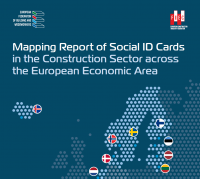
Construction : Last December,
European social partners in the construction sector (FIEC and EFBWW) unveiled the
results of their joint SIDE-CIC project, supported by the EU, which examines the
feasibility of creating an interoperable framework for social ID cards in the
construction sector. These cards make it possible to combat fraud, to enhance
workplace health and safety, and to recognise vocational qualifications and training
courses followed by employees. The project undertook three studies: a mapping report on
the existing systems, a legal
feasibility study and a technical
feasibility study. Based on the findings
reached, the social partners have agreed on a set of
recommendations to guide future initiatives, promote interoperability and
prepare a potential pilot project (see FIEC
and EFBWW
press releases).
|
2. Member
States
Bulgaria

Digital nomads : The Council of
Ministers has adopted Regulation
no. 286 dated 12 December 2025, pursuant to an amended
law of 18 June 2025 on foreigners’ rights of residence, which introduces a
digital nomad permit, among other things. The new procedure allows people to reside
in the country without having a link of subordination with a local employer. As well
as boosting the economy and tourism, the aim is to attract people who are qualified
in the fields of innovation, and in the creative and hi-tech industries.
|
Spain

Occupational health and safety :
The Ministry of Labour and the two trade-union confederations
CC.OO and UGT have reached an agreement
aimed at improving and modernising the law on prevention of occupational
risks (see CC.OO
and UGT
press releases). However, this step forward has not received unanimous approval. The
employers’ organisations CEPYME and CEOE have said they are not happy with the plan,
and that they were shut out of the decision-making process. This feeling of
exclusion is not new. The two organisations had already published, in November 2025,
a
joint statement condemning the fact that they had been sidelined from
decisions made in the field of Spanish social relations. The absence of a broader
and more inclusive dialogue, they say, is partly responsible for creating a hostile
climate for businesses, especially very small businesses and SMEs. As the government
lacks a guaranteed majority in Parliament, the measures provided for by the
agreement will be enacted by royal decree. Decrees are expected on a number of
issues, including psychosocial risks (to force companies to assess these), closer
monitoring where several companies are operating in the same workplace, and on
workers’ exposure to adverse weather conditions.
|
Poland
Harassment at work : On 17
February, the Council of Ministers adopted a draft law on harassment at work,
requiring employers with a workforce of nine or more to inform their employees of
the rules and procedures in place (see press
release). The law also includes increased compensation for victims and the
introduction of measures to tackle false accusations. This initiative seeks to
clarify the law, which at the present time remains vague in terms of actions,
effects and impacts of harassment at work, but will now seemingly require harassment
to manifest itself in the form of recurrent and repeated acts committed over the
long term.
|
3.
Companies
Artificial intelligence : On 4
February, the management of the Italian insurance group Generali and its European Works
Council signed a Joint
declaration on technological transformation, digitalisation and artificial
intelligence (AI). This is the fifth declaration of its kind concluded
within the group. The stated aim is to oversee the deployment of AI tools, while
also anticipating their organisational and social impacts. The text stipulates that
“in adopting innovative technological solutions, particular attention will be paid
to workers’ health and safety, to avoid the risk that an intensive use of AI may
generate cognitive overload or reduce social interactions, with negative effects on
mental health and potential repercussions on physical integrity”. Training
constitutes another pillar of the agreement. The declaration states that “workers
will also be duly informed about the use of AI systems and Generative AI and
provided with adequate training to understand their functioning, benefits and
possible risks”. These training initiatives, the content of which is set out in the
text, will be carried out during working hours. The principle of human oversight is
explicitly reaffirmed for high-risk AI systems, including in the field of human
resources management. The document stipulates that “the EWC select committee shall
be duly informed in the event that the introduction and/or updating of the
above-mentioned systems has a significant impact on workers at transnational level”.
However, the text does not use the term “consultation” and does not specify the
committee’s role upstream from the deployment or updating of AI systems. Moreover,
at various levels — European, national or local — consideration will be given to the
possibility “of carrying out preliminary risk assessments concerning occupational
health and safety” in the event of a planned introduction or updating of the tools
concerned. The task of monitoring application of the declaration is entrusted to the
EWC’s IT New Technologies and AI working group. This body will meet twice a year for
the duration of the text’s validity period.
|
Transnational agreements

Database : On 19 January, the
ILO published an update of newly concluded or renewed transnational company
agreements in its Repository
of knowledge on cross-border social dialogue. While traditional topics such
as fundamental rights at work and occupational health and safety are covered by the
latest agreements, the ILO notes that the latter pay closer attention to the issues
of due diligence in supply chains, environmental sustainability, just transitions,
digital transformation and artificial intelligence.
|
Company
agreement

Artificial intelligence : On 4
February, the management of Albéa Tubes
France signed a method
agreement on the role of employee representation during the introduction of
AI with four trade unions (CFDT, CFE-CGC, CGT, Unsa). This text applies both
to new AI systems and their updates, and provides for differentiated methods of
employee representatives’ involvement: consultation on major projects that, among
other things, lead to job cuts or the implementation of more than 35 hours of
training per person; or have consequences for the qualifications or classification
of employees. Consultation is also provided for at the time of any implementation of
a coordinated algorithmic management system. Employee representation bodies can call
in an expert opinion if required. Such consultation is supplemented by “ongoing
social dialogue, which is the only appropriate response to the ‘life cycle’ and
‘open-ended’ nature of AI systems.” Odile Chagny, an economist at the Institut
de recherches économiques et sociales (IRES), comments that this agreement
“will probably mark a milestone in the operational rollout of an iterative social
dialogue on AI, as reflected within the framework of the Dial-IA project.”
|
4. Studies
and reports
Occupational health and safety :
The European Agency for Safety and Health at Work (EU-OSHA) has
published the first
findings of its fourth European Survey of Enterprises on New and Emerging
Risks (ESENER), accompanied by a data
visualisation tool, which is particularly useful for analysing findings and
making comparisons between European countries. These first findings reveal the rise
in working from home: the share of workplaces in the EU-27 reporting that they have
employees working from home on a regular basis has almost doubled since 2019,
reaching 23% in 2024, compared to 13% in 2019 — and exceeding 40% in Finland and the
Netherlands. Another consequence of this rise is that prolonged sitting is the most
frequently identified physical risk factor in the EU-27 (64% of establishments).
When it comes to psychosocial risks, several factors continue to feature strongly
within organisations, including having to deal with difficult patients, customers
and pupils (56% of establishments) and time pressure (43%). Companies also seem to
be strengthening their preventive actions. Among establishments that have to deal
with situations involving difficult customers, patients or pupils, 54% of those
employing 20 or more people report having a procedure in place to deal with possible
cases of threats, abuse or assaults by external persons (up from 51% in 2019). In
addition, 39% of establishments have introduced action plans to combat stress (up
from 33% in 2019) and 55% now have procedures in place to deal with bullying or
harassment (compared to 45% in 2019).
|
|
|











