 |
| |
IR Notes 133 – 15 January 2020
www.irshare.eu
|
|
|
| |
| |
A question for…
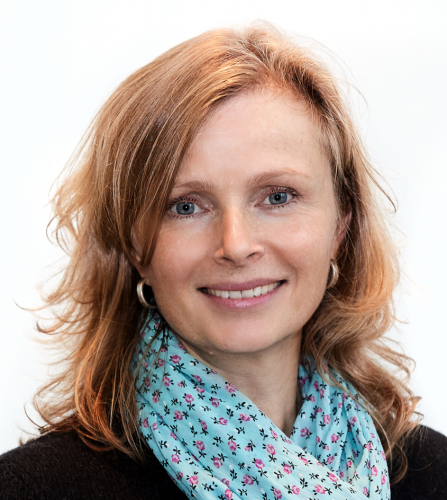
Kerstin Mai, Secretary (IG Metall), Bosch European Works Council
To what extent is the Bosch
European Works Council addressing the major transformations
affecting the car industry?
The car industry has entered a period of
severe turbulence, what with new European standards requiring cuts
in CO2 emissions, the rise of electric cars and the decline in
production of combustion engines, especially diesel engines. These
transformations are particularly affecting the Powertrain Solutions
division within our group. The European Works Council is not geared
up to deal with this type of transformation process. Its normal role
is that of informing and consulting employees about clearly defined
projects affecting several countries, with clearly defined starting
and completion dates. It meets only once a year, and is made up of
38 members, representing 21 countries, plus two observers (Turkey,
Switzerland) and a representative of IndustriAll Europe. It deals
with subjects linked to all of the group’s activities, which are
extremely diverse in nature. As regards this particular change, we
came to realise that we have to deal with a complex process that is
affecting all Powertrain Solutions sites, though not necessarily
with the same degree of intensity. Moreover, this transformation
process is not one that is controlled by the employer from start to
finish, and it is not limited in terms of time. In addition, the
European Works Council was not really equipped to deal with a
transformation of this nature. In 2018, we persuaded the company to
set up a working party dedicated to the Powertrain Solutions
division, which meets twice a year. It comprises 16 representatives
from the 8 European countries that host our production units, plus
the six members of the European Works Council select committee.
We’re now up to our fourth meeting. Following an adaptation time,
especially for those members who weren’t used to sitting on a
transnational body and engaging in dialogue with colleagues from
other sites and other countries, we’re now very satisfied with the
progress made. It was also something of a novelty for the employer
to display transparency regarding the processes affecting the
division, and to see for itself the benefits of discussing, with
employee representatives, the potential short and medium-term
impacts on employment and qualifications. Within the working party,
we encourage discussion, exchanges and the search for alternative
solutions to replace a form of production that is destined to
disappear. In this sense, we have a responsibility both to the
group’s employees, but also to the territories hosting our
production facilities, such as Bari (Italy), where the group plays a
vital role as an important employer. We also issued a joint
declaration of solidarity on 21 November 2019, to coincide with the
mobilisation days held in Germany, Italy and France (see 3.
Companies)
|
|
|

|
| |
Obituary
Farewell to Claudio
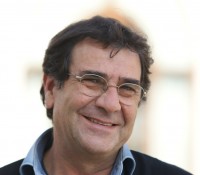
We were very sad to learn of the death, on
27 December last year, of Claudio Stanzani, the
former head and founder of our Italian partner, the SindNova
association. Luca Visentini, Secretary General of the European Trade
Union Confederation, reflected that “he devoted his life to the
trade union movement in Italy and Europe”. In 2018, his unfailing
support prompted us to launch an Italian version of IR Notes, to
facilitate access for the Italians to European news in the field of
social affairs. Without him, there would be no Italian version of
our publication. As a defender of social dialogue and a man of
conviction, he was one of those people who took the concept of a
social Europe forward, in particular by training many European Works
Council members. We send our condolences to his family and
friends.
|
|
|
|
|
| |
Diary
17 January
Paris
The
“Great Debate” of the Revue de Droit Social, the reference
journal for labour law, entitled “Juges
et accords collectifs de travail“, including a “what do they do
elsewhere” session with François Biltgen (CJEU) and Achim Seifert
(University of Jena). The conference will be introduced by Jean-Emmanuel
Rayand and will also include a speech by Laurent Berger (CFDT),
President of the European Trade Union Confederation.
23 January
Dublin
Conference organised by the European Trade Union Institute and the Irish
National Worker Directors Group, entitled “Reviving
economic democracy in Ireland after the crisis”, with Aline Hoffmann
(ETUI) and Patricia King (ICTU).
23 January
Noisy-Le-Grand
(France)
IRES international seminar,
devoted to the International Organisation of Employers (IOE) and its
relationship with the International Labour Organization (ILO), featuring
Marieke Louis (Sciences Po Grenoble) and Danièle Fraboulet (Sorbonne
University).
27 and 28
January
Hamburg
12th
annual seminar of the EWC Academy for European and SE works
councils. Information
and registration form.
28 January
Brussels
Conference organised by Eurofound, ACC and SMEunited on “The
changing environment of the self-employed”.
12 March
Paris
European conference organised by Eurogip, “Preventing
occupational risks in the healthcare sector for the dependent
elderly”.
19 and 20
March
Trier
Annual
Conference on European Labour Law 2020, organised by the Academy
of European Law
19 and 20
March
Zagreb
Conference organised by the European social partners in the construction
sector on “Undeclared
work in construction”
30 January
Zagreb
Conference organised by the Croatian Presidency of the EU on the Participation of women
on the labour market.
|
|
|
|
|
| |
Who we are?
IR Notes
is a fortnightly newsletter produced
by IR Share and
its network of experts, and is available in several European languages
(English, French, German, Italian, Spanish). It offers Europe-wide
monitoring of employment law, labour relations and employment policy. It
is available by subscription for 18 euros per month.
>>> News:
The IR Notes newsletter has been recognised as an “on-line press
service” under Article 1 of Law no. 86-897 of 1 August 1986 reforming
press legislation. In addition to constituting recognition of the
quality of IR Notes, the benefit of having “on-line press service”
status is that we can now invoice IR Notes subscriptions at a reduced
VAT rate of 2.1%.
The team This issue
was produced by Märt
Masso
and
Frédéric
Turlan.
Find
out more about the IR Share
team on our website
Subscribe to IR Notes
Via the
IR
Share website or by calling us on:
+33 (0)6 81 41 53 95
or
E-mail: frederic.t@irshare.eu
Legal notice.
Publisher: IR Share SARL – 5, Les Compères – 89520 Fontenoy,
France – Tel.: +33 (0)6 81 41 53 95 – share capital 1,500 euros –
commercial register (RCS Auxerre): 512 567 959. Managing editor:
Frédéric Turlan. Hosting: Ideal prod – 14 rue Auguste Morel – 89100
Sens – France – Tel.: + 33 (0)3 86 83 21 21. CPPAP no.: 0621 Z 93933.
|
|
|
|
|

|
|
|
Lead
story
First
reflections on the Commission’s social programme and the European minimum wage
On 14 January, the European Commission unveiled its social affairs road
map for its term of office, in a communication
on a “strong Social Europe for Just Transitions” (see press
release issued by the Commission). This communication marks the opening of a
period of consultation with all stakeholders and citizens (notably via a dedicated website)
lasting until November 2020, and leading to the adoption, at the beginning of 2021,
of an action plan to firm up the rights and principles contained in the European
Pillar of Social Rights. In this context, the Commission has also launched a first-stage
consultation of European social partners on how to ensure fair minimum
wages. In this consultation document, the Commission still remains rather
vague about its intentions. It implies that Member States should find solutions that
will guarantee a wage providing a decent living (either in relation to a given
standard of living, as in Ireland and the UK, or via the target of reaching 60% of
the median household income, i.e. the at-risk-of-poverty threshold in the EU). This
also involves guaranteeing that a sufficient number of workers will be covered by a
minimum wage, and arranging in-depth consultation of the social partners regarding
the level of this wage and a mechanism for updating its amount. In its
communication, the Commission also remains somewhat evasive regarding the tools it
plans to use to implement the European Pillar of Social Rights, certainly so as not
to influence the consultation, but in all likelihood too, because the will to
strengthen a social Europe is still lacking. Few binding standards are announced,
with the exception of those that will feature in the new gender equality strategy
announced for the first quarter of 2020, with a view to closing the gender pay gap,
“including through binding pay transparency measures”. On the other hand, there are
no announcements regarding working conditions in the platform economy – “possible
solutions” will be discussed at a “summit” to be held in the second half of the
year. In terms of health and safety, new risks and exposure to dangerous substances
will be addressed in a new strategy, though its adoption date is not specified. The
Commission acknowledges that “fair working conditions are also about strong social
dialogue”, which is “crucial, especially when companies are restructuring or
undergoing significant change”. However, in concrete terms, the Commission does not
announce any revisions of directives, and merely calls on Member States to “make
full use of existing instruments on workers’ involvement such as the European Works
Councils to promote the culture of information and consultation of workers”. Lastly,
the communication emphasises the creation of a just transition mechanism, including
a fund to support the regions most affected by the transition, and their workers
(see press
release issued by the Commission).
|
1. European
Union
Case law
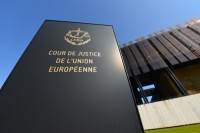
Protection against the employer’s insolvency :
the Court of Justice has upheld the direct
effect of Article 8 of Directive 2008/94/EC of 22 October 2008, on the
protection of employees in the event of the insolvency of their employer. In this
particular case, which arose in Germany, (CJEU,
19 December 2019, case C-168/18, Pensions-Sicherungs-Verein), a former
employee was receiving a company pension worth around 600 euros/month, paid by a
pension fund. The fund was experiencing financial difficulties, so the authorities
had granted it permission to reduce the amount of the pensions it was paying. The
former employee’s pension was cut by almost 14% (i.e. by 82.74 euros per month). The
difference was made up by the former employer. However, this company itself
subsequently became insolvent. PSV – the body responsible in Germany for payment of
employment pensions in the event of an employer’s insolvency – then took over
payment of this pension, though without guaranteeing to pay the compensation paid by
the employer. The case was referred to the Federal Employment Court, which in turn
referred it to the European Court of Justice. The latter ruled on three points
relating to Article 8, which establishes protection of the interests of employees
and of persons having already left their employer at the date of the onset of the
employer’s insolvency, “in respect of rights conferring on them immediate or
prospective entitlement to old-age benefits […] under supplementary occupational or
inter-occupational pension schemes […]”. First of all, the Court of Justice holds
that the compensation paid by the employer shall enjoy the protection granted by
Article 8. Next, the Court takes the view that the reduction in the amount of the
pension is “manifestly disproportionate, even though the former employee receives at
least half of the amount of the benefits arising from his or her acquired rights,
where, as a result of the reduction, the former employee is already living, or would
have to live, below the at-risk-of-poverty threshold determined by Eurostat for the
Member State concerned.” Lastly, Article 8, which lays down an “obligation to
provide a minimum degree of protection”, has “direct effect, so that it may be
relied upon against an institution governed by private law that is designated by the
State as the institution which guarantees occupational pensions against the risk of
an employer’s insolvency […] ”.
|
Sectoral
social dialogue
- Postal sector: On 6
December 2019, the European social partners in the postal sector issued a Joint
Declaration on Training in the Digital. The declaration emphasises the
role played by the Social Dialogue Committee (SDC) and affirms that lifelong
training and up‑skilling are essential to allow employees to acquire the
necessary skills and offer new services. The SDC obtained the European
Commission’s approval for the funding of a new project entitled “Postal Skills
and Work Environment in the Digital Era”, which will go ahead in 2020-2021 (see
PostEurope press
release).
- Private security and cash-in-transit:
On 5 November 2019, the European social partners in the
private security and cash-in-transit industries – the employers’ organisations
CoESS and ESTA, and the UNI Europa European trade union federation – issued a Joint
Statement on the Need to Safeguard Cash, promising to promote collective
agreements in order to ensure that workers employed in the cash-in-transit
business experience a fair and sustainable transition.
|
2. Member
States
Estonia

Minimum wage : On 25 November,
following a difficult negotiation between the Estonian Trade Union Confederation
(EAKL) and the Estonian Employers’ Confederation (ETKL), the parties finally agreed
to the compromise put forward by the national conciliation service, with a view to
setting the national minimum wage for 2020. As a result, the minimum wage will rise
by 7.6%, to 584 euros (3.48 euros per hour) in 2020. It was also agreed that in
2021, it will be fixed at 40% of the average wage, and that an impact study will be
completed by summer 2021, to be used as the basis for a new formula to calculate the
level of the minimum wage.
|
Greece
- Part-time working : Article
59 of Law 4635/2019 of 31 October 2019 increases the remuneration payable for
overtime worked by part-time employees. Previously, part-time employees who
worked more than the number of hours specified in their contract of employment,
were not paid more money. They are now entitled to a 12% increase for any hours
worked over and above the number of hours specified in their contract.
|
Slovakia
- Paid annual leave : On 16
October 2019, Parliament passed an amendment to Article 103 of the Employment
Code, concerning the amount of paid annual leave. This amendment came into force
on 1 January 2020. Under the previous version of this article, employees were
entitled to at least four weeks’ paid annual leave, and an employee who, at the
end of the calendar year concerned, was at least 33 years old, was entitled to
at least five weeks’ paid annual leave. The amendment passed extends the amount
of this leave to five weeks for employees who have not yet reached the age of 33
but are looking after a child on a permanent basis.
> Further
national information is available in the October
and November
editions of Flash Report on Labour Law, which were recently published on
the IR Share website.
|
3.
Companies
European
Works Councils

Long-term transformation process :
the Bosch group’s European Works Council (EWC) has set up a
working party to monitor changes taking place in the drive trains used in the motor
vehicle industry, which are affecting its “Powertrain Solutions” division. On 21
November 2019, this working party, in conjunction with the EWC’s executive
committee, issued a joint
declaration of solidarity to coincide with the mobilisation days held in
Germany, Italy and France (see also: A question for… Kerstin Mai, opposite). In this
document, workers’ representatives call for future prospects to be set out for the
group’s various sites and for its employees, with the emphasis on training and
redeployment, to enable the employees concerned to go and work in other sectors of
the group. They also state that a deterioration in working conditions resulting from
competition among different sites, linked to new products, is unacceptable. The
signatories rule out redundancies on economic grounds and call for social dialogue
to be reinforced on affected sites “so that the transformation process can be
fashioned to work in employees’ interests”.
|
Global Works
Council

A vehicle for global social dialogue :
the French tyre manufacturer Michelin (125,000 employees) and
the IndustriAll Global Union federation have completed their negotiation aimed at
setting up a global Works Council. The agreement, a copy of which has been obtained
by IR Notes, is in the process of being signed and is due to be unveiled at the next
plenary meeting of the group’s European Works Council, due to be held in late March.
The French trade union FCE-CFDT says: “this new agreement, which is open-ended,
reinforces social dialogue company-wide, but it does not take the place of employee
representation bodies in individual countries” (see press
release). The global Works Council “will enable employee representatives and
management to discuss and share ideas, and to work on selective studies concerning
major international issues facing the group”. Up to 50 employee representatives will
sit on the Michelin Global Council (CMM). They will be appointed on the basis of
their country or economic area, either from among trade union representatives, or
via an election, in accordance with local practices. The employee representatives
from EU countries will come from the group’s European Works Council, which retains
all of its powers. The Council, which is entitled to hold up to two meetings per
annum, is conceived as “a social dialogue body allowing information to be exchanged
with workforce representatives who are CMM members, regarding economic, financial,
social and environmental matters that are global and transnational in scope.” At
meetings, senior management will share information with the group’s employee
representatives on subjects such as: 1) the group’s economic results, social
indicators and strategic orientations at global level; 2) economic, social and
environmental benchmarks and forecasts; 3) raising awareness of issues and
transformations facing the company; 4) thinking on external changes and cultural
trends that are unfolding. The body will be there to act as the group’s “economic,
social and environmental observatory”.
|
Transnational agreement
On 28 November 2019, the Board of Management of the German chemicals
manufacturing group Bayer and
its European Works Council (the Europa-Forum Bayer) signed a joint
declaration relating to the group’s reorganisation. This reorganisation is
seeking to cut costs linked to platform functions by 1.4 billion euros per annum.
Approximately 7,000 jobs in these functions will be concerned at global level, by
the end of 2021. The reorganisation of global functions and the objectives set in
terms of achieving productivity gains will also lead, in European countries, to jobs
and functions disappearing or to jobs being transferred to shared service centres.
In this context, the signatories have defined “terms of fair treatment”, to be
adhered to in all of the countries affected. In particular, this involves
guaranteeing “fair treatment for the employees affected”; an “open and transparent
information and consultation process” and exhausting “all internal possibilities to
safeguard jobs”, while at the same time avoiding “dismissals for operational reasons
wherever possible”.
|
|
|











