 |
| |
IR Notes 135 – 12 February 2020
www.irshare.eu
|
|
|
| |
| |
A question for…
Janet Williamson Senior Policy Officer, Rights, International, Social and
Economics Department, TUC

What are the immediate consequences
of Brexit on EWCs set up under UK law and for the UK EWC
members?
The
UK has left the EU, but until the end of 2020 we are in a
‘transition period’ where all existing UK and EU rules and
regulations continue to apply. This means that, in theory, there is
no immediate change in relation to the requirements on EWCs because
for the time being the UK is still covered by the TICE Regulations
that govern the establishment and operation of EWCs. What happens at
the end of the transition period depends on what is negotiated
between the EU and the UK to govern their future relationship in the
coming months.
At the end
of the transition period, without an agreement to the contrary, the
UK would no longer be covered by the EU rules on EWCs. This means
that UK workers would not count towards the thresholds that trigger
legal requirements on companies to establish EWCs and UK workers
will not have a right to become EWC representatives. It also means
that EWCs would no longer be able to be based in the UK or operate
under UK law. Many companies have already anticipated this scenario
by moving their EWC base to Ireland.
However, EWCs would still be able to include
UK workers on a voluntary basis. Some agreements have always
included provisions on the representation of non-EU countries, while
others have recently changed their rules so that UK workers will
continue to be covered by and included in their EWCs. The TUC, the
ETUC and the Global Union Federations are all calling for EWCs to
amend their rules so that UK workers continue to be within the scope
of their agreements.
A
no-agreement conclusion to the transition period is, however, a
worst-case scenario. The recently published draft negotiating
position of the EC for a trade deal with the UK called for common
standards in relation to “information and consultation rights at
company level”, as well as the protection of social dialogue among
workers and employers. The TUC and the ETUC are calling for an
agreement that protects existing employment standards and rights to
social dialogue, including participation in EWCs, as well as future
alignment of rights. We will continue to fight for this in the
months ahead.
|
|
|

|
|
|
|
|
| |
Who we are?
IR Notes
is a fortnightly newsletter produced
by IR Share and
its network of experts, and is available in several European languages
(English, French, German, Italian, Spanish). It offers Europe-wide
monitoring of employment law, labour relations and employment policy. It
is available by subscription for 18 euros per month.
>>> News:
The IR Notes newsletter has been recognised as an “on-line press
service” under Article 1 of Law no. 86-897 of 1 August 1986 reforming
press legislation. In addition to constituting recognition of the
quality of IR Notes, the benefit of having “on-line press service”
status is that we can now invoice IR Notes subscriptions at a reduced
VAT rate of 2.1%.
The team This issue
was produced by Francisco Gomez
Abelleira, Sylvain Nadalet
and
Frédéric
Turlan.
Find
out more about the IR Share
team on our website
Subscribe to IR Notes
Via the
IR
Share website or by calling us on:
+33 (0)6 81 41 53 95
or
E-mail: frederic.t@irshare.eu
Legal notice.
Publisher: IR Share SARL – 5, Les Compères – 89520 Fontenoy,
France – Tel.: +33 (0)6 81 41 53 95 – share capital 1,500 euros –
commercial register (RCS Auxerre): 512 567 959. Managing editor:
Frédéric Turlan. Hosting: Ideal prod – 14 rue Auguste Morel – 89100
Sens – France – Tel.: + 33 (0)3 86 83 21 21. CPPAP no.: 0621 Z 93933.
|
|
|
|
|

|
|
|
Lead
story
Research
providing food for thought on the European minimum wage

Nearly a month after the European Commission launched its first-stage consultation of
the European social partners on how to ensure fair minimum wages within the Union,
several publications now throw further light on this issue. Eurostat has updated its
annual
minimum wage statistics in 2020, emphasising the disparity between minimum
wage levels within the EU. This shows there is a sevenfold difference between the
lowest (Bulgaria, 312 euros) and highest (Luxembourg, 2,142 euros) minimum wage.
When purchasing power parity is taken into account, the gap comes down to a factor
of three. One bar
chart deserves particular attention: it shows the level of each country’s
minimum wage as a proportion of its median gross full-time earnings. The Commission
has suggested that the minimum wage should be 60% of this median earnings figure,
which corresponds to the poverty threshold. Of the 19 countries that have a minimum
wage and for which data is available, just three are above this threshold (Slovenia,
France, Portugal). As a result, most States will have to make a significant effort
if they are to meet this target, especially those five in which the minimum wage
represents between 40% and 50% of median earnings. For its part, the European Trade
Union Institute (ETUI) has published a working document entitled (“The
European minimum wage on the doorstep”), advocating a pragmatic approach to
the 60% threshold. This formula would have to be tested in each country, for example
using a basket of specific goods and services, defined in conjunction with the
social partners, to check that a minimum wage of 60% of national median earnings
really does equate to a wage guaranteeing a decent standard of living. The European
Foundation for the Improvement of Living and Working Conditions (Eurofound), which
is due to publish a full report on 20 May (Minimum
wages in 2020: Annual review), has already published some
information in its blog.
The author reminds us of two conclusions reached by previous research: minimum wages
probably do not harm employment a lot (at least not substantially as a whole), but
they tend to have a more limited impact on fighting in‑work poverty. Lastly, we
should also mention another study, this one performed in the USA, which was
published on 7 January in the Journal of
Epidemiology and Community Health. It establishes that increases in the
minimum wage seem to reduce the suicide rate among people educated to upper
secondary level or below.
|
1. European
Union
Social
update

2020 work programme : On 29
January, the European Commission adopted its work programme, setting out
the actions it will be taking in 2020, among those already referred to in its communication
dealing with a “strong Social Europe for just transitions” (see IR Notes 133). This
year, the Commission will present several “strategies”, i.e. sets of measures
combining non-binding instruments with European funding, to promote gender equality,
boost workers’ skills and digital education, and to support LGBTI people. The
programme contains few binding texts in the area of social policy, other than an
instrument seeking to establish a European minimum wage and measures imposing
greater wage transparency on employers in relation to men’s and women’s pay (see press
release). The programme can also be analysed in terms of what it leaves out:
there is nothing in it about either the new strategy on occupational safety and
health, or procedures for informing and consulting workers, or legislation requiring
multinational companies to follow due diligence and exercise responsible business
conduct. The European Trade Union Confederation has expressed its regret at these
omissions (see press release).
Proposals to improve the working conditions of workers employed by digital platforms
have been postponed to 2021, to allow time for consultation to take place this
year.
- Minimum wage: Reacting to
the first-stage
consultation of European social partners on how to ensure fair minimum
wages, launched by the European Commission on 14 January (see IR Notes 133),
the employers’ organisation BusinessEurope has stated that it is “strongly
opposed to EU legislation on minimum wages.” (see press
release).
- Gender pay gap: In a resolution
on the gender pay gap adopted on 30 January by a very large majority,
MEPs called for an ambitious strategy, including binding measures to reduce the
gender pay gap. They also want to see “collective bargaining restored, defended
and promoted” (see press
release) and for “strong enforcement policies”. MEPs are thereby
indicating to Member States that they will have to deal with a Parliament that
is united and determined to take forward the issue of equal pay for equal work.
|
Sectoral
social dialogue

Urban Public Transport :
On 29 January, the European social partners in
the urban public transport sector (UITP and ETF), renewed their Joint
Recommendations for Combating Violence and Insecurity (see ETF
press release). This is a joint undertaking to apply the recommendations
made in two existing texts: 1° the 2007 Framework
agreement on harassment and violence at work; 2° the joint statement issued
in 2015 by their counterparts at international level (UITP and ITF) regarding Recommendations for Combating
Violence and Insecurity on Urban Public Transport, which “modernises and
firms up” the joint
recommendations on insecurity and feelings of insecurity adopted by the UITP
and the ETF in 2003. Violence, aggression and other forms “anti-social behaviour at
work” discourage “new workers from joining, most particularly women who are already
under-represented in the transport sector”, and deter “people from using
urban public transport”, despite the fact that developing public transport is a key
factor in combatting climate change. The social partners are calling for these texts
to be implemented by means of workshops, conferences and monitoring their
application at national level. These recommendations can also provide direct
inspiration for social dialogue within companies faced with these phenomena, even
companies outside the urban public transport sector.
|
Case law
- Holiday pay entitlement :
Is there an entitlement on the part of a worker to paid
annual leave in respect of the period from the date of dismissal to the date of
reinstatement where it is established that such a worker has been unlawfully
dismissed from that employment? That was the question answered by the Advocate
General of the Court of Justice. In his opinion, which the Court of Justice
usually follows, the Advocate General emphasises that the employee has not been
able, for reasons beyond his or her control, to exercise the right to paid
annual leave before termination of the employment relationship. He or she is
therefore entitled to financial compensation, which must be calculated so that
the worker is put in a position comparable to that he or she would have been in
had he or she exercised that right during the employment relationship. (CJEU,
Opinion, 29 January 2020, case C-762/18 and C-37/19).
|
2. Member
States
Belgium
- Occupational healthcare : A
Royal
Decree of 12 January 2020 has been published, amending the list of
occupational exposure limit values to chemical agents (see press
release). This text, which transposes Directive
(EU) 2017/2398 of 12 December 2017, adds “works giving rise to exposure
to alveolar crystalline silica dust derived from work processes” to this list.
As a result, this type of substance “is unambiguously defined as carcinogenic”,
according to the Ministry of Employment.
|
Spain
- Labour market reforms : The
new government has embarked on a social dialogue with the social partners, aimed
at revisiting the 2012 employment reforms (see the European Trade Union
Institute’s Background
Summary of the 2012 reforms on the Reformwatch website. The main
subjects for discussion are as follows: 1° Prioritising company agreements over
sector-based collective labour agreements. 2° Extending collective labour
agreements beyond their expiry date. 3° Use of subcontracting and fixed-term
employment contracts. 4° Changes to working conditions. 5° Dismissal.
Discussions are due to last until the summer. The government has announced an
immediate rescinding of the right to dismiss employees on absenteeism grounds.
This right entitles employers to dismiss employees provided they pay them
redundancy money representing 20 days’ wages for each year worked, in cases
where the employee has been absent from work a number of times over a given
period, even if this is for valid reasons. This practice punishes employees who
go on sick leave at frequent intervals and for very short periods of time.
|
Italy

Family leave :
The Finance law has raised the period of
entitlement to compulsory paternity leave on full pay to seven days (in place of the
previous allowance of five days). This must be taken during the first five months of
the infant’s life. The option of adding an extra day is maintained, provided the
mother foregoes one day of her maternity leave. The government is also examining the
financial feasibility of extending the term of compulsory paternity leave to one
month.
|
Sweden
Quality of life at work :
The MENSEN
association has secured funding
from the government, enabling it to pursue the work it began in 2019, to encourage
companies to obtain “menstrual certification” following an internal audit, to
organise training courses and adopt action plans (see interview with Klara Rydström,
in IR Notes n°131).
MENSEN emphasises that “the aim is to help create a working environment that is
equal, safe and fair, in which the various needs of employees during menstruation
periods are recognised and respected”. The project is supported by the Body Shop and
the trade union Akademikerförbundet SRR.
|
3.
Companies
European
works councils
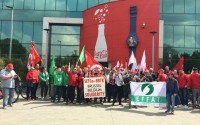
Three levels of extraordinary consultation :
Following three years of negotiations, the management of Coca-Cola European Partners
(22,500 employees) and the European trade-union federation Effat have signed an agreement
establishing a European Works Council at this company, which was created by
a merger, in 2016, of the Coca-Cola Company’s three European bottling operations,
two of which already had their own European Works Council (Coca-Cola Enterprises and
Coca-Cola Iberian Partners) (see Effat press
release). The first meeting is scheduled to take place at the end of March,
at Heathrow (United Kingdom). The agreement contains very detailed provisions
regarding consultation in the event of exceptional circumstances; three different
scenarios are envisaged, depending on the number of employees impacted (under 100
employees, 100 to 300, over 300). The thresholds change the number of meetings (from
one to three), the body convened (select committee or plenary body) and the
timetable for proceedings (a maximum of eight weeks). An agreement
signed on 28 January at the French subsidiary specifies the composition of the
French delegation to the European Works Council (four representatives, two of whom
are entitled to attend extraordinary meetings of the select committee).
|
- Post-Brexit clauses :
A supplemental
agreement dated 16 October 2019, to the European Works Council agreement
of the Canadian group Bombardier, published on
line by the European Trade Union Institute, seeks to keep the British
representatives on the council, even if the United Kingdom leaves the EU or the
European Economic Area and if the European Works Council Directive no longer
applies to the UK. Something else worthy of note in the Coca-Cola European Partners
European Works Council agreement is an explicit clause (Article 4.6) maintaining
all the effects of the agreement in the UK, where it has a 3,625-strong
workforce: the British representatives will continue to be accredited EWC
members and the European Works Council will remain competent to deal with all
transnational matters concerning the United Kingdom.
|

Agreement renewed :
On 5 December 2019, the Italian manufacturing
group Cementir (3,000
employees), whose head office is in the Netherlands, renewed its European Works Council agreement
under the auspices of Italian law. The council, on which 7 employee representatives
sit, will be entitled to invite observers representing non-EU countries to sit in on
its meetings. The council’s secretariat comprises five representatives, one of whom
is a coordinator appointed jointly by the Italian trade-union federations.
> Further agreements: a number of
new agreements have been published on the European Trade Union Institute’s website:
Berckers & Colart, Österreichische Bundesbahn (ÖBB),
Wilsonart.
|
Corporate
Social Responsibility

Fundamental Social Rights :
On 31 January, the cosmetics group L’Oréal (86,000 employees)
announced the launch of its new “Employee
Human Rights Policy“. The group commits “to uphold a set of universal human
and social rights standards for all its employees worldwide, regardless of their
geographic location or position in the Group” (see press
release). This text is similar to a global framework agreement, other than
for the fact that it has not been drawn up jointly with a trade union partner.
Article 9 on Wages, Hours, Leave and Benefits provides for “a minimum maternity
leave of 14 weeks paid at 100% of the salary and a minimum paternity leave of 10
days paid at 100% of the salary”. Employees (or their families) will receive “at
least twenty-four months’ salary in the event of death or permanent incapacity and
access to major medical treatments” guaranteeing reimbursement of “at least 75% of
related costs”.
|
|
|












