 |
| |
IR Notes 16 – 24 September 2014
www.irshare.eu
|
|
|
| |
|
|

|
| |
Interview
Gabriel Di Letizia, Secretary (LCGB-SESF) of the European works council
of BNP Paribas

You have just signed a European
agreement on professional equality within BNP Paribas. Wherein
lies the importance of this
agreement?
When
we were preparing for the negotiation,
we exchanged information on the arrangements existing in the
different countries covered by the EWC. We then discovered that,
while several Member States already had very strong legislation
and/or a collective agreement in place, this was not the case in
every country, particularly in the east of Europe. Our agreement
will allow all employees to be put on an equal footing within the
group.
Did you encounter points of
contention during the negotiation?
Not really, no, because both we and the
management were intent upon reaching an agreement from the outset.
When such a course has been set from the start, with the will to
arrive at a consensus, the negotiation proceeds quickly and
smoothly.
How do you envisage the agreement’s
implementation?
We have written down the principles on
paper. Now we must do the hardest bit, that is to say, to enforce
the agreement in practice. We are fairly confident, since the first
European agreement on employment, which we signed in 2012, has
already been implemented in a satisfactory manner. We have already
had countries which have drawn on this agreement when they faced
restructuring. Our experience has therefore been positive.
|
|
|
|
|
| |
Diary
24 to 26
September
Brussels
Conference organised jointly by the European Trade Union
Confederation (ETUC) and the European Trade Union Institute (ETUI),
entitled “Europe
at a crossroads. Which way to quality jobs and prosperity ?“.
1 to
3
October
Bordeaux
9th
Congress of the International Network for Research on Organizations and
Sustainable Development (RIODD – Réseau international de recherche sur
les organisations et le développement durable) organised by the Centre
for Comparative Labour and Social Security Law (COMPRASEC) of the
University of Bordeaux on the subject of “The
environment and work: how do they relate?”.
7
October
Paris
Conference
on European sectoral social dialogue organised by the French
associations RDS (Réalités du Dialogue social) and Europe and Society.
20-21
November
Vienna
4th
Congress of the European Federation of Food, Agriculture and Tourism
Trade Unions (EFFAT).
|
|
|
|
|
| |
IR Notes
is a fortnightly newsletter produced by
IR Share and
its network of experts, and is available in several European
languages. It offers Europe-wide monitoring of employment law,
labour relations and employment policy. It is available by
subscription for 15 euros per month ; 150 euros per year (excluding
tax), via the IR Share
website. IR Share is a privately- owned,
independent, apolitical company whose aim is to inform and assist
all players involved in social dialogue within and outside Europe.
It has been the correspondent organisation for France and Luxembourg
of the Dublin Foundation since 2009 and for Bulgaria since
2014.
|
|
|
|
|
|
|
Lead
story
The European
Commission adopts a “social face”
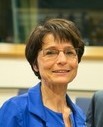
The new European Commission formed by its president, Jean-Claude Juncker, appears to
be placing greater emphasis on the social dimension of the EU than the previous
team: 1. Two vice-presidents of the Commission will oversee social issues: on the
one hand, the Latvian Valdis Dombrovskis will be responsible for a curious
combination of the euro and social dialogue, and on the other, the Finn Jyrki
Katainen is entrusted with employment, growth, investment and competitiveness. 2.
The Commissioner for Employment and Social Affairs, the Flemish Christian democrat
Marianne Thyssen (photo), represents a country which was a founder member of the
Union and which, like Jean-Claude Juncker’s own homeland, has a strong tradition of
social dialogue. She is “someone who understands the need for dialogue with
trade unions,” Bernadette Ségol, the general secretary of the European
Trade Union Confederation, was keen to stress. 3. Her mission
letter gives her a right to intervene in the European Semester system, where
she will be involved in drawing up recommendations for the Member States,
particularly with regard to labour market reform. 4. The Directorate General for
Employment and Social Affairs will pick up units from other DGs in charge of
dossiers linked to training, equal treatment and the rights of persons with
disabilities. These are some positive signals in support of social dialogue. The
European parliamentarians of the Committee on Employment and Social Affairs will no
doubt be looking to gain assurances about the more socially minded orientation of
the new team when, on 1 October, they interview Marianne Thyssen, who has defined
herself as the new Commission’s “social face”.
|
1. European
Union
Social
update
- Reducing the tax burden on
labour: The representatives of the Member States of the
euro area (Eurogroup) on 12 September adopted a statement
concerning the common principles to be observed in order to reduce the tax
burden on labour. “Shifting taxes away from labour is potentially the single
most important boost for jobs right now,” Council President Herman Von Rompuy
likewise declared on 16 September, (see speech,
in English).
- Intervention in support of employees laid
off by PSA Peugeot-Citroën: The European Commission on
11 September proposed to provide France with 12.7 million euros from the
European Globalisation Adjustment Fund (EGF) (see press
release). The amount is intended to help 2,357 workers made redundant by
carmaker Peugeot Citroën Automobile (PSA) to find new jobs.
- Workshop for European works councils in
the financial sector: The UNI Europa Finance federation
held a workshop on 10 and 11 September in Potsdam (Germany) for trade union
representatives of several major European banks (Deutsche Bank, Allianz, BNP
Paribas Fortis, UniCredit, Barclays and Société Générale). The aim was for
participants to improve their practical work in the European works councils
(EWC) and to work to establish transnational trade union alliances in these
groups (see press
release, in English).
|
Case law
- No impediment to posting of workers from
non-member states: The European Court of Justice has
handed down a judgement (CJEU
11 September 2014, case C-91/13) which reminds the Member States that
they cannot impede the entry onto their labour market of employees originating
from non-member countries posted to their territory by a company from another
Member state of the EU to carry out a service. In this particular case, Essent,
a Dutch company, placed an order for the erection of scaffolding with another
Dutch enterprise, which had in turn called in a German provider. The latter
dispatched 29 Turks to work on the building site. The Dutch authorities imposed
a fine of 264,000 euros on Essent for failing to obtain work permits for these
nationals – wrongly in the eyes of the Court, which found the requirement of
demanding a work permit excessive, and at the same time recommended a simpler
system of declaration prior to posting.
- The effects produced by a collective
agreement must continue to be observed if an undertaking is
transferred: In the event of an undertaking being
transferred, directive 2001/23 of 12 March 2001 provides that the transferee
which takes over the employees shall continue to observe “the terms and
conditions agreed in any collective agreement” until the date of termination or
expiry of the collective agreement or the entry into force or application of
another collective agreement (Article 3 (3)). In a dispute resolved by the
European Court of Justice (CJEU,
11 September 2014, case C-328/13, Austrian Confederation of Trade
Unions), the question at issue was whether the principal of continued
application is also valid if the collective agreement has been terminated just
before the transfer and national legislation provides for the effects of the
collective agreement to continue to be observed in the event of termination. The
Court replied in the affirmative, ruling that the effects of the rescinded
collective agreement continue to apply until the expiry of the observance period
or the entry into force of a new collective agreement or a new individual
agreement concluded between the employer and the employee.
- A public contract cannot impose compliance
with the set minimum wage on employees working in another Member
State: The European Court of Justice has delivered its
judgement (CJEU
18 September 2014, case C-549/13, Bundesdruckerei GmbH) in an action
brought by a German printing company against the city of Dortmund, which wished,
in the context of a public contract, in compliance with regional legislation, to
oblige both the printing company and its subcontractors to observe a minimum
wage of 8.62 euros per hour. The company, which intended to assign part of the
contract to a Polish subcontractor, challenged this provision – justifiably, in
the eyes of the Court, which took the view that, while the set minimum wage
corresponds “to that required in order to ensure reasonable remuneration for
employees in the Member State of the contracting authority in the light of the
cost of living” on that Member State’s territory, it “bears no relation to the
cost of living in the Member State in which the services relating to the public
contract at issue are performed and for that reason prevents subcontractors
established in that Member State from deriving a competitive advantage from the
differences between the respective rates of pay”. The regional provision “goes
beyond what is necessary to ensure that the objective of employee protection is
attained”.
|
2. Member
states
Bulgaria
- Trade union for people working from
home: A trade union for home workers held its first
congress on 16 July. Of the around 500,000 people who carry out their
professional activity from home, only 8% are said to benefit from an employment
contract and to pay social security contributions. The remainder belong to the
informal economy. The trade union has proposed that its members should be able
to register (and pay contributions and taxes) and that they should be paid in
line with the minimum wage (equivalent to 174 euros per month) after five years
of work.
|
Czech
Republic
- Higher minimum wage: On
15 September the government approved an increase in the minimum wage of
700 koruna (over 25 euros). This takes it to a new level of 9,200 koruna
(approximately 333 euros), although it remains below the poverty threshold,
which is set at 9,600 koruna (nearly 350 euros).
- Civil Service Act: On 10
September, following 13 years of discussions, the government approved an
amendment of the country’s Civil Service Act which is scheduled to take effect
on 1 January 2015. While the principal objective is to “depoliticise” public
service – the EU was threatening to cease payment of European funding to the
republic unless a law to this effect was passed – the new text is also likely to
mean important changes to the working conditions of the 70,000 civil servants.
|
France
- Workforce thresholds: The
social partners on 9 September defined their social agenda (“Relevé
de suivi de l’agenda social“, in French). Their programme includes three
negotiations, including one on social dialogue. This negotiation will begin in
October and be concluded by the end of the year. It will deal with the question
of workforce thresholds that trigger the set-up of staff representative bodies,
as well as improving the way the latter work.
|
Luxembourg
- Strategy to promote equal treatment:
The equal opportunities minister Lydia Mutsch on 16
September presented a strategy
comprising 11 steps for promoting gender equality, as well as a
communication campaign urging women and men to work together to achieve this
goal. A key measure is the introduction, from 2019 onwards, of a 40% quota of
women in senior management positions in the public sector and in companies in
which the state is a shareholder.
|
Romania
- Right to be accompanied during a
preliminary interview: According to the labour code, a
preliminary interview must take place between the employer and the employee
prior to any disciplinary sanction. Case law was divided on whether the employee
could be accompanied by an advisor or not. Explicitly following the example of
French legislation, the legislator passed law No. 77/2014 (published on 26 June)
which expressly stipulates that the employee has the right to be accompanied, if
so requested, by a lawyer or representative of his or her trade union.
|
3.
Companies
European
Companies (SE)
- Airbus: The negotiations
are about to commence on an agreement to involve the workers in the future
Airbus SE, whose constitution is scheduled for 2015. This will provide an
opportunity to redefine the current architecture of the various European works
councils of the group existing in particular at holding company level and in the
different divisions.
|
European
works councils
- ArcelorMittal: The
management and the representatives of the European works council must revise the
steelmaking group’s EWC installation agreement in particular to bring the works
council in line with the reduction in the group’s European workforce, which has
gone down from 136,000 in 2006 to 82,000 at present. The number of members – 54,
plus the same number of alternates – will no doubt be reduced.
- Microsoft: The negotiation
to set up a European works council will not now be initiated after the Italian
trade union CGIL, which had requested the opening of negotiation along with the
CGT (France), finally withdrew its request. The directive relating to European
works councils requires that such a request is formulated by employee
representatives from at least two countries.
|
Transnational agreements

BNP Paribas: The
management of the BNP Paribas bank on 16 September signed its
second European agreement, following on from the one on
employment sealed in July 2012 (see Interview). The new
agreement concerns professional equality and was concluded with the UNI
Europa Finance trade union federation, the FECEC and the three members of the EWC
secretariat. The text deals with the topics of recruitment, promotion, access to
vocational training and reversing the wage disparity between women and men by
implementing an action plan at each group entity. The signatories also aim to
promote diversity, the work-life balance and the establishment of women’s networks
within the group. One provision allows for professional support during and on
returning from maternity leave (see Press
release, in French).
- H&M: The International
Labour Organisation (ILO) and the textile group H&M (116,000 employees) on
15 September forged a partnership to promote sustainable global supply chains in
the garment industry. The agreement
will include joint work on industrial relations and wages, training and skills
development in factories H&M source from, as well as strengthening
employers’ and workers’ organisations in the global garment industry (see ILO
press release)
|
4. Studies
and reports
- Employment and manpower
costs: The number of persons employed increased by 0.3 %
in the EU and by 0.2 % in the euro area in the second quarter of 2014 compared
with the previous quarter, according to estimates
published on 12 September by Eurostat. Eurostat has also released statistics on
the pattern of labour costs (see press
release) and on the job vacancy rate in the EU (see press
release).
- Erosion of social justice:
A study by the German foundation Bertlesmann Stiftung (Social
Justice in the EU – A Cross-national Comparison, in English) has
revealed a fall in the social justice index calculated by the foundation since
2008. The latest survey, following on from those conducted in 2008 and 2011,
shows that the situation has deteriorated in numerous countries (Spain, Greece,
Portugal, Ireland and Hungary). Most troubling in the foundation’s eyes is that
social injustice is primarily impacting on the younger generations, since 28% of
children and young Europeans are exposed to the risk of poverty or social
‘exclusion, compared to 26.1% in 2009.
- Towards a common migration
policy: The European Commission and the OECD on 18
September published a joint report entitled “Matching
economic migration with labour market needs”. The document makes the
case for 1. Fostering intra-EU labour mobility to ensure a better allocation of
skills; 2. Better integrating non-EU migrants to ensure a smarter use of their
skills; 3. Attracting the skilled migrants needed on the EU’s labour market.
|
Phrase of
the fortnight
Country-specific recommendations
The new Commissioner for Employment and Social Affairs will be involved in drawing up
the country-specific recommendations, the president-elect of the European
Commission, Jean-Claude Juncker, has explained. What are they? These annual
recommendations drawn up by the Commission indicate to the Member States the
objectives to be achieved, in particular with regard to employment policy and labour
market reform. The draft recommendations are drawn up in May and subsequently
adopted by the college of commissioners. They are then discussed in the Council for
adoption in July. After that, the Member States are invited to implement them. The
European social partners are consulted as part of this process, and the Member
States are also asked to consult their social partners on the implementation of the
recommendations and the national reform programme, which they must submit to the
Commission. See the Eurofound
European Industrial Relations Dictionary (in English) for further
information.
|
|
|











