 |
| |
IR Notes 180 – 23 February 2022
www.irshare.eu
|
|
|
| |
| |
A question for…
François Nogué, Director of Human Resources, SNCF Group
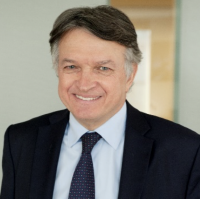
On 22 February, SNCF hosted a
European
Railway Summit,
under the auspices of the European
Commission and within the framework of the French Presidency of
the EU. One of the topics discussed was European sectoral social
dialogue.
Why is this level of social dialogue important, both for the
sector as a whole and for your company in
particular?
First
of all, I’d like to reiterate my
commitment to European social dialogue. I used to be the SNCF
Group’s DHR before leaving the company. I subsequently came back to
work for SNCF, just as we were setting up the Group’s European Works
Council. For several years, I also chaired the rail sector’s
European DHR group, within the European employers’ organisation CER.
It was this experience that prompted me to organise the Summit, on
the eve of the European Council of Transport Ministers, with the
participation of all actors engaged in European social dialogue. It
was an opportunity for us to reaffirm SNCF’s involvement in European
sectoral social dialogue, and the importance of having a
high-quality social dialogue in the rail sector. This summit focused
on three issues:
The first
one is an objective shared by all European railway networks, i.e.
boosting the sector’s appeal to European workers in order to support
its own development, which is being stimulated by the transition to
low-carbon modes of transport. We need people who are motivated and
trained, who are capable of working in a complex environment and are
conversant with digital technology.
The second issue is that of redoubling our
efforts to grow the participation of women in our business. At the
present time, on average at EU level, 20% of the rail industry’s
workforce are women. This figure is far too low. To remedy this
situation, the European social partners have signed a voluntary
agreement called “Women in Rail” (see IR Notes
no. 174). SNCF was a driving force
behind this initiative. All of the federations affiliated to the
Europe trade-union federation ETF have signed it. And very soon
afterwards, SNCF consolidated these gains by concluding an agreement
on gender diversity and equal representation within SNCF group, with
the unanimous support of the trade unions. In accordance with the
European agreement, we have drawn up a roadmap, containing
quantified commitments.
The
third and final challenge facing us is
to create a large Europe-wide rail market, by enhancing network
interoperability. We have already negotiated two European agreements
covering railway licences and mobile workers performing cross-border
interoperability services, which have been converted into an EU
directive. And with our recent “Women in Rail” agreement, we are
making a contribution to the harmonisation of working conditions. If
we want to expand the role played by rail in a low-carbon economy,
we need to do away with borders across the European continent, so
that there is no need for goods to be transshipped when they move
from one country to another.
(photo : Copyright – Veysset
Frédérique)
|
|
|

|
| |
Editorial
Ukraine is part of Europe, so let’s act accordingly!
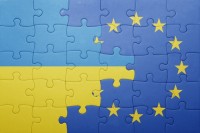
It’s not easy to establish a link between
the Ukrainian crisis and the topics usually covered in IR Notes, but
nevertheless one can be made. In 2019, the food production group Bel
signed a European
Works Council agreement, which
includes Ukraine in its geographical scope of application. In other
words, at the time the agreement was signed, the company’s 342
Ukrainian employees (who account for 5% of its total workforce in
Europe) had two accredited representatives on the EWC. In light of
the destabilisation now being experienced by this democratic state,
a majority of whose population would like to move closer to the EU,
it could be useful for companies with employees in Ukraine to make a
gesture of solidarity towards them. For example, these companies
could amend their EWC agreement and include Ukrainian staff in the
EWC; those unwilling to take the bold step of granting them a seat
as a fully-fledged Council member, could simply allow them to join
as observers.
|
|
|
|
|
| |
Diary
28 February-1
March
On
line
Training
course organised by the European Trade Union Institute (ETUI), on US
multinationals’ European Works Councils (EWC). Contact: lcoremans@etui.org
14 March
Brussels
Employment
and Social Policy Council.
22 and 23
March
Brussels
Training
course organised by the European Trade Union Institute (ETUI) for
European Works Council secretaries, on European social dialogue.
Contact: esantaniello@etui.org
24 March
On line
A
conference (in French) organised by IR Share on “A
year of European social case law” [une année de
jurisprudence sociale européenne], with Jean-Philippe
Lhernould, Professor of Law at the University of Poitiers.
8 to 12
May
Berlin
DGB
Congress.
16 June
Luxembourg
Employment
and Social Policy Council
27 and 28
June
Hamburg
14th
conference of the EWC Academy for European and SE Works
Councils, featuring Gabriele Bischoff, Udo Rehfeldt and Ilaria
Armaroli.
|
|
|
|
|
| |
Who we are?
IR Notes is a
fortnightly newsletter produced by IR
Share and its
network of experts, and is available in several European languages
(English, French, German, Italian, Spanish). It offers Europe-wide
monitoring of employment law, labour relations and employment policy. It
is available by subscription for 18 euros per month.
The team This
issue was producaed by Inga
Blaziene, Elma
Paulauskaite, Vasilis
Koniaris, Pascale Turlan
et Frédéric
Turlan.
Find out more about the IR Share
team on our website.
Subscribe to IR Notes
Via the
IR
Share website or by calling us on:
+33 (0)6 81 41 53 95
or
E-mail: frederic.t@irshare.eu
Legal notice.
Publisher: IR Share SARL – 5, Les Compères – 89520 Fontenoy,
France – Tel.: +33 (0)6 81 41 53 95 – share capital 1,500 euros –
commercial register (RCS Auxerre): 512 567 959. Managing editor:
Frédéric Turlan. Hosting: Ideal prod – 14 rue Auguste Morel – 89100
Sens – France – Tel.: + 33 (0)3 86 83 21 21. CPPAP no.: 0626 Z
93933
|
|
|
|
|
| |
European Industrial Relations Dictionary
In case reading IR Notes inspires you to explore this subject further, we
are providing links to
the European
Industrial Relations Dictionary published by Eurofound. This is
updated at regular intervals by IR Share, which publishes IR Notes. The
term definitions are available in English and can easily be converted
into other languages using on-line translation tools.
|
|
|
|
|

|
|
|
Lead
story
Reclassifying a worker who is recognised as having a disability, is one of the
reasonable accommodations that an employer must make

The Court of Justice has delivered a ruling concerning a maintenance technician
recruited by the Belgian railways company to work on railway tracks. During his
traineeship period prior to qualification at the company, he was diagnosed with a
heart condition. He was subsequently fitted with a pacemaker, a device that is
incompatible with the electromagnetic fields present on railway tracks. As a result,
this worker was recognised as having a disability. He was quickly reassigned to a
warehouseman’s position, then dismissed before the traineeship came to an end. As a
trainee, does he enjoy the protection granted to workers by Directive 2000/78 of
27 November 2000, establishing a general framework for equal treatment in employment
and occupation? Yes, the Court of Justice replies. This law applies to “a worker
undertaking a traineeship following recruitment by his or her employer”, provided
that the traineeship period is served “under the conditions of genuine and effective
activity as an employed person, for and under the direction of an employer”.
Furthermore, Article 5 of the Directive stipulates that “reasonable accommodation”
shall be provided, in order to guarantee compliance with the principle of equal
treatment in relation to persons with disabilities. The Court states that where a
worker becomes permanently incapable of remaining in his or her job because of the
onset of a disability, reassignment to another job may constitute an appropriate
measure in the context of “reasonable accommodation”. Admittedly, this provision
does not oblige an employer to take measures which would impose a “disproportionate
burden” on it, taking account in particular “of the financial costs entailed, the
scale and financial resources of the organisation or undertaking and the possibility
of obtaining public funding or any other assistance”. Although the Court leaves the
national courts to assess whether or not a disproportionate burden exists, it adds
that the worker “was reassigned to a warehouseman’s position within the same
company”, which would tend to indicate that reassignment to another position was
possible. However, the Court does specify one criterion applicable to this
reclassification obligation: “the possibility of assigning a disabled person to
another job is only available where there is at least one vacancy that the worker in
question is capable of holding” (see press
release and CJEU,
10 February 2022, Case C-485/20, HR Rail SA).
|
***Last
minute***
The Commission has today adopted a proposal for a Directive on corporate
sustainability due diligence. The aim of this Directive is to foster sustainable and
responsible corporate behaviour and to anchor human rights and environmental
considerations in companies’ operations and corporate governance. The Commission has
published a proposal
for a Directive and a communication
(see press
release and a Questions
and Answers document published by the Commission, plus the reactions of the
European
Trade Union Confederation and BusinessEurope).
|
1. European
Union
Legislation
- Carcinogens, mutagens and reprotoxic
substances : On 17 February, MEPs adopted, by 686 votes
for, 4 against and 4 abstentions, the fourth revision of the directive limiting
workers’ exposure to carcinogens, mutagens or reprotoxic substances (see IR Notes 177).
The directive now has to be approved by the Council before it is published (see
press
release issued by Parliament).
|
Proposal
Representation of women on company boards :
In January 2012, just 14% of the directors of publicly listed EU
companies and just 3% of the Chairs of these companies were women. To tackle this
gender imbalance, in November 2012, the European Commission put forward a proposal
for a directive on improving the gender balance among non-executive directors of
companies listed on stock exchanges and related measures. One of its
objectives was to ensure that publicly listed companies at which board members of
the under‑represented sex hold less than 40% of non-executive directorships, reached
this percentage by 1 January 2020 at the latest… After ten years of obstruction on
the Council, the German government has just announced its support for this law and
its intention to vote for it at the forthcoming Employment and Social Affairs
Council meeting on 14 March. This change of position means that a qualified majority
is certain to be achieved, guaranteeing that the directive will be adopted.
Germany’s Federal Minister of Foreign Affairs, Annalena Baerbock, offers the
following explanation in a statement:
“It is unacceptable that in the heart of Europe, we are still having to search
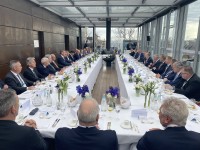
really hard to find any women on company boards”. The recent meeting of German
business leaders at the Munich Security Conference clearly illustrates her point…
(see photo).
|
Case law

Court of Justice examines the issue of joint
management again : On 8 February, an important case was
heard before the EU Court of Justice, concerning compliance with German law on joint
management, where a company is converted into a European company (SE). This case
concerns the validity of the provision covering the composition of the supervisory
board, within the agreement on employee involvement in SAP SE. Where this board
comprises 12 representatives, the agreement concluded at the time SAP was converted
into a SE, stipulates that six of them must be employee representatives. However,
the agreement does not provide for a specific election to appoint two trade union
representatives among the six representatives, as required by German law.
Consequently, although the agreement on employee involvement maintains the required
parity of representation, it removes the specific mechanism whereby the trade unions
can have two representatives who are not company employees, sitting on the
supervisory board. The employer believes that the agreement was able to stipulate
such a provision, given the principle of autonomy of the parties, whereas the two
trade unions who took this case to court – IG Metall and Ver.di – take the view, in
light of the “before and after” principle stipulated by the directive on the
involvement of employees in the SE, that any conversion into a SE should keep this
mechanism in place, as it is one of the strengths of the German industrial relations
model. The two trade unions claimed that the European Commission and the
representatives of the German and Luxembourg governments supported their positions
at the hearing. The Advocate General’s opinion is expected to be made public on 28
April. Thereafter, the Court usually rules on the case within six to nine months
(see joint
press release issued by IG Metall and Verdi, and the request
for a preliminary ruling submitted to the CJEU).
|
European
social dialogue
- BDA’s position on European social dialogue
: In a statement
published in January, the German employers’ organisation BDA, one of the
heavyweights at the European employers’ organisation BusinessEurope, made clear
its position on the revision of European social dialogue, on which the European
Commission is due to publish a communication in the second half of 2022. The
BDA, which is calling on the Commission to respect the social partners’
autonomy, expresses its regret in the following terms: “Unfortunately, the
European Commission is launching a growing number of social policy initiatives
that are being implemented by the Council and the Parliament, within the
framework of the ordinary legislative process”. The BDA adopts most of the
proposals contained in Andrea Nahles’ report (see IR Notes 157),
such as designating a specific person to be responsible for social dialogue at
each of the Commission’s directorates-general, so that the social partners can
be more closely involved in formulating all EU policies, not just social
policies. The BDA believes that any agreements signed by the social partners
should be respected: for example, according to the BDA, the European framework
agreement on digitalisation, which was concluded for a three-year term, prevents
the Commission and the Parliament from passing a directive on the right to
disconnect, during that time.
|
2. Member
States
Germany
A new offence of obstructing the creation of a
works council? : On 9 February, in Berlin, the executive
committee of the German trade union confederation DGB set out its work priorities
for 2022 (see press
release). Just a few weeks before fixed-term elections are held to appoint
180,000 works councils representatives who hold offices at 28,000 companies, DGB
Chairman Reiner Hoffmann welcomed the government’s proposal to create an offence of
obstructing the creation of a works council. Reiner Hoffmann emphasised that “it is
simply unacceptable that the creation of one in six works councils is being
prevented, in unlawful ways”. He also called for joint management to be
strengthened, with a view to tackling the social and environmental transition, a
topic that will feature prominently at the DGB Congress, which is being held in
Berlin, from 8 to 12 May.
- Better pay and additional leave in the
care-for-the-elderly sector: On 5 February, the care
commission (Pflegekommission)
established by the law setting minimum wage levels in the care-for-the-elderly
sector, unanimously decided to raise the minimum wages paid in this branch. The
commission recommends a three-stage increase in the minimum wage, starting on 1
September 2022, so that by 1 December 2023, the following rates will apply:
14.15 euros per hour for nursing assistants; 15.25 euros per hour for qualified
nursing assistants; and 18.25 euros per hour for specialised nurses. The
commission also recommends granting additional paid leave, on top of the
statutory leave entitlement. This additional leave is expected to amount to
seven days for employees who work five days a week in 2022, and nine days for
2023 and 2024 (see press
release issued by the Ministry of Employment).
|
Spain
- Minimum wage rises to 1,000 euros :
The national minimum wage will rise to 1,000 euros per
month, payable in 14 instalments after an agreement concluded between the
Minister of Employment, Yolanda Díaz, and the two leading trade unions: CCOO and
UGT. However, the employers’ organisations reject this increase, which they
regard as premature. The increase was approved at the Council of Ministers on
22 February, and will be applied retroactively, with effect from 1 January. The
national minimum wage currently stands at 965 euros and will therefore be raised
by 35 euros.
|
Greece
Length-of-service allowance returns :
Up to 2012, employees receiving the minimum wage – which at that
time was set by a national collective bargaining agreement – enjoyed a 3% pay rise,
provided for by law, for each continuous three-year period of employment they
completed, regardless of their employer. This pay rise applied for a maximum of
three periods (i.e. nine years in total, representing an increase of approx. 10% on
the minimum wage). Under the terms of the Memoranda concluded with the EU and the
IMF during the debt crisis, this “allowance for persons employed on the
minimum wage” was abolished until such time as the unemployment rate fell below 10%.
As a result, in 2012, all employees who were receiving the minimum wage, and had
qualified for this entitlement, lost their allowance. Now, by virtue of a Council of
State decision, this bonus has been reinstated for employees who completed one or
more of these three-year periods by 2012. However, employees receiving the
minimum wage after 2012 do not qualify for it because unemployment has not fallen
below the 10% threshold stipulated by law. The return of this length-of-service
bonus only applies to employees who are receiving the statutory minimum wage. This
increase does not apply to other employees who are covered by sectoral agreements
that include wage-related provisions, or who have negotiated their contract of
employment with their employer.
|
Ireland

New employment rights : On 1
February, at the presentation of a Tips
and Gratuities Bill, Leo Varadkar, the Minister for Enterprise, Trade and
Employment, announced that he wanted to create jobs with better terms and
conditions, that are “more sustainable, secure and valued”. To this end, he plans to
establish five new workers’ rights in 2022, namely: a new public holiday (St
Brigid’s day, to be observed on the first Monday of February each year), which
brings Ireland more into line with the European average; statutory sick pay (see IR Notes 175); the
right to request remote working (see IR Notes 179); new
rights around redundancy for people laid off during the pandemic; and a guarantee
that tips will be passed on to staff, by virtue of the tips and gratuities bill.
This law is based on four principles: 1) it will prohibit employers from using tips
and gratuities to ‘make up’ contractual rates of pay. Tips and gratuities must be
added to staff wages in all circumstances. 2) It establishes a legal entitlement for
workers to receive tips and gratuities paid in electronic form. 3) An employer may
not retain any share of tips received electronically, other than in exceptional
circumstances (e.g. to pay tax, or bank charges arising from providing electronic
modes of tipping). 4) Businesses will be required to clearly display their policy on
how tips are distributed.
|
Lithuania
- First-ever strike in the private sector :
600 of the 1300 employees at fertiliser producer AB Achema
are on strike, following the employer’s refusal to negotiate a collective
bargaining agreement. What is unusual about this news, which would probably be
seen as unremarkable in most EU Member States, is that it is the first strike in
the Lithuanian private sector for more than 30 years. All of the strikes that
have taken place in Lithuania have involved only the public sector (see
IndustriAll Europe press
release and
article
in Delfi.en).
|
Netherlands
A guide offering support for divorcees :
On 8 February, the National Confederation of Christian Trade
Unions (CNV) published a study
of divorced employees, highlighting their heightened risk of absenteeism and burnout
(16% of employees say they suffered burnout during the year following their
divorce). Based on these results, the CNV is calling for the introduction of
protocols within companies, to provide support for employees who are in the process
of getting divorced or are already divorced. The CNV advocates that employers should
put in place a separation policy, indicating ways in which divorced employees can be
supported as effectively as possible, in practical, financial and psychological
terms. With this goal in mind, the CNV has published an e-book
and is preparing a practical guide for divorced employees (see press
release).
|
3.
Companies
European
Works Councils
A new European Works Council :
On 19 January, the management of Intersnack signed an agreement,
with a special negotiating body, covering the setting-up of a EWC at this German
snack food company, which employs 13,000 people. The European trade-union federation
EFFAT accompanied the SNB during the negotiations. The EWC includes representatives
from 20 countries (see EFFAT press
release).
>
See also: Interview
with Daniela Cavalho, president of the European and World Group Works
Councils of Volkswagen, published on the IndustriAll Global Union website.
|
- Restructuring : The
international trade-union federation IUF, accompanied by representatives of the
Finnish trade union SEL and of the Unilever EWC, has paid a
visit to employees of the Sipoo ice cream production factory (64 employees) in
Finland, which is threatened with closure by Unilever’s management (see press
release) to argue the case for keeping the site open.
|
Transnational agreements

Social dialogue at Uber : On 17
February, the International Transport Workers’ Federation (ITF) and Uber signed a memorandum of
understanding to begin social dialogue on the working conditions of drivers and
couriers globally. This text covers a variety of topics, such as trade union
representation, freedom of association and bargaining, health and safety, social
protections and dispute resolution. ITF thinks that this agreement “can accelerate
improvements in rights and conditions for drivers and couriers through a dual policy
of social dialogue and structural reform” but the federation plans to continue to
“robustly challenge employment status misclassification and disguised employment
practices”. (see ITF press
release)
|
4. Studies
and reports
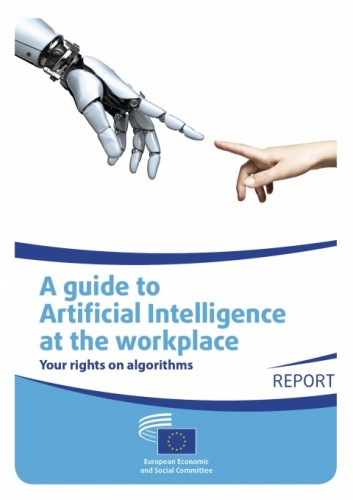
Artificial intelligence : The
European Economic and Social Committee (EESC) has published a guide,
in partnership with CFDT Cadres, for better mastering AI in the work environment. It
is aimed at anyone wishing to address the risks associated with using artificial
intelligence in the workplace. If we are faced with facial recognition during
recruitment, the use of our personal data without our knowledge, if we are monitored
by software during teleworking, if we depend on the arbitrary decision of an
algorithm to obtain a promotion… this guide, produced by Franca Salis-Madinier
(CFDT), who is an EESC member, will help employees and their representatives to ask
the right questions, and to act. This publication also features interviews with
researchers, sociologists, staff and worker representatives, and bodies confronted
with the introduction of artificial intelligence in organisations. It has also been
published in French, under the title of “Le
guide de l’intelligence artificielle au travail”.
|
Links between board-level employee
representatives and EWCs : The European Trade Union
Institute (ETUI) has published a Policy Brief
advocating stronger links between European Works Councils and employee
representatives serving on boards of directors or supervisory boards, when the two
forms of employee representation co-exist within the same group. This document,
which is based on a vast survey conducted in 2018, emphasises that EWCs “are
underusing this potential asset”, which is about “having friends in high places –
namely, well-informed allies within the heart of corporate decision-making”. This
publication should prompt thinking within every EWC concerned, with a view to
establishing such links: frequently they are absent, in some cases due to
excessively strict interpretation of confidentiality rules.
|
|
|











