 |
| |
IR Notes 181 – 9 March 2022
www.irshare.eu
|
|
|
| |
| |
Editorial
Supporting Ukraine
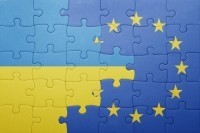
The Council of the EU is now going to
consider Ukraine’s application to join the European Union, and
shortly it will also look at applications for membership submitted
by Georgia and Moldova. Giving the green light to starting the
process will be a step of symbolic importance, but the road to
membership is long. Another symbolic action that can be taken, and
one that is much faster, is allowing Ukrainian
representatives to join European Works Councils without
delay. The financial outlay involved is relatively
small, and the move carries symbolic importance. It’s a way of
showing support and of gradually helping Ukrainian employees adapt
to the European industrial relations model. We intend to
relay this appeal on social media as widely as possible, so as
to encourage company managements and EWCs to open the door to
Ukrainians. Lastly, IR Notes supports the initiative
launched by the International Trade Union Confederation (ITUC),
which has set up a fund to help the Ukrainian trade unions assisting
civilians who are fleeing the conflict, and also trade unions from
countries bordering Ukraine, which are welcoming refugees. Donations
can be made via this website. IR Notes also supports the
Ukrainian media that are continuing to operate, despite the war
unleashed on journalists, e.g. The Kyiv Independent (donations
here) and The New Voice of
Ukraine (donations
here).
|
|
|

|
| |
A question for…
Françoise Geng, EPSU Vice-President and representative of the CGT Santé
Action Sociale federation
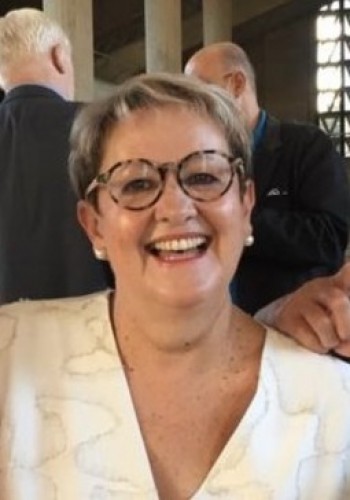
Your trade-union federation, with
the support of the European trade-union federation EPSU and the
French trade union FO, organised demonstrations on 8 March,
which is International Women’s Day, outside Orpéa’s head offices
in France and Spain, in conjunction with the CC.OO trade union.
Why was this?
Following the revelations in the book
entitled “Les
Fossoyeurs” [‘The Gravediggers”], regarding the Orpéa
group’s cost-cutting practices, which are detrimental to the welfare
of the elderly occupants of their retirement homes, and the
widespread mistreatment occurring in these establishments, which are
run by the European market leader in care homes for dependent
elderly people, we have organised three meetings with trade union
officials in the countries in which Orpéa operates. The latest one
was held on 2 March, and EPSU decided to lend its support to the
appeal launched by the CGT Santé Action Sociale federation for
demonstrations on International Women’s Day, because 90% of Orpéa’s
workforce is made up of women (see EPSU press
release). Each national
organisation was allowed to take the initiative in organising
mobilisations in its respective country. The meetings we held showed
that the level of social dialogue is appalling in several countries,
such as Germany, Belgium and France. In Germany, the Ver.di union’s
EWC secretary, who also holds office at local level, has already
been made redundant twice, and subsequently reinstated, each time by
virtue of a court ruling. The way in which this group manages its
social policies is alarming, but it’s also a permanent feature of
the way it operates. Even in Germany, a country with
well-established trade union rights, the company adopts an
aggressive approach to employees who take on the role of workforce
representative. At the level of its European Works Council, which
was established on the basis of the subsidiary requirements of
French law, after negotiations broke down in 2021, nothing is
happening.
The situation
in the Orpéa group raises many questions. In France, it’s clear that
the composition of the workforce, which is made up of 90% women, is
one explanation for the company’s failure to engage in social
dialogue and to abide by employment law. The women working in these
healthcare and personal care sectors tend not to be very militant,
and when they do mobilise, they aren’t listened to, and they don’t
receive much media coverage. This explains why the level of nurses’
pay in France is one of the lowest of the OECD countries. That’s why
we organised a day of action on 8 March this week, in conjunction
with employees who travelled from Germany and Belgium, and with the
German female barrister who conducted the EWC secretary’s defence.
Looking beyond the case of France, the Orpéa case illustrates the
weakness of European social dialogue: it’s just not working.
Companies don’t respect the EWC’s information and consultation
rights. Nothing happens. There are no effective sanctions. At the
time negotiations were held with a view to setting up a EWC at
Orpéa, there was no designated person representing the management
side. SNB members were able to write to a generic email address, but
any replies received were unsigned. These for-profit private sector
groups are engaged in a constant search for profitability and
nothing will stop them. They are subject to few checks, and appear
to escape any sanctions, including as regards the use of public
funds, even when these funds are not used for their intended
purpose. Nor are these companies afraid to either breach or ride
roughshod over employment laws, as there are no effective sanctions
in place to deter them. It’s time to review social legislation and
to ensure that collective bargaining rights, both in France and
elsewhere, are properly respected, and the same goes for information
and consultation rights at European level. Such a move would be an
effective way to prevent abuses occurring in corporate
governance.
|
|
|
|
|
|
|
|
|
| |
Who we are?
IR Notes is a
fortnightly newsletter produced by IR
Share and its
network of experts, and is available in several European languages
(English, French, German, Italian, Spanish). It offers Europe-wide
monitoring of employment law, labour relations and employment policy. It
is available by subscription for 18 euros per month.
The team This
issue was producaed by Pascale Turlan
et Frédéric
Turlan.
Find out more about the IR Share
team on our website.
Subscribe to IR Notes
Via the
IR
Share website or by calling us on:
+33 (0)6 81 41 53 95
or
E-mail: frederic.t@irshare.eu
Legal notice.
Publisher: IR Share SARL – 5, Les Compères – 89520 Fontenoy,
France – Tel.: +33 (0)6 81 41 53 95 – share capital 1,500 euros –
commercial register (RCS Auxerre): 512 567 959. Managing editor:
Frédéric Turlan. Hosting: Ideal prod – 14 rue Auguste Morel – 89100
Sens – France – Tel.: + 33 (0)3 86 83 21 21. CPPAP no.: 0626 Z 93933
|
|
|
|
|
| |
European Industrial Relations Dictionary

In case reading IR Notes inspires you to explore this subject further, we
are providing links to
the European
Industrial Relations Dictionary published by Eurofound. This is
updated at regular intervals by IR Share, which publishes IR Notes. The
term definitions are available in English and can easily be converted
into other languages using on-line translation tools.
|
|
|
|
|

|
|
|
Lead
story
A first step
towards due diligence
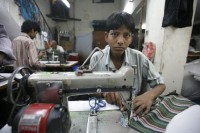
On 23 February, the European Commission adopted a Proposal
for a Directive on Corporate Sustainability Due Diligence. The objective is
to hold multinational companies liable for adverse human rights and environmental
impacts throughout their value chain (i.e. those created by all of their suppliers
and subcontractors) (see Due diligence)..
Which companies are concerned?
This text covers two categories of company: 1) companies with more than 500 employees
and a net worldwide turnover of more than EUR 150 million. 2) Those operating in
“high-impact” sectors posing significant risks of adverse human rights and
environmental impacts (textiles, agriculture, ore extraction), and which employ more
than 250 employees and realise a net worldwide turnover of more than EUR 40 million
(Article 2). This text also applies to companies from third countries active in the
EU, whose turnover threshold is aligned with these thresholds. Only SMEs with 250 or
fewer employees will escape this directive. However, they could still be impacted as
contractors or subcontractors to companies directly concerned by the directive, and
so could economic operators from third countries. That is why the proposal calls on
Member States to put in place assistance, websites and platforms to help them meet
these due diligence obligations.
What will their obligations be?
To comply with this due diligence requirement in terms of sustainability, they will
have to: 1) Integrate due diligence into their policies, in particular by adopting a
code of conduct describing the rules and principles to be followed by the company’s
employees and describing the processes put in place to implement due diligence
(Article 5). 2) Identify actual or potential adverse impacts of their own activities
or those of their subsidiaries and, where these are linked to their value chains,
their established business relationships, on human rights and the environment. To
this end, companies “shall, where relevant, also carry out consultations with
potentially affected groups including workers and other relevant stakeholders to
gather information on actual or potential adverse impacts” (Article 6). It is worth
clarifying and strengthening this provision by involving European Works Councils,
where they exist, in the task of identifying these impacts. 3) Prevent or mitigate
potential adverse impacts by adopting a prevention action plan, accompanied by a
timeline of action and indicators that “is developed in consultation with affected
stakeholders” (Article 7). Here too, it can be assumed that European Works Councils
too, should be consulted about these plans. 4) Make the necessary investments and
provide support for SMEs whose viability might be jeopardised by the code of conduct
or prevention plan. 5) Bring actual adverse impacts to an end or minimise their
extent, including by the payment of damages (Article 8). 6) Establish and maintain a
procedure for dealing with complaints concerning the operations of companies, those
of subsidiaries and their value chains, which must be accessible to the persons
concerned and also to “trade unions and other workers’ representatives representing
individuals working in the value chain concerned” (Article 9). 7) Monitor the
effectiveness of the due diligence policy and measures, by means of assessments
carried out at least every 12 months, based on qualitative and quantitative
indicators (Article 10). 8) Publish an annual due diligence statement, whose
content is yet to be specified.
How is climate change taken into
account?
Larger companies will also have to adopt a plan to ensure that their business model
and strategy are compatible with the transition to a sustainable economy and with
the limiting of global warming to 1.5° C, in line with the Paris Agreement. The plan
will have to include emission reduction objectives where risks or impacts are
identified. The variable remuneration payable to company directors, chief executive
officers and deputy chief executive officers should include objectives linked to
combating climate change (Article 15).
The Commission plans to confer a key
role on company directors in taking account of the consequences of their decisions
for sustainability matters, including, where applicable, human rights, climate
change and environmental consequences, including in the short, medium and long term.
They are required to “adapt the corporate strategy to actual and potential impacts
identified and any due diligence measures taken”. It will be for the Member States,
who will have two years to transpose the directive after it has been adopted, to lay
down the rules on sanctions applicable. These must be effective, proportionate and
dissuasive (Article 20). Companies shall incur civil liability if they do not meet
their obligations as laid down in Articles 7 and 8, where an adverse impact should
have been identified, prevented, mitigated, brought to an end or its extent
minimised (Article 22).
Pending the adoption and transposition of this proposal
for a directive into national laws, there is nothing to stop these matters being
incorporated into the scope of competence of European Works Councils – or even
better, EWCs being involved in the process of defining action plans – whenever
existing EWC agreements are revised or new agreements are concluded in the meantime.
> See also:
European social partners’ reactions (below, Social update)
|
1. European
Union
Legislation
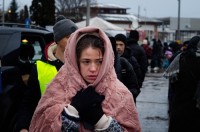
Activation of temporary protection :
On 4 March, the Council of the EU unanimously adopted a decision
establishing the temporary protection provided for by Council
Directive 2001/55/EC of 20 July 2001 on minimum standards for giving temporary
protection in the event of a mass influx of displaced persons. This
initiative was presented by the Commission on 2 March (see press
release). The aim is to reduce pressure on national asylum systems and to
allow displaced persons to enjoy harmonised rights across the European Union. These
include residency rights, access to the labour market and to housing, medical
assistance and children’s access to education (see Council press
release). Article 12 of the directive stipulates that the “Member States
shall authorise, for a period not exceeding that of temporary protection, persons
enjoying temporary protection to engage in employed or self-employed activities,
subject to rules applicable to the profession, as well as in activities such as
educational opportunities for adults, vocational training and practical workplace
experience”. Moreover, “the general law in force in the Member States applicable to
remuneration, access to social security systems relating to employed or
self-employed activities and other conditions of employment shall apply.”
- Directive on carcinogens, mutagens and
reprotoxic substances: After Parliament gave it the
green light on 17 February (see IR Notes 177),
on 3 March, the Council of the EU definitively adopted the revision of the
Directive on Carcinogens
and Mutagens, which will now also include exposure to reprotoxic
substances, i.e. chemical substances likely to interfere with the human
reproductive system (see Carcinogens directive
revision). Member States will have two years in which to
transpose the directive, which will shortly be published in the OJEU, into their
domestic legislation (see Council press
release).
|
Social
update
Reactions to the proposal for a directive on due
diligence (see Lead story) : The first criticism made by the
European Trade Union Confederation (ETUC) is the insufficient involvement of workers
and trade unions in shaping and monitoring business due diligence strategies. ETUC
Confederal Secretary Isabelle Schömann comments as follows: “The Commission seems to
have opted for the lowest common denominator, as a baseline” (see ETUC press
release). The European trade-union federation EFFAT adds: “Self-evidently,
intense lobbying activity by industry groups has jeopardized the text, which appears
full of shortcomings and exemptions” (see EFFAT
press release). Although IndustriAll Europe welcomes the initiative, it
urges for solutions to the massive and unacceptable loopholes in the text (see
IndustriAll Europe press
release). The federation is also concerned about the leeway left to
companies to decide on their own, about their code of conduct and due diligence
strategy. “Because workers are not just one stakeholder out of many, a dedicated
dialogue with trade unions and their representatives must take place at company
level on the design, implementation and reporting of due diligence plans”. The ETUC
also considers that the application thresholds in terms of employee numbers are too
high. As far as the employers are concerned, BusinessEurope believes that this
proposal adds to the already excessive cumulative burden imposed on European
business over the last years and that it is “unrealistic to expect that European
companies can control their entire value chains across the world, including
‘indirect’ third party suppliers or even customers” (see press
release). SGI Europe, for its part, “welcomes the fact that the proposal
foresees that only ‘large undertakings’ with high net turnovers” are concerned by
the proposal (see press
release).
|
International Women’s Day and poverty :
The gender pay gap and the various forms of discrimination faced
by women continue to be a major problem in the member states of the European Union,
and more broadly, of the Council of Europe, whose female Secretary General has
called on men to take action and tackle inequality (see press
release). As well as the gender pay gap, there is also the issue of poverty
among women, which has been emphasised by several trade unions across the EU. In
Germany, the move to raise the classification threshold of “mini-jobs” to 520
euros/month on 1 October 2022, is a matter of concern to all trade unions. “For
women in particular, a mini-job is frequently a one-way ticket to poverty in old
age”, says Anja Piel, a board member of the German Trade Union Confederation (DGB)
(see press
release). Ver.di President Frank Werneke claims that “mini-jobs are a
poison” (see press
release). “It is scientifically proven that having a permanent mini‑job
leads to deskilling and thus undermines qualifications previously earned through a
great deal of effort”, adds IG Metall’s female Vice-President Christiane Benner (see
press
release). In Portugal, a recent study (by the CGTP trade-union
confederation) of poverty among women, shows that women are at higher risk of
poverty than men are (19.2% compared to 17.5%), due to their very low wages – which
are even lower than men’s wages (see press
release). Since 2020, the number of women at risk of poverty has risen
faster than the equivalent figure for men (+138,000, compared to +120,000). In
Spain, the UGT trade-union confederation highlights the impact of part-time working
on poverty, and points out that “women do not freely choose to work part-time: only
one in ten woman who works part-time, does so for work-life balance reasons,
compared to one man in three” (see press
release).
- Combating racism and
antisemitism: On 4 March, the Council of the EU adopted
conclusions
on combating racism and antisemitism. This text invites Member States to
develop action plans and strategies by the end of 2022, to implement the EU
anti-racism action plan (2020) and the EU strategy on combating antisemitism
(2021) (see Council press
release). When it comes to developing these action plans, Member States
are invited to work with various stakeholders, including the social partners
(point 6).
|
Case law
- Night-time working hours:
The Court of Justice has provided details of the application
of the provisions relating to night work, appearing in Directive 2003/88 of 4
November 2003, concerning certain aspects of the organisation of working time
(see Night work).It has
indicated that EU law does not require national legislations to stipulate a
maximum length of night-time work that is shorter than day-time work. There may
also be a variation between the private sector and the public sector in terms of
the length of night work, provided that this difference in treatment is based on
an objective and reasonable criterion, i.e. it is linked to a lawful goal
pursued by national legislation, and that it is commensurate with this goal (CJEU,
24 February 2022, Case C-262/20, VB (not available in English).
- Unemployment cover for domestic
staff: Where their employers are private individuals,
domestic staff in Spain are subject to a special social security regime covering
all of the normal risks faced by employees, except that of unemployment. As a
result, domestic staff are unable to pay contributions to insure themselves
against this risk, and thus do not qualify for unemployment benefit when they
lose their job. The Court of Justice regards this as indirect discrimination
against women and can find no valid justification for it (CJEU,
24 February 2022, Case C-389/20, CJ (not available in English).
|
2. Member
States
Belgium
- Labour market reforms : The
federal government has put forward a plan to reform the labour market, with the
goal of achieving 80% employment in 2030. These proposals (see press
release) relate among other things to increased flexibility in working
hours, and granting employees the option of completing their weekly working
hours in four days, or working more one week and less the next. This plan is
also intended to facilitate night work in the field of e-commerce, to provide
better protection for platform workers and to extend the right to disconnect to
companies with more than 20 employees. Trade-union confederations have condemned
the lack of consultation and criticised some of the measures announced (see
press releases issued by the FGTB
and the CSC).
For their part, FEB employers are satisfied with the plan overall, but have
identified a risk that it may contain an “overabundance of rules” (see press
release). The draft text has been submitted to the social partners for
their opinion.
|
3.
Companies
European
works councils / Ukraine special
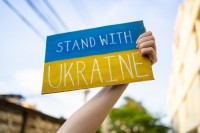
European Works Councils confronting the war in Ukraine: IR Notes has spoken to
several EWC secretaries. These European bodies have mobilised strongly to help their
Ukrainian colleagues. The executive committee of the BNP Paribas EWC held a meeting
to discuss the situation in Ukraine, where 5,000 employees work at its Ukrsibbank
subsidiary. “We contacted management to ask it to organise an extraordinary meeting
of the executive committee”, explains Gabriel Di Letizia, secretary of the BNP
Paribas EWC. Colleagues who become involved with humanitarian organisations lending
assistance to Ukrainian refugees, must be able to make use of more “solidarity
hours”. At Veolia, the subject
of Ukraine, where the company has approximately 300 employees, is being discussed
today at a meeting between management and the secretaries of the France group
council and the European Works Council. At SAP, “the EWC is being kept
informed on a daily basis about the general situation in Ukraine, and about the
situation of our employees and their families”, says Catherine Bordelon, who is a
member of the SAP European Works Council. Likewise, at Nexans, an EWC executive
committee meeting was held on 2 March, to take stock of the situation of the 2,800
employees working at the company’s three sites in Ukraine. “Members asked management
about solidarity actions that might be envisaged, especially from the countries
bordering Ukraine”, says Bertrand Jullian, EWC secretary. On 2 March, following a
meeting of executive committee members, Frédéric de Fondaumière, deputy secretary of
the Société Générale EWC, sent
a letter to management, calling for an extraordinary meeting of the European Works
Council. The very next day, management agreed to hold a meeting on 10 March, on
line. EWC members are asking management to provide information on the war’s economic
consequences for the bank’s business and on its direct and indirect impacts in
European countries where the group is present (Poland, the Czech Republic, Romania,
Germany, France, etc.), as well as in Ukraine and Russia. They would like to know
about the measures being taken to protect employees in Ukraine, French nationals and
also Ukrainian citizens wishing to move either temporarily or permanently to France,
Poland, the Czech Republic, Germany or Romania. Another request relates to measures
to ensure the safety of the 12,000 employees working at the bank’s various sites in
Russia.
European Works Councils have even embarked on initiatives at groups that have no
employees in Ukraine. At Safran,
the EWC issued a message
of solidarity with employees who are impacted by the conflict, and
especially those working at the Polish sites close to the Russian border, and
Ukrainian employees “working at Safran Cabin Plzeň and their families”. Regular
discussions are also taking place between management and the council, especially
regarding the situation of Safran employees in Russia. At Generali, the EWC questioned
management about the fate of countries bordering Ukraine, in which the group has
employees (Poland, Romania and Slovakia). It issued a press
release aimed at all employees, and asked management to distribute this on
the Group’s intranet. It also sent a message to management, suggesting initiatives
that the latter should take, such as: setting up a support fund, which has been
done; making the best possible arrangements for the Ukrainian employees who work for
the group, and for their families; letting the EWC take part in the crisis unit set
up by the Global HRD; and recruiting Ukrainian refugees on fixed-term contracts in
countries bordering Ukraine, and providing them with training.
At Orange, EWC members will be
briefed on the situation, at an ordinary EWC meeting being held on 9 March. “This
will primarily deal with the actions decided on by Orange entities in the four
countries bordering Ukraine”, explains Anne Lelong-Nakhlé, who is the company’s
industrial relations manager: “turning a training centre in Poland into a reception
centre for refugees; making telecommunications networks available to humanitarian
aid organisations and emergency services; the Orange Foundation issuing a call for
projects to company employees; and distributing SIM cards to migrants crossing the
border”.
As a European Works Council, we’ve asked our management to make a
donation to the ICRC, which they have done, and we’ve asked all our employees to
make a donation to local aid organisations, in order to help Ukrainian refugees”,
explains Stephan Seiffert, Secretary of the EWC of the Irish group Ardagh, which manufactures glass
and metal containers, and has a number of sites in Poland.
In the future, once Ukraine has submitted its application to join the European Union,
a more immediate action might be to amend European Works Council agreements, so that
Ukraine can come within their scope of application. Legally, there is no reason why
this cannot be done. “The question of an immediate symbolic integration has not yet
arisen”, explains Michaela Sofer-Ayadi (Veolia). “Our priority is to provide help on
the ground, but the question of allowing Ukrainian employees to join the European
Works Council will be put to management”, Gabriel Di Letizia (BNP Paribas) assures
us.
|
Company
agreement
Right to withdraw labour: : On 2
March, an innovative agreement
was signed by the motorway company Autostrade
per l’Italia (5,300 employees) and the trade unions
FILT-CGIL, FIT-CISL, UIL-Trasporti, SLA-CISAL, UGL Viabilita, Fillea – CGIL, Filca –
CISL and Fenealuil, at the Ministry of Employment, in the presence of minister
Andrea Orlando (see press
release). This agreement provides for the creation, for the first time in
Italy, of a right to withdraw labour, i.e. the right for every employee, regardless
of the position they hold, their length of service or the role they play, to stop
work where they believe that this work is not being performed in complete safety and
might result in accidents, injuries or occupational illnesses, either to themselves
or others. The agreement also provides for the organisation of a periodic “safety
walk”, i.e. periodic inspections of the workplace conducted by management, both for
observation purposes and to listen to workers’ concerns, with a view to promoting
good behaviour. The memorandum of understanding provides for the creation of a
strategic joint safety committee, with a view to guiding and monitoring initiatives
taken in the area of vocational health and safety, and to setting short, medium and
long-term objectives, in accordance with the group’s strategy.
|
|
|











