 |
| |
IR Notes 20 – 19 November 2014
www.irshare.eu
|
|
|
| |
|
|

|
| |
Editorial
The entire IR Notes team has, for several
weeks, had the pleasure of counting among its readers the European
members of the Renault group works council and the
members of the executive committee of the EWC of
BNP Paribas. Discussions are in progress with other
European works councils, as well as with some trade unions and
company management teams. We are well on our way to reaching our
target of having 500 readers by the end of the year. You can
also contribute to our development and especially to preserving
our independence by helping us to spread the word about IR Notes
in your networks. All suggestions and words of advice
welcome! We would be delighted to hear from you directly.
Frédéric Turlan
frederic.t@irshare.eu
|
|
|
|
|
| |
Interview
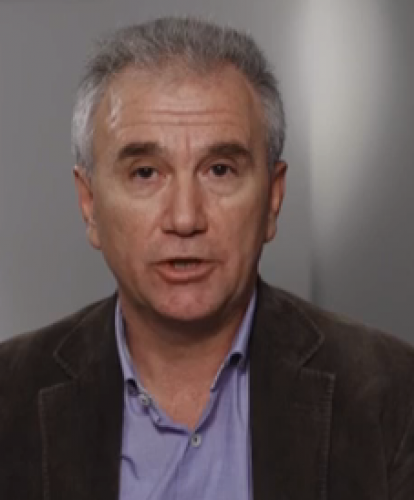
Christos Triantafillou, Labour Institute of the Greek General
Confederation
What
is the situation concerning collective bargaining in
Greece?
The system has been radically
decentralised. As of now, company-level agreements take precedence
over sectoral or professional collective agreements. And the law now
allows so-called “associations of persons” to be formed in very
simple conditions. These associations of persons can sign
company-level agreements. It has become a veritable problem for the
trade unions. This is particularly true in small businesses, where
the trade unions have always had difficulty in gaining a foothold.
At present, these associations of persons are multiplying, often at
the instigation of the employers. The agreements signed in these new
conditions have only resulted in reductions in salaries.
You
paint an apocalyptic picture of the social situation in your
country…
Long-term unemployment has
been multiplied by 5 and affects 70% of those without work. Nearly
800,000 people receive their unemployment benefit between two months
and a year late, and the majority receives neither redundancy nor
social support. Poverty is much worse than the official figures,
which are two years old and date from the time before numerous
reforms made the situation worse in terms of income and social
services. Greece has almost 2.5 million people without social
protection in a population of 11 million inhabitants. This logic of
cutting expenditure at any cost is leading to a humanitarian
crisis.
What
do you expect from the new European Commission?
I have learned to judge by results. Are
the promised 300 billion euros of investment simply structural funds
that already exist? With regard to social dialogue, will the
European Social Charter be respected in Greece or Portugal, or
elsewhere? And then I have some doubts as to the true seat of
decision-making in Brussels. At present, it is the European Council,
which brings together the 28 heads of state and of government. For
the moment, the Commission is not visible. We will have to see
whether that will change.
|
|
|
|
|
| |
Diary
20-21
November
Vienna
4th
Congress of the European Federation of Food, Agriculture and Tourism
Trade Unions (EFFAT).
24 –
27 November
Strasbourg
Plenary
session of the European Parliament
26 November
Paris
Conference
organised by Confrontations Europe « One
year on from the European conference in Paris on youth employment:
What outcome? What prospects? ».
27-28 November
Brussels
Seminar
organised by the European Commission and the OECD on “Job quality,
labour market performance and well-being in the workplace”.
28
November
Bordeaux
Sciences-Po Bordeaux university is organising its 4th EU Day,
with a round-table on “The European social model and the challenge of
competitiveness”, led by Marcel Grignard, president of the
Confrontations Europe think-tank with, among others, the European MEPs
Alain Lamassoure and Robert Rochefort, and the former head of DG
Employment and Social Affairs of the European Commission, Odile Quintin.
2
December
Paris
12th
conference of the COR (Conseil d’Orientation des Retraites) (French
pensions advisory council) entitled “Retirement
systems, demographic trends and economic growth“, including
presentations by experts on the response of the German and Swedish
systems to these challenges.
10
December
Paris
Fourth annual
meeting of the EWC Club, bringing together managers and members of
European works councils and led by Astrees and IR Share on the subject
of using the expertise of European works councils. Tel. : +33
6 81 41 53 95.
11
December
Brussels
Employment,
Social Policy, Health and Consumer Affairs Council.
17
December
Paris
The French
association Europe and Society, together with RDS (Réalités du dialogue
social), is organising another conference in the series dedicated to
European social dialogue. The focus of this session is on the role of
employers’ organisations in the development of European sectoral social
dialogue.
12 – 13
February
Paris
The
European social partners of the civil aviation sector are organising a
conference presenting the results of the study conducted by Ghent
University on “non-standard employment of air crews” commissioned by the
social partners.
|
|
|
|
|

IR Notes is a
fortnightly newsletter produced by IR
Share and its network of experts, and is available
in several European languages. It offers Europe-wide monitoring of
employment law, labour relations and employment policy. It is available by
subscription for 15 euros per month ; 150 euros per year (excluding tax),
via the IR Share
website. IR Share is a privately- owned, independent,
apolitical company whose aim is to inform and assist all players involved in
social dialogue within and outside Europe. It has been the correspondent
organisation for France and Luxembourg of the Dublin Foundation since 2009
and for Bulgaria since 2014.
|
|
|
Lead story
Benefit
tourism

The European Court of Justice has delivered a judgement
on a politically very sensitive and highly controversial issue concerning the
alleged damage done by “benefit tourism”. In this case, a Romanian woman residing in
Germany with her young son, who was born in Germany, was refused a non-contributory
benefit (i.e. financed by taxes and not by social security contributions) “intended
to enable its beneficiaries to lead a life in keeping with human dignity” by the
public employment service. She was already receiving child benefit (“Kindergeld”) of
184 euros per month and another benefit, linked to the fact that the father was
unknown (an advance on maintenance payments), of 133 euros per month. The woman
twice applied for benefits by way of the basic provision under unemployment
insurance (Arbeitslosengeld
II / Sozialgeld) which, given her situation, would have allowed her to
receive 391 euros (as of 1 January 2014), together with a supplement for her son, as
a child under six years old, of 229 euros. The German court hearing the case wished
to verify that the refusal to grant her this benefit was compliant with EU law. Six
member states (Austria, Denmark, France, Germany, Ireland, United Kingdom)
intervened vis-à-vis the Court of Justice, wishing it to adopt a strict position.
The Court, basing its decision solely on the application of directive 2004/38 on the
right of residence rather than on regulation 883/2004 on the coordination of social
security systems, concluded that the directive (article 7) “seeks to prevent
economically inactive Union citizens from using the host Member State’s welfare
system to fund their means of subsistence”. In the opinion of the Court, “A Member
State must therefore have the possibility, pursuant to Article 7 of Directive
2004/38, of refusing to grant social benefits to economically inactive Union
citizens who exercise their right to freedom of movement solely in order to obtain
another Member State’s social assistance although they do not have sufficient
resources to claim a right of residence”. Therefore, if the examination of the state
of the applicant’s financial means – which must be undertaken from case to case –
reveals that he or she does not have resources sufficient to meet his or her own
basic needs, the host member state is justified in not paying a special cash benefit
of a non-contributory nature whose aim is to ensure the subsistence of the
beneficiary. Is this the end of benefit tourism? No, this is a relatively marginal
case of an economically inactive individual who moves to another country of the EU
without seeking employment on that country’s soil. This is very far from being true
of most people who move to another country, who are looking to find work – a
mobility which itself remains marginal, compared to the active population as a
whole, and is consequently far from destabilising the social security systems of the
member states.
|
1. European
Union
Social
update
- Work programme of the European
Commission: The new European Commission on 12 November
explained that it was going to prepare its 2015 work programme in liaison with
the European Parliament and the member states. The aim is to adopt the 2015 Work
Programme in mid-December (see press
release, in English).
- Trade union position on the role of
European works councils: The European Trade Union
Confederation (ETUC) published a document to coincide with its annual EWC
conference on 30 September – 1 October, on the role
of European works councils in health and safety and the anticipation of
change, which was discussed during the conference (the text is also
available in Italian
and Polish).
- Trade union position on the right to
information and consultation: The executive committee of
the ETUC at its meeting on 21-22 October adopted a resolution entitled “Towards
a new framework for more democracy at work” which calls for a single
directive which “should set high standards on information and consultation, and
introduce ambitious minimum standards on workers’ board level representation as
an additional source of workers’ influence” regardless of the company form. This
marks a key contribution at a time when the European Commission is due to start
work on a “consolidation” of the different existing directives relating to
information and consultation, while at the same time preparing its report on the
application of the recast directive on European works councils. This area is
regarded as dangerous by Anglo-Saxon employers in particular, which fear new,
related constraints.
- Assistance from the European Globalisation
Adjustment Fund: The European Commission on 11 November
2014 proposed to grant 25.9 million euros from the European Globalisation
Adjustment Fund (EGF) to help 3,886 of the 5,213 employees laid off by the
French airline Air France to find new jobs (see Commission press
release). It also requested payment of 6.4 million euros to Greece to
help 600 former workers of the Fokas department stores (see Commission press
release), and finally, it proposed to provide an envelope of 1.2 million
euros to Poland to help 777 workers made redundant by the car maker Fiat Auto
Poland (see Commission press
release).
|
Sectoral
social dialogue
- A guide to awarding public contracts for
private security services: The European social partners
in the private security sector – UNI Europa and CoESS – have updated their “Best
value manual” intended for the use of contracting authorities so that, when
selecting a private security provider, they choose the offer giving the best
price-quality ratio, rather than systematically choosing the lowest bid (see UNI
Europa press
release). The manual, which is translated in 14 languages, will be made
available online by the social partners in the near future.
|
Case law
- Employees without a residence permit are
protected by the “insolvency directive”: A Turkish
worker lost his right to residence in the Netherlands following his divorce. He
continued to work for his employer, but the latter became bankrupt. The worker,
who had not been paid for nearly six months, saw any entitlement to the
guaranteed payment of the wages owed denied on the grounds that he did not have
a legal residence permit. The European Court of Justice considered that
directive 80/987 of 23 October 1980 benefits all employees, including those from
third countries who are not legally resident in the member state concerned (CJEU
5 November 2014, case C-311/13, Tümer). In any event, if national
legislation excludes those employees from the salary guarantee system, they
nevertheless must be offered equivalent protection, which was not the case under
Dutch legislation. The Court also pointed out the “social objective of that
directive, which is to guarantee employees a minimum of protection at EU level”.
- An employer can reduce an allowance paid
to a part-time worker: The European Court of Justice has
ruled on a case concerning the payment of a dependent child allowance to
employees covered by the collective agreement of the banking sector in Austria
(CJEU
5 November 2014, C-476/12, Österreichischer Gewerkschaftsbund). Can an
employer reduce the amount of the allowance when it is paid to a part-time
worker on a pro rata basis according to the hours worked compared to those of a
full-time employee? Does this constitute discrimination against part-time
workers contrary to Clause 4 of the Framework Agreement on part-time work
(annexed to directive 97/81), which provides that such workers “shall not be
treated in a less favourable manner than comparable full-time workers solely
because they work part time”. In the opinion of the Court, this allowance
represents additional remuneration in the meaning of article 157 of the Treaty
and “it must be held that the calculation of the dependent child allowance in
accordance with the principle of pro rata temporis is objectively justified,
within the meaning of Clause 4.1 of the Framework agreement on part-time work,
and appropriate within the meaning of Clause 4.2 thereof”.
|
2. Member
states
Austria
- Wage increase or time off in the
metalworking industry: The social partners in the
metalworking sector (180,000 employees) on 5 November sealed a new unified
collective agreement which provides for a 2.1% pay rise. However, in certain
sectors (mining, steel and car manufacture), company-level agreements can
convert the increase into time off, of 38.5 hours (see press
release of the PRO GE trade union).
|
Czech
Republic
- Adoption of a strategy for equality of men
and women: On 12 November the government adopted a strategy
for equality of men and women (in Czech) (for the period 2015-2020)
whose principal objectives are as follows: 1. To increase the representation of
women in positions of power (in politics but also in business) to a level of 40%
(as envisaged by the proposal for a directive of the European Commission); 2. To
increase the female employment rate of women to 65%; 3. To reduce the wage gap
between women and men, currently estimated at 22%, to the EU average (16.4%); 4.
To raise the proportion of flexible work forms to 20%; 5. To meet the Barcelona
objectives concerning childcare facilities for pre-school-age children.
According to the “Global
Gender Gap 2014” report published in October by the World Economic
Forum, the Czech Republic is in 96th position out of 142 countries as regards
equality of opportunity, the worst score of the EU apart from Malta.
|
Germany
- IG Metall calls for 5.5% pay
rise: Following the recommendations of its regional
sections, the IG Metall trade union for Germany’s metalworking industry on
11 November fixed the level of its pay claim in the context of renegotiating the
sectoral collective agreement. IG Metall proposes a rise of 5.5%, which has
still to be endorsed by the relevant trade union instances. The current
collective agreement runs out at the end of December. The union is also seeking
a right to continuing professional development and an improvement in the system
of part-time employment for employees approaching retirement (see IG Metall press
release, in German).
|
Luxembourg
- Three collective agreements made
compulsory: The council of government on 7 November
approved the general extension of the 2014-2016 collective labour agreement for
bank workers. The same applies to an amendment of the collective agreement
applicable to the staff of security companies and the collective labour
agreement on working conditions for seafarers.
|
Spain
- Plan supporting social responsibility by
enterprises: The council of ministers on 24 October
passed a resolution on the Spanish strategy for corporate social responsibility
(CSR) 2014-2020 which comprises 60 measures aimed at strengthening the social
responsibility of Spanish enterprises (see press
release of the minister of labour, in Spanish).
|
3. Companies
European
works councils
Falck: The Danish emergency
service group Falck (10,000
employees) in July revised its 2005 EWC agreement to take the provisions of
directive 2009/38 into account. The new
agreement was signed in October. The EWC comprises one member per country
having more than 200 employees, plus one additional representative when the number
of employees rises above 1,000 and a third representative for countries with more
than 5,000 employees. The agreement states that the country in which the company has
its head-office (Denmark) will always be represented by three members. The
signatories undertake to hold all their meetings in English from 2015 (see press release of the European Federation
of Public Service Unions (EPSU), and the EWC can invite representatives of employees
from non-EU countries to attend its meetings.
- Crédit Mutuel Nord Europe:
A request has been sent by Belgian and French trade unions to the
management of the Crédit Mutuel Nord Europe cooperative bank, which has
establishments in northern France, Belgium and Luxembourg, to set up a European
works council (see UNI Finance press
release).
- Sulzer Group: The EWC
agreement of the Swiss industrial engineering and manufacturing company Sulzer
(6,000 employees) was revised on 3 June 2014. The new
agreement, which remains an anticipatory agreement as indicated by the
signatories, is accompanied by rules
of procedure which lay down the working methods and resources of the
EWC.
|
Trade
unions
- Deutsche Telekom: The
alliance of trade unions represented within German telecommunications group
Deutsche Telekom’s operations in central and eastern Europe (CEE Union Alliance)
met in Bucharest on 30 – 31 October, at the initiative of UNI Global Union (see
UNI Europa press
release).
|
Transnational agreements
- AEON: The management of
the Japanese retail giant AEON (420,000 employees) on 10 November signed a
global framework agreement guaranteeing fundamental social rights with the
international trade union federation UNI Global Union (see press
release of UNI Global Union).
|
4. Studies
and reports
- One-quarter of Europeans are exposed to
the risk of poverty: According to a study
published by Eurostat, 24.5% of Europeans were at risk of poverty or social
exclusion in 2013, that is to say 122.6 million people. The number of EU
citizens in this situation has gone up compared to 2008, which has put paid to
the EU objective, adopted in 2010, of bringing 20 million people out of poverty
by 2020.
- Impact of unemployment insurance for the
euro area: The research services of the European
Parliament in September published a study on the effects of an unemployment
insurance system for the euro area which would play a stabilising role within
the economic and monetary union. Such a scheme would have reduced the fall in
GDP in the Eurozone states by 71 billon euros in the period between 2009 and
2012 (see Cost
of Non-Europe – an Unemployment Insurance Scheme for the euro area, in
English).
|
Phrase of
the fortnight
Free
movement of citizens
The case decided by the European Court of Justice relating to “benefit tourism” (see
Lead story), highlights directive
2004/38 of 29 April 2004, which puts into practice the right to free
movement of European citizens. Initially limited to workers, the right to move
freely was gradually extended until the Maastricht Treaty in 1992, which introduced
the concept of citizenship of the European Union, conferring on every Union citizen
a fundamental and personal right to move and reside freely without reference to an
economic activity. For a period of residence lasting more than three months,
however, citizens must prove that they have sufficient resources not “to become a
burden on the social assistance system of the host Member State during their period
of residence and have comprehensive sickness insurance cover in the host Member
State”. Find out more from the European
Industrial Relations Dictionary (in English).
|
|
|











