 |
| |
IR Notes 22 – 17 December 2014
www.irshare.eu
|
|
|
| |
|
|

|
| |
Dear readers,
The IR Notes team will be back with you on
14 January. We wish you a joyous festive season and look forward to
accompanying you right through 2015!”
|
|
|
|
|
| |
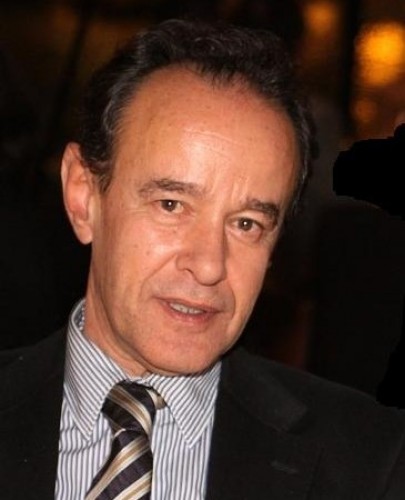
IR Perspectives by Fernando Vasquez
lawyer, former official of the European Commission and expert member of
the IR Share network
Which reforms, what labour market,
by which means? A
few weeks ago, Martin Wolf wrote in the Financial Times (“Radical
cures for unusual economic ills”, 25 November 2014 issue): “This
(the need to avoid weakening demand) is one of the difficulties
with the boilerplate recommendation of labour market reform,
which entails lowering wages for a large proportion of the
labour force and making it easier for employers to hire and
fire. (…) Reforms should promote demand. That is why the
eurozone must settle on a balanced package, not excessive
reliance on structural reforms.”
Call for an alternative
policy. Despite
this argument against the current reforms of the labour market from
the FT’s principal economic commentator, whose words carry
unprecedented weight all over the world, it is unlikely that the EU
will change its recent direction on this subject. Every day,
political current affairs provide us with images of European leaders
extolling the virtues of the search for competitiveness and growth
by lowering labour costs – to the point that another influential
commentator from the FT, Wolfgang Münchau (“Radical left is right
about Europe’s debt”, 23 November 2014), disillusioned with the
dogmatic conservatism of the traditional political forces of the
right and left, called on the radical parties of the left, Podemos
in Spain and Syriza in Greece, to act and offer a coherent vision of
an alternative policy in order to spare us “the economic equivalent
of a nuclear winter”.
Reforms are probably
necessary. Those
which have been pursued in recent years nevertheless suffer from two
serious flaws which risk making them economically ineffective and
being rejected by the majority of social forces: on the one hand,
they are based on a growth in inequalities, in injustice, in poverty
and in precariousness, and on the other, they ignore any attempt at
consensus between the principal social partners, for example by
disregarding the collective agreements concluded between the latter.
It has yet to be explained seriously and in detail by which
mysterious ways competition can be boosted, at least in the medium
and long term, simply by lowering labour costs (and purchasing power
of course), independent of any consideration of productivity and
economic solidity.
Negation of social dialogue.
And how can one expect
to pursue such reforms in a Europe whose economic prosperity has
been built on social dialogue, without getting the employee
representatives, who have demonstrated their opposition to this
development, to sign up to it by negotiation? It may even appear
strange that the EU has wanted to force the pace and has taken this
path of refusing to engage (by simply refraining from explaining and
justifying the policies proposed) and of isolating the social
players when it has embarked upon reforms on a scale never before
seen in peace-time.
Importance of the European
spirit. All those
who have been involved over many long years in devising and
negotiating controversial European instruments know the importance,
to achieve success, of mobilising what can be termed the “European
spirit”, or put less pompously, the simple political will to work
together, to focus on shared interests, to translate these into
concrete instruments, to mobilise the decision-makers and to do what
has to be done to reach consensus or, at any rate, a compromise.
Indeed, this vision of a common interest was for a long time shared
by governments, the principal European and national political
parties and the social partners. It rested on two pillars: the
equality of all the players (one state, one vote) and the balance of
the solutions pursued.
We are now living in a different
world: Political
equality between European equals has become an illusion; balance has
been replaced by the unilateral imposition of conditions, and the
will to work together has vanished. Even the most devoted Europhiles
end up believing that action at EU level must remain an exception
rather than the rule. When such action is quite clearly essential,
its implementation is accompanied by apologies. As for the
Eurosceptics, they deny the advantage of acting at this level,
without any great effort at justification, having won the argument!
The application of subsidiarity and proportionality has become a
one-way street that robs these principles of any meaning. The
reality is that no-one in the EU wants common and shared projects
any more, other than those which, seen narrowly, may be expedient in
the light of immediate concerns, or, in economic governance, those
which provide ideological, or even political, tutelage.
Loss of popular
support. This
state of affairs alone can explain why no-one even tries to
elucidate and justify the proposed reform measures, or to gain the
backing of all the social forces and the citizens. It is no longer
possible to do so. It may not even be desirable. More than the
direction and the very dubious content of these reforms, the fact
that they are being implemented in isolation prevents the search for
compromise and leads to a sort of European nihilism which is in the
process of draining popular support from the political ideas with
which we have been familiar for decades. While this development is
perhaps inevitable, are we at least aware of it?
|
|
|
|
|
|
|
|
|
| |
Top tip!
How to obtain a document on IR Share?
When you click on a link in IR Notes, you
are often directed to the IR Share website so you can download a
document. However, in most cases you have to identify yourself. To
do so, you need an account on the website. To create an account, go
to this page. You will then be emailed a user name and
password.
|
|
|
|
|

IR Notes
is a fortnightly newsletter produced by
IR Share and its
network of experts, and is available in several European languages. It
offers Europe-wide monitoring of employment law, labour relations and
employment policy. It is available by subscription for 15 euros per month ;
150 euros per year (excluding tax), via the IR Share website. IR
Share is a privately- owned, independent, apolitical company whose aim is to
inform and assist all players involved in social dialogue within and outside
Europe. It has been the correspondent organisation for France and Luxembourg
of the Dublin Foundation since 2009 and for Bulgaria since 2014.
|
|
|
Lead story
Progress by
Europe’s labour ministers on several issues
During the meeting of the Employment and Social Affairs Council on 11 December, the
European ministers of labour arrived at an agreement (“general approach”) on the Proposal
for a Regulation of the European Parliament and of the Council “on a European
Network of Employment Services, workers’ access to mobility services and the
further integration of labour markets” which aims to improve the efficiency
of the European employment services (Eures) in order to facilitate labour mobility
(see Council press
release, in English). The ministers also reached agreement on the directive
relating to seafarers, aimed at removing the derogations envisaged by
European social legislation, primarily with reference to information and
consultation rights (see Council press
release , in English). The European Parliament has still to deliver its
position on these two texts at first reading. In another advance, the Council has
arrived at a political agreement on the proposal
for a directive on the organisation of working time in inland waterway
transportwhich is based on the agreement
concluded by the European social partners in this sector. By contrast, the member
states were unable to agree a proposal for a directive “on
improving the gender balance among directors of companies listed on stock
exchanges and related measures” which aims to establish a quota system in
order to ensure better representation of women on company management and supervisory
boards by 2020 (see Council press
release , in English). Agreement could not be reached despite the
flexibility proposals put forward by the Italian EU Presidency (see Council press
release , pages 9 and 10). Discussions took place on the proposal
for a directive on equal treatment (in English), which has been on the
Council’s table since 2008. It is regarded as a priority by the new European
Commission. Exchanges also took place on maternity leave, with the ministers
agreeing on a leave period of 18 weeks (instead of the 14 currently applicable),
including six weeks’ compulsory leave after childbirth and an allowance on a par
with sick pay. Ministers are still not ready to accept the European Parliament’s
proposal (20 weeks on full pay), which is judged to be “unrealistic” (see Council press
release, page 11).
|
1. European
Union
Social
update
- Assistance from the Globalisation
Adjustment Fund: The European Commission on 9 December
proposed to grant nearly 3.8 million euros to Belgium from the European
Globalisation Fund (EGF) to help more than 2,200 workers. This move follows the
redundancies of 1,285 employees at Arcelor Mittal Liège and 1,030 workers at
Caterpillar Belgium, as well as those at Duferco Belgium and NLMK La Louvière.
(See Commission press
release)
|
Sectoral
social dialogue
- Telecommunications: The
social partners in the telecommunications sector on 28 November adopted a joint
declaration on future skills needs. The signatories call on companies in
the sector to cooperate by creating an association or a committee dedicated to
professional skills development in the telecommunications sector which would
allow them to share their best practices.
- Postal services: The
European social partners in the postal sector on 21 November adopted a joint declaration on matching
skills and jobs in the sector in response to the development of new
activities and the retraining of personnel involved in classic activities for
which demand is declining.
- Hairdressing: The European
social partners in the hairdressing sector on 22 October adopted a resolution
on securing employment in the hairdressing sector. After an alarmist
analysis of employment in the profession, the signatories insist on maintaining
or establishing social and quality standards in all member states, particularly
by means of European certifications put in place by the European social
partners, based on a certain number of criteria for practising the profession.
They call on the Commission to secure employment in the hairdressing trade and
not to jeopardise the profession by completely eliminating all regulations on
market access based on quality criteria.
|
Case law
- Confirmation of a provision aimed at
combating abuses relating to the posting of workers: The
European Court of Justice has delivered an important judgement concerning the
room for manoeuvre available to the member states to monitor the flow of posted
workers (CJEU
3 December 2014, case C‑315/13, De Clercq). Action was taken against the
directors of a Belgian company following a check by the labour inspectorate
which had noted the presence of Polish workers employed by the company’s Polish
subsidiary, who had been posted to work in Belgium. They were not in possession
of either E 101 forms or of the acknowledgement of receipt issued following the
pre-posting declaration envisaged by Belgian legislation. Under the law,
contractors must provide the responsible agency with the data allowing posted
workers who are unable to present the acknowledgement of receipt to be
identified. It was because of failure to comply with this obligation that action
was brought against the company directors. The latter claimed that this
obligation was a disproportionate restriction on the freedom to provide
services. The court noted that this obligation does indeed constitute a
restriction on the freedom to provide services, but that it is justified. The
court found that “the objectives of protecting posted workers and combating
fraud […] are capable of justifying” the legislation at issue, which
“constitutes a necessary control measure”.
|
2. Member
states
France
- Law to reboot the economy:
The council of ministers on 10 December adopted the “bill for growth and
economic activity”, which aims to reboot the economy by means of a large number
of different measures, including some with relevance for employment: greater
scope for shops to open on Sundays (increased from five to twelve times per
year, and all year round in certain tourist areas) and a reform of the
conseils des prud’hommes (courts responsible for matters relating to
labour law). (See government
press release and press
pack presenting the bill, in French).
|
Germany
- Minimum wage: A regulation
of the labour ministry, adopted on 27 November, will allow the new minimum wage
package to take effect in the healthcare sector from 1 January 2015 (see
ministry press
release).
|
Italy
- Vote on the “Jobs act”:
The parliament definitively adopted the law reforming the labour market,
commonly referred to as the “Jobs act”, which will enter force in January. The
text introduces a certain number of measures aimed at making it easier to hire
staff, with incentives for employers, but also a reduction in the protection for
employees – and at decreasing the segmentation of the labour market. However, to
gain a detailed insight into the changes brought about by this reform, we must
await the decrees which the government is authorised to issue. The Italian trade
unions held a one-day general strike on 12 December to mark their opposition.
|
Sweden
- Political crisis: Few
reforms relating to social affairs can be expected between now and 22 March,
when new legislative elections have been called after the present government
lost its majority when its finance bill was defeated in parliament. The
far-right Sweden Democrats voted for the counter-proposal presented by the
centre-right opposition, which put the alliance of Social Democrats and Greens
in the minority and rendered it incapable of governing. The Sweden Democrats
have announced that they will vote against all bills which do not contain
measures to limit immigration.
|
3.
Companies
European
works councils

Bayer: The management of the
German chemical group Bayer and its European works council – known as the Bayer
European Forum — on 13 November signed a joint
declaration aimed at providing guarantees to the employees affected by the
IPO of the Bayer Material Science (BMS) plastics business unit. In particular, the
text provides for the preservation of the European sites and, in the event of
manpower adjustments at the future business entity, adherence to the “principles for
social compatibility” negotiated within the Bayer group, and a commitment to uphold
these until their official expiry at the end of 2020. The text defines the measures
to be taken in order to avoid any redundancies on economic grounds. “We have
therefore secured measures to safeguard jobs that are valid for a period of six
years, which is remarkable,” commented Oliver Zühlke (IG BCE), secretary of the
Bayer European Forum.
- Axa: At its plenary
meeting on 26 November, the European works council of the Axa group presented a
methodology for the process of information and consultation in connection with
the group’s global digitisation project. The objective, accepted by the
management during the session, is to establish permanent social dialogue during
the meetings of the executive committee and plenaries to accompany the group’s
digital transformation. In addition, the EWC will develop the holding of
meetings in each country between the national members represented on the EWC and
local management with a view to preparing the plenary sessions. This exercise
will allow the flow of information about how the digitisation process is
progressing at national level, while at the same time bringing in the expertise
developed by the EWC at this level.
- Pernod Ricard: The
management of the Pernod Ricard group and the members of its European works
council on 3 July reached agreement on a revised version of the agreement which
created the EWC. The text
in particular provides rules for convening the select committee in the case of
exceptional circumstances. The EWC’s responsibility is defined as relating only
to transnational projects forming part of a global restructuring plan and
affecting at least 100 employees in each of the establishments concerned.
- UniCredit: The European
works council of the UniCredit banking group, which met in plenary session on
28 November in Milan, in a statement
called on management to discuss a joint declaration on responsible sales
practices. It reaffirmed its commitment to strengthening social dialogue at
European and national level.
|
4. Studies
and reports
- Integration of people with disabilities on
the labour market: In 2011, according to Eurostat (see
release),
disabled people had more limited access to the employment market: while the
employment rate of people aged 15 to 64 without disability was 66.9%, this rate
was much lower (47.3%) for those with disabilities. The employment rate of
disabled people was less than a third in Hungary (23.7%), Ireland (29.8%),
Bulgaria (30.7%), Romania (31.8%), Slovakia (31.9%) and Croatia (33%). On the
other hand, employment rates above 60% were recorded in Sweden (66.2%),
Luxembourg (62.5%), Finland (60.8%) and Austria (60.3%). The rate recorded in
France was 56.2 %.
|
Phrase of
the fortnight
Fitness
check
This term, more readily associated with the vocabulary of gyms and health spas, has
figured in the work programme of the European Commission since 2010. Alongside the
application reports envisaged for directives after they have been in force for a
number of years, the Commission has also launched fitness checks in order to carry
out an overall evaluation of European legislation in specific areas. One of the
first sectors to be subjected to a fitness check was the directives providing a
right of information and consultation. The outcome of the exercise, carried out
under the “smart regulation” concept of rules which simplify legislation and produce
an effect while minimising the administrative burden, appeared in a working
document published in 2013. The findings were that these directives are fit
for purpose, but that there are still some issues which need to be re-examined. On
this basis, the Commission has announced a “consolidation” of these documents. See
the Eurofound European
Industrial Relations Dictionary for further information.
|
|
|











