 |
| |
IR Notes 230 – 15 May 2024
www.irshare.eu
|
|
|
| |
| |
A question for…
Séverine Picard, founder and Chief Executive Director of Progressive
Policies

You
recently published a report denouncing severe exploitation
of third-country road‑transport drivers. Is this the price
we have to pay for free movement of workers and goods within
the EU?
No, not at all. We have indeed highlighted
cases of unacceptable terms of employment, but on paper at least, EU
legislation is fairly protective. As soon as a worker from a third
country is legally admitted to EU territory, an equal treatment
principle applies, virtually across the board. The social
legislation applicable to posted workers in general, and to workers
in the road transport sector in particular, doesn’t create “second
class” workers.
The
problem is that in many cases, these rules are broken. What’s more,
inspections are the responsibility of each Member State, but
everyone knows that there aren’t enough of these inspections and
they’re not effective.
The
situation of drivers had already deteriorated at the time the EU
expanded to take in the countries of Central and Eastern Europe,
when carriers set up subsidiaries in these countries to recruit
drivers and move them around within the EU at the least cost. At the
present time, mainly due to labour shortages, these same
subsidiaries and local SMEs are recruiting drivers from Belarus,
Ukraine, Georgia, etc., who are dispatched directly onto EU roads,
usually in breach of EU legislation designed to combat letterbox
companies. In point of fact, a road transport company is supposedly
authorised to offer international transport services only if it is
carrying on a genuine economic activity in the place where it is
established. Many of these employers are not engaged in such
activity but they are nonetheless happy to recruit drivers in third
countries, and put them in charge of lorries operating outside their
home country, without having a genuine business
there.
The situation won’t
change unless Member States and the European Commission make a
conscious decision to boost their inspections and efforts to combat
fraud. Thus far, the authorities (and the EU authorities in
particular) have tended to take the view that toughening up road
traffic inspections would constitute an obstacle to freedom of
movement within the internal market. However, this
laissez-faire attitude has created a catastrophic social
situation, in which social dumping has become the norm and working
conditions have become unacceptable for our EU Member States, which
are governed by the rule of law. Furthermore, this strong pressure
on wages is keeping road transport costs artificially low, to the
detriment of rail in particular, despite this latter mode of
transport being better aligned with our climate goals. Member States
must therefore accept their responsibilities, to ensure that they
meet the environmental, social justice and road safety goals.
|
|
|

|
|
|
|
|
| |
Who we are?
IR Notes is a
fortnightly newsletter produced by IR
Share and its
network of experts, and is available in several European languages
(English, French, German, Italian, Spanish). It offers Europe-wide
monitoring of employment law, labour relations and employment policy. It
is available by subscription for 273 euros per year .
The team This issue
was producaed by Iris
Turlan and Frédéric
Turlan..
Find out more
about the IR
Share team on our website.
Subscribe to IR Notes
Via the
IR
Share website or by calliang us on:
+33 (0)6 81 41 53 95
or
E-mail: frederic.t@irshare.eu
Legal notice.
Publisher: IR Share SARL – 5, Les Compères – 89520 Fontenoy, France –
Tel.: +33 (0)6 81 41 53 95 – share capital 1,500 euros – commercial
register (RCS Auxerre): 512 567 959. Managing editor: Frédéric Turlan.
Hosting: ALTEO by Damien Cornillet – Château – 89500
Villeneuve-sur-Yonne. CPPAP no.: 0626 Z 93933.
|
|
|
|
|
| |
Follow us on LinkedIn!

Why not connect to the IR Notes LinkedIn page, so that you can keep up with
developments in the issues we’re covering, between two editions?
You’re welcome to follow us! There are already 620 of you following
us!
|
|
|
|
|
| |
European Industrial Relations Dictionary

In case reading IR Notes inspires you to
explore this subject further, we are providing links to the European
Industrial Relations Dictionary published by Eurofound. This is updated at
regular intervals by IR Share, which publishes IR Notes. The term
definitions are available in English and can easily be converted
into other languages using on-line translation tools.
|
|
|
|
|

|
|
|
Lead
story
Third-country nationals are our slaves
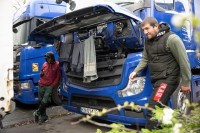
This topic will probably not be debated during the European elections, but it is one
that the next European Parliament legislature and the Commission will simply have to
address: the growing exploitation of third-country nationals (see Third-country nationals), who
come to work legally within the EU, yet are being openly exploited. They join the
cohort of workers who are being exploited within the large Community-wide single
market, such as seasonal workers and undocumented foreign nationals employed by
digital platforms. Several recent publications have tried to zero in on a situation
which, if it is not dealt with properly, will weaken our democracies. 1/ On 30 April, the Commission
published the report
on the application and implementation of Directive EU 2018/957 of 28 June 2018
amending Directive 96/71/EC concerning the posting of workers in the framework
of the provision of services, accompanied by a working
document (see below). This report emphasises that “posted third-country
nationals are generally more exposed to abusive practices, such as fraudulent
posting, labour rights violations, precarious working conditions, irregular payment
and non-payment of social contributions”. They are also “likely to accept
remuneration below what should be paid” and are heavily exposed to risks linked to
precarious living and working conditions, especially due to “their potential
dependency on their employer for the renewal of work and/or residence
permits”. 2/ This report is
based in particular on a study
ordered by the Commission, monitoring the situation of temporary cross-border mobile
workers and workers in subcontracting chains. Using several enlightening case
studies, the authors note that “the number of posted TCNs is increasing rapidly,
particularly in countries like Slovenia, Poland and Lithuania, as well as in sectors
such as construction, road transport, live‑in care, and agriculture”. Some Member
States have introduced “permissive entry regimes”, a development that has
significantly increased the proportion of third-country nationals working in some
sectors. 3/ The report
on third-country drivers in European road transport produced by Progressive
Policies for the European Transport Workers’ Federation (ETF) confirms the wholesale
recruitment of third-country nationals by Slovenia, Poland, Lithuania and Spain. In
Lithuania, in 2021, 65% of road-transport drivers came from third countries. Once
recruited, these drivers are dispatched EU-wide, taking advantage of free movement
legislation, and they will remain with their lorry for several months. The report
finds evidence of working conditions that could be categorised as “severe
exploitation”, with wages paid below the minimum levels, thanks to the imposition of
various deductions and driving time being extended by tampering with the tachographs
that are supposed to log drivers’ time behind the wheel. Faced this situation, the
Commission does not plan to amend EU legislation, but is considering a number of
ways to tackle the problem, such as giving posted third-country workers better
access to information on their rights; strengthening transnational cooperation
between inspection bodies and migration authorities; and strengthening the
application of posting rules in specific sectors that have a large number of posted
third-country workers. In other words, the ball is now in Member States’s court,
even though social partners too, can take on their share of the responsibility, as
those in the transport sector have recently done (see below). However, doing nothing
would be highly damaging for the construction of Europe, which is supposed to aim at
“full employment and social progress”.
|
1. European
Union
Legislation

Directives passed : On 7 May,
following votes in Parliament, the Council definitively adopted the directive
on combating violence against women and domestic violence (see press
release) and two directives that will strengthen the role of equality bodies
across the EU (see press
release). These directives will shortly be published in the OJEU,
and Member States will then have three years to transpose the first one into their
domestic law, and two years for the other two. On 29 April, the Council also
definitively adopted the directive
on time limits for the adoption of sustainability reporting standards for
certain sectors and third country undertakings, to give the companies
concerned more time to apply European Sustainability Reporting Standards (ESRS) (see
press
release).
|
Social
update

Revision of European Works Council directive :
In response to the statement
issued by EU employers’ organisations on 22 March, (see IR Notes 229), on
6 May, six European trade union federations and the European Trade Union
Confederation published a joint
statement of their own, denouncing the arguments put forward by the
employers: 1/ the European
Commission’s proposal for a directive in no way envisages granting EWCs a right of
co-decision-making; 2/ in the
event of a breach of information and consultation rights, the signatories are
calling primarily for an injunction that can suspend a management decision until a
proper consultation is carried out;
3/ the new definition of transnational matters is
justified, because a decision taken by head office in one Member State, which
affects a production site in another Member State, may sometimes also have effects
in a third Member State, thus requiring employees to be informed and consulted;
4/ the obligation for
management to provide a written response to an opinion adopted by an EWC already
exists in agreements and improves the quality of the consultation process; 5/ EWCs must be able to ask
management to justify why information is categorised as confidential, and must be
entitled to pass on confidential information to employee representatives at national
level (who are themselves bound by a confidentiality obligation), failing which
effective consultation cannot be guaranteed; 6/ in addition to the permanent
support of a trade union representative, a EWC needs support from experts, whether
legal or financial, in order to be able to provide a proper consultation
contribution. As the EWC has no income of its own, these external experts’ fees must
be paid by the employer, which has entire teams of experts at its disposal to advise
management; 7/ the deletion of
exceptions does not automatically end existing agreements: “if these agreements work
as well as the employers’ organisations claim, neither side will apply to replace
them with new ones in accordance with Article 5 of the Directive”. In conclusion,
the trade unions call on the Council “not to be blinded by false arguments and to
finally ensure that European Works Councils are given sufficient and enforceable
rights and have the necessary resources to exercise them”.
|

Financial independence for women :
On 7 May, the Council adopted conclusions entitled “Economic
empowerment and financial independence of women as a pathway to substantive
gender equality”. These conclusions call on Member States to promote
measures to support victims of domestic violence, “including measures to help them
maintain or gain financial independence, such as measures to help them retain
employment or measures providing for paid leave from work”. They call on the
Commission to launch awareness-raising campaigns on the new rights for workers in
the Pay Transparency Directive and the Work-Life Balance Directive, so as to ensure
that citizens know and can exercise their rights.
|
Case law

Discrimination based on sexual orientation :
On 7 May, the European Court of Human Rights (ECtHR) handed down
a judgment in a Russian
case relating to a dismissal linked to a female employee’s sexual orientation. A
teacher was summoned to appear before her school management, which had become aware
of photos posted on social media, showing her kissing other women. She was asked to
resign in light of “her propaganda of non-traditional sexual orientation”. She
refused, but was then dismissed some days later because of “immoral acts
incompatible with continued performance of teaching activities”. Relying on Articles
8 (right to respect for private and family life) and Article 14 (prohibition of
discrimination), the Court holds that an individual’s sexual orientation cannot be
isolated from the private and public expressions of it, and is protected by Article
8. The posting of photos showing intimacy to partners while travelling or at parties
is a staple of social media. The employer’s hostile reaction to such posting
demonstrates its lack of acceptance of the teacher’s sexuality. The dismissal
represents “a disproportionate interference with her Article 8 rights based solely
on her sexual orientation” (see press
release and Discrimination on the grounds of sexual
orientation).
|
Sectoral
social dialogue
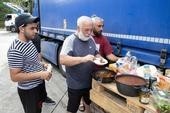
Road transport : On 19 April,
the European social partners in the road transport sector, IRU and ETF, issued a joint
statement on the creation of a European framework for improved working
conditions of third-country drivers employed by companies based in the EU
(ETF
and IRU
press releases). This text tries to reach a compromise between the claims of the
trade unions, which seek to improve drivers’ working conditions, and the need to
recruit more drivers, given the current labour shortages. In this text, the trade
unions agree to the use of third-country drivers, but they insist that road
transport companies must comply with social security and tax rules (see Lead story).
|
2. Member
States
Germany

Breaks at work : According to a
survey
conducted in 2021 by the Federal Institute for Occupational Health and Safety (BAuA)
and involving 17,000 workers, 31% of those questioned stated that they “frequently
skipped” work breaks lasting more than 15 minutes. The highest rate (49%) was in the
healthcare sector. The study showed that workers who frequently skipped their breaks
were more likely to suffer from “sleep disorders” (46%, compared to 30% of those who
skipped their breaks less often or always took them) and “burn-out” (51%, compared
to 35%).
|
Finland

Berry pickers : The government
has published a report
in preparation for a new law that will oversee the use of third-country workers
employed to pick wild berries. Previously, the pickers came mainly from Thailand,
and were granted a tourist visa lasting no more than three months. As there had been
a number of cases of people trafficking, no visas were granted in 2024, and the
government asked experts to examine the possibility of granting the pickers an
alternative status for the next berry-picking campaign in 2025: either that of
seasonal workers or self-employed workers. Classifying them as seasonal workers (see
Seasonal workers) would allow
them to be paid the minimum wage and would meet health and safety obligations, but
would not wipe off the debt they take on in their home country to finance their trip
(see press
release).
|
France

Childbirth leave : The
government has today begun a consultation with social partners and associations with
a view to introducing “childbirth leave”, to replace the current parental leave
arrangements. The plan is to grant three months’ leave each to mothers and fathers,
which can be taken concurrently during the child’s first year, and will be paid at
the rate of 50% of the parent’s normal wage, up to a ceiling of 1900 euros/month.
The current parental leave arrangements are seen as unappealing (a fixed monthly
payment of 448 euros) and as lasting too long (three years), which can make it hard
for women to return to the labour market.
|
3.
Companies
European
works councils
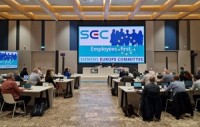
Combatting extremism : To mark
the 30th meeting of the Siemens
Europe Committee (SEC)
(see press
release), its members travelled to Nuremberg and visited the site where the
Nazi party held rallies of its members. Here, they issued a joint declaration, in
which they condemned “all forms of extremism, exclusion and discrimination, and all
hatred and violence. What is associated with this place must never be repeated”. The
declaration was signed by management, and by the Chairman and Deputy Chairwoman of
the European Works Council.
|
4. Studies
and reports
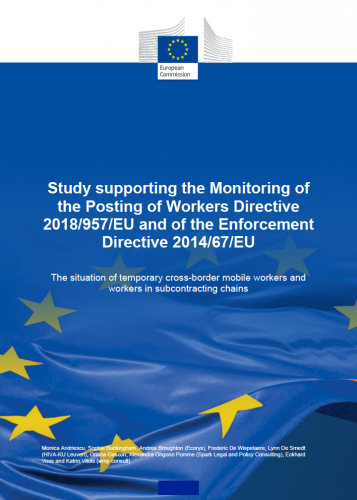
Posted workers : On 30 April,
the Commission published the report
on the application and implementation of Directive EU 2018/957 of 28 June 2018
amending Directive 96/71/EC concerning the posting of workers in the framework
of the provision of services, accompanied by a working
document and a study.
These documents contain valuable information on the subject of posting workers and
on bad practices noted. The Commission believes that the directive has “improved the
working conditions of posted workers, especially as regards their remuneration, the
equal treatment of posted temporary agency workers and the reimbursement of
expenditure incurred on account of the posting”. It thinks there is no point in
amending the legislation, but within Member States, it has identified “various
issues of non-conformity” with the directive, which might prompt it to bring new
legal proceedings against countries that are in breach of the directive and
reluctant to cooperate. The Commission also refers to a number of new initiatives,
in partnership with the European Labour Authority (ELA), which could include
providing “guidance on applying more stringent rules at national level with regard
to the scope of subcontracting liability”. However, it is refusing to amend the
directive on this point, which is what some European trade union federations are
calling for. Having noted certain difficulties in determining the pay applicable to
posted workers, it believes that ELA “could work on a tool to facilitate the
calculation” of their remuneration “and increase its transparency”. Such a tool, for
which the general elements could be established by ELA, would be used and
implemented at national level.
|

Working conditions in 2023 : The
European Foundation for the Improvement of Living and Working Conditions (Eurofound)
has published its annual
report, setting out a summary of the various studies it performed in 2023 on
numerous topics, ranging from labour shortages to the impact on health and
well-being of stress factors in the workplace, via the future of hybrid work. Of
particular note is the chapter on democracy at work, which attempts, using three
criteria — the ability of social partners to influence economic policy, social
dialogue at company level and workers’ rights – to rank Member States’ systems of
social relations, based on their performance. Each subsequent chapter then
facilitates the task of analysing the reports used as a basis for this ranking, and
provides a short summary in the form of “takeaways”.
|
|
|











