 |
| |
IR Notes 231 – 29 May 2024
www.irshare.eu
|
|
|
| |
| |
A question for…
Léna Guyon, Policy Officer Social Affairs at FIEC (the European
Construction Industry Federation)

Working
with the European
Federation of Building and Woodworkers (EFBWW), and with the
support both of the European Association of Paritarian
Institutions (AEIP) and of the EU, on 23 May, you organised
an initial meeting to discuss the “Social ID cards in the
construction industry” (SIDE-CIC) project. What are its
aims?
We had already completed a project on social
ID cards (*), which came to an end in 2015. The first objective of
our new SIDE-CIC project is to update the mapping of social ID cards
in the construction sector in Europe. Using a broad definition of
what constitutes a social ID card, we ascertained that such
documents were already in existence in around fifteen countries,
usually at national level (Austria, Belgium, Spain, Estonia,
Finland, France, Iceland, Latvia, Lithuania, Luxembourg, Norway,
Sweden) or local level (Denmark, Italy), and that a number of other
countries (Cyprus, Greece and the Netherlands) had plans to develop
them. Even though these cards serve different purposes, such as
preventing undeclared work (in France), and keeping a record of
training courses completed by workers notably in the area of health
and safety (in Spain), the fact remains that they could all be
interconnected in order to facilitate free movement and efforts to
combat undeclared work and bogus postings.
The project’s second objective is to perform
a study regarding the feasibility of interconnecting the existing
national systems with a technical and a legal component. Our aim is
to submit recommendations to the European Commission, which is very
interested in this initiative, within a year from now. It made an
explicit reference to this project in its communication on
digitalisation of social security systems, published in September
2023.
These
recommendations may also help other countries to introduce this type
of card, and to overcome their reluctance to embrace initiatives
that are being taken by the social partners in the first instance.
They may also be of interest to other sectors of activity, as well
as the construction industry.
(*) Editor’s note: these cards contain a
variety of information on the holder. This information differs from
one system to another, but usually includes, at minimum, the
worker’s ID details, their employer’s contact details, etc.
|
|
|

|
| |
Diary
25 June
Strasbourg
Symposium entitled la
diversification du droit de la non-discrimination au travail en
Europe [‘diversification of the law governing workplace
non-discrimination in Europe’], featuring Mélanie Schmitt, Nicolas
Moizard, Achim Seifert, Pascale Lorber, Juan Carlos Álvarez Cortés,
Aleksandra Bochenska and others.
5
July
Bordeaux
Symposium
organised by the Labour Institute of Bordeaux University, entitled
« Depuis Maastricht, 30 ans d’Europe sociale – La Cour de justice et
le droit social de l’Union européenne » [“30 years of social
Europe since Maastricht – The Court of Justice and EU labour law”].
Contact: institutdutravail@u-bordeaux.fr
|
|
|
|
|
| |
Who we are?
IR Notes is a
fortnightly newsletter produced by IR
Share and its
network of experts, and is available in several European languages
(English, French, German, Italian, Spanish). It offers Europe-wide
monitoring of employment law, labour relations and employment policy. It
is available by subscription for 273 euros per year .
The team This issue
was producaed by Victoria
Fronseca, Emma
Godemet, Iris
Turlan and Frédéric
Turlan .
Find out more
about the IR
Share team on our website.
Subscribe to IR Notes
Via the
IR
Share website or by calliang us on:
+33 (0)6 81 41 53 95
or
E-mail: frederic.t@irshare.eu
Legal notice.
Publisher: IR Share SARL – 5, Les Compères – 89520 Fontenoy, France –
Tel.: +33 (0)6 81 41 53 95 – share capital 1,500 euros – commercial
register (RCS Auxerre): 512 567 959. Managing editor: Frédéric Turlan.
Hosting: ALTEO by Damien Cornillet – Château – 89500
Villeneuve-sur-Yonne. CPPAP no.: 0626 Z 93933.
|
|
|
|
|
| |
Follow us on LinkedIn!

Why not connect to the IR Notes LinkedIn page, so that you can keep up with
developments in the issues we’re covering, between two editions?
You’re welcome to follow us! There are already 620 of you following
us!
|
|
|
|
|
| |
European Industrial Relations Dictionary
In case reading IR Notes inspires you to
explore this subject further, we are providing links to the European
Industrial Relations Dictionary published by Eurofound. This is updated at
regular intervals by IR Share, which publishes IR Notes. The term
definitions are available in English and can easily be converted
into other languages using on-line translation tools.
|
|
|
|
|

|
|
|
Lead
story
“Social
optimisation” to eliminate employee involvement
Since its introduction in 2001, the European company (SE) statute (see European company), which
simplifies company structures, has been used by German companies as a way of
avoiding legislation that imposes employee involvement on the company’s supervisory
board. The authorities are aware of such avoidance mechanisms, and the German
government has promised to introduce legislation to prevent this form of “social
avoidance”. It is now under pressure, following the publication of a new Court of
Justice judgement, which applies the text of Directive 2001/86/EU on involvement of
employees quite literally, without showing much concern about possible abusive
practice (CJEU,
16 May 2024, Case C- 706/22, Konzernbetriebsrat der O SE & Co.
KG).
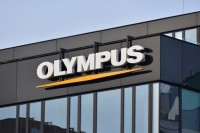
The case concerns two companies belonging to the Japanese group
Olympus – one of them British (O Ltd), the other German (O GmbH) – which decided to
merge and create a European company (SE), on 28 March 2013. As neither of these
companies had any employees or any subsidiaries with employees, no special
negotiating body was set up to negotiate an agreement on employee involvement, as
provided for in Articles 3 to 7 of Directive 2001/86/EU. The following day, the new
company derived from the merger, known as O Holding SE, became the sole shareholder
in O Holding GmbH, registered in Germany. The latter employed workers and had a
supervisory board, one third of whose seats were held by workers’ representatives. A
few months later, O Holding GmbH was converted into a limited partnership, called
O KG. Following this conversion, the requirement for employee involvement on the
supervisory board ceased to apply to the company. In October 2017, O Holding SE,
which until then had been registered in the United Kingdom, moved its registered
office to Hamburg. The group, which has more than 2,200 employees in the EU, neither
took over the employee involvement arrangement that previously existed at the main
company, nor established a SE works council to represent its European employees.
Moreover, as the employees work for a SE, they are not entitled to call for the
creation of a European Works Council. In point of fact, they are subject only to the
directive on employee involvement in the SE, which provides for the creation of a SE
works council, by means of an agreement. The only remaining representation body was
O KG’s German group works council, which took the dispute over these arrangements to
the Federal Labour Court. This court in turn referred the case to the EU Court of
Justice. The council argued that once it had acquired control of companies with
employees, the management of O Holding SE should, with retrospective effect, have
set up a special negotiating body for the purposes of concluding an agreement on
employee involvement.
So, what does the Court of Justice have to say?
1/ Directive 2001/86/EU does
not create any obligation to enter into negotiations on employee involvement when
“structural changes are made to a holding SE already established by participating
companies which do not employ employees, and do not have subsidiaries employing
employees”. Moreover, in such a situation, it does not extend the guarantee on
maintaining workers’ involvement rights in cases where a company is converted into a
SE (the “before-after” principle), 2/ When the directive was drafted,
the Council of the EU did not adopt an amendment proposed by the European
Parliament, which explicitly provided for further negotiations on workers’
involvement in the event of a significant restructuring following the creation of a
SE. 3/ It does not rule on any
“abusive practice”, but leaves the burden of demonstrating this to the Federal
Labour Court’s discretion, explaining how it can do so.
Werner Altmeyer,
Managing Director of the EWC Academy, is concerned: “So, for the first time, this
judgment allows a company to completely withdraw from all crossborder forms of
worker involvement”. Dr. Sebastian Sick, an expert in company law at the IMU
Institute, confirms that there are grounds for concern: the Court of Justice “is
giving its blessing to a major new escape route for companies wanting to prevent
co-determination for employees sitting on supervisory boards, and thereby
contributing to the erosion of this right. Co-determination is designed to achieve
the objective of shared decision-making for key decisions made by the company. By
opening up a way to bypass co‑determination, the CJEU is renouncing this objective,
and therefore part of the European social model.”
|
1. European
Union
Legislation

Due diligence : On 24 May, the
Council definitively adopted the due diligence directive, which will shortly be
published in the OJEU. Member States will have to adopt it into their
domestic law within two years (see press
release). IndustriAll Europe is delighted, commenting that thanks to this
directive, “running a business responsibly is no longer an option, it’s an
obligation”. IndustriAll Europe General Secretary Judith Kirton-Darling says: “We
insist on trade union representatives being fully involved at all stages to ensure
that companies do not stop at a mere box-ticking exercise. We are only at the
beginning of a process in which trade unions active in multinational companies will
play their full role” (see press release). The
UNI Europa trade union federation comments that national trade unions in Europe
should pressurise their governments “to ensure robust national legislation,
including to close some of the gaps in the directive” (see press
release).
|
Social
update
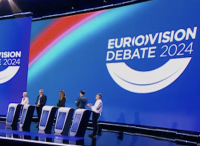
European elections : On 23 May,
the lead candidates of the European parties set out the broad lines of their
programmes at a debate organised at the European Parliament. Astonishingly, this was
given the name “Eurovision
2024”. Social Europe was not at the heart of the discussions, but the
candidates mentioned a number of related points: Nicolas Schmit (PES) highlighted
the need to combat poverty by creating jobs and investing in skills, in light of the
rapid changes taking place in the labour market. Ursula von der Leyen placed the
main emphasis on her record, rather than future plans, expressing her satisfaction
at the introduction of a minimum wage, which ensures that “it pays to work”, and at
the billions of euros invested in housing renovation and providing access to social
housing. She believes that the EU needs to finalise the common market of capital and
to boost skills. For his part, Walter Baier (European Left) called for a directive
on capping rents. Terry Reintke (Greens) argued that it was important not to fall
back on an austerity programme, and that the EU should instead boost its investments
in the green transformation, which will also create jobs.
|
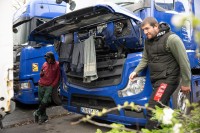
Road transport : On 20 May, the
Belgian authorities carried out a major inspection on a lorry park close to the Port
of Anvers, with the support of the European Labour Authority (ELA) and
representatives of the Bulgarian, Lithuanian, Polish and Romanian authorities. The
European trade union federation ETF was also present at this inspection, together
with some of its affiliates. The inspection revealed systemic non-compliance with
social legislation. A total of 202 vehicles were examined, and among these, the
inspectors identified 135 violations of the ban on resting in vehicles during longer
breaks, 70 violations concerning the return of trucks to the operational centre and
35 violations of the requirement for drivers to return home every four weeks (see
ETF press
release).
- Industrial policy and the single market:
On 24 May, the Council adopted conclusions sketching out the
future of industrial policies and the functioning of the single market, while at
the same time calling for “reinforced social dialogue” (see press
release).
|
Cross-industry social dialogue
- European elections : On 23
May, in a joint
declaration, European social partners – the ETUC, BusinessEurope, SGI
Europe and SMEunited – called on “those who are eligible to vote in the upcoming
European elections to make their voices heard” in order to support and
strengthen European democracy.
|
Sectoral
social dialogue

Banking : On 14 May, European
social partners in the banking sector signed a joint declaration on artificial
intelligence (see IR
Notes 230 and Artificial intelligence). In
their text, the social partners adopt the definition of AI used in the recent AI
act, and highlight the importance of social dialogue in managing any impact of AI on
working conditions, management, decision-making and the confidentiality of workers’
personal data. The signatories call for joint actions to “support job transition and
ensure re/up-skilling opportunities”. They take into account the specific
characteristics of AI, whose use should be “a subject of continuous monitoring
through social dialogue and collective bargaining”. When it comes to health and
safety, the signatories recommend joint assessments “that include the effects of
algorithmic management due to its embedded unpredictability, as these systems rely
on complex data processing and have a tendency to reduce human involvement in
decision-making.” They also emphasise that profiling, personnel selection, internal
promotion, changes of function and professional grade level, the system of
sanctions, and performance evaluations should “always [be] subject to the
human-in-control principle”. European social partners in the banking sector strongly
encourage sectoral social partners at national level and company-level actors,
including European Works Councils, to take this joint statement on board (see press
release).
|
Gas : In a press release, the
European trade union federations IndustriAll Europe and EPSU deplore the fact that
after nine months of negotiations between EU social partners in the gas sector, the
employers’ organisation Eurogas has failed to adopt the Just Transition agreement
negotiated by the employers’ and trade union delegations. This text required
companies to draw up “Just Transition plans”, in order to anticipate the green
transformation’s impact on jobs and skills, provide high-quality training and
organise job-to-job transitions.
|
2. Member
States
Belgium

Preventing musculoskeletal disorders :
A Royal
Decree dated 19 March 2024 relating to ergonomics in the workplace and
preventing musculoskeletal disorders at work was published in the
Moniteur belge on 15 May 2024. For the first time, this text introduces a
section into the Well-Being at Work Code, which defines several concepts and general
principles relating to ergonomics in the workplace and prevention of musculoskeletal
disorders. Employers are required to take ergonomics in the workplace into account,
not only at the time new workstations are designed and laid out, but also whenever
adaptations are made to existing workstations. They must also implement a prevention
policy based on a global approach that takes the various risk factors into account
(see press
release).
|

Reclassifying workers as employees :
In three recently published decisions (nos. 267,
268
and 270),
the Employment Relationship Commission (CRT) of the Social Security Federal Public
Service indicated that three Uber Eats delivery workers should be reclassified as
employees. This decision is binding only on certain public institutions, such as the
National Social Security Office (ONSS) and the Self-Employed Workers’ Fund
[caisse en charge des indépendants], though it may guide the courts’
thinking. Among other things, the Commission notes “a number of restrictions on
delivery workers’ freedom in the way they execute their work”. Furthermore, “these
restrictions apply even though the service performed by the delivery worker, which
is by nature fairly straightforward and broadly standardised, leaves very little
scope for freedom of organisation”.
|
Denmark
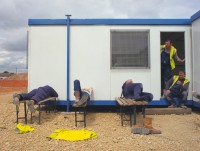
Combating social dumping : On 23
May, the parties making up the government coalition and several opposition parties
adopted an agreement
on boosting efforts to combat social dumping, which will give rise to the
preparation of several draft laws by the end of 2025. Noting that one in eight
Danish employees is a foreign national, the signatories point out that the foreign
employees “should not have to work under unacceptable conditions”. However, the
country’s Working Environment Authority is no longer able to cope with the task of
tackling repeated breaches of occupational health and safety legislation, especially
in the construction industry. The aim is therefore to provide it with more
resources, such as powers to suspend the work performed on site by companies and
their subcontractors, to inspect companies at more frequent intervals if they have
already been found guilty of breaking the law, and to impose suspensions on
contractors found guilty of serious and repeated violations. The agreement also sets
minimum requirements governing accommodation provided for workers, and the Working
Environment Authority will be tasked with overseeing compliance with these
standards. The accommodation inspections performed by the labour inspectorate will
use a risk-based approach, which will also include spot checks (see press
release).
|
3.
Companies
European
works councils

New EWC created following a demerger :
After merging in 2017, the US
company FMC and the French company Technip, which both operate in the oil industry,
demerged in 2021, resulting in the creation of two new companies: TechnipEnergies, which took over
the engineering and technology businesses, and TechnipFMC, which retained the
subsea business and renegotiated an EWC agreement (see IR Notes 227).
TechnipEnergies (6,316 employees) signed its EWC
agreement on 14 December 2023. This is governed by French law, even though
the company’s registered office is in the Netherlands. The signatories agree that
the EWC shall be “properly informed and consulted, appropriately and in a timely
manner, to useful effect”. The group provides the EWC with an annual budget of
25,000 euros to cover its operating costs. This funding cannot be carried forward
from one year to the next. The EWC is consulted in exceptional circumstances,
involving either a proposal to cut at least 80 jobs from the workforce, or in
connection with other operations, when at least 500 employees are impacted by the
proposal, in at least two countries, with at least 50 employees in each country.
|
EWC agreement renewed : The
parcel delivery subsidiary of the La Poste group, Geopost (122,000 employees
worldwide, including 46,335 in Europe), renewed its European
Works Council agreement on 5 March. Following a vote in 2021, the EWC now
covers the United Kingdom (which has 10,500 employees and constitutes its main
delegation) and Switzerland. There are few changes to the original agreement, which
was signed in May 2008. Alongside the annual meeting, the EWC has a budget of 20,000
euros (excluding interpreting and technical costs) to cover the cost of organising
an annual two-day training meeting.
|
|
|











