 |
| |
IR Notes 25 – 11 February 2015
www.irshare.eu
|
|
|
| |
| |
Who we are?
IR Share is a provider that
shares information, documentation and expertise for HR managers and
employee representatives. The IR Share agency operates by way of online
publications, working groups, training devoted to relevant topics and a
network of experts.
The team
This issue was produced by Francisco Gomez Abelleira, Frédéric
Turlan and Fernando Vasquez. Find out more about the IR Share
team on our website.
Subscribe to IR
Notes Via the IR
Share website or by calling us on:
+33 (0)6 81 41 53 95 or
E-mail: frederic.t@irshare.eu
|
|
|

|
| |
Editorial
The entire IR Notes team has, for several
weeks, had the pleasure of counting among its readers the members of
the European works council of the Carrefour group
and members of the executive committee of the EWC of
Michelin, Club méditerranée, SNCF and
Cereal partners. The European Federation
of Cleaning Industries has also joined
our subscribers. You can also contribute to our development and
especially to preserving our independence by helping us to spread
the word about IR Notes in your networks. All suggestions and words
of advice welcome! We would be delighted to hear from you
directly.
|
|
|
|
|
| |
IR Perspectives by Fernando Vasquez
lawyer, former official of the European Commission and expert member of
the IR Share network
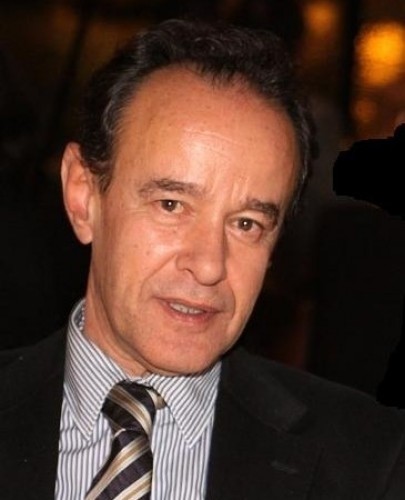
Given the importance of this week for the
fate not only of the EU country most affected by the crisis, but
also of the austerity-versus-growth debate, it appears useful to
review the recent trends of the EU economy and labour market.
What do the figures disclosed by
the recent European Commission report on this subject(*) tell
us? Between 2003
and 2013, the population of the EU went up from 484.726 to 500.457
million (+15.731 million), and the working-age population (those
aged 15-64) rose from 203.804 to 212.702 million (+8.9 million).
During this same period, the employment rate (full-time equivalent)
remained practically unchanged, edging up from 58 to 58.2%, and
peaking at 60.4% in 2008. However, the percentage of self-employed
labour in the employment total declined from 16.4 to 15.4%
(–673,000), while that of part-time workers rose from 16.5 to 20.3 %
(+ 9.5 million); the proportion of employees on fixed-term contracts
grew from 12.7 to 13.8% (+3.5 million). The combined increase in
these three categories exceeded by 4 million the rise in the
working-age population. The number of unemployed people in the EU
advanced from 20.840 million in 2003 to 26.388 million in 2013, or
by 5.5 million. This total rises to 9.5 million, however, if the
best of the intervening years (16.8 million unemployed in 2008) is
taken into consideration. As for the GDP growth rate, which averaged
+2.6% between 2003 and 2007, it fell to –0.1% on average during the
period from 2008 to 2013.
These figures demonstrate the link
between growth and employment, and the adverse effect of rising
unemployment on the quality of jobs for those in work:
statistically
speaking, the increased number of precarious contracts subsumes all
newly created jobs. More serious still, it even depletes the
existing stock of stable jobs (4 million). The report also
illustrates the enormous disparity between the member states in
terms of these data as a whole, as well as – more worryingly – the
continuous widening of these disparities, that is to say the process
of economic and social divergence inside the EU itself. The
Commission report recognises this when it underlines the importance
of restoring socio-economic convergence, in particular in southern
and peripheral EU15 member states.
On
the other hand, the link made in the report between the
level of development of the labour markets –
more open and less segmented markets which had invested more in
education and lifelong learning and having more efficient activation
systems – and their performance during the crisis, ignores macro and
micro-economic factors: those related to the industrial structure,
as well as differences in competitiveness and in levels of domestic
and external demand, and other causes extraneous to the labour
market which influence them.
The
report also omits to recognise the failure of the
innumerable policies and measures to promote employment
launched by the EU and the member states during
the past decade, mostly backed by major funding packages. At a time
when the focus is on boosting employment in Europe, greater
consideration should be given to the effectiveness of employment
policies, as well as the fundamental role of growth, in maintaining
acceptable employment levels. We will return to this issue
again.
(*) Employment and Social Developments in
Europe 2014, in
English
|
|
|
|
|
| |
Diary
3
February
Brussels
Symposium
by the European Trade Union Institute on the debt crisis, the EU and
the welfare state.
11
February
Brussels
Concluding
conference of the Eurosofin project on social dialogue in
the financial sector in Europe: contribution to anticipation and
restructuring. The project is supervised by the collective
bargaining and employment policies unit of the Luxembourg Institute of
Socio-Economic Research (LISER). Link
to the registration form.
12
February
Paris
Ires
talks (Entretiens de l’Ires): Symposium to mark publication of
the special edition of the “Chronique internationale de l’Ires”
periodical entitled “Education and health: public services in turmoil”,
which will bring together researchers and members of trade unions for
two round-table discussions on experiences in France and other
countries.
12 -13
February
Paris
The
European social partners of the civil aviation sector are organising a
conference presenting the results of the study conducted by Ghent
University on “non-standard
employment of air crews” commissioned by the social partners.
24
February
Brussels
Monthly
forum of the European Trade Union Institute on corporate social
responsibility and the trade unions.
26 February
Riga
Conference
organised by the Latvian EU Presidency on the Trade
union role in promotion of sustainable growth and job creation.
26 February
Brussels
Meeting of
the Employment and Social Affairs Committee of the European Parliament.
5
March
Brussels
High-level
conference organised by the European Commission to mark the 30th
anniversary of the launch of European social dialogue (“Val Duchesse”),
at which it will present its new orientations.
9
March
Brussels
Employment
and Social Affairs Council.
31
March
Riga
Forum
of the social partners on The
role of social dialogue in ensuring economic growth and qualitative
workplaces, organised by the Latvian social partners and the
Latvian EU Presidency.
9-10
April
Paris
Seminar
organised by Astrees, IR Share and SBI-FNV Formaat, with funding from
the European Commission, on the transnational competence of European
works councils. This seminar is reserved for managers responsible for
European works councils.
Tel.: + 33 (0)6 81 41 53 95.
frederic.t@irshare.eu
|
|
|
|
|

IR Notes is a
fortnightly newsletter produced by IR Share and
its network of experts, and is available in several European languages. It
offers Europe-wide monitoring of employment law, labour relations and
employment policy. It is available by subscription for 15 euros per month ;
150 euros per year (excluding tax), via the IR Share
website. IR Share is a privately- owned,
independent, apolitical company whose aim is to inform and assist all
players involved in social dialogue within and outside Europe. It has been
the correspondent organisation for France and Luxembourg of the Dublin
Foundation since 2009 and for Bulgaria since 2014.
|
|
|
Lead
story
European
social dialogue – a thirty-year-old with a bright future?
“European social dialogue first saw the light of day in the course of a meeting
convened by European Commission President Jacques Delors on 31 January 1985″…
These words open a policy
paper published by the Jacques Delors Institute and authored by Jean
Lapeyre, who was deputy general secretary of the European Trade Union Confederation
from 1991 to 2003. This document, which retraces the history of European social
dialogue, finishes with recommendations aimed at “imparting a fresh boost to social
dialogue, and strengthening that dialogue in the future”: to put in place a legal
framework for the “independent agreements” of the social partners (that is to say,
agreements concluded at their own initiative without the intervention of the
European Commission) with an “independent body capable of arbitration and of
conciliation”; to create a European social dialogue secretariat funded by the budget
of the EU in order to give it the resources necessary for the functioning and
development of social dialogue, or even to launch social dialogue specifically for
the euro area. These proposals may inform the high-level conference organised by the
Commission on 5 March next in Brussels, with representatives of the European social
partners. The discussions will centre on four topics: 1. To integrate the social
partners better in economic governance both at European and national level. 2. To
improve the participation of the social partners in formulating European policies on
social matters (e.g. worker mobility, labour market integration), but also in other
spheres such as the energy union or the single digital market. 3. To strengthen the
European agreements concluded by the social partners, in particular when these are
being “transposed” via a European directive. 4. To consolidate social dialogue in
the member states, with financial backing from the EU. The Commission also intends
to review its funding lines in support of social dialogue and industrial relations,
giving priority to projects backed by the European social partners. The Commission
President, Jean-Claude Juncker, announced his wish to be a “president of social
dialogue”. 2015 will tell.
> Also
see the special
page dedicated to this subject by the Foundation for the Improvement of
Living and Working Conditions (Eurofound) and in particular the post
on the blog of Christian Welz on the founding meeting of social dialogue, on
31 January 1985 at Val Duchesse castle (in English).
|
1. European
Union
Legislation
- System of taxation applicable in the case
of parent companies and subsidiaries: Directive
2015/121 of 27 January 2015, which amends directive 2011/96 concerning
the common system of taxation applicable in the case of parent companies and
subsidiaries in different member states, has been published in the Official
Journal. The aim is to prevent misuse of a measure intended to exempt dividends
and other profit distributions paid by subsidiary companies to their parent
companies from withholding taxes.
|
Social
update
- Increase in pre-financing for measures to
benefit young people: The European Commission on 4
February adopted a proposal
for a regulation aimed at increasing the initial pre-financing amount
paid to operational programmes set up by the member states as part of the Youth
Employment Initiative. Once adopted by the Council and the Parliament, this text
should enable one billion euros to be released in 2015 which, according to the
Commission, will allow the pre-financing member states receive to boost youth
employment to be multiplied by 30 and permit up to 650,000 young people to be
helped into work (see Commission press
release and the associated Q&A
memo (other languages IT PT EL PL).
This initiative corrects one of the numerous flaws in the Youth
Guarantee scheme, whereby the amounts mobilised by the countries most
affected by youth unemployment were to be included in the budget deficit
calculation; this does not encourage countries to adopt such programmes.
Pre-financing will allow them to incur expenses without having to finance them
from their own budget.
- Assistance from the Globalisation
Adjustment Fund: The European Commission on 3 February
proposed to provide financial support of 8.7 million euros to Greece, to help
1,633 workers who lost their jobs in the media sector to find employment again
(see Commission press
release, in English).
|
Case law
- The European Court of Justice cannot rule
on the validity of a probationary period lasting one
year: The European Court of Justice was invited to rule
on the compliance of one of the flagship measures of the 2012 reform of the
Spanish labour market with EU law: a one-year trial period, during which the
employer could terminate the employment contract of someone recruited under the
new “employment contract of indefinite duration to support entrepreneurs” at any
time without a justifiable reason (CJEU,
5 February 2015, case C-117/14, Nisttahuz Poclava). A female worker
dismissed during her probationary period thus referred the matter to the Court
of Justice, raising the question of whether this constituted a breach of the Charter
of Fundamental Rights of the EU, ILO
Convention 158, the European
Social Charter and directive
1999/70 of 28 June 1999 concerning fixed-term work. While the European
Committee of Social Rights delivered a report
in January which found this provision to be contrary to the European Social
Charter, the European Court of Justice declares, rightly, that it does not have
jurisdiction: the Charter of Fundamental Rights applies only to those texts
which implement the law of the EU. Moreover, the disputed contract cannot be
considered as a fixed-term contract and therefore does not fall within the scope
of directive 1999/70. In addition, the court is not competent to rule on the
interpretation of provisions of the other forenamed instruments of international
law. Finally, no other provision of EU law regulates the probationary period.
“The law on termination of employment is not covered by EU labour legislation;
this is one of its weaknesses,” comments Jean-Philippe Lhernould, professor at
the University of Nantes.
- Clarifications concerning the directive on
dismissals for economic reasons: The Advocate General of
the European Court of Justice has delivered an opinion in three cases concerning
the directive on collective redundancies (CJEU,
5 February 2014, cases C-182/13, C‑392/13, C‑80/14). The question at
issue was to determine the exact scope, in the case of collective redundancies,
of the concept of “establishment” referred to in Article 1(1)(a) (2) of
directive 98/59. The court is expected to deliver its ruling later this year.
- Consideration of periods of work performed
before the age of 18: Almost six years after the Hütter
case (CJEC,
18 June 2009, case C-88/08), the European Court of Justice has again
ruled on an Austrian matter concerning an employee whose reference date for the
purposes of advancement did not take apprenticeship periods prior to the age of
18 into account (CJEU,
28 January 2015, case C-417/13, ÖBB Personenverkehr AG v. Starjakob).
The court stated that “as long as a system to abolish discrimination on grounds
of age in a way that conforms with the provisions of Directive 2000/78 has not
been adopted, re-establishing equal treatment entails granting” to disadvantaged
persons “the same benefits” as those which have been enjoyed by employees in a
comparable situation.
|
2. Member
states
France
- Funding of the social partners:
As provided for by law
No. 2014-288 of 5 March 2014, the fund for financing employers’
professional bodies and trade union organisations was established by the decree
of 31 January . This fund is to finance the social partners in the light
of their public interest role (management of joint bodies, training of staff
representatives, etc.). The funding is ensured by contributions from private
employers (0.016% of payroll costs) and by the state. The decree defines the
rules of how the fund is organised, how it operates and how the monies are
allocated. This arrangement is intended to put an end to the lack of
transparency in the social partners’ funding channels.
|
Germany
- Minimum wage’s application to truck
drivers in transit suspended: The German minister of
labour Andrea Nahles has decided to delay the decision on enforcing the legal
minimum wage that became law at the beginning of the year vis-à-vis lorry
drivers from other member states when transiting German territory (see press
release, in German). The employers’ organisation IRU has called for an
immediate moratorium (see press
release, in English). For its part, the European Transport Workers’
Federation (ETF) judges the measure to be compliant with EU law and underscores
that, until such times as there is a European policy to combat social dumping,
the member states will continue to seek national solutions to fight social fraud
in the transport sector (see Eurofound (2015) “EurWORK
topical update – Pay – Q4 2014 – Statutory minimum wages in 2015“). The
Commission is currently conducting an initial inquiry to verify the (in our view
dubious) compatibility of this measure with EU law and in particular the free
movement of services.
|
Luxembourg
- Amendments to the Labour Code:
On 6 February, the government adopted a draft law (see press
release, in French), with the following aims: 1. To bring the
legislation into line with EU law by adding “the notion of gender reassignment
in general legal provisions on non-discrimination, in the Labour Code”, and in
legislation applicable to civil servants 2. To guarantee, in the context of
cross-border mergers, the same participation rights to employees outside
Luxembourg as to those who were already working on national soil prior to the
merger. In other respects, government passed a draft regulation transposing
directive 2010/32 of 10 May 2010, which defines the measures to be implemented
to protect employees against the risks associated with sharps injuries in the
hospital and healthcare sectors.
|
Spain
- Programme for unemployed whose benefit
rights have run out: The government has adopted a royal
decree (in Spanish), approved by the social partners, which will allow
it to offer unemployed persons who are no longer eligible for benefits or
compensation to take part in work re-integration programmes for six months and
receive an allowance of 426 euros.
> Get more information about labour
law developments from the Newsletter
European Labour Law Network (in English) and about collective bargaining
from the European Trade Union Institute’s “Collective
Bargaining Newsletter” (in English).
|
3.
Companies
Transnational agreements

IndustriAll presents its new guidelines for the
negotiation of transnational agreements: The international
trade union federation IndustriAll Global on 6 February presented its new
guidelines for negotiating global framework agreements (GFAs). As well as
referencing and recognising fundamental social rights guaranteed by various
international documents, global framework agreements must: 1. Cover all company
operations throughout the world without exception; 2. Include a strong and
unequivocal commitment by the multinational company concerned that suppliers and
sub-contractors adopt these standards for their workers; 3. Guarantee a commitment
from the company to treat unions positively, and refrain from all anti-union
activities and to remain strictly neutral concerning an employee’s choice for or
against joining a union organisation; 4. Grant union representatives “reasonable”
access to the workplace; 5. Contain an effective mechanism for implementation, and a
procedure for binding dispute resolution. A standing working group is created to
review current GFAs and provide an annual report on the status of the GFAs signed.
The agreements must be translated into all working languages and disseminated to
employees, managers, suppliers and subcontractors. These recommendations have
already been respected in the global framework agreement of the Total group, signed
on 22 January this year.
- Areva: To simplify the
arrangements for following up European agreements signed between the Areva group
and the IndustriAll Europe trade union federation (*), the two sides have
concluded negotiation of a new European agreement in support of joint steering
of the existing agreements. The draft agreement, submitted to the trade unions
represented in the group and members of the federation for approval, stresses
that social dialogue must cover the “group’s strategic orientations” in order to
anticipate their “foreseeable effects on employment, occupations and skills”.
The text also insists on recognition of the skills acquired when exercising a
mandate as a staff representative and the need for equal treatment of these
representatives alongside the other employees.
(*) The agreements on “equal
opportunities ” (and its amendment)
as well as “professions
and competences forecast and management” » are available on IR Share
- Scor: The French
reinsurance group Scor SE (2,300 employees in 11 member states) on 29 January
signed a European
Charter on Professional Equality with the members of the Common European
Companies Committee (CECC), representing the four European companies making up
the Scor SE group. The document reviews all aspects of the working relationship
linked to equal treatment (recruitment, training, wage trends, maternity) and
creates tools (e.g. women’s networks, mentoring, awareness campaign) to ensure
successful implementation of the agreement which, according to Roberta
Iorizzo-Fard, CECC representative, “will make it possible to help all employees
to give of their best and improve well-being at work on all levels”.
|
European
works councils
- Dana: The new EWC
agreement (in German) signed on 18 November 2014 between the American
automotive equipment supplier Dana (5,325 employees in Europe) and the president
of the EWC states that transnational questions are those which concern two
establishments in two member states, as well as those having a major impact on
the European workforce, regardless of the number of countries affected. To
obtain the organisation of an extraordinary meeting, the EWC’s request must be
supported by members representing at least two countries and 25% of employees.
|
4. Studies
and reports
- Minimum wage: The
Foundation for the Improvement of Living and Working Conditions (Eurofound) has
published an article
on the minimum wage in Europe as of 1 January 2015, in English, which
shows the current minimum wage levels in the 22 member states and any increases
compared to 2014. It also ventures to indicate the change in the minimum wage’s
value “in real terms”, taking account of inflation. It appears that, in five
countries, this has gone down.
- Severance pay: The
Foundation for the Improvement of Living and Working Conditions (Eurofound) has
published an info
sheet on the statutory regulation of severance pay in the EU.
- Impact on employment of sanctions against
Russia: The Foundation for the Improvement of Living and
Working Conditions (Eurofound) has published a brief
analysis in the ERM quarterly restructuring summary (in English) on job
losses in European companies linked to the sanctions taken by the EU against
Russia.
|
Phrase of
the fortnight
Val
Duchesse

The Val Duchesse priory is situated in Auderghem, a municipality on the southern
outskirts of Brussels, on the edge of the Sonian Forest. It was in this bucolic
setting that, on 31 January 1985, European social dialogue was born, at the
initiative of Commission President Jacques Delors. The outcome was the “Val Duchesse
process”, which saw representatives of the trade unions and of employers become
players in the formulation of European legislation during the construction of the
single market.
|
|
|











