 |
| |
IR Notes 250 – 16 April 2025
www.irshare.eu
|
|
|
| |
| |
A question for…
Jean-Philippe Charpentier, Secretary, Verizon EWC

As the discussions continue between
the Council, the Commission and Parliament (the “trilogue”)
regarding revision of the European Works Council directive, what
problems is Verizon’s EWC still
facing?
There’s
still the case before the Dublin
High Court, dealing with the problem of access to justice for EWCs
in Ireland. The hearing has been scheduled for 1 to 3 July. I hope
the outcome of the trilogue will solve this problem of access to
justice, and in particular, the issue of recovering legal
costs.
At the same time,
we’ve seen the first signs of a new EWC agreement being negotiated –
bear in mind that the current EWC is operating on the basis of the
directive’s subsidiary requirements – with management promising to
begin discussions. However, I’m still concerned about the slow pace
of the process, given that our request already dates back to
December. Nevertheless, we hope for an agreement to be finalised
that will solve all of the difficulties we’ve encountered in recent
years, and which led us to take legal action on multiple occasions
in order to assert the EWC’s legal rights, firstly before the UK
courts, and then in Ireland, after the company appointed its
management representative there. I sincerely hope that a new
agreement will be beneficial to both parties and will bring all of
our disputes to an end.
However, question marks remain over whether
management is acting in good faith, because in early December, it
informed us of plans to close a business in 2025. In April, we were
given an update on this plan, with the announcement that a buyer had
been found for this business. We’re giving favourable consideration
to this news. Yet we also deplore the fact that the decision has
already been taken, without any consultation regarding the social
consequences of this move – either for employees who will be leaving
or those who will remain. This means we’ll have to submit an opinion
without receiving answers to the questions we’d asked, with the aim
of enlightening our European colleagues who are affected by this
plan.
|
|
|

|
|
|
|
|
| |
Who we are?
IR Notes is a
fortnightly newsletter produced by IR
Share and its
network of experts, and is available in several European languages
(English, French, German, Italian, Spanish). It offers Europe-wide
monitoring of employment law, labour relations and employment policy. It
is available by subscription for 273 euros per year .
The team This issue
was producaed by Fioana
Bernard, Ambre
Grenier-Boley,
Victoria
Fonseca,
Stepanka Lehmann, Laura Renucci, Iris Turlan and Frédéric
Turlan.
Find out more
about the IR Share team on our
website.
Subscribe to IR Notes
Via the
IR
Share website or by calliang us on:
+33 (0)6 81 41 53 95
or
E-mail: frederic.t@irshare.eu
Legal notice.
Publisher: IR Share SARL – 5, Les Compères – 89520 Fontenoy, France –
Tel.: +33 (0)6 81 41 53 95 – share capital 1,500 euros – commercial
register (RCS Auxerre): 512 567 959. Managing editor: Frédéric Turlan.
Hosting: ALTEO by Damien Cornillet – Château – 89500
Villeneuve-sur-Yonne. CPPAP no.: 0626 Z 93933.
|
|
|
|
|
| |
Follow us on LinkedIn!

Why not connect to the IR Notes LinkedIn page, so that you can keep up with
developments in the issues we’re covering, between two editions?
You’re welcome to follow us! There are already 694 of you following
us!
|
|
|
|
|
| |
European Industrial Relations Dictionary

In case reading IR Notes inspires you to
explore this subject further, we are providing links to the European
Industrial Relations Dictionary published by Eurofound. This is updated at
regular intervals by IR Share, which publishes IR Notes. The term
definitions are available in English and can easily be converted
into other languages using on-line translation tools.
|
|
|
|
|

|
|
|
Lead
story
Car industry
in crisis, but its impacts vary from one Member State to another

At the annual meeting of Eurofound’s national correspondents (Editor’s Note: IR
Share, which publishes IR Notes, is part of this network), on 10 April, a panel of
researchers discussed the crisis in the automotive sector, highlighting the unequal
impacts of the transformations currently under way in this industry (see Employment
in the EU’s automotive sector). While some countries, such as Belgium and
Italy, are witnessing a collapse in the number of manufacturing sites, others are
continuing to prosper. Belgium, which used to manufacture more than a million
vehicles per year in the 2000s, now produces only around 240,000. The closures of
the Audi and Renault sites have had a severe impact on the country. In Italy, annual
production fell from almost 2 million vehicles in 2018, to 591,000 in 2023. The
current situation of Stellantis, which is the sector’s main company in Italy,
is worrying (see article
in the CGIL trade union newsletter). Exports from the Netherlands fell by more than
20% between 2018 and 2022. The researcher from the Netherlands presented a
particularly striking case study: the closure of VDL Nedcar in the municipality of
Born, in the Dutch province of Limburg. The town was severely affected by these
4,000 job losses, and social partners played a vital role in mitigating the impact
of these losses, by offering legal advice, training and support. Much of this
decline is due to the transition to electric vehicles and to offshoring of
production.
On the other hand, the automotive sector is continuing to prosper
in Hungary, Romania and the Czech Republic. In these countries, this sector
represents a significant proportion (between 8 and 9%) of GDP and of the industrial
labour force. In Hungary, the industry accounts for 25% of the manufacturing sector
and employs 150,000 people, i.e. almost 4% of the working population. The country is
also investing in battery production, which employed 8,100 workers in 2024, compared
to 1500 in 2019. However, the drop in demand for electric vehicles might have
unforeseeable consequences for the future of the sector. Researcher Nora Krokovay
also highlights a number of risks linked to the sector’s labour force: its high
proportion of unskilled workers, a lack of investment in training, a policy of
inviting in “guest workers” and the widespread adoption of part-time working. She
points out that when taken together, these various factors create a fragile
environment for social dialogue. Romania offers a similar scenario: here, the
automotive sector employs 160,000 workers, and accounts for a significant share of
the country’s manufacturing industry. Most plants (almost 90%) belong to parts
suppliers (primarily cable loom manufacturers). Although this sector is prosperous,
it was strongly affected by the Covid-19 pandemic, given that this type of
production, which is highly labour-intensive, is particularly sensitive to closures
imposed by lockdowns. In contrast to Hungary, the Czech Republic’s transition to
electric cars is behind schedule. The lack of interest shown in national policies
aimed at encouraging companies to explore this new field might come to be a problem
for the country in the medium term. For the Czech Republic, where the sector
employs 180,000 workers directly and a further 500,000 among parts suppliers, the
key lies in investment in training at all levels, with companies such as Skoda
having their own university.
The government is implementing policies designed to meet the current challenges,
e.g. the National Action Plan for Clean Mobility. Nevertheless, the
competitiveness of these three countries is being undermined by the rise of new,
low-cost countries, such as Serbia, Moldova and Morocco.
|
1. European
Union
Project

CSRD and due diligence : Having
previously been enthusiastic defenders of the European Green Deal adopted under the
von der Leyen Commission’s first term, MEPs changed direction on 3 April, supporting
the Commission’s proposal to postpone implementation of the new legislation on due
diligence and sustainability reports. The vote was 531 in favour, 69 against and 17
abstentions (see press
release). They adopted the draft directive as previously approved by the
Council (see press
release). The directive, which was approved by the Council on 14 April, will
be published in the OJEU once it has been formally passed by Parliament, and it will
then enter into force.
|
Social
update

Social risks identified in ten Member States :
On 11 April, the European Commission published the second-stage
country analysis on social convergence for 10 EU Member States, in line with
the EU’s new rules on economic governance. Stage one, which is aimed at identifying
potential risks for social convergence that require a more in-depth analysis,
involves all 27 Member States, and is based on the main indicators of the Social scoreboard. A second
stage focuses on ten Member States that were identified in the Joint Employment
Report 2025 as presenting risks for upward social convergence. This year, the
countries concerned are Bulgaria, Estonia, Greece, Spain, Croatia, Italy, Lithuania,
Luxembourg, Hungary and Romania. The main risks, which are set out in detail country
by country, relate in particular to the population experiencing poverty or social
exclusion, adult participation in learning, early leaving from education and
training, and integration of persons with disabilities. The European Trade Union
Confederation has expressed its viewpoint regarding seven countries (see document).
|
Case law

Company transfer : On 3 April,
the Court of Justice pronounced judgment on a Belgian case involving the Wibra store
chain. The company, which has been in financial difficulties for several years now
and was adversely affected by the Covid-19 crisis, applied in 2020 for judicial
restructuring proceedings, with a plan to cut the number of its stores from 81 to 36
and the size of its workforce from 439 to 183. The Ghent Business Court rejected
this plan, primarily because of the company’s failure to abide by the collective
labour agreement. The trade unions condemned management’s refusal to honour their
employees’ holiday pay and end-of-year bonus. At this point, the company’s
management immediately declared bankruptcy and implemented the proposed
restructuring plan the next day, retaining 36 stores, with the agreement of the
court-appointed administrators. The company’s entire workforce was made redundant as
a result of the bankruptcy, but 183 employees were then rehired. 60 former employees
challenged these proceedings, citing non-compliance with the obligations to inform
and consult employee representatives in the event of collective redundancies linked
to judicial restructuring proceedings. The Liège Labour Court awarded each of these
employees €3,500 and referred the case to the CJEU for a ruling on whether the new
Wibra company was required to fund these payments, or whether it could take
advantage of the derogation applicable under the employee protection scheme
established by the Transfers of Undertakings Directive 2001/23/EC, which allows a
company not to rehire employees where it declares bankruptcy. The Court of Justice
invites the Liège employment tribunal to determine, before applying this derogation,
whether the bankruptcy proceedings were conducted “under the supervision of a
competent public authority” and to check that there had not been any “misuse of
insolvency proceedings”, in such a way as to deprive workers of their rights (CJEU, 3 April
2025, Case C-431/23, Wibra).
|

Exposure to harmful substances :
On 27 March, the European Court of Human Rights (ECtHR) issued a
judgment
condemning Italy for not conducting an effective investigation in the case of a
former Ilva employee, who had died of a pulmonary tumour. The deceased’s family
alleged that the disease was caused by his exposure to toxic substances in the
workplace. The Italian courts had discontinued the proceedings due to insufficient
evidence, because the employer failed to provide all of the requested information,
meaning that it was not possible to ascertain the specific activities undertaken by
the employee. A causal link could not therefore be established with any certainty.
Nevertheless, the ECtHR held that because an occupational origin of the illness had
not been excluded at the outset, the trial court could have ordered further
investigations to ascertain the possible existence of a causal link between exposure
to harmful substances and the deceased’s illness, with a view to identifying those
responsible for any breaches of safety measures. It followed that the domestic
courts had not made sufficient efforts to establish the facts of the case, and that
the decision to close the investigation had not been properly reasoned. The Court
concluded that there had been a violation of Article 2 of the European Convention on
Human Rights, because the investigation had not been effective (see press
release).
|
Sectoral
social dialogue

Construction : On 5 March,
European social partners in the construction sector issued a Joint
declaration on labour and skills shortages, acknowledging that one of the
reasons for labour shortages is the sector’s lack of attractiveness, due to
“negative stereotypes and also difficult working conditions”. The declaration
emphasises that the social partners will continue “to promote quality and good
working conditions, such as fair wages, equal treatment, training opportunities, and
sustainable business models, creating more direct jobs and avoiding long chains of
subcontracting” (see joint
press release).
|
2. Member
States
Germany
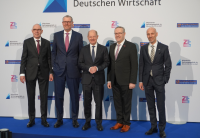
New coalition faces calls for negotiations :
The employers’ organisations BDA, ZDH and BDI, and the
Association of German Chambers of Industry and Commerce (DIHK), are calling on the
CDU-CSU-SPD coalition to implement ambitious measures to tackle the structural
problems faced by the German economy (see declaration).
Among other things, they call for: a reduction in the tax and administrative burdens
on companies; recruitment of foreign skilled workers to meet the labour market
demand; and for the independent minimum wage commission to pursue its work (see press
release).
|
Finland

Artificial intelligence : The
Church’s labour market service, the employers’ organisation KT, the trade union
confederations SAK, EK and STTK, and the national institute VTML, have put forward a
common position on the use of artificial intelligence in the workplace (see press
release). These organisations are calling on the EU to establish clear
rules, to invest in this area, to encourage cooperation and to guarantee protection
for workers.
|
France

Sustainability report : On 3
April, Parliament definitively adopted a law
designed to standardise various French laws with EU legislation. This law
anticipates the decision made at European level to postpone implementation of the
new obligations applicable under the corporate sustainability reporting directive
(CSRD). These obligations, which were implemented by means of order no. 2023-1142 of
6 December 2023, have applied to the largest companies (mainly publicly listed
companies, banks and insurance companies with more than 500 employees) since 1
January 2025. The remaining large companies were due to produce their first
sustainability report with effect from 1 January 2026. This date has now been
postponed to 1 January 2028 (for the 2027 report), and the new obligations will not
apply to listed SME until 1 January 2029 onwards (for their 2028 report), rather
than the original date of 1 January 2027. The new law also states that the
sustainability information to be disclosed to the company’s economic and social
committee [French acronym ‘CSE’] must be provided during the course of at least one
of the mandatory CSE consultations relating to the company’s strategic orientations,
its economic and financial situation, and its social policy, working conditions and
terms of employment. This information does not have to be provided at each one of
these mandatory negotiations.
|
Lithuania

Employment Code : A number of
significant changes were made to the Lithuanian Employment Code on 1 January 2025
(see press release). They include stronger measures to prevent
different types of workplace violence and bullying, and a change to the Code of
Administrative Offences. The aim is to create a safer and more transparent working
environment, to ensure better protection of employees’ rights and to improve
employment relationships.
|
Poland
Maternity leave : On 19 March, a
law reforming the
Employment Code introduced additional maternity leave for parents of premature or
hospitalised new-born babies. Depending on the parent’s situation, this leave will
be taken on full pay and last for 8 or 15 weeks. It will be available on demand,
including for adoptive and foster families.
|
Czech
Republic
Labour market reforms : The
draft law amending the Employment Code, which was drawn up by the government in 2024
and was preceded by heated debates with social partners, was definitively approved
by Parliament on 9 April. The objective is to create increased flexibility in the
labour market, in ways that include simplifying the beginning and end of an
employment relationship. The most significant changes are as follows: 1/ extending the trial period
from 3 to 4 months (and from 6 to 8 months for managerial staff); 2/ reducing the notice period,
which will no longer start on the first day of the month following presentation of
the letter giving the employee their notice, but on the day this letter is handed
over; 3/ reducing the age at
which young people can take on a summer job, from age 15 to 14; 4/ introducing an obligation for
the employer to keep an employee’s original position open when they take parental
leave until the child reaches the age of two (previously, this obligation applied
only up to the time the employee returned from maternity leave); 5/ introducing the option of
paying employees in foreign currency; 6/ changes to unemployment
benefits: increasing them during the early months and reducing them during the final
months of the period during which benefits are payable, toughening up the rules
governing eligibility for these benefits and linking them more closely to
reskilling, etc. In the end, the most controversial element of the plan, namely
introducing the right to dismiss workers without giving a valid reason – a change to
which the trade unions were opposed – was not included in these amendments. If the
President does not veto the plan, and instead goes ahead and signs it, these
amendments could enter into force in June 2025 at the earliest, except for the
changes to unemployment benefits, which are due to enter into force from 2026
onwards.
|
|
|











