 |
| |
IR Notes 264 – 17 December 2025
www.irshare.eu
|
|
|
| |
| |
A question for…
Maxime Legrand, President of CEC European Managers

What subjects are discussed in the
European social partners’ consultation on quality jobs, which
you plan to mobilise around?
Well, CEC European Managers’ view is that
there are certainly a great many subjects to be tackled at the same
time. We’re planning to focus primarily on mental health and
psychosocial risks. We believe that the key issue is that of
establishing a genuine right to disconnect. These days, managers are
particularly affected by tiredness linked to hyperconnectivity: many
of them are constantly juggling two phones and two computers, and
having to deal with an endless stream of calls and notifications,
including via social media. The statistics are clear: this situation
is giving rise to an increase in sick leave among the employees that
we represent.
So, it’s
essential to act at an upstream stage, through prevention and
raising awareness among employers. We believe that a quality job is
also one that is sustainable, stable and worthwhile, based on
quality leadership. It should combine security, predictability,
possibilities for career development and a respectful working
environment.
We’ll also be
emphasising the importance of training. Employers are calling for
greater flexibility in the processes associated with cutting jobs,
but once employees have left the company, it’s too late to act.
Before any jobs are cut, it’s vital to plan for retraining schemes,
so that employees can be guided into new occupations, especially
those linked to the green and digital transitions.
We also need to improve our managerial
skills. Here, we’re calling for managers to have their own personal
training entitlement, to help them cope with the new demands they’re
facing. Lastly — and this is a major item on our agenda — another
factor in creating quality jobs is improving social dialogue around
work organisation. In some countries, this dialogue is a reality:
employers consult with employee representatives on this issue and
sometimes even work with them in designing their systems. That
arrangement works, by enhancing job quality in concrete terms.
However, it’s not the case everywhere, which is why we really must
have a European Union initiative to encourage employers to work with
us in tackling current and future transformations.
|
|
|

|
| |
Who we are?
IR Notes is a
fortnightly newsletter produced by
IR Share and its network of experts, and is
available in several European languages (English, French, German,
Italian, Spanish, Polish). It offers Europe-wide monitoring of
employment law, labour relations and employment policy. It is available
by subscription for 273 euros per year .
The team: This
issue was producaed by Predrag
Bekakovic,
Inès Bollet, Victoria
Fonseca, Ambre
Grenier-Boley, Laura Renucci, Iris Turlan
and Frédéric
Turlan. Find out more about the IR Share team on our website.
Subscribe to IR Notes
Via the IR
Share website or by calling us on: +33 (0)6 81 41 53 95
or
E-mail: frederic.t@irshare.eu
Legal notice.
Publisher: IR Share SARL – 5, Les Compères – 89520 Fontenoy,
France – Tel.: +33 (0)6 81 41 53 95 – share capital 1,500 euros –
commercial register (RCS Auxerre): 512 567 959. Managing editor:
Frédéric Turlan. Hosting: ALTEO by Damien Cornillet – Château – 89500
Villeneuve-sur-Yonne. CPPAP no.: 0626 Z 93933.
|
|
|
|
|
| |
Follow us on LinkedIn!

Why not connect to the IR Notes LinkedIn page, so that you can keep up with
developments in the issues we’re covering, between two editions?
You’re welcome to follow us! There are already 777 of you following
us!
|
|
|
|
|

|
|
|
Lead
story
A tortuous
path towards improving job quality

On 4 December, the European Commission published a Communication
on a Quality Jobs Roadmap in preparation for the Quality Jobs Act, which is
due to be unveiled in late 2026. This communication is quite disappointing, as it
repeats some of the language already used, without giving any details regarding the
Commission’s intentions. Nor does it say which instruments the Commission plans to
mobilise. Instead, it merely states that the act “may be accompanied by
non-legislative initiatives and will take into account the diversity of national
systems”. While the Commission points out, in the area of business restructuring,
that it has committed “to discuss with social partners a framework for fair
transitions, anticipating change, quicker intervention, and implementing the
information and consultation framework”, what is new in this communication is the
expression of a desire to re-examine current legislation. Thus the Commission is
planning to launch a study of business restructuring practices, to check whether
“applicable rules allow startups, scaleups and innovative companies to adapt and
innovate”, and to gather evidence “on the implementation of the directives on
information and consultation, collective redundancies and transfers of
undertakings”. This is an astonishing step, given that a “fitness
check” had already been performed in 2013. Is the Commission planning to
embark on a process of simplification and deregulation in the area of labour law, or
is it planning to move in the direction of the European Parliament, which is calling
for stronger information and consultation rights as part of the green and digital
transitions? In short, the communication fails to clarify the purpose of this law,
even though it is the outcome of “an unprecedented consultation process with social
partners”, conducted between April and June 2025. At the same time, the Commission
has also launched the first
phase of another consultation of social partners, the results of which might
be incorporated into the Quality Jobs Act. The document lists a number of areas of
intervention with potential EU actions: 1/ Algorithmic management and
artificial intelligence at work, aimed at “strengthening workers’ protection,
including by building on the principle of human in control, fostering trust and
transparency, ethical limits and proportionality, and promoting enhanced social
dialogue”; 2/ Occupational
health and safety, including psychosocial risks and telework-related risks; 3/ Subcontracting, with EU
action “targeted to sectors where data shows risks of fraudulent practices”; 4/ Just transitions: among other
things, to ensure early and appropriate involvement of workers in companies’
decisions and promotion of collective bargaining and social dialogue; 5/ Application of EU law and
involvement of social partners, to make sure that existing rules are followed,
including by ensuring “sufficient […] effectiveness of inspections”. Nevertheless,
each time an action is mentioned, the Commission adds wording that implies taking
precautions, such as “without imposing unnecessary additional burden” or “while not
creating additional requirements or unnecessary restrictions” or “simplifying the
legislation”, to demonstrate that it is fully aware of the prevailing mood,
deregulation and the Omnibus directives. In all of these areas, the Commission is
asking the social partners whether it has correctly identified the issues in play;
whether EU action would be appropriate; and lastly, whether they would be ready to
negotiate on these subjects.
|
1. European
Union
Legislation

European Works Council Directive :
Directive
2025/2450 of 26 November 2025 amending Directive 2009/38/EC as regards the
establishment and operation of European Works Councils and the effective
enforcement of transnational information and consultation rights, was
published in the OJEU on 11 December. Member States will have until 1 January 2028
to transpose the directive’s provisions into their domestic law. However, the aim of
simplifying EU legislation has been abandoned amid the twists and turns of seeking a
compromise that will allow the directive to be adopted. Firstly, the directive
provides for its application to be deferred to 2 January 2029, meaning that Member
States will have two years to transpose measures that will be applied one year after
that deadline. However, needless to say, there are a number of exceptions: the
provisions transposing Article 1, points 12) and 13) will come into effect earlier,
on 2 January 2028. They concern the deletion of Article 14 of the 2009 directive and
the introduction of an article 14a, paragraphs 1, 2 and 3. In other words, from 2
January 2028 onwards, workers’ representatives (or central management) will be
entitled to request or initiate the renegotiation of an agreement that does not yet
cover all of the obligatory elements required to feature in a European Works Council
agreement under the revised Article 6, i.e. format of meetings, financial and
material resources, including, at the very least, recourse to experts and provision
of training to members. This derogation is explained by recital 34: It “is possible
that European Works Council agreements concluded […] before the transposition of
this Directive” – i.e. before 1 January 2028 – “do not address the requirements for
the content of those agreements as amended by this Directive. It is therefore
appropriate to provide for transitional arrangements enabling the parties to such
agreements to amend their agreements”. So what is the purpose of the one-year delay
postponing application of the directive’s other provisions? Recital 33 provides the
answer, namely that it is intended “to give employees’ representatives and central
management […] sufficient time to consider the revised minimum requirements and to
prepare for their application”, i.e. items such as the new definitions of
consultation, the transnational nature of a project and managing confidential
information.
|

Omnibus directive : On 9
December, the Council and the European Parliament reached a provisional
agreement aimed at simplifying corporate sustainability reporting and due
diligence requirements. Unsurprisingly, the agreement adopts the broad
outlines of the report adopted by Parliament on 13 November (see IR Notes
262), by deregulating the rules set by the Corporate Sustainability
Reporting (CSRD) and Corporate Sustainability Due Diligence (CS3D) directives. The
scope of application of these two directives has been heavily cut back: the due
diligence requirements will now only apply to companies with more than 5,000
employees and a minimum turnover level. The remaining number of companies required
to comply with these directives is now only just over 1,000 (i.e. 70% fewer than the
initial scope of application). The agreement also goes further than Parliament’s
report, firstly by postponing the deadline for transposition of the CS3D for a
further year, by fixing this at 26 July 2028 – companies will have to comply with
the new measures by July 2029 – and secondly, by abolishing the requirement for
companies to draw up a transition plan for climate change mitigation. For its part,
the CSRD directive, which previously covered 46,450 companies, will now apply to
only 4,792 of them. So, we have a 90% ‘simplification’! In the end, the directive
will apply to fewer companies than its predecessor, which imposed non-financial
reporting obligations on some 11,700 companies. This agreement, which has been
formally approved by the Council and Parliament, was endorsed by Parliament on 16
December this week (428 votes in favour, 218 against and 17 abstentions), opening
the way to the directive’s publication in the OJEU (see Council press
release). Andreas Rasche, Professor and Associate Dean at Copenhagen
Business School, offers this warning: “Seeing both regulations only as cost drivers
and framing them as a competitive disadvantage may appease populist sentiments, but
it is not a winning strategy for the future of Europe.”
|
Social
update

Accompanying transitions : On 3
December, by a large majority (42 votes in favour, 12 against and 2 abstentions),
MEPs on the European Parliament’s Committee on Employment and Social Affairs adopted
a resolution
for a directive to protect workers within the framework of the green and digital
transitions. The resolution, whose compromise
amendments are yet to be incorporated, will be submitted in January, for
adoption at Parliament’s plenary session. Within three months, the European
Commission will then have to either specify what measures it plans to take, or
justify its refusal to put forward a legislative initiative. The resolution calls
for “a dedicated framework to anticipate and manage change through the mandatory and
timely information and consultation of workers and their representatives, social
dialogue and collective bargaining on the design of just transition measures and
mechanisms”. The text calls for an individual right to training for workers during
working hours and highlights “the need for protecting the mental health and
psychosocial well-being of workers during transitions” with measures to be
“integrated into company-level transition plans”.
|

European Skills Guarantee : On
27 November, the European Commission launched an initial skills guarantee
pilot scheme, with a budget of 14.5 million euros. This initiative focuses on
workers from the automotive industry, ranging from manufacturers through to
subcontractors in the supply chain, who are at risk of losing their job (see press
release). The Commission has published a call
for proposals to fund schemes designed to accelerate and improve the
transition of these workers to jobs in strategic growing or emerging sectors, by
offering targeted upskilling and redeployment programmes. The IndustriAll Europe
trade-union federation points out that it has consistently called for “anticipatory
measures that protect workers through quality training instead of leaving them to
bear the cost of industrial change”. The federation notes with satisfaction that
this plan “offers exactly that” (see press release).
|
European
social dialogue

Education : On 2 December,
European social partners in the education sector concluded a European
autonomous framework agreement on telework and the right to disconnect.
Although cross-industry negotiations on this subject have failed, this agreement
establishes common principles governing telework and recognises that all workers
have a right to disconnect. It’s a voluntary and non-binding agreement that can act
as a basis for discussions and negotiations at national or local level.
|

Telecommunications : On 13
November, European social partners in the telecommunications sector adopted a joint
declaration on artificial intelligence, updating the 2020
agreement to take account of changes in legislation (the AI Act) and
progress in the fields of generative and agentic AI. This text is intended to be a
template for establishing a flexible framework for working towards ethical and
responsible AI. It calls for “meaningful social dialogue — based on continuous,
transparent communication and information” with a view to “gaining the trust of the
employees and to facilitating AI adoption”. Among other things, the declaration
states that AI systems should be as transparent as possible for employees, so that
they can understand both how their data is used, and how decisions affecting them
are taken.
|
2. Member
States
Germany
Collective bargaining cycle :
According to the Hans Böckler Foundation, a vast cycle of wage
negotiations covering around 10 million employees will commence in 2026, when
several collective labour agreements expire between December 2025 and November 2026
(see press
release). By way of comparison, the 2025 wave was far less consequential:
new agreements covering around 6.3 million employees have been concluded so far this
year. Details of forthcoming negotiations covering many different sectors, such as
the chemical industry (February), retailing (March) and the metalworking industry
(October), which covers 3.7 million employees, are set out in a table.
|
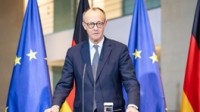
Pension reform : The Bundestag
has passed the pensions bill provided for in the federal government coalition
agreement (see press
release). Chancellor Friedrich Merz has also announced a global reform in
2026, based on recommendations made by a committee. The new measures should
encourage people to work beyond their pension age, and will take better account of
the shared contributions made to a child’s education. The DGB trade union
confederation has supported these measures (see press
release).
(Photo: Steffen Kugler)
|
Croatia

Minimum wage : Following a
consultation on 16 October 2025 with social partners, who failed to reach a
consensus on how far to raise the minimum wage, the government has proposed that
this wage should be fixed at 1,050 euros gross on 1 January 2026, i.e. an increase
of 80 euros on 2025. The Croation Employers’ Association (CEA) points out that the
minimum wage has risen by 92% since 2019, i.e. three times faster than the EU
average and 60% faster than in the Central and Eastern European zone. For their
part, trade-union leaders have argued that the minimum wage was already below the
poverty threshold, whereas companies’ net profits rose by 112% between 2019 and
2024, compared to a 54% rise in the average net wage (see more
detailed article).
|
Romania

Violence and harassment : The
government has amended several pieces of legislation (Law no. 319/2006, Law no. 53/2003 and Law
no. 108/1999) to introduce obligations requiring
employers to take steps to prevent and tackle violence and harassment at work, in
order to ensure compliance with ILO Convention 190 on the elimination of violence
and harassment in the world of work. Obligations requiring employers to protect
victims are among the changes introduced. As a result, in the event of an imminent
and serious danger to their life, health or security, employees can ask the employer
to make temporary changes to their place of work or the type of work they do. If
these adaptations cannot be made, including scenarios where telework is not a viable
option, the employer will have to grant them paid leave days (see press
release).
|
3.
Companies
Trade
unionism

Call for negotiation : Sanofi’s global trade union
network met in Paris on 10 and 11 December. The event brought together more than 50
workers’ representatives from countries around the world where the group is present.
The network, which was established nearly 10 years ago, is now calling for social
dialogue to be conducted within a global structure, “preferably framed through a
Global Framework Agreement” (see press
release).
|
Trade union network created : At
a meeting held in Paris on 9 and 10 December, a global trade union network was
established for the first time within the British pharmaceutical group GSK. The new global trade union
network, which is coordinated by IndustriAll Global Union, will initiate
“discussions with GSK on establishing a Global Trade Union Works Council, as part of
a comprehensive global industrial relations strategy” (see press
release).
|
|
|











