 |
| |
IR Notes 267 – 11 February 2026
www.irshare.eu
|
|
|
| |
| |
A question for…
Isabelle Ferreras, Research Director at FNRS, Research Associate at
Harvard and Oxford, and Professor of Sociology at the Catholic
University of Louvain
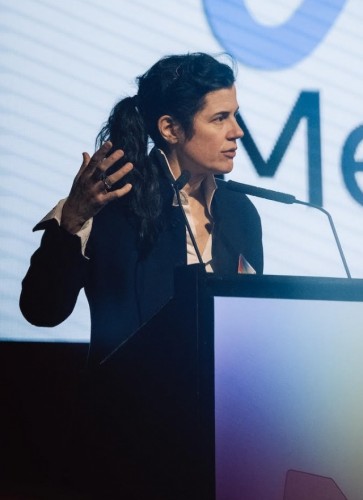
The report on
democracy at work, published by the committee of experts chaired
by you, (see Lead
story) advocates granting European
works councils a co-decision right covering artificial
intelligence. Why?
In its mission letter, the Spanish
government asked us to broaden our thinking on democracy at work to
a European scale. Clearly, the existence of EWCs constitutes major
progress in terms of social Europe. However, this progress would be
even greater if these bodies were able to exercise a genuine
co-decision right over issues that really matter. For example, the
most influential factor affecting employees’ working conditions in
today’s world is the deployment of artificial intelligence tools.
The AI systems being rolled out at the present time come with
important consequences for employees’ working life, affecting access
to jobs, work organisation and performance evaluation, extending
right through to retirement. In a society like Spain, which
enshrines workers’ involvement in the decision-making process as a
constitutional value, it’s simply inconceivable that workers should
be denied a say on the deployment of systems that govern them. So we
suggested transposing to European level what we’re advocating at
national level: a right to “shape and consent” to AI. The aim is
prevent workers being downgraded to a passive role and forced to
issue an opinion in haste, once a tool is ready to be deployed. From
a democratic viewpoint, it’s vital that they should be allowed to
take part in the design of AI systems at an upstream stage. This
assumes that they fully grasp the ins and outs of the mechanisms
about to be imposed on them: how they work, what they’re producing,
what they’re changing, etc. And it also means having the option of
saying ‘no’, or consenting – collectively – to their use. So we’re
also proposing that this new right granted to EWCs should be
supplemented by the right to be accompanied by an artificial
intelligence expert, whose costs will be paid by the company. Taking
such a step would prevent pointless stand-offs and stalemate
situations arising. These tensions are frequently interpreted as the
workforce adopting a conservative posture, but in reality they
result from employees having to use tools they don’t understand, yet
also knowing very well that these tools are in control of
them.
|
|
|

|
| |
Agenda
12 and 13
February
Lefkosia
(Cyprus)
Informal meeting of European
Ministers of Employment
3 and 4
March
Brussels
4th
European Employment and Social Rights Forum,
organised by the
European Commission, on the theme of:
Social
Europe: Empowering people in times of uncertainty.
4 March
Brussels
The
European Commission is due to adopt its 2026-2030 gender equality
strategy and its intergenerational fairness strategy
9
March
Brussels
Employment
and Social Affairs Council
18
March
Brussels
Tripartite
Social Summit
29 June
Luxembourg
Employment
and Social Affairs Council
|
|
|
|
|
| |
Who we are?
IR Notes is a
fortnightly newsletter produced by
IR Share and its network of experts, and is
available in several European languages (English, French, German,
Italian, Spanish, Polish). It offers Europe-wide monitoring of
employment law, labour relations and employment policy. It is available
by subscription for 273 euros per year .
The team: This
issue was producaed by Inès
Bollet, Victoria
Fonseca, Ambre
Grenier-Boley, Laura Renucci,
Frédéric
Turlan and Iris
Turlan. Find out more about the IR Share team on our website.
Subscribe to IR Notes
Via the IR
Share website or by calling us on: +33 (0)6 81 41 53 95
or
E-mail: frederic.t@irshare.eu
Legal notice.
Publisher: IR Share SARL – 5, Les Compères – 89520 Fontenoy,
France – Tel.: +33 (0)6 81 41 53 95 – share capital 1,500 euros –
commercial register (RCS Auxerre): 512 567 959. Managing editor:
Frédéric Turlan. Hosting: ALTEO by Damien Cornillet – Château – 89500
Villeneuve-sur-Yonne. CPPAP no.: 0626 Z 93933.
|
|
|
|
|
| |
Follow us on LinkedIn!

Why not connect to the IR Notes LinkedIn page, so that you can keep up with
developments in the issues we’re covering, between two editions?
You’re welcome to follow us! There are already 779 of you following
us!
|
|
|
|
|

|
|
|
Lead
story
An appeal
for businesses to be democratised
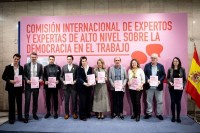
On 5 February, the International High-level
Expert Committee on Democracy at Work submitted its report
to Yolanda Díaz, the Spanish Minister of Labour and Social Economy (see press
release, executive
summary and comprehensive
summary). Some of what appears in the report on democracy at work will mark
a milestone and should encourage debate, not just in Spain, but across the EU. This
committee, chaired by Belgian sociologist Isabelle Ferreras, (see ‘A
question for…’) was tasked with putting Article 129.2 of the Spanish Constitution –
which describes the various forms of worker participation in a company, cooperatives
and access for workers to owning the means of production – into practice. The
Minister’s view is that the task of implementing this principle remains unfinished,
as no legislation was subsequently passed to create any form of financial
participation or employee representation on company boards (see IR Notes
247). The committee notes that Spain is “among the least developed countries
in the European Union in terms of the recognition of workers as key constituents of
the economy”. The report recommends “firm democratization” as a means of enacting
the provisions of Article 129.2 and “opening a path for all labour investors”, i.e.
workers, “to access voice and ownership”. As justification for the need to position
citizens at the heart of a business, the experts provide “factual evidence and
robust economic and political arguments to explain the necessity of public
intervention in this direction”. While this article of the Constitution has
something of a Marxist feel to it, the authors show that democratisation within a
business can now offer a response that is more pertinent than ever to the many
challenges posed by the Spanish economy, and to those inherent in one-legged
capitalism, which serves only the interests of shareholders, while destroying the
nine planetary boundaries one by one. In a country like Spain, where three quarters
of its surface area is now at risk of desertification, the message is a highly
pertinent one. The experts advocate tackling the situation in two ways. The first
way is to strengthen workers’ voice, by introducing a co-decision right for
workforce representatives, and ensuring that workers have a presence on company
boards. The second one aims to make it easier for workers to access ownership of the
means of production: by opening up the share capital of companies to their
employees; by drawing up transition plans that will allow workers to acquire their
companyʼs shares in anticipation of a founder or ownerʼs retirement; and by creating
funds that will enable citizens to acquire shares. The authors argue that this would
make “Spanish firms more resilient, and less dependent on extractive financial
actors”. Furthermore, and this is an innovation in the report, echoing EU debates on
revision of public procurement rules, the authors suggest creating a reporting tool
– the Corporate Democratic Development Index – based on two scoring scales measuring
workers’ access to the decision-making process and to capital. Depending on their
level of democratisation, the score achieved by companies could be used by the
authorities as an incentive-based mechanism, using the bonus/malus principle, to
access public subsidies, corporate tax rates, fiscal benefits, privileged access to
public procurement, etc. It is now up to the Spanish social partners to discuss
these proposals, as promised by Yolanda Díaz, who is hoping for an agreement,
failing which the Sanchez government will have to move forward on the basis of its
commitment to legislate during this Parliament.
|
1. European
Union
Social
update

28th regime : On 20 January, by
a large majority, MEPs adopted a series of recommendations relating to the European
Commission’s proposal for a new legal framework designed to support businesses in
the EU, commonly known as the “28th regime” (see European Parliament resolution,
briefing
and At
a Glance). This regime involves creating the status of a Societas
Europaea Unificata (S.EU) [‘unified European company’], which would apply
to unlisted limited liability companies established in one of the 27 EU Member
States. The registration of such a company would be an entirely digital process, so
that it could be completed within 48 hours, with a minimum paid-up share capital
requirement of just one euro. To attract and retain top talent at S.EUs, it is
likely that employee stock ownership plans and employee stock options will be
introduced. Parliament’s recommendations concerning the 28th regime for
EU businesses look set to be included in a legislative proposal drawn up by the
Commission, which is expected during the first quarter of 2026. In his report, MEP
René Repasi (S&D) tries to limit the risk of reducing worker protection in the
areas of labour law and rights relating to worker participation in company
decision-making processes, where such rights exist. Although it was originally
designed to facilitate the creation of EU start-up companies, the 28th
regime no longer seems to be subject to any limits in terms of company size. This
change makes the European Trade Union Confederation very wary of this piece of
legislation, which, in the Commission’s proposal expected on 16 March, might also
impose a limitation on workers’ rights (see press
release).
|
Subcontracting : On 12 February,
the European Parliament is due to vote on the motion for a resolution
on “addressing subcontracting chains and the role of intermediaries in order to
protect workers’ rights”, presented by Johan Danielsson (S&D). The Committee on
Employment and Social Affairs has already approved this by 35 votes in favour and 20
against. The text invites the Commission to “end abusive subcontracting and to
protect workers’ rights, to strengthen transparency and accountability throughout
the supply chain, and to consider introducing a well-defined regime for the joint
and several liability of economic operators and subcontractors”. It also calls on
the Commission to assess “the impact of public contracts being performed mainly by
the successful tenderer’s direct workers and recommends that public procurement
rules encourage companies to have sufficient in-house staff to implement the
projects for which they are awarded public contracts”.
|

Restructuring : On 6 February,
the European Commission announced a proposal to mobilise 3.7 million euros from the
European Globalisation Adjustment Fund (EGF) to help 416 workers dismissed following
the bankruptcy of the home decoration company Casa in Belgium (1.9 million euros)
and 420 workers dismissed by the motorcycle manufacturer KTM in Austria (1.8 million
euros) (see press
release).
|
Cross-industry social dialogue

Quality jobs : The European
Commission has received replies from the main European social partners to the first
phase consultation on the Quality Jobs Act, launched on 4 December (see IR Notes
264). The proposal for a job quality directive is due to be presented by the
year end, following a second phase consultation with European social partners, under
Article 154 TFEU. These partners are clearly divided in their contributions. On the
one hand, the European Trade Union Confederation (ETUC) is calling for binding
legislation on all topics covered by the consultation: algorithmic management and
artificial intelligence in the workplace, protection against psychosocial and
ergonomic risks in the workplace; the right to disconnect; abusive subcontracting
practices; a just transition with the creation of a personal training entitlement,
etc. (see ETUC reply).
Moreover, having had its fingers burned in 2023 by the breakdown of cross-industry
negotiations on telework and the right to disconnect, the ETUC rules out the idea of
reaching any negotiated solution with European employers’ organisations, as it “does
not consider that the necessary conditions currently exist to initiate a dialogue.”
Although the issues raised by the Commission are widely recognised, the employers,
for their part, believe that the solutions required are completely different from
those advocated by the ETUC. The employers’ organisation BusinessEurope rejects the
idea of a purely legislative approach – other than for the purpose of simplifying
the existing legislation (see contribution). It advocates
non-binding initiatives for all topics tackled in the consultation, and calls for
the existing rules to be applied properly: “the answer lies in strengthening labour
inspectorates and other relevant players” to deter “fraudulent activities and
potential abuses through enforcement”. Moreover, taking the opposite view to the
ETUC, BusinessEurope explains that it is ready “to further explore the possibility
of initiating a social dialogue on one or several of the issues mentioned in the
consultation document”. Both SGI Europe (reply) and SME United (reply) also leave open the
possibility of negotiation between European social partners, which could be
incorporated into the multi-annual work programme currently under preparation.
|
2. Member
States
Germany

Working hours : The CDU party,
led by Chancellor Friedrich Merz, wants to revise working hours legislation and to
restrict workers’ rights in the area of part-time working. Since 2001, companies
with more than 15 employees have had to agree, subject to certain conditions, to
requests for shorter working hours submitted by employees who have at least 6
months’ service. The Chancellor’s party wants to limit this piece of legislation to
particular situations, such as childcare and vocational training. This initiative
has been criticised by some trade unions, including the DGB Trade Union
Confederation and IG Metall (see press
release). It marks a change of direction in the country’s employment policy,
and aims to get Germans back to work, through longer working hours and clamping down
on abuses of sick leave.
|
Finland

Democracy at work : The
Conservative government is launching a public consultation on legislative amendments
aimed at increasing board‑level employee representation. The government wants the
regulation on board-level employee representation to apply to companies with at
least 100 employees, rather than the current figure of 150. “We want employees to
have a stronger voice in Finnish workplaces”, says Minister of Employment Matias
Marttinen, who believes that the measure “will bring as many as 100,000 additional
employees within the scope” of the regulation on board-level employee
representation. He emphasises that “companies that already have this type of
employee representation report mostly positive experiences” (see press
release).
|
France
Retraining : Following the
enactment of Law
no.
2025-989 of 24 October 2025 transposing domestic cross-industry agreements
to promote the employment of experienced workers and relating to the evolution of
social dialogue, the “retraining period” scheme entered into force on 1 February
2026 and replaces the previous schemes covering “Collective transitions” and
“sandwich courses for retraining or promotion”. The new scheme is open to all
employees who are seeking mobility inside or outside their company, with a view to
gaining certification or skills, and it can also operate at the employer’s
initiative. Two decrees were published on 28 January 2026, to clarify certain points
of the legislation, notably regarding its implementation
and funding.
|
Netherlands

Employee monitoring : The data
protection authority has prohibited the UK transport company Arriva from
continuously filming its bus drivers, by reminding all road transport companies
operating in the passengers or goods sectors, of the principles governing use of
CCTV (see press
release). CCTV can be used for security purposes, but not to monitor
employees. The CNV trade union welcomes this decision and calls on its members and
other companies to carefully re-examine their rules governing CCTV use (see press
release).
|
Slovakia

New family leave arrangements :
On 1 January, the Labour Code was amended by Law
406/2025 on help for dependants (see press
release). The text broadens leave entitlements to include employees who are
encountering “major personal obstacles in performing their work duties”. For
example, an employee is granted seven days of leave per year to accompany a child
who is aged under 15 and attending medical examinations or appointments at
institutions for children or pupils with disabilities. The law also grants a further
seven days of leave, which can be taken cumulatively with the first seven days, to
employees who are single parents accompanying a family member, including a child,
undergoing examinations or treatment at a healthcare establishment in the event of a
sudden illness or accident, or attending a specialised institution for children or
pupils with disabilities.
|
3.
Companies
European
Works Councils

Older workers : On 26 January,
the Spanish textile group Inditex
and its EWC signed a joint
statement on the measures necessary to address the employment of middle-aged
people and support age diversity. The text highlights eight objectives or
measures that could be adopted to take “the work and professional experience of
those who make up their workforce, and especially its older members” into account
more effectively. These measures include a desire to tackle ageing-related risks
“using a global approach, including both physical and psychosocial aspects”, and a
commitment by the group to evaluate, at “local level, and taking account of the
characteristics of each market, ways of adapting the jobs of people whose abilities
have been affected by ageing, where this has a significant impact on how they carry
out their duties”, e.g. by making changes to their working hours or working day.
|

Restructuring : The European
management of steelmaker ArcelorMittal has announced a
new plan involving the massive relocation of support functions, which will put at
risk 5,600 jobs in 20 countries, even though a similar plan is still ongoing,
according to a statement
issued by the EWC, following an extraordinary meeting held on 29 January, via
videoconferencing. “This decision constitutes a new frontal attack on European
workers, without any assessment or evaluation and without consideration for the
human, social and industrial consequences”, says the statement, with particular
reference to workers employed by the company’s subcontractors. Workers’
representatives are demanding an immediate halt to any further relocations until the
first wave has been completed and evaluated; retention of key skills, particularly
IT skills, in Europe is “a genuine European industrial strategy that respects jobs
and workers”. EWC secretary Jean-Luc Ruffin expresses doubts about the legal
validity of the information-consultation process, which looks more like a
consultation on a framework, paving the way for a series of restructurings, without
the matter having to be referred back to the EWC for consultation.
|
|
|











