 |
| |
IR Notes 1 – 15 January 2014
www.irshare.eu
|
|
|
| |
| |
Who is IR Share?
IR Share is a provider that shares information, documentation and
expertise for HR managers and employee representatives. The IR Share
agency operates by way of online publications, working groups, training
devoted to relevant topics and a network of experts.
The team
This
issue was produced by: Catarina Carvalho, Francisco Gomez Abelleira,
Frédéric Turlan.
Find out more about the IR Share
team on our website.
Subscribe to IR
Notes
Via the IR
Share website or by calling us on:
+33 (0)6 81 41 53 95
|
|
|

|
| |
Interview
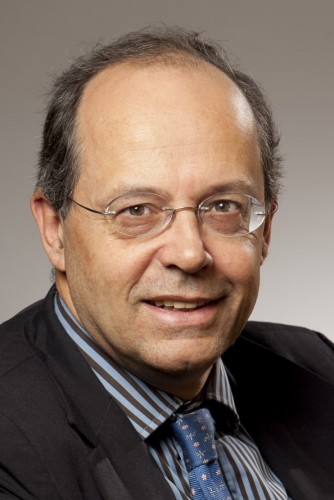
Jean-Christophe Sciberras, Labour Relations Director of the Solvay group
What is the part played by a
transnational framework agreement?
A company is always vulnerable to
mishaps, including industrial accidents, or disputes with trade
unions. Protagonists from outside the company can intervene, give
their opinion, conduct information campaigns, and so on. Meeting
them only when a problem arises isn’t the best of situations to be
in. With an agreement of this kind, our aim is to build a long-term
relationship with them, so that they are already aware of our
practices and our professionalism. If a relationship of trust is
established, then, when there is a difficulty, we think that they
will give us some credit when they address it; dialogue will be
easier as a result.
Has this approach already produced
some benefits?
Without a doubt. I can give two examples
involving the Rhodia group, before it merged with Solvay. In 2005,
Rhodia had made a worldwide agreement with the ICEM [International
Federation of Chemical, Energy, Mine and General Workers’ Unions],
which subsequently merged with other federations to form
IndustriALL. When we wanted to close a site in Venezuela, in a
political context which we knew to be complicated, we notified the
ICEM, which no longer had any affiliate organisations there.
However, it contacted its former affiliates to explain to them how
the group proceeded when it closed a site, and to alleviate their
fears, enabling us to reach an agreement that was in the interests
of the company and of the employees concerned. As another example,
some rather biased allegations had been made against the group in
Brazil, and the ICEM took action among its members to defend what
Rhodia had done concerning its employees, and matters were put
right.
This agreement mentions
establishing an international social dialogue. What are the
prospects for the future?
We have a number of different levels of
social dialogue in the group: an international level, with the
signature of this agreement; a European level with our European
works council; in certain countries, such as Germany, France and the
United Kingdom, there’s a national level, and we also have – and
this is the most frequent situation – an establishment level. We
also have a supranational level in South America, where a dialogue
has been initiated with representatives of the Brazilian and
Argentinian trade unions within an ad hoc body. The principle is to
establish social dialogue at the relevant level so that we can deal
with the matter concerned in the best possible way. If some matters
are worthy of a worldwide social dialogue, then we will develop
this. We are going to take an initial step with the renegotiation,
between now and June 2014, of our European Works Council agreement,
which we are going to extend to representatives of the non-European
countries where half our employees work, by incorporating observers
for each geographic area.
|
|
|
|
|
| |
Diary
16 January
Charleroi
Colloquium entitled “Le
travail en marge de l’emploi”, organised by the CIRTES of the
Université Catholique de Louvain. Based on results from empirical
studies elaborated at the CIRTES research centre, this colloquium aims
to better understand certain mechanisms giving rise to inequalities or,
on the other hand, development, affecting the employment market and the
workforce.
16-18 January
Paris
International colloquium entitled “Normes
d’emploi et situations de travail face aux régulations marchandes et
politiques: la globalisation vue du Nord et vue du Sud”,
organised by IRISSO (Paris-Dauphine), UPEC and LISE (CNAM).
16-17 January
Strasbourg
Forum on social entrepreneurship in Europe.
22-23 January
Brussels
Meeting of the European Parliament’s Committee for Employment and Social
Affairs.
23-24 January
Paris
Seminar on “Stratégies
nationales et européennes de croissance et politiques sociales”,
organised by Sciences Po and CEPREMAP, with support from DREES.
27-28 January
Hamburg
6th
conference of the EWC Academy on European Works Councils.
5 February
Paris
Seminar by Europe et Société and RDS on European social dialogue,
focusing on an introduction to some European employers’ organisations.
Contact: europeetsociete@wanadoo.fr
5-7 February
Melbourne
Annual conference of the Association of Industrial Relations Academics
of Australia and New Zealand (AIRAANZ).
Details from: www.airaanzconference2014.com
28
February
Brussels
Monthly
forum of the European Trade Union Institute (ETUI) on ”The
EU’s REFIT agenda: simplification or deregulation?”
|
|
|
|
|

IR Notes is a fortnightly
newsletter produced by IR
Share and its network of experts, and is available in
several European languages. It offers Europe-wide monitoring of employment law,
labour relations and employment policy. It is available by subscription for 15
euros per month (excluding tax), via the IR
Share website. IR Share is a
privately-owned, independent, apolitical company whose aim is to inform and
assist all players involved in social dialogue within and outside Europe. It has
been the correspondent organisation for France and Luxembourg of the Dublin
Foundation since 2009.
|
|
|
Lead
story
EC
communication on managing restructuring
On 13 December 2013, the European Commission adopted a communication
concerning an “EU quality framework for the anticipation of change and
restructuring”. This document will disappoint those members of the European
Parliament who were expecting the Commission to propose a “legislative act”. It
merely recycles, in shorter form, something that the Commission has already
published with its “Checklist
on restructuring processes”. This document, like the checklist before it,
may encourage companies to negotiate agreements intended to provide a framework for
restructuring processes. The Commission has said that it “will examine whether it is
appropriate to revise it between now and 2016”, thus making 2015 a pivotal year,
because the Commission will be presenting its proposal aimed at “consolidating the
information and consultation directives”, as announced in its
“Refit”communication of 2 October 2013. Before 5 June 2015, it must also
produce a report on the application of directive 2009/38 on European Works Councils.
This means that there will be opportunities to examine the role of information and
consultation in planning restructuring processes.
|
1. European
Union
Legislation
- Structural funds: The new
regulations governing the operation and purposes of the European structural
funds have been published in the Official Journal (L347).
These include regulations concerning the European
Social Fund and the European
Globalisation Adjustment Fund, and the common
provisions of the different structural funds. The regulation
on de minimis aid has also now been published (in Official
Journal L352).
This concerns aid of less than 200,000 euros over a three-year period that may
be paid by a Member State to enterprises in difficulty without giving prior
notice to the European Commission.
|
Other news
- Greek presidency of the European
Union: Greece has begun its six-month presidency of the
European Union. It has set out its priorities
on its website. IR Share has published a dossier
(in French, available for 19 euros excluding tax) giving an assessment of social
dialogue, employment law and the social situation in Greece.
|
Sectoral
social dialogue
- Hospitals: On 4 December
2013, the social partners in the hospital sector published some guidelines
and examples of good practice
to deal with the challenge presented by the ageing of the healthcare sector
workforce.
- Violence from third
parties: The European social partners who signed up to
the multi-sectoral guidelines on dealing with violence from third parties in the
workplace, adopted on 16 July 2010, published their first
report on the implementation of the agreement on 21 November 2013.
- Electricity: In December,
the European social partners in the electricity sector adopted a common
position on the “2030
framework for climate and energy policies” proposed by the European
Commission. The signatories are requesting that this medium-term strategy
incorporates “just employment transition principles” and are insisting on the
role of social dialogue at all levels in anticipating and managing the change.
|
2. Member
States
Belgium
- Single employment status takes
effect: The law
of 26 December 2013 concerning a single status for blue- and
white-collar workers as regards notice periods, the waiting period before a
benefit is paid, and also support measures, has been published. It entered into
force on 1 January 2014. This is a mandatory law, which means that, in
principle, it applies to existing contracts. Links to observations
from the Belgian Ministry of Labour.
|
France
- Vocational training: The
social partners reached agreement on the future of vocational training on 14
December 2013. The principal elements of this agreement
(in French) are the creation of the individual training account and an overhaul
of how the vocational training system is financed and governed. A bill
containing the terms of the agreement will be passed by the Council of Ministers
on 22 January 2014.
|
Spain
- Working time: New
legislation has been passed on part-time work. This legislation is
intended to increase the flexibility of working hours and to make part-time
contracts more attractive to employers. The age of minor children for whom
employees can elect to reduce their working hours has been raised from 8 to
12 years.
- Pensions: The social
security reform has been finally approved. The goal is to establish a
number of parameters for the initial and successive calculations of the pension
amount.
- Restructuring:
Redundancies in companies with fewer than 25 employees have become substantially
(around 40%) more expensive since 1 January 2014, as a consequence of a new
provision eliminating the allowance provided by the Wage Guarantee Fund.
- Social security
contributions: New
rules have been introduced governing the calculation of the social
security contribution base. As a result of these rules, the contribution base
will generally rise.
|
Luxembourg
- Banking sector: The social
partners within the banking sector met on 7 January 2014 for a second session of
negotiations to renew the current collective agreement for the sector, but
without securing a deal.
|
Poland
- Working time: Eurofound
published an article
on 20 December 2013 concerning the law of 12 July 2013 on working time, which
entered into force on 23 August, and which included a provision facilitating the
annualisation of working hours.
|
Portugal
- Fixed-term employment
contracts: a new special temporary regime (to be in
force until 31 December 2016) allows two additional renewals of a fixed-term
employment contract, extending its overall duration (Act No. 76/2013
of 7 November).
- Wages: 50% of the
Christmas and the vacation allowances can be paid in twelve instalments also in
the private sector. This special statutory regime, which was initially to be
applicable only between 1 January and 31 December 2013 (Act No. 11/2013 of 28
January 2013), will remain in force during 2014 (article 257 of
the State Budget Law for 2014).
|
3.
Companies
Transnational agreements
- Loomis: The Swedish cash
transport group Loomis AB (22,000 employees) signed an international framework
agreement with the Swedish transport workers’ union and UNI Property Service on
13 December 2013. Links to press
release from UNI.
- Meliá Hotels
International: The Spanish hotel chain (38,000
employees) signed an international
framework agreement with the food, agriculture and catering union IUF on
9 December 2013. The agreement applies to all Meliá-branded establishments, even
where these are franchise operations or are managed by the chain on behalf of
the owner. Links to press releases from the IUF and Meliá
Hotels International.
- Solvay: The Belgian
chemicals group Solvay (30,000 employees) signed a worldwide
social responsibility agreement with IndustriALL Global Union on 17
December 2013. The text specifies that management must adopt a neutral attitude
when dealing with a union that wishes to become established at a site in the
United States. Link to press
release from Solvay.
- IR Doc: Access to
framework agreements recently put online on IR Share: Norske
Skog (December 2013), SCA (December
2013), Statoil
(2005), Veidekke
(2005)
|
European
Works Councils
- Capio: At its meeting on
19 and 20 September 2013, the Capio group’s European Works Council validated
several documents concerning the anti-corruption policy and the whistleblowing
policy, and updated the code of conduct (see press
release from Capio). “We are now talking about how to implement these
documents and monitor their enforcement,” said Kevin Thompson, head of the
employees’ representatives on the EWC.
- RATP: The French group
RATP (provider of public transport in Paris) held a second session of
negotiations on 5 December 2013 to set up a European Works Council.
- Telefónica: The Spanish
telecommunications group Telefónica
(130,000 employees) renewed its European
Works Council agreement, which will be governed by British law, on 29
November 2013.
- Hewlett-Packard: In a statement,
the secretary of the European Works Council, Udo Verzagt, explained that
negotiations to establish a new agreement, which began after the works council
terminated the previous agreement, have failed. Udo Verzagt stated that, as a
result, from 24 January, HP will be the first company in Europe having a
European works council to see this body cease to function. The employees’
representatives are therefore going to submit an official request for
negotiations to begin so that a new EWC can be set up. These negotiations could
take up to three years.
|
4. Studies
and reports
- Social relations in 2012:
Eurofound has published a
comparative
study of developments in industrial relations in Europe in 2012, based
on the national reports of its 29 correspondents. The document reviews the main
political and legislative developments, as well as those relating to social
dialogue.
- Unemployment stabilises:
The seasonally-adjusted level of unemployment in the eurozone was 12.1% in
November 2013, having been stable since April. In the EU, unemployment has been
stable at 10.9% since May (Eurostat press
release).
|
5. Phrase of
the fortnight
Social
dialogue
Social dialogue is the dominant feature of the system of industrial relations in
Europe and is rooted in the continent’s history. The model of industrial relations
based on a dialogue between representatives of employers and employees distinguishes
Europe from other regions of the world. In Europe, social dialogue takes place at
institutional level, where the social partners are consulted, in particular, on
matters related to employment and to labour law. It also takes place at
interprofessional and sectoral level, between employers’ organisations and
employees’ organisations. For further details, please refer to the European
Industrial Relations Dictionary.
|
|
|











