 |
| |
IR Notes 242 – 11 December 2024
www.irshare.eu
|
|
|
| |
| |
Christmas break

*** Everyone in the IR Share team sends our
readers the season’s greetings and wishes them an enjoyable
Christmas break. We’ll be back with IR Notes 243 on 8 January
2025, after a short winter break. However, you can still stay in
touch in the meantime: we will continue to post
updates on the IR Share
website and you can also follow us on the
LinkedIn account.***
|
|
|

|
| |
Who we are?
IR Notes is a
fortnightly newsletter produced by IR
Share and its
network of experts, and is available in several European languages
(English, French, German, Italian, Spanish). It offers Europe-wide
monitoring of employment law, labour relations and employment policy. It
is available by subscription for 273 euros per year .
The team This issue
was producaed by Ambre Grenier-Boley,
Victoria Fonseca,
Iris Turlan and Frédéric
Turlan.
Find out more
about the IR
Share team on our website.
Subscribe to IR Notes
Via the
IR
Share website or by calliang us on:
+33 (0)6 81 41 53 95
or
E-mail: frederic.t@irshare.eu
Legal notice.
Publisher: IR Share SARL – 5, Les Compères – 89520 Fontenoy, France –
Tel.: +33 (0)6 81 41 53 95 – share capital 1,500 euros – commercial
register (RCS Auxerre): 512 567 959. Managing editor: Frédéric Turlan.
Hosting: ALTEO by Damien Cornillet – Château – 89500
Villeneuve-sur-Yonne. CPPAP no.: 0626 Z 93933.
|
|
|
|
|
| |
Follow us on LinkedIn!

Why not connect to the IR Notes LinkedIn page, so that you can keep up with
developments in the issues we’re covering, between two editions?
You’re welcome to follow us! There are already 660 of you following
us!
|
|
|
|
|
| |
European Industrial Relations Dictionary
In case reading IR Notes inspires you to
explore this subject further, we are providing links to the European
Industrial Relations Dictionary published by Eurofound. This is updated at
regular intervals by IR Share, which publishes IR Notes. The term
definitions are available in English and can easily be converted
into other languages using on-line translation tools.
|
|
|
|
|

|
|
|
Lead
story
Negotiations
on revision of the EWC Directive due to start in January

On 3 December, the European Parliament’s Committee on Employment and Social Affairs
adopted the negotiating mandate for launching inter-institutional discussions on
revision of Directive 2009/38 on European Works Councils. The vote on this mandate
was originally scheduled for April of this year, to coincide with the adoption of
the report
submitted by German MEP Dennis Radtke (EPP), but was then postponed to ensure that
it would be adopted by a large majority. This choice proved to be a wise one, as the
mandate was adopted with 36 votes in favour, 11 against and 3 abstentions, and it
was supported by virtually all parties other than the far-right, with the exception
of one EPP MEP. Representatives of the Council, the European Parliament and the
European Commission will commence inter-institutional negotiations (the “trilogue”)
as early as January 2025, with a view to adopting the revision of the directive.
“We’re going to discuss the most consensual articles first, so that the difficult
points – such as the sanctions regime applicable to breaches of the EWC’s right to
be informed and consulted – are kept back to the end”, says MEP Gabrielle Bischoff
(S&D), who will be one of Parliament’s negotiators. As the positions of the
Council (see General
approach) and Parliament are not too far apart, it seems realistic to
anticipate that the text will be adopted during the second half of 2025, which would
mean the Member States having to transpose it by the end of 2027, if all goes to
plan. However, the employers’ organisations, which are opposed to a binding text,
will not give up the fight and may try to convince Member States that are not
affected by this issue very much (i.e. those with few or even no companies covered
by the directive) to oppose the adoption of a new text.
|
1. European
Union
Legislation

Inclusion of persons with disabilities: :
On 2 December, the Employment and Social Affairs Council adopted
Conclusions
on fostering social inclusion of persons with disabilities through employment,
reasonable accommodation and rehabilitation. The Council points out that the
employment gap of persons with and without disabilities in the EU was 21.5 pp in
2023, compared to 22.7 pp in 2014 (see press
release). The conclusions call on Member States to adopt “measures,
including the setting of qualitative or quantitative national targets, for
increasing the employment rate of persons with disabilities in order to reduce the
gap between the employment rates of persons with and without disabilities”. They are
also urged to promote “the employment of persons with disabilities in an inclusive
open labour market by fostering equal treatment and supporting the possibility of
and opportunities for taking advantage of flexible working arrangements (such as
flexible working hours, part-time employment, teleworking, project-based employment
or even job-sharing) that provide personalised working conditions and flexibility,
with the involvement of social partners while respecting their autonomy”. For its
part, the Commission is asked to “consider launching actions aiming to help
employers better understand and accommodate the needs of persons with disabilities
in order to ensure their participation and inclusion”.
>
Note: On 4 December, the European
Trade Union Confederation condemned the fact that in some EU Member States, people
with disabilities can still be paid less than the minimum wage set by law or by
collective agreements. It is calling on Member States to use the implementation of
the EU directive on minimum wages to eliminate such discriminatory pay laws and
ensure payment of at least the minimum wage or collective agreement wage (see press
release).
|

Labour shortages : On 2
December, the Employment and Social Affairs Council adopted Conclusions
on labour and skills shortages in the EU: Mobilising untapped labour potential
in the EU. Among other things, these conclusions call on the Member States
to “improve health and safety at work, especially by addressing mental health,
work-related psychosocial risks and wellbeing at work”, and to “promote fair and
decent working conditions, and employment on a stable basis”. Countries should also
“continue strengthening social dialogue and enable effective collective bargaining,
while respecting the role and autonomy of social partners, to improve working
conditions and to tackle the challenges brought about by labour and skills
shortages” (see press
release). The document calls on the Member States to help groups
underrepresented in the labour market to access employment in fields where there is
a shortage of workers, by particularly targeting women, low-skilled workers, older
workers, young people, people with an ethnic minority background, and persons with
disabilities.
|
Project

Directive on improving the quality of
traineeships : On 2 December, the Member States failed to
agree a common position on the proposal for a directive regulating trainees’ working
conditions. More than 10 countries, including Germany, Italy and Poland, rejected
the compromise text put forward by the Hungarian presidency of the EU, arguing that
it lacked ambition. They also received the support of Roxana Mînzatu, the
Commission’s new Vice-President for Social Rights and Skills, Quality Jobs and
Preparedness, who emphasised that the text put forward by Hungary was not good
enough to improve trainees’ working conditions or to tackle the issue of bogus
traineeships. The Hungarian presidency must now decide whether to overhaul its text
in depth or to content itself with passing the file on to the Polish presidency of
the EU, which commences on 1 January.
|
Trade
unionism

Artificial intelligence : At the
end of November, the Executive Committee of the IndustriAll Europe trade union
federation adopted a new trade union strategy on artificial intelligence (AI) in the
world of work. It includes a policy
brief on AI and a number of practical recommendations
to coordinators and worker representatives in EWCs and SEs. These
initiatives are based on a study
of digitalisation and AI in the workplace performed by Syndex (see press release).
Isabelle Barthès, Deputy General Secretary of IndustriAll Europe, would like the
provisions of the EU Platform Directive covering algorithmic management to be
extended to all workers, and “as regulation cannot solve everything, our trade union
strategy presents guidance on how trade unions during social dialogue with employers
can address the impact of AI systems at work, securing workers’ rights in the face
of this rapidly evolving technology.”
|
2. Member
States
Germany

Decree on harmful substances :
The decree on harmful
substances, which entered into force on 5 December, is intended to improve health
and safety in the workplace. Its provisions now cover activities involving the use
of carcinogenic substances, and are aligned with European standards. The rules
governing asbestos have also been revised (see press
release).
|

Overtime working by part-time employees :
The Federal Labour Court has ruled that part-time workers have
the same rights as their full-time colleagues when it comes to overtime working (see
press
release). A clause in one collective agreement has been deemed
discriminatory, as it disadvantages part-time employees (who are mostly women) for
no objective reason, by failing to specify that any hours worked beyond their
contractually agreed period are to be paid as overtime. Following the recent case
law established by the EU Court of Justice, the Federal Labour Court declared this
clause invalid (see IR
Notes
235). It also granted the female complainant the sum of 250 euros as
compensation for this discrimination. The Verdi trade union has expressed its
support for this decision (see press
release).
|
Netherlands

Child employment : A regulation
introduced on 10 October has allowed young people aged under 16 to benefit from more
flexible employment rules with effect from 18 November. It allows 13 and 14
year-olds to work later on non-school days (up to 8pm in the evening rather than
7pm) and also to work on Sundays. These new provisions will continue to involve
close supervision: the child’s legal representative and the company’s works council
or workers’ representation council will both have to give their permission (see press
release).
|
Portugal

Retirement age : in 2026, the
statutory retirement age will be raised to its highest-ever level: 66 years and 9
months. This means that people will have to work two months longer than in 2025 to
qualify for a full state pension. Since 2015, the statutory retirement age has been
based on changes in the life expectancy of a 65-year-old, as calculated by the
Instituto Nacional de Estatística (INE). The same indicator is used to
determine the reduction in pension applicable to persons taking early retirement.
Based on INE data, this reduction will be fixed at 16.93% in 2025, which is a
significantly higher figure than the 15.8% rate applicable in 2024. However, persons
who are aged at least 60 and already have 40 years’ worth of contributions, will not
be subject to this new higher rate. They will continue to be bound by the current
rule, whereby at the time they retire, they are subject to a 0.5% reduction for each
month they are below the statutory retirement age (see article
in Publico).
|
3.
Companies
European
Works Councils

A new EWC (1): : On 9 December,
the German subsidiary of the Japanese group Tokai
Carbon (4,200 employees),
which is specialised in carbon and graphite products, and a special negotiating body
assisted by the IndustriAll Europe trade union federation, concluded an agreement
setting up a European Works Council. The agreement contains an adaptation clause, to
be implemented at the time the future revised EWC directive is adopted. The EWC will
be comprised of representatives of German, French, Italian and Polish employees.
They will also represent temporary workers (who are on a contract lasting longer
than three months), apprentices and trainees. Matters on which the EWC will be kept
informed and consulted include: reducing the group’s carbon footprint; environmental
and social issues; sustainability-related responsible corporate governance
(including the sustainability report); and social responsibility. Another item of
note is that prior to disclosing any confidential information, management will
explain: “whether this is to be treated as confidential; why; vis-à-vis
whom; and for how long it must remain confidential”.
|
A new EWC (2) : On 29 October,
the management of the German-Austrian family-run group Lohmann & Rauscher (5,400
employees), a global leader in the field of medical devices and hygiene products,
signed a European
Works Council agreement covering 12 countries. The EWC’s main delegations
are from Germany, Austria and the Czech Republic. The EWC is entitled to establish
working parties (mainly meeting on line). AI and digitalisation are mentioned as
examples of topics on which the EWC might be kept informed and consulted. The text
sets operating rules covering virtual meetings, in particular, to protect the
confidentiality of discussions.
|
Merger : Following the
acquisition of Ideal Standard
by the Villeroy & Boch
group in February 2024 (see press
release), the question has arisen regarding the future of the existing EWCs
of these two bathroom product manufacturers, which now form a group with 13,000
employees in Europe. On 26 August, the group’s management and a special negotiating
body signed an amendment to the Villeroy & Boch EWC agreement, taking a
pragmatic approach. The number of seats has been increased to accommodate three
Bulgarian members without cutting the number of seats allocated to other countries,
and a six-member select committee has been created, to include the three members
making up the select committee of Ideal Standard’s EWC. The new EWC recently held a
meeting in Bulgaria. The next aim is to open a more wide-ranging renegotiation of
the agreement, in late 2025, with a view to accommodating the changes contained in
the future revised European directive.
|
Transnational negotiation

Work-life balance : The
management of Safran and
trade-union negotiators appointed by the IndustriAll Europe trade union federation
have concluded a European framework agreement entitled “Family Life-Working Life”.
This is the third European framework agreement signed by the aircraft equipment
manufacturer, following those covering career
and skills development and professional
integration of young people. The new agreement bestows new rights on
employees, such as those who are also carers: they will be entitled to work
part-time, on a basis of between 50% and 80%. The text includes measures making it
easier for employees to deal with situations in their personal life, such as:
receiving medical assistance with procreation; adopting children; support with
pregnancies that do not reach full-term; and assigning pregnant women who work
nights to a day-time job while maintaining their basic wage. The agreement has been
sent to trade union federations that are members of IndustriAll Europe, for
approval. We will be able to publish it once it has been officially signed, in
January.
|
Corporate
social responsibility
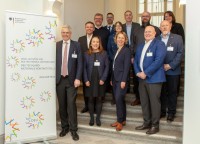
Relationships with trade unions :
On 4 December, the postal and logistics group DHL adopted a new
OECD protocol governing dialogue with the International Transport Workers’
Federation (ITF) and UNI Global Union. The protocol was signed by the German
National Contact Point for the OECD Guidelines for Multinational Enterprises (see UNI
Global Union and ITF
press releases). The first
protocol was signed in 2016, for the purpose of settling disputes between
trade unions and the DHL group, and agreeing on a responsible social dialogue
between the parties. The new text provides for the holding of annual regional
dialogue meetings between the parties.
|
|
|











